Tell us about the job
Takes about a minute. No obligation.
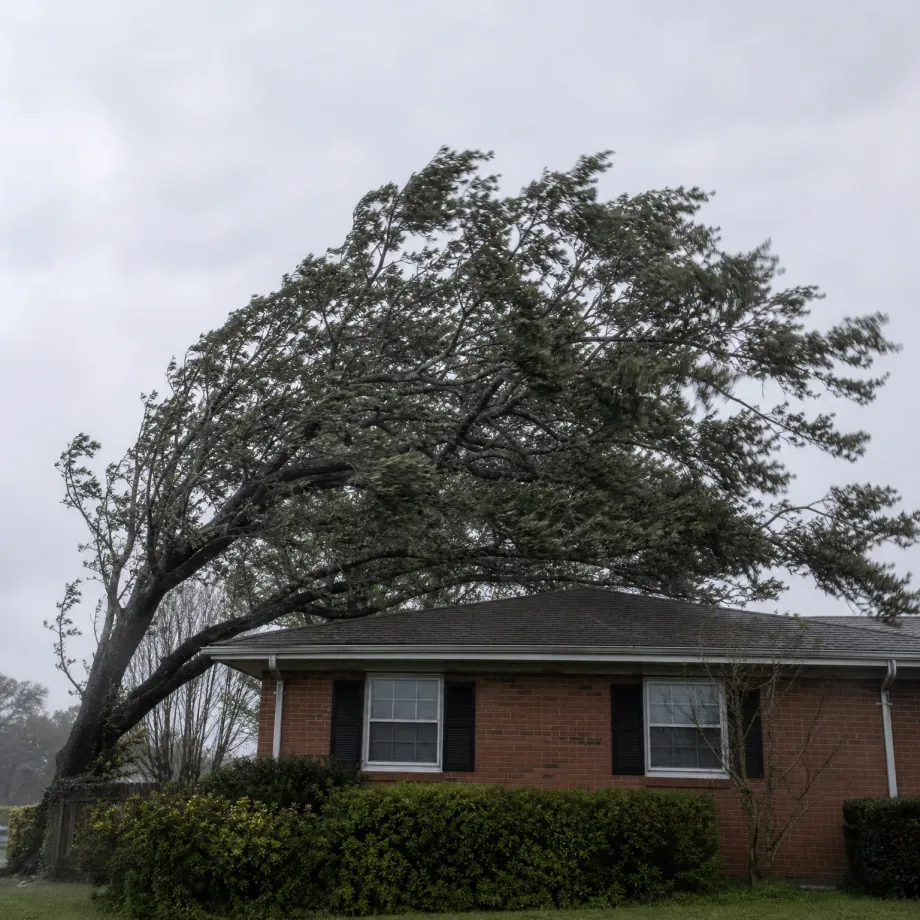
A furnace repair in Floyd County starts with what the equipment has been through, and the weather record here is only a small part of that story. 93 severe weather events were recorded in Floyd County, Texas between 2015 and 2024. At roughly that rate, severe weather lands in this county as an event rather than a condition, which means most systems have not been worn down by relentless weather cycles. A contractor diagnosing a failed heat exchanger or a dead igniter looks first at the age of the unit, how often filters were changed, and whether the original install was sized and sealed correctly. Those are what fail furnaces here.
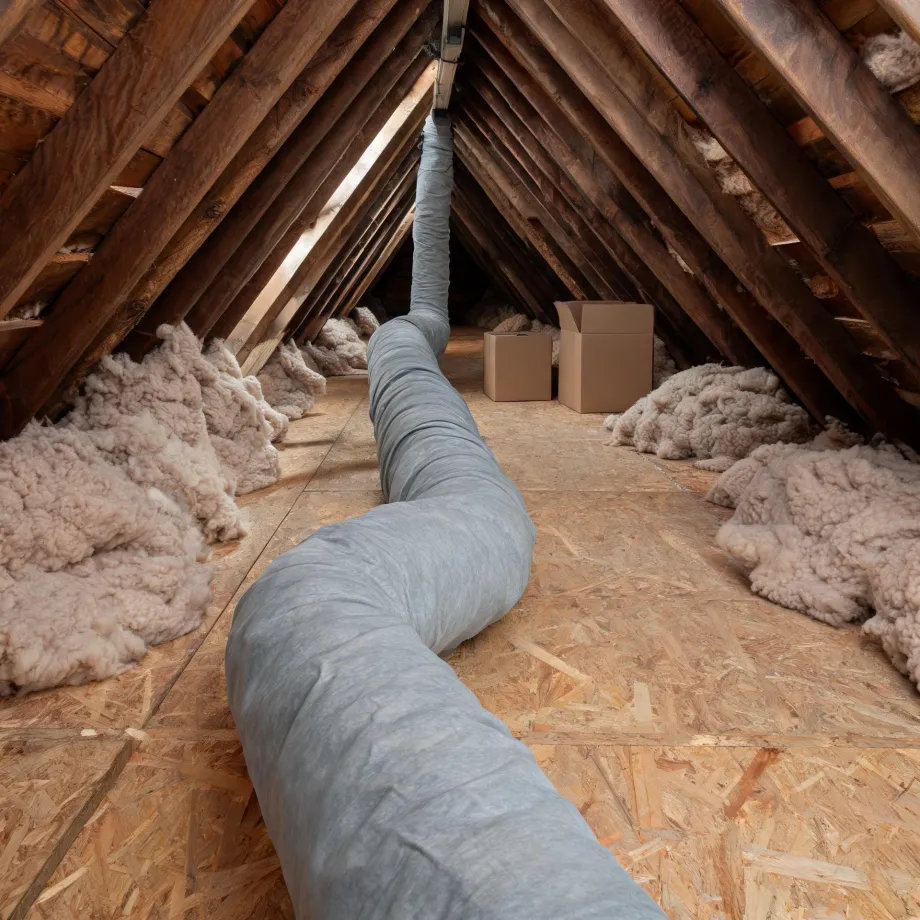
Ductwork in a house built for mid-century equipment has seen decades of patching, adapting, and informal repair long before a furnace contractor arrives. Half the homes in Floyd County, Texas were built in 1962 or earlier (2020-2024 ACS 5-year). When a system opens up in stock like this, the question a contractor has to answer is whether the parts that furnace actually takes are still in production. Heat exchangers, burner assemblies, and control boards for older units fall out of the supply chain quietly, and a contractor pulling a failed component sometimes finds the manufacturer stopped making it years ago. That answer shapes the repair scope more than any diagnostic reading does.
The Parts of a Furnace a Contractor Checks First
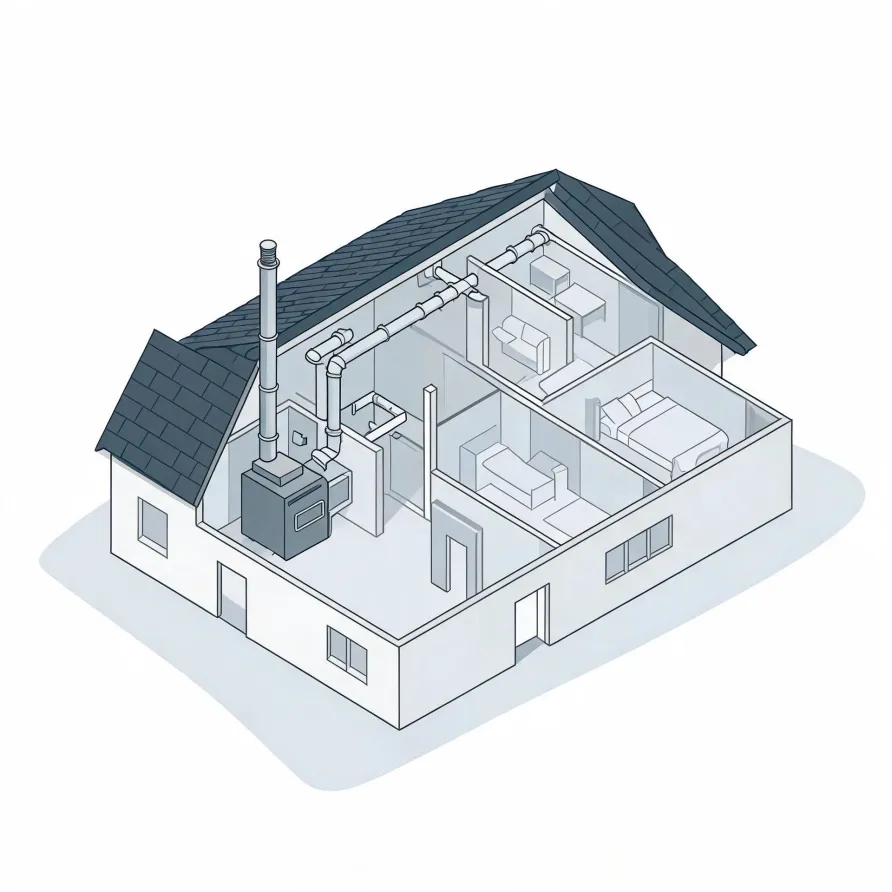
The heat exchanger sits at the core of the furnace cabinet and is where combustion heat transfers to the air your home circulates. Cracks or failures here are serious. The burners, which sit just below it, are where the contractor looks when the furnace fails to fire or fires unevenly.
The blower motor and fan assembly sit at the base of the cabinet and push conditioned air into the duct system. The inducer motor pulls combustion gases out before a cycle begins, and the flue pipe carries those gases outside. The control board ties everything together, and a fault there can mimic almost any other failure.
The drawing shows a typical furnace layout, and a licensed contractor determines which components apply to your specific system and situation.
Get matched in Floyd CountyFloyd County, Texas, by the numbers
93 severe weather events were recorded in Floyd County, Texas between 2015 and 2024.
NOAA National Centers for Environmental Information, Storm Events Database, bulk CSV export, events 2015-01-01 through 2024-12-31.Half the homes in Floyd County, Texas were built in 1962 or earlier (2020-2024 ACS 5-year).
U.S. Census Bureau, 2020-2024 American Community Survey 5-Year EstimatesFloyd County, Texas holds 2,592 housing units (2020-2024 ACS 5-year).
U.S. Census Bureau, 2020-2024 American Community Survey 5-Year EstimatesOwners occupy 73.3% of the occupied homes in Floyd County, Texas (2020-2024 ACS 5-year).
U.S. Census Bureau, 2020-2024 American Community Survey 5-Year EstimatesCodes & Standards Behind Furnace Repair in Floyd County, Texas5 rules & standards
What HVAC Repair Looks Like in Floyd County
Non-weatherized gas furnaces manufactured on or after November 19, 2015 must reach 80.0 percent AFUE.
Non-weatherized oil-fired furnaces manufactured on or after November 19, 2015 must reach 83.0 percent AFUE.
Mobile home gas furnaces manufactured on or after November 19, 2015 must reach 80.0 percent AFUE.
Non-weatherized gas furnaces manufactured on or after December 18, 2028 must reach 95.0 percent AFUE, up from the 80.0 percent minimum that applies to units manufactured before that date.
Licensing Rules for HVAC Repair in Floyd County, Texas
In Texas a person may not engage in air conditioning and refrigeration contracting unless that person holds a license issued under the state air conditioning and refrigeration contractor law.
Severe Weather Events in Floyd County
Extreme weather puts real strain on heating equipment, pushing furnaces through hard starts, long run cycles, and sharp demand swings that wear components faster than ordinary use. How much of that load a furnace in Floyd County carries is a local question, and it shapes what repair and maintenance look like here.
93 severe weather events, 2015–2024. Source: NOAA National Centers for Environmental Information, Storm Events Database.