Tell us about the job
Takes about a minute. No obligation.
A furnace repair in Crosby County sits in a different context than one in a quieter part of Texas. 122 severe weather events were recorded in Crosby County, Texas between 2015 and 2024. At that rate, severe weather is a standing condition, and heat exchangers, igniters, and control boards here have been running against it season after season. A contractor coming out to diagnose a failure has to establish whether a component gave out under accumulated load or simply reached the end of its service life, because the answer changes what gets replaced and what gets left alone.
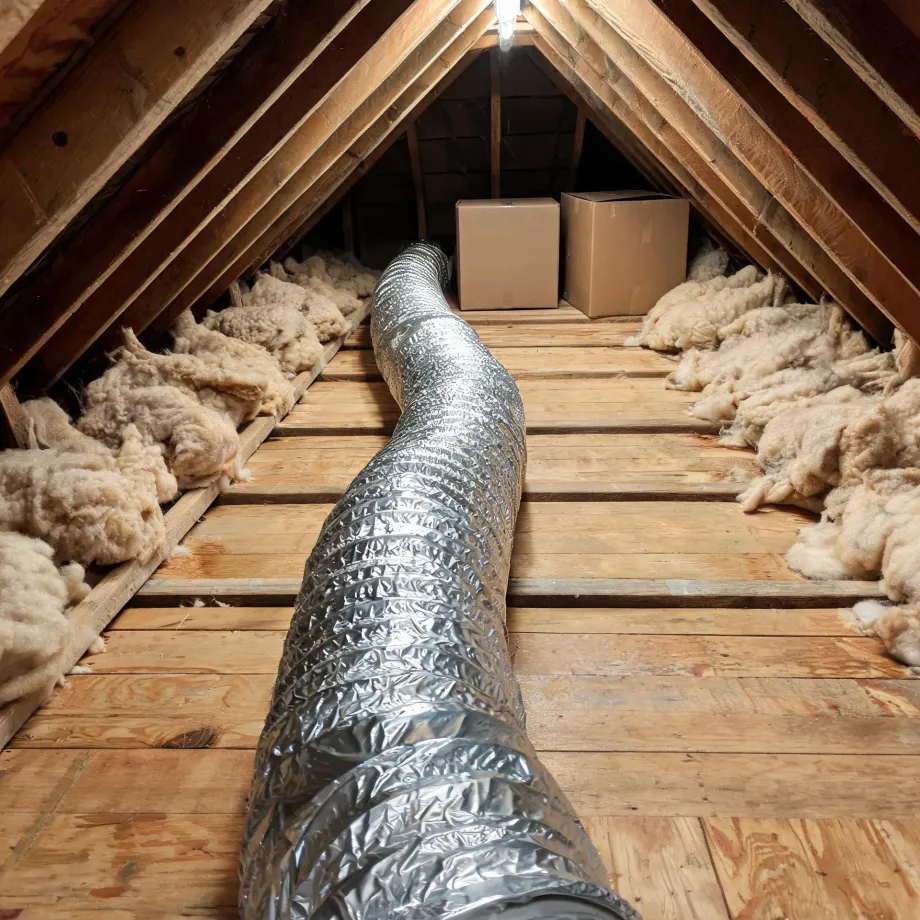
Ductwork and heat exchangers in houses this old have histories that show up the moment a lid comes off. Half the homes in Crosby County, Texas were built in 1964 or earlier (2020-2024 ACS 5-year). A furnace that has been running in stock from that era has likely been through at least one repair cycle already, and the parts it takes may no longer be on a standard order list. When a contractor opens the unit, what they find determines whether the job is a straightforward swap or a search for components that suppliers have phased out. That search, not the labor, is what stretches the timeline and changes what the repair costs.
The Parts of a Furnace a Contractor Checks First
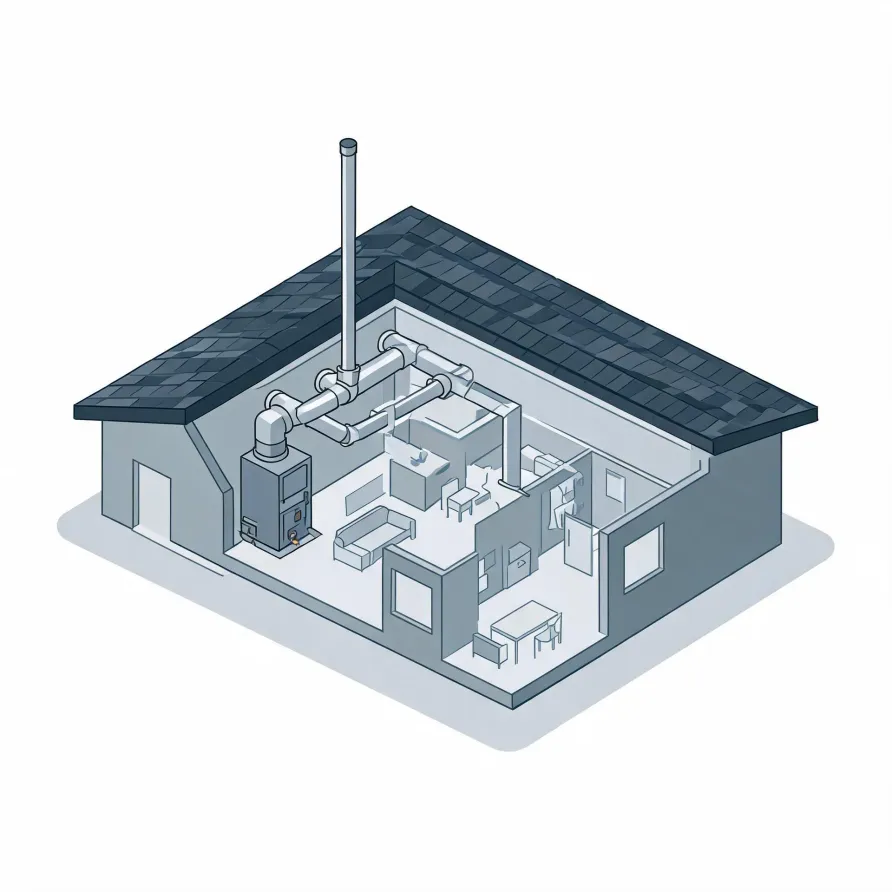
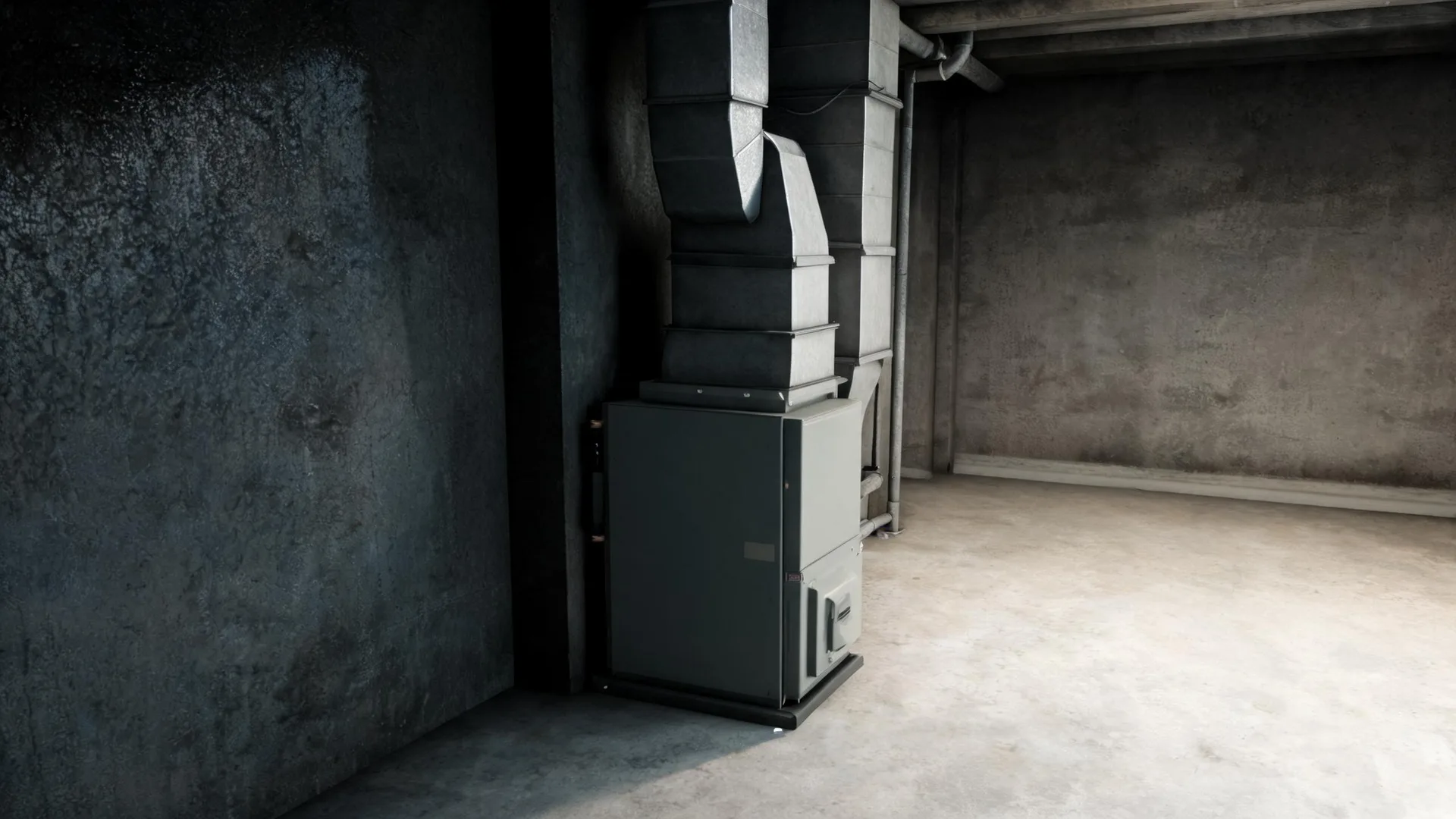
The heat exchanger sits inside the furnace cabinet in the utility area, basement, or closet and is the piece a contractor looks at closely when a furnace is producing odd smells, uneven heat, or no heat at all. The burner assembly sits just below it and is the first suspect when the furnace fails to ignite or cycles off too soon.
The blower motor and its fan wheel sit at the base of the cabinet and push conditioned air into the duct system. The control board, mounted inside the cabinet door, coordinates every other component, and a fault there can look like a problem anywhere in the system. The flue pipe runs from the cabinet to an exterior vent and is checked when combustion gases are not clearing properly.
The drawing shows a general furnace layout, and a licensed contractor determines which parts apply to your specific system and situation.
Get matched in Crosby CountyCrosby County by the numbers
122 severe weather events were recorded in Crosby County, Texas between 2015 and 2024.
NOAA National Centers for Environmental Information, Storm Events Database, bulk CSV export, events 2015-01-01 through 2024-12-31.Half the homes in Crosby County, Texas were built in 1964 or earlier (2020-2024 ACS 5-year).
U.S. Census Bureau, 2020-2024 American Community Survey 5-Year EstimatesCrosby County, Texas holds 2,659 housing units (2020-2024 ACS 5-year).
U.S. Census Bureau, 2020-2024 American Community Survey 5-Year EstimatesOwners occupy 68.8% of the occupied homes in Crosby County, Texas (2020-2024 ACS 5-year).
U.S. Census Bureau, 2020-2024 American Community Survey 5-Year EstimatesCodes & Standards Governing Furnace Repair in Crosby County, Texas5 sourced rules and standards
What Happens When the Contractor Comes Out
Non-weatherized gas furnaces manufactured on or after November 19, 2015 must reach 80.0 percent AFUE.
Non-weatherized oil-fired furnaces manufactured on or after November 19, 2015 must reach 83.0 percent AFUE.
Mobile home gas furnaces manufactured on or after November 19, 2015 must reach 80.0 percent AFUE.
Non-weatherized gas furnaces manufactured on or after December 18, 2028 must reach 95.0 percent AFUE, up from the 80.0 percent minimum that applies to units manufactured before that date.
What Texas Requires for HVAC Repair in Crosby County
In Texas a person may not engage in air conditioning and refrigeration contracting unless that person holds a license issued under the state air conditioning and refrigeration contractor law.
Weather That Works Against Equipment in Crosby County
Furnaces in Crosby County carry a load shaped by local conditions. Hard weather accelerates wear on heating systems, and that makes repair needs here a question of what this area actually puts equipment through.
122 severe weather events, 2015–2024. Source: NOAA National Centers for Environmental Information, Storm Events Database.