Tell us about the job
Takes about a minute. No obligation.
A furnace repair in Lubbock County starts with a different set of assumptions than one in a quieter part of the country. 260 severe weather events were recorded in Lubbock County, Texas between 2015 and 2024. At that rate, severe weather is a standing condition for every system in the county, and a contractor working a furnace here checks heat exchangers and ignition components for cumulative stress before drawing any other conclusion. That load shapes what fails and in what order.
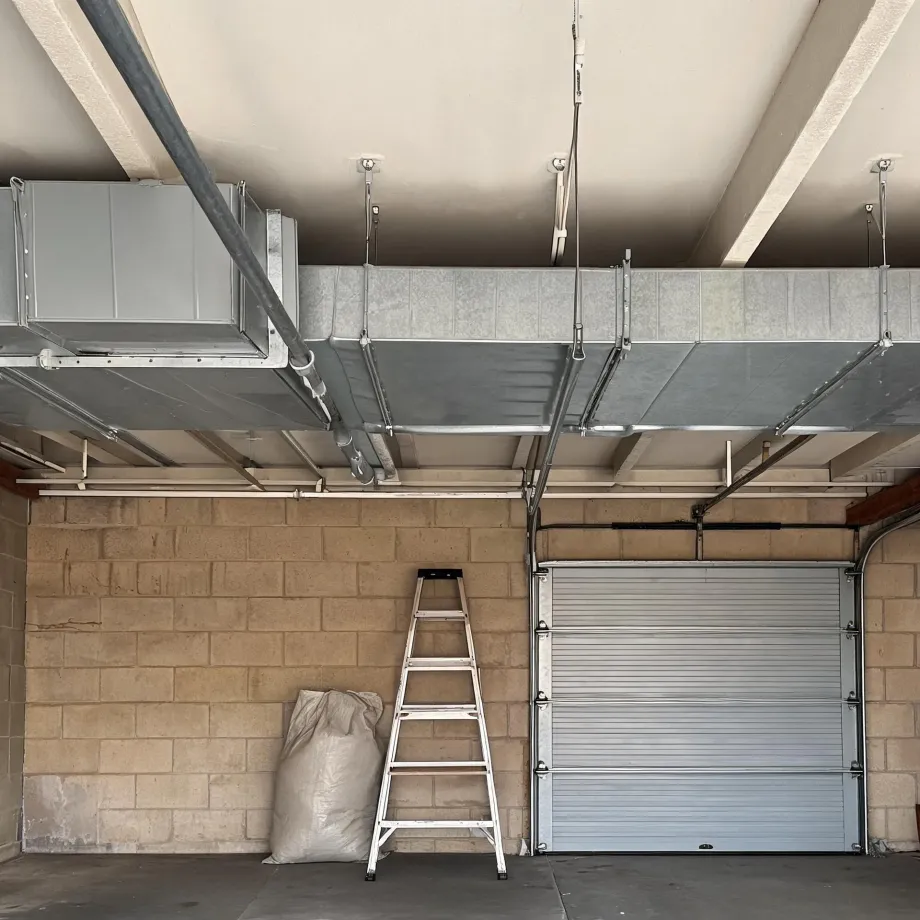
Older ductwork and aging equipment in a house of this vintage tend to tell their own story once the panels come off. Half the homes in Lubbock County, Texas were built in 1985 or earlier (2020-2024 ACS 5-year). A furnace that has been running through Lubbock County's winters for that long may carry components that suppliers have moved on from, and a contractor opening the unit may need to source parts rather than pull them off a standard order. What the opened system actually turns on is which components remain serviceable and which have been discontinued, and that determines whether the repair is a same-week fix or a longer sourcing job.
The Parts of a Furnace a Contractor Checks First
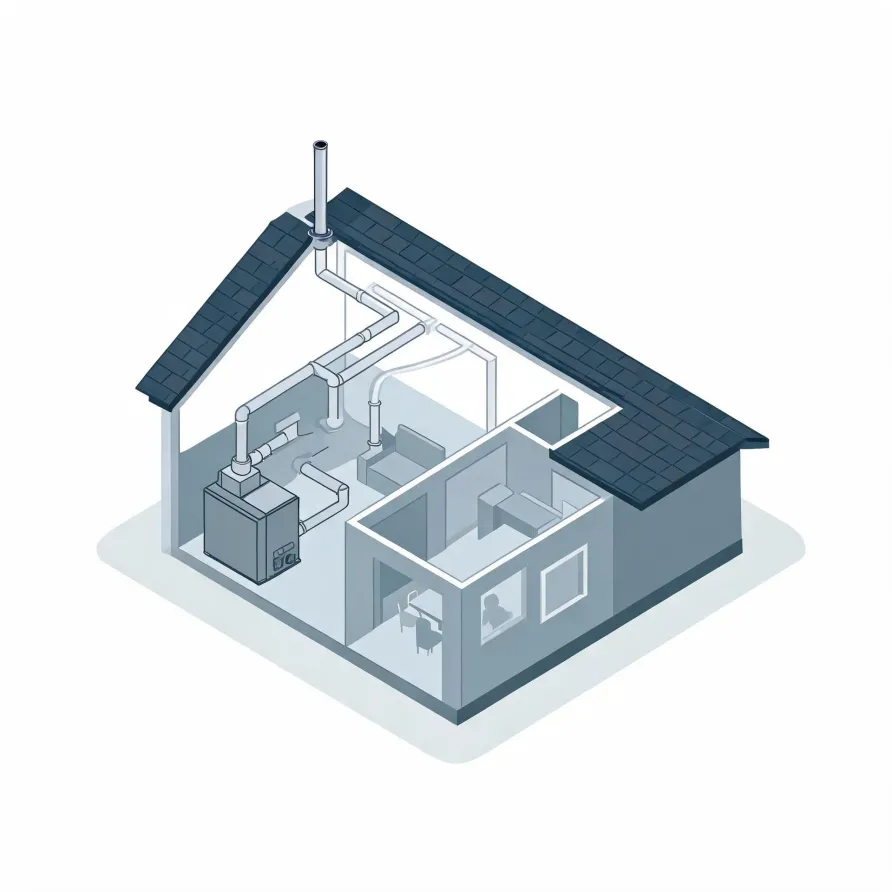
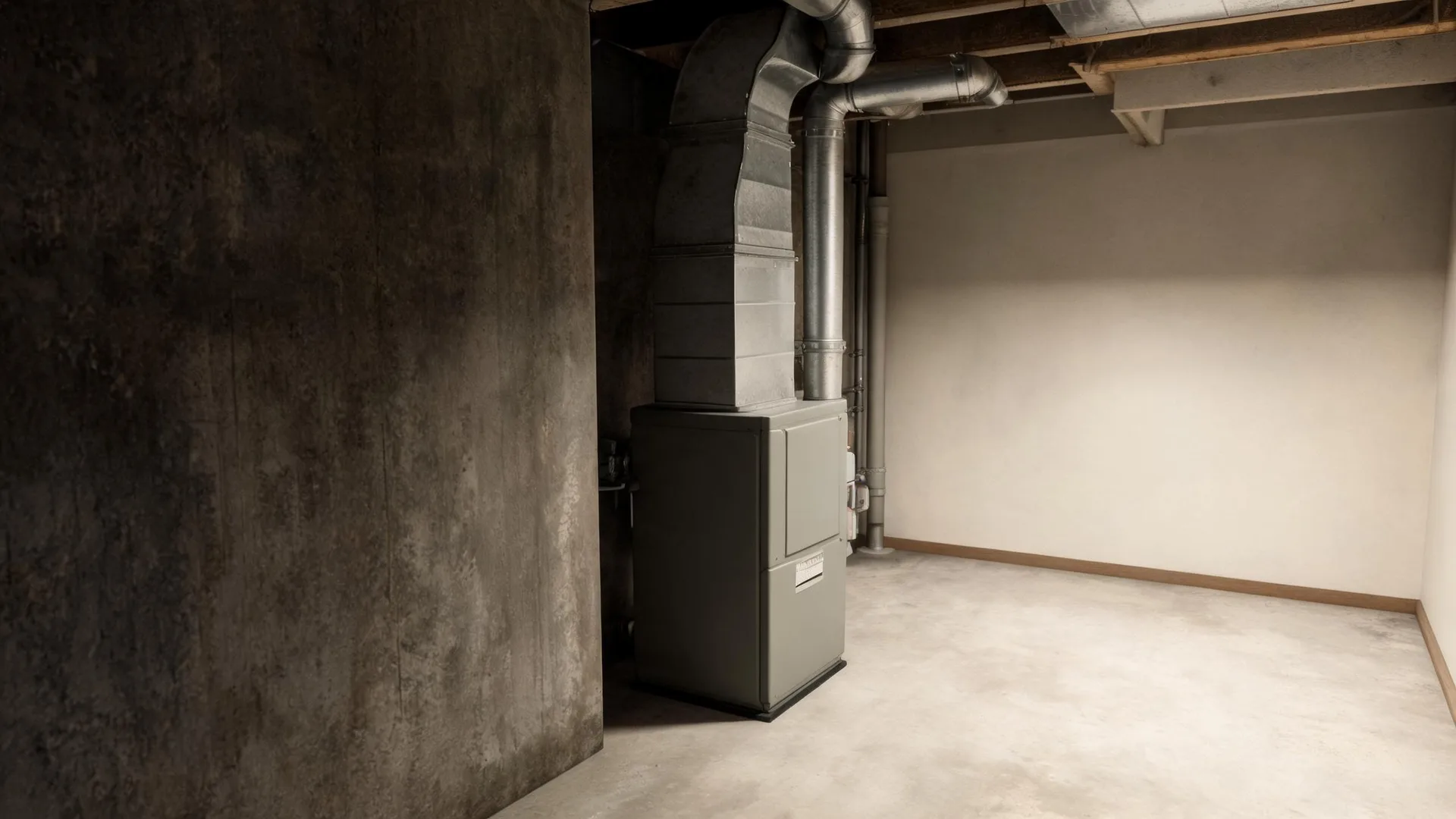
The heat exchanger sits inside the furnace cabinet, usually in a basement, utility closet, or garage, and it is the piece that actually warms the air your home circulates. Cracks or stress in the exchanger are a common reason a furnace runs but fails to heat properly. The burner assembly sits just below it and is where a contractor looks when ignition is the problem.
The blower motor sits at the base of the cabinet and pushes conditioned air out through the supply ducts. The control board, mounted inside the same cabinet, reads signals from the thermostat and tells every other component when to act. When a furnace short-cycles, runs continuously, or refuses to start, the board and its connections are among the first things a contractor examines.
The drawing shows a typical furnace layout, and a licensed contractor determines which components apply to your specific system and situation.
Find a contractor in Lubbock CountyLubbock County, by the numbers
260 severe weather events were recorded in Lubbock County, Texas between 2015 and 2024.
NOAA National Centers for Environmental Information, Storm Events Database, bulk CSV export, events 2015-01-01 through 2024-12-31.Half the homes in Lubbock County, Texas were built in 1985 or earlier (2020-2024 ACS 5-year).
U.S. Census Bureau, 2020-2024 American Community Survey 5-Year EstimatesLubbock County, Texas holds 139,344 housing units (2020-2024 ACS 5-year).
U.S. Census Bureau, 2020-2024 American Community Survey 5-Year EstimatesOwners occupy 55.5% of the occupied homes in Lubbock County, Texas (2020-2024 ACS 5-year).
U.S. Census Bureau, 2020-2024 American Community Survey 5-Year EstimatesCodes & Standards Governing Furnace Repair in Lubbock County, Texas5 sourced rules & standards
What the repair visit looks like
Non-weatherized gas furnaces manufactured on or after November 19, 2015 must reach 80.0 percent AFUE.
Non-weatherized oil-fired furnaces manufactured on or after November 19, 2015 must reach 83.0 percent AFUE.
Mobile home gas furnaces manufactured on or after November 19, 2015 must reach 80.0 percent AFUE.
Non-weatherized gas furnaces manufactured on or after December 18, 2028 must reach 95.0 percent AFUE, up from the 80.0 percent minimum that applies to units manufactured before that date.
Licensing and Legal Requirements in Lubbock County, Texas
In Texas a person may not engage in air conditioning and refrigeration contracting unless that person holds a license issued under the state air conditioning and refrigeration contractor law.
Severe Weather Events in Lubbock County
Extreme weather puts real load on furnaces and HVAC systems, shortening service intervals and pushing equipment toward failure. How often that pressure hits Lubbock County is a local fact, and it shapes what repair work looks like here.
260 severe weather events, 2015–2024. Source: NOAA National Centers for Environmental Information, Storm Events Database.