Tell us about the job
Takes about a minute. No obligation.
A furnace repair in this area asks a contractor to settle one question before they can give you an honest scope: how much of what they find is age and maintenance history, and how much reflects the load this climate puts on a system year after year. 131 severe weather events were recorded in Burnet County, Texas between 2015 and 2024. At that rate, stress on heat exchangers, igniters, and control boards accumulates through normal operating life, not just through a single hard season. A contractor who skips that distinction will quote you a part when the underlying wear pattern points to something broader.
Furnaces in houses built that long ago were manufactured to standards and part families that suppliers have since replaced or discontinued. Half the homes in Burnet County, Texas were built in 1997 or earlier (2020-2024 ACS 5-year). When a contractor opens a furnace in stock like this, the real question is whether a replacement heat exchanger, igniter, or control board is still in production or has to be sourced from diminishing secondary supply. That answer drives the repair bill more than labor does.
The Parts of a Furnace a Contractor Checks First
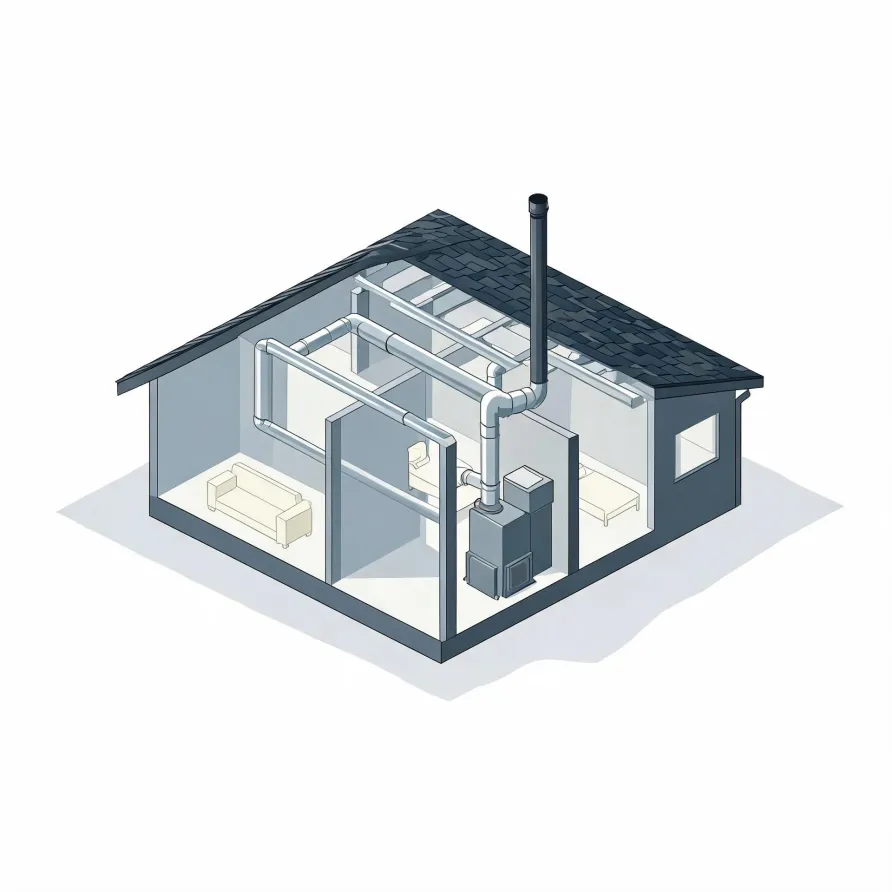
The heat exchanger sits inside the furnace cabinet in the utility room, basement, or closet and is the part that actually warms the air moving through your home. When it cracks or corrodes, combustion gases can enter the airstream. The burner assembly sits just below it, and a contractor will pull it early in any repair visit to look for carbon buildup, uneven flame, or ignition failure.
The blower motor sits at the base of the cabinet and pushes conditioned air into the supply ducts. The control board mounts inside the cabinet door and tells every other component when to run. A failed board can mimic the symptoms of several other broken parts, so contractors often check it alongside the ignitor and the flame sensor, two small components that together confirm the burner lit and is holding flame.
The drawing shows the general layout of a furnace system, and a licensed contractor determines which components apply and what condition they are in for your specific house.
Get matched in Burnet CountyBurnet County, by the numbers
131 severe weather events were recorded in Burnet County, Texas between 2015 and 2024.
NOAA National Centers for Environmental Information, Storm Events Database, bulk CSV export, events 2015-01-01 through 2024-12-31.Half the homes in Burnet County, Texas were built in 1997 or earlier (2020-2024 ACS 5-year).
U.S. Census Bureau, 2020-2024 American Community Survey 5-Year EstimatesBurnet County, Texas holds 25,555 housing units (2020-2024 ACS 5-year).
U.S. Census Bureau, 2020-2024 American Community Survey 5-Year EstimatesOwners occupy 76.3% of the occupied homes in Burnet County, Texas (2020-2024 ACS 5-year).
U.S. Census Bureau, 2020-2024 American Community Survey 5-Year EstimatesCodes & Standards Covering Furnace Repair in Burnet County, Texas5 sourced rules & standards
What Furnace Repair Looks Like in Burnet County
Non-weatherized gas furnaces manufactured on or after November 19, 2015 must reach 80.0 percent AFUE.
Non-weatherized oil-fired furnaces manufactured on or after November 19, 2015 must reach 83.0 percent AFUE.
Mobile home gas furnaces manufactured on or after November 19, 2015 must reach 80.0 percent AFUE.
Non-weatherized gas furnaces manufactured on or after December 18, 2028 must reach 95.0 percent AFUE, up from the 80.0 percent minimum that applies to units manufactured before that date.
Licensing and Legal Requirements in Burnet County, Texas
In Texas a person may not engage in air conditioning and refrigeration contracting unless that person holds a license issued under the state air conditioning and refrigeration contractor law.
Severe Weather Events in Burnet County
Weather stress is one of the main reasons furnaces wear out or fail ahead of schedule. How hard the climate pushes a heating system is a local question, and the data below reflects what conditions in this area have actually looked like.
131 severe weather events, 2015–2024. Source: NOAA National Centers for Environmental Information, Storm Events Database.