Tell us about the job
Takes about a minute. No obligation.
Furnace repairs in Wharton County come down less to weather and more to how the equipment has been maintained and how long it has been running. 33 severe weather events were recorded in Wharton County, Texas between 2015 and 2024. At that rate, severe weather touches a system now and then, but a heat exchanger that has cracked or a control board that has failed almost always got there through years of deferred service or simple age. A contractor will check those first because that is where the real wear shows up.
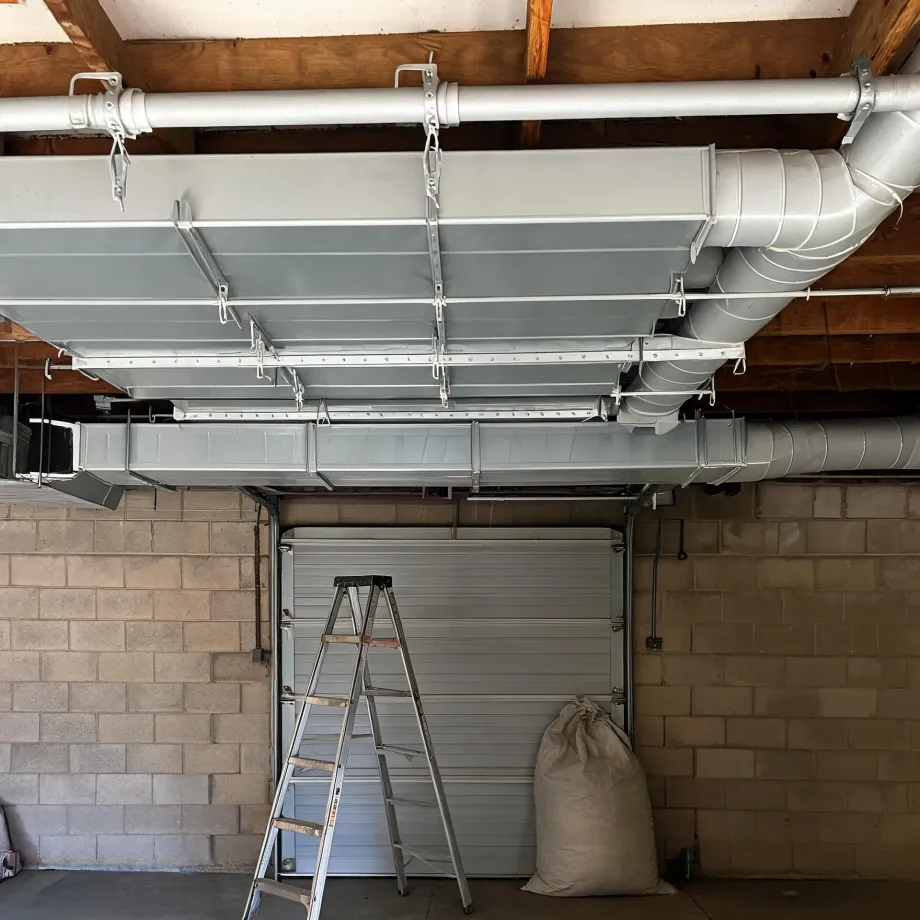
Half the homes in Wharton County, Texas were built in 1980 or earlier (2020-2024 ACS 5-year). Furnaces in stock this old have often run long enough that the gap between what a homeowner reports and what a contractor finds inside the cabinet is wide. A cracked heat exchanger and a fouled burner assembly look identical from the thermostat. Once a contractor pulls the covers, those two problems produce different part lists, different labor, and a different conversation about whether the repair is worth completing. The age of the housing puts the odds toward the harder find.
The Parts of a Furnace a Contractor Checks First
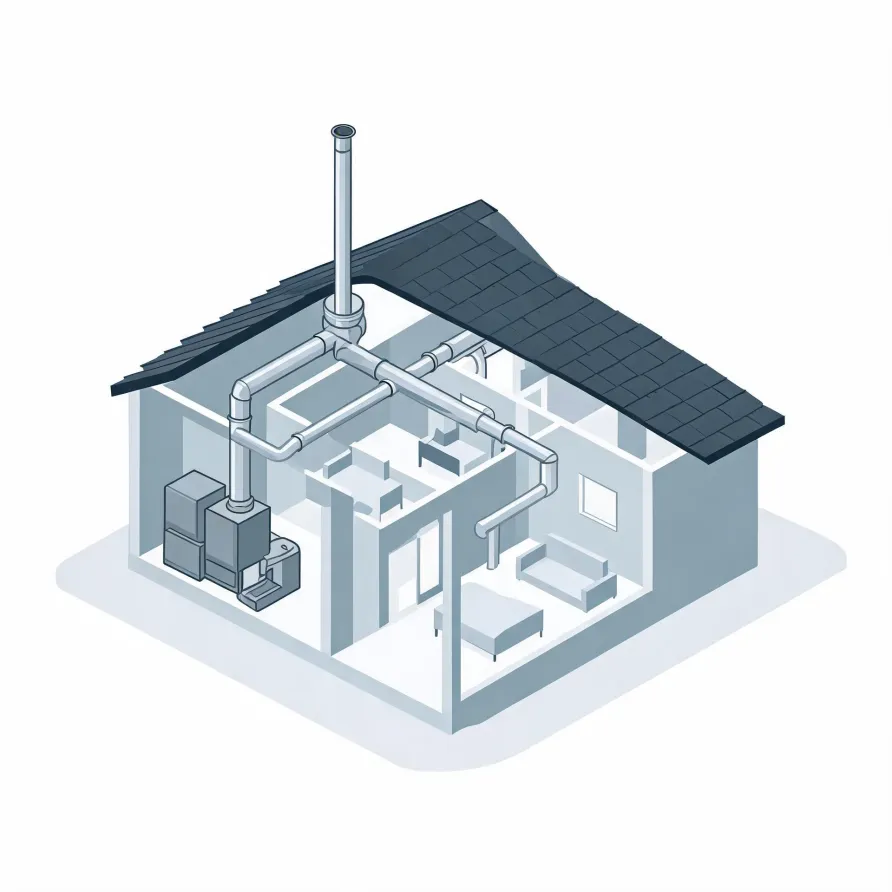
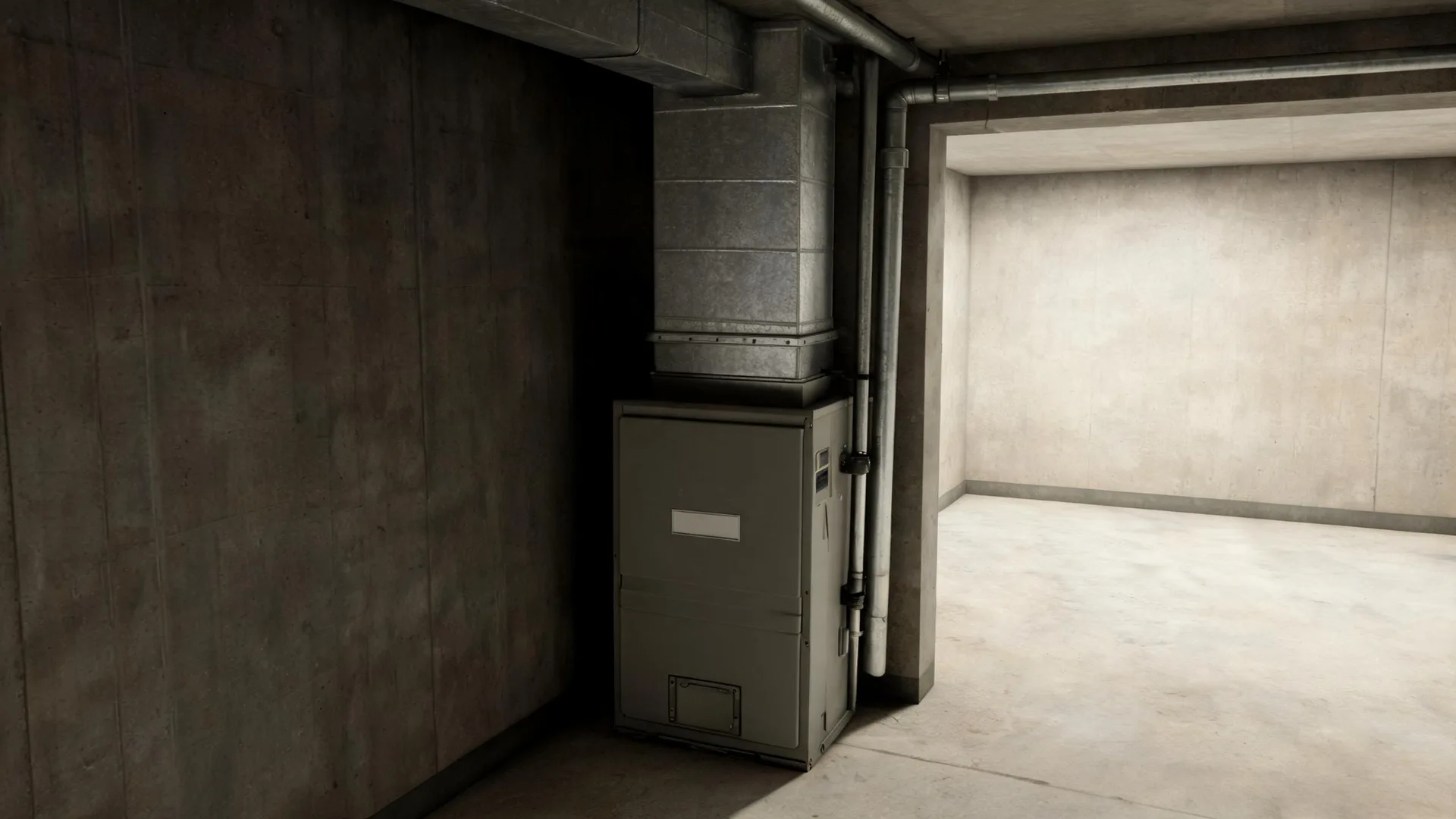
The heat exchanger sits at the core of the furnace cabinet and is the part that warms air before it moves through the house. When it cracks or corrodes, the furnace often short-cycles or trips the limit switch repeatedly. The burner assembly sits just below it, and a contractor will check both together since a misfiring burner stresses the exchanger over time.
The blower motor and its fan wheel sit in the lower half of the cabinet and push conditioned air into the supply side of the duct system. The inducer motor pulls combustion gases out through the flue and is a frequent source of startup faults. The control board ties all of it together and is where a contractor reads fault codes to narrow the diagnosis before touching anything else.
The drawing shows a typical furnace layout, and a licensed contractor determines which parts apply to your specific equipment and setup.
Find a contractor in Wharton CountyWharton County, by the numbers
33 severe weather events were recorded in Wharton County, Texas between 2015 and 2024.
NOAA National Centers for Environmental Information, Storm Events Database, bulk CSV export, events 2015-01-01 through 2024-12-31.Half the homes in Wharton County, Texas were built in 1980 or earlier (2020-2024 ACS 5-year).
U.S. Census Bureau, 2020-2024 American Community Survey 5-Year EstimatesWharton County, Texas holds 17,711 housing units (2020-2024 ACS 5-year).
U.S. Census Bureau, 2020-2024 American Community Survey 5-Year EstimatesOwners occupy 72.3% of the occupied homes in Wharton County, Texas (2020-2024 ACS 5-year).
U.S. Census Bureau, 2020-2024 American Community Survey 5-Year EstimatesCodes & Standards Covering Furnace Repair in Wharton County, Texas5 sourced rules and standards
What Happens When the Contractor Arrives
Non-weatherized gas furnaces manufactured on or after November 19, 2015 must reach 80.0 percent AFUE.
Non-weatherized oil-fired furnaces manufactured on or after November 19, 2015 must reach 83.0 percent AFUE.
Mobile home gas furnaces manufactured on or after November 19, 2015 must reach 80.0 percent AFUE.
Non-weatherized gas furnaces manufactured on or after December 18, 2028 must reach 95.0 percent AFUE, up from the 80.0 percent minimum that applies to units manufactured before that date.
Licensing Rules for HVAC Repair in Wharton County, Texas
In Texas a person may not engage in air conditioning and refrigeration contracting unless that person holds a license issued under the state air conditioning and refrigeration contractor law.
Severe Weather Events in Wharton County
Extreme weather puts real strain on furnace components, cycling equipment hard and accelerating wear that shows up as repair calls. How much of that pressure a system faces depends on where it sits, which is why local weather history is part of the picture for any furnace work in Wharton County.
33 severe weather events, 2015–2024. Source: NOAA National Centers for Environmental Information, Storm Events Database.