Tell us about the job
Takes about a minute. No obligation.
Furnaces in Brown County carry a real weather load, and that shapes what a contractor has to work through before settling on a repair. 155 severe weather events were recorded in Brown County, Texas between 2015 and 2024. At that rate, wear on igniters, heat exchangers, and blower motors builds from sustained demand rather than from any single incident. A component that looks like it failed suddenly has usually been degrading under repeated thermal cycling, and a contractor who skips that history risks replacing the wrong part.
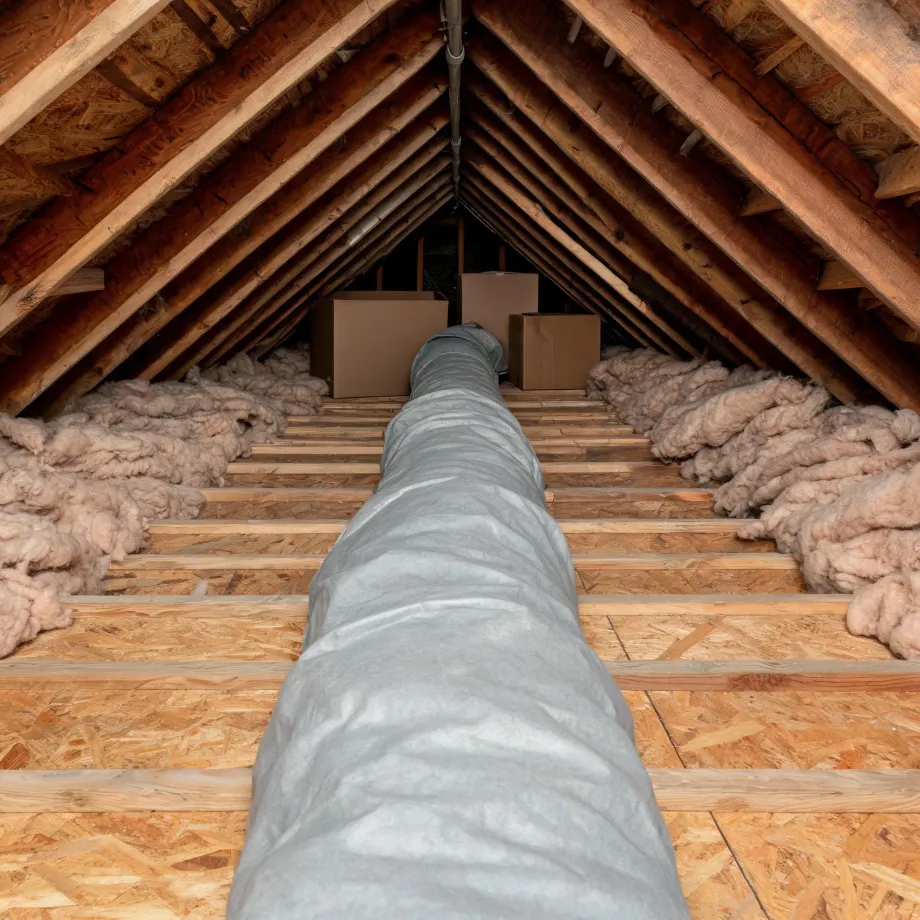
Ductwork and wiring adapted across generations is common in a house that has stood this long, but for furnace repair, what actually decides the job is what comes out of the unit once it is open. Half the homes in Brown County, Texas were built in 1978 or earlier (2020-2024 ACS 5-year). A furnace installed to serve stock of that vintage draws on parts whose production runs have since closed or been consolidated, and a contractor here checks supply before committing to a repair path. Finding a functional replacement for a heat exchanger or a specific igniter board is the variable a quote has to account for, not the labor to pull and test the component.
The Parts of a Furnace a Contractor Checks First
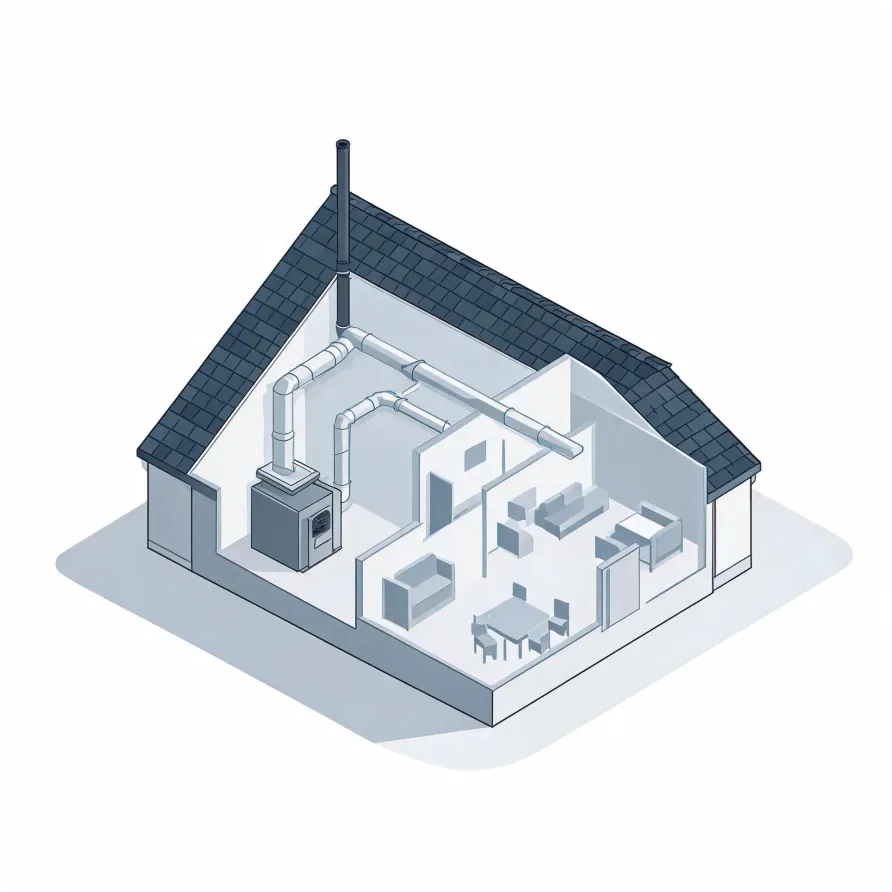
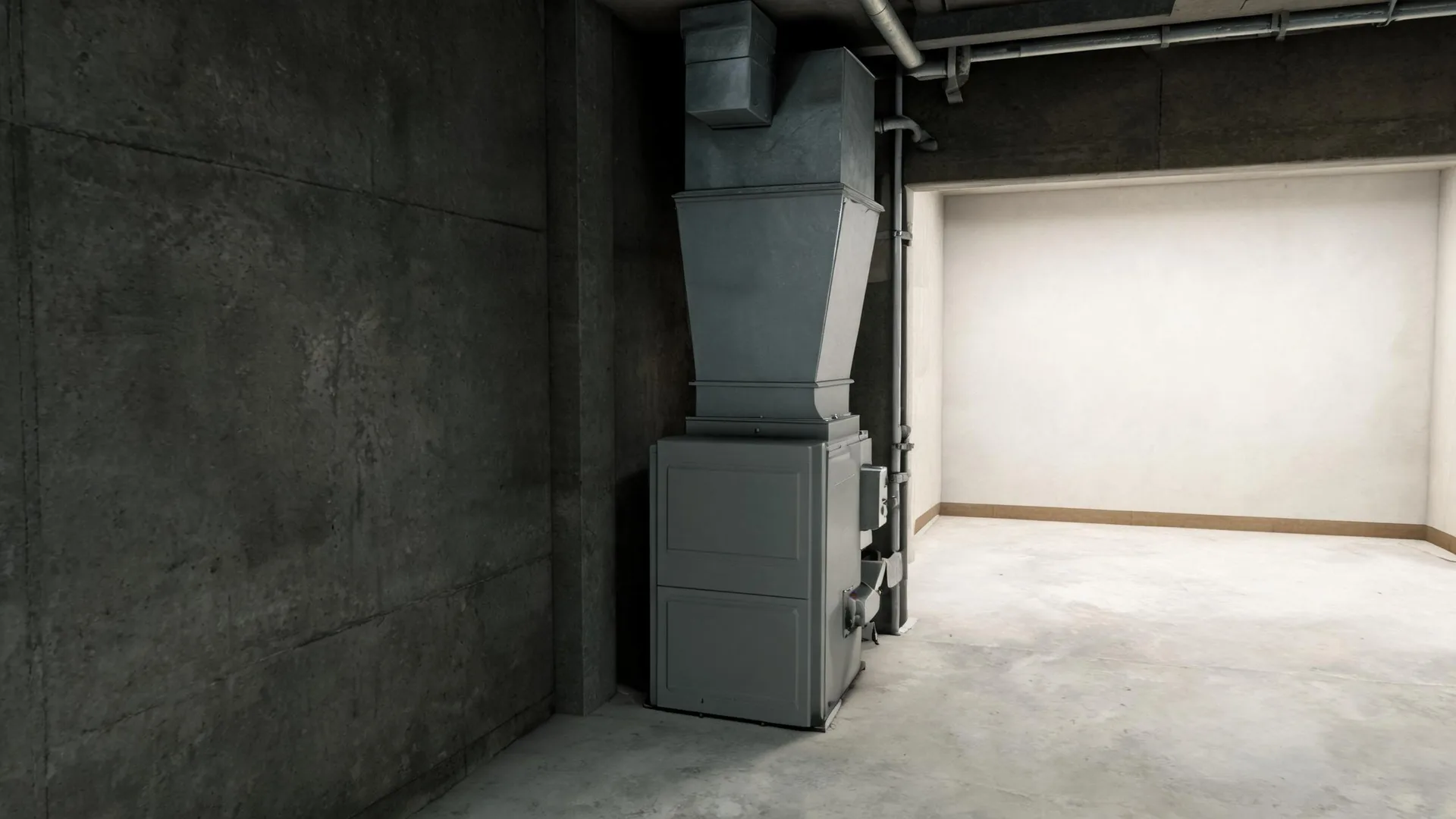
The heat exchanger sits inside the furnace cabinet, usually in a utility room, basement, or closet, and it is the piece that warms the air before it moves through the house. Cracks or corrosion here are serious. The burner assembly, just below it, is where the fuel ignites, and a contractor will look at it early when the system runs but produces little heat or shuts off before the house warms up.
The blower motor sits at the base of the cabinet and pushes conditioned air into the supply ducts. When a furnace runs loudly or air delivery feels weak, that motor and its capacitor are where a contractor looks. The flue pipe runs from the cabinet up and out of the house, and a contractor checks it for blockages or separation, since either one affects both performance and safety.
The drawing shows the general layout of a furnace system, and a licensed contractor determines which components and conditions apply to your specific house.
Get matched in Brown CountyBrown County, Texas, by the numbers
155 severe weather events were recorded in Brown County, Texas between 2015 and 2024.
NOAA National Centers for Environmental Information, Storm Events Database, bulk CSV export, events 2015-01-01 through 2024-12-31.Half the homes in Brown County, Texas were built in 1978 or earlier (2020-2024 ACS 5-year).
U.S. Census Bureau, 2020-2024 American Community Survey 5-Year EstimatesBrown County, Texas holds 19,246 housing units (2020-2024 ACS 5-year).
U.S. Census Bureau, 2020-2024 American Community Survey 5-Year EstimatesOwners occupy 68.3% of the occupied homes in Brown County, Texas (2020-2024 ACS 5-year).
U.S. Census Bureau, 2020-2024 American Community Survey 5-Year EstimatesCodes & Standards Governing Furnace Repair in Brown County, Texas5 sourced rules and standards
What the repair visit looks like
Non-weatherized gas furnaces manufactured on or after November 19, 2015 must reach 80.0 percent AFUE.
Non-weatherized oil-fired furnaces manufactured on or after November 19, 2015 must reach 83.0 percent AFUE.
Mobile home gas furnaces manufactured on or after November 19, 2015 must reach 80.0 percent AFUE.
Non-weatherized gas furnaces manufactured on or after December 18, 2028 must reach 95.0 percent AFUE, up from the 80.0 percent minimum that applies to units manufactured before that date.
Licensing and Legal Requirements in Brown County, Texas
In Texas a person may not engage in air conditioning and refrigeration contracting unless that person holds a license issued under the state air conditioning and refrigeration contractor law.
Severe Weather Events in Brown County
Weather puts real stress on heating equipment, and Brown County's climate is the reason local furnaces work as hard as they do. How often that stress hits, and how sharply, shapes how much repair work the equipment needs over its life.
155 severe weather events, 2015–2024. Source: NOAA National Centers for Environmental Information, Storm Events Database.