Tell us about the job
Takes about a minute. No obligation.
A contractor quoting furnace installation in Caldwell County has to figure out what drove the old system out before they can size and spec the new one correctly. 55 severe weather events were recorded in Caldwell County, Texas between 2015 and 2024. At that rate, severe weather passes through but does not define what a furnace runs against year to year. A system that failed here was most likely undersized from the start, poorly commissioned, or simply worn through normal service life. Those are the variables a contractor prices around, and they shape which equipment gets specified and how the install gets done.
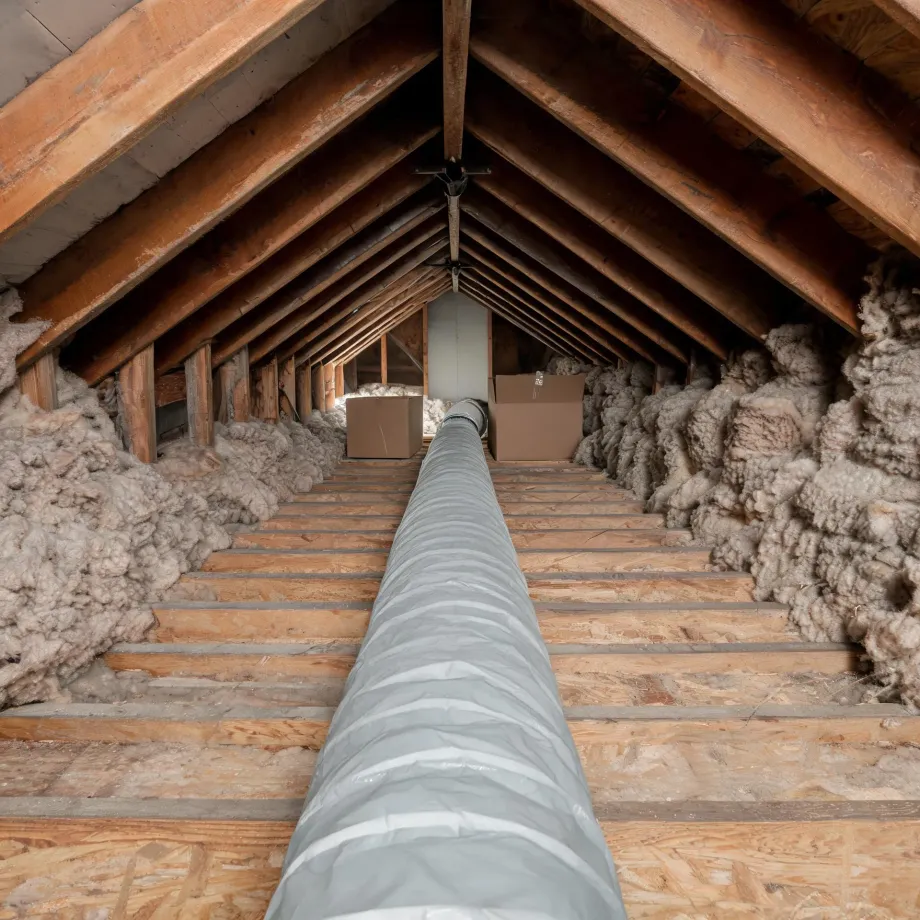
Existing ductwork is what a contractor has to price before anything else goes on the order. Half the homes in Caldwell County, Texas were built in 1991 or earlier (2020-2024 ACS 5-year). A house built then was ducted for a furnace generation that drew different volumes and ran different static pressures than what a licensed contractor puts in today. Whether those runs can carry a new system without being rerouted or resized is the question that changes the job, and the electrical panel gets the same scrutiny for the same reason. The unit itself gets quoted once the house tells a contractor what it will accept.
What Gets Installed With a New Furnace
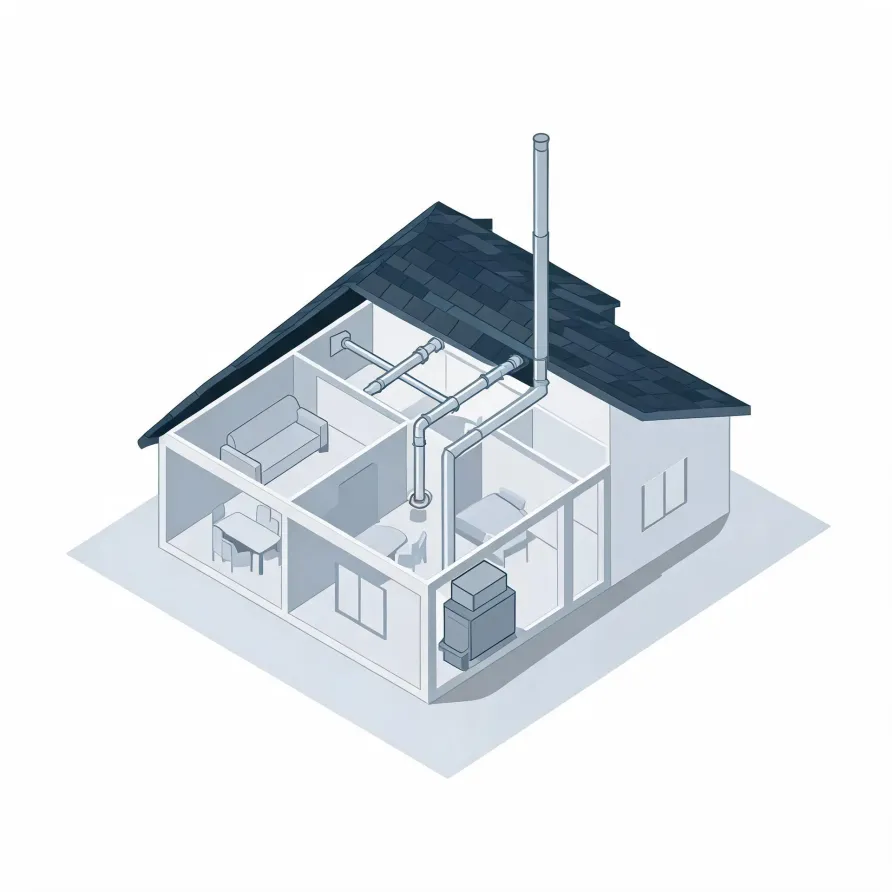
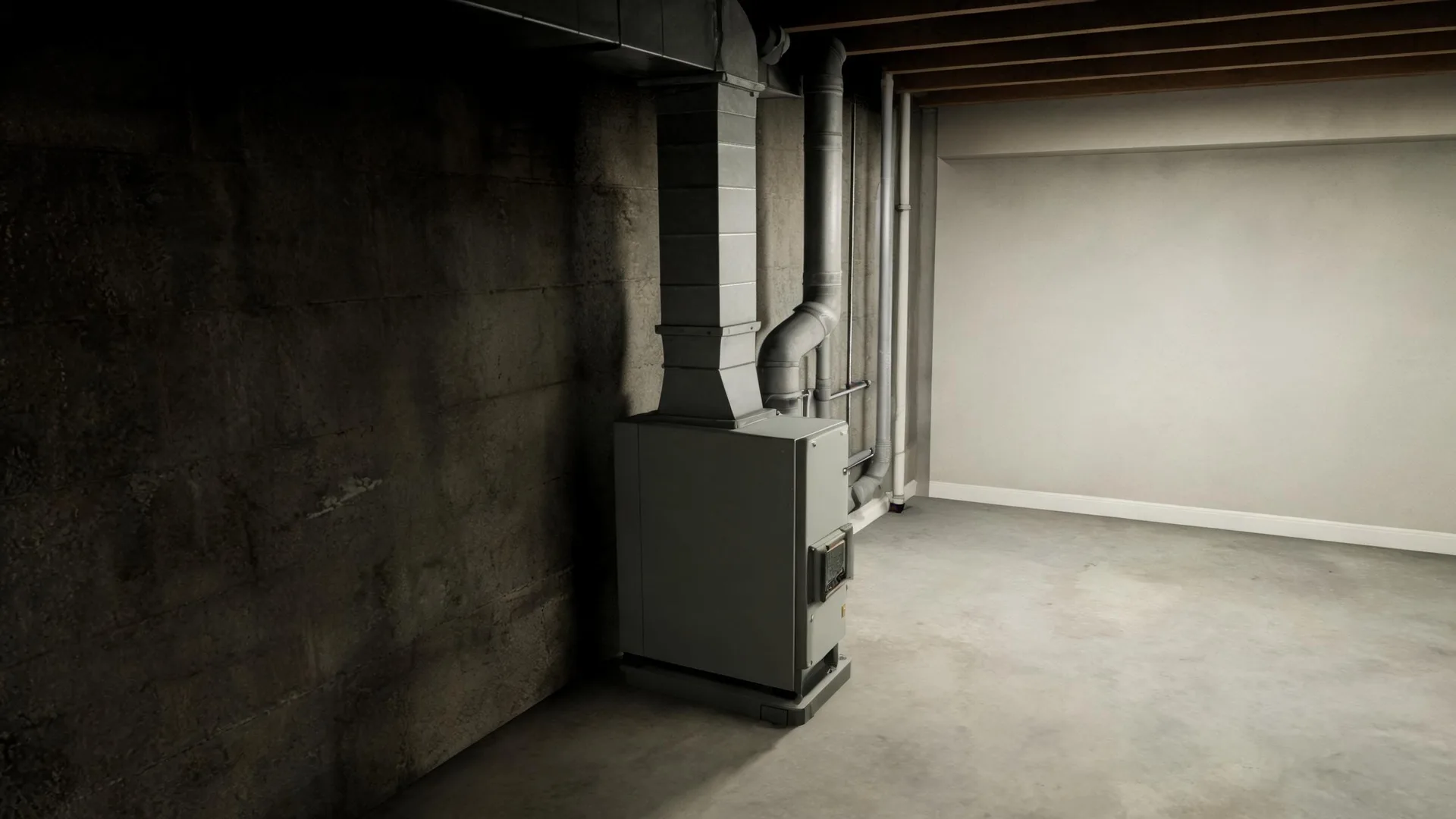
The furnace itself sits in a utility closet, basement, or garage and is the unit a homeowner sees most. Inside it, the heat exchanger and burner assembly do the core work, while the blower motor pushes conditioned air out into the home. These are the pieces a contractor physically sets in place and connects.
The flue pipe runs from the furnace to an exterior wall or roofline, carrying combustion gases out of the house. Alongside it, the air handler cabinet and filter housing sit at the return-air opening, and the thermostat mounts on an interior wall to give the homeowner control over the whole system.
The drawing shows a general layout of these components, and a licensed contractor determines exactly how each one fits the conditions of your particular house.
Get matched in Caldwell CountyCaldwell County, by the numbers
55 severe weather events were recorded in Caldwell County, Texas between 2015 and 2024.
NOAA National Centers for Environmental Information, Storm Events Database, bulk CSV export, events 2015-01-01 through 2024-12-31.Half the homes in Caldwell County, Texas were built in 1991 or earlier (2020-2024 ACS 5-year).
U.S. Census Bureau, 2020-2024 American Community Survey 5-Year EstimatesCaldwell County, Texas holds 17,582 housing units (2020-2024 ACS 5-year).
U.S. Census Bureau, 2020-2024 American Community Survey 5-Year EstimatesOwners occupy 75.3% of the occupied homes in Caldwell County, Texas (2020-2024 ACS 5-year).
U.S. Census Bureau, 2020-2024 American Community Survey 5-Year EstimatesFurnace Installation Rules for Caldwell County, Texas5 codes, standards, and laws
What the installation looks like from your end
Non-weatherized gas furnaces manufactured on or after November 19, 2015 must reach 80.0 percent AFUE.
Non-weatherized oil-fired furnaces manufactured on or after November 19, 2015 must reach 83.0 percent AFUE.
Mobile home gas furnaces manufactured on or after November 19, 2015 must reach 80.0 percent AFUE.
Non-weatherized gas furnaces manufactured on or after December 18, 2028 must reach 95.0 percent AFUE, up from the 80.0 percent minimum that applies to units manufactured before that date.
Licensing and Legal Requirements in Caldwell County, Texas
In Texas a person may not engage in air conditioning and refrigeration contracting unless that person holds a license issued under the state air conditioning and refrigeration contractor law.
Severe Weather Events in Caldwell County
Weather patterns in Caldwell County put real demands on heating equipment, from temperature swings that force systems to cycle hard to storm conditions that accelerate wear. A furnace sized and installed for local conditions handles those demands differently than one spec'd for somewhere else.
55 severe weather events, 2015–2024. Source: NOAA National Centers for Environmental Information, Storm Events Database.