Tell us about the job
Takes about a minute. No obligation.
A contractor quoting a furnace installation in Fayette County is not working around a relentless weather load. 57 severe weather events were recorded in Fayette County, Texas between 2015 and 2024. At that rate, severe weather is an occasional event, not a standing condition equipment has to be built against. What drives sizing decisions and installation choices here is the age of the home, the quality of the ductwork, and what the previous system was actually doing to meet the load. A bad prior install can undersize or overwork a furnace far more than the weather record here would.
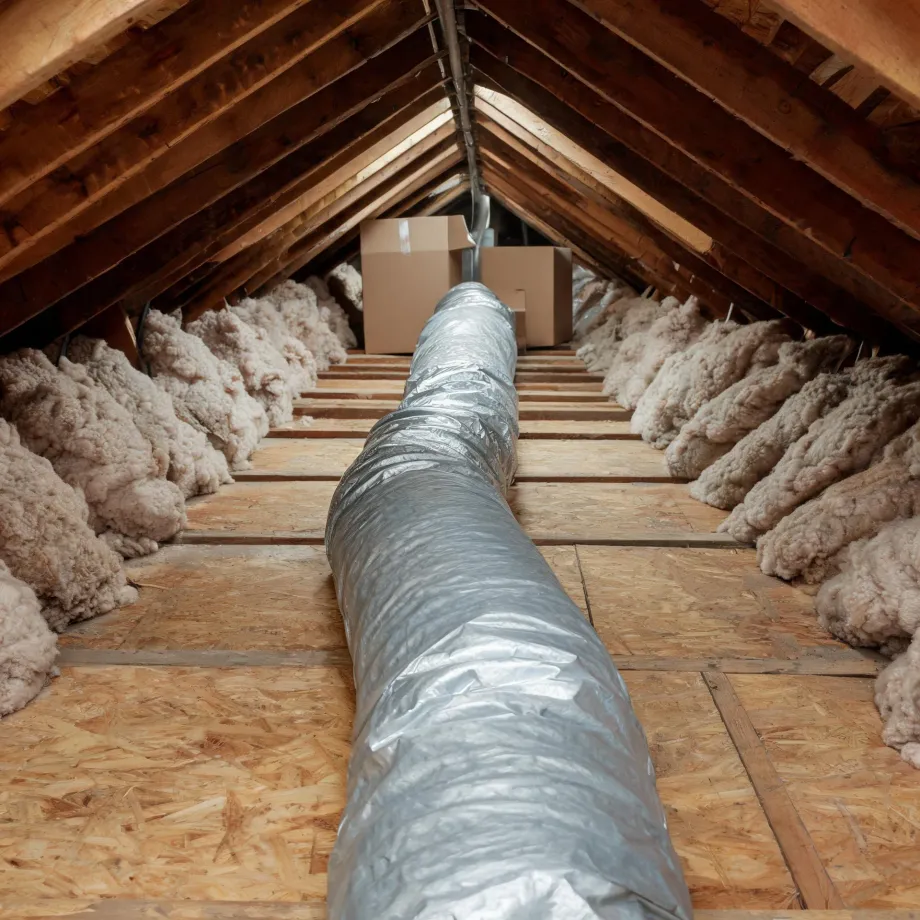
Ductwork laid down for one system and then patched for the next rarely moves air the way a new furnace needs it to. Half the homes in Fayette County, Texas were built in 1984 or earlier (2020-2024 ACS 5-year). That gap between when a house was framed and what a contractor is putting into it now is where furnace installation actually gets decided. If the duct runs are undersized or leaking at the joints, a correctly sized unit still performs against resistance the original builder never planned for. A contractor quoting the furnace is pricing one line item; what the ducts behind it can actually deliver is a separate question, and it gets answered before the equipment order is placed.
What Gets Installed With a New Furnace
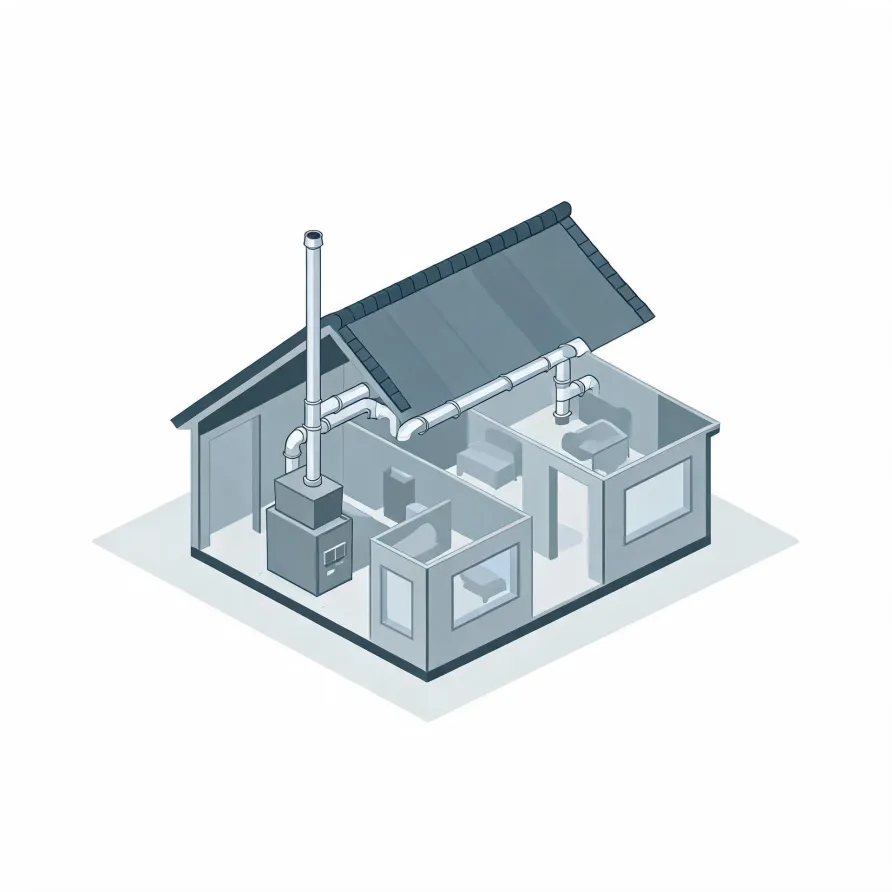
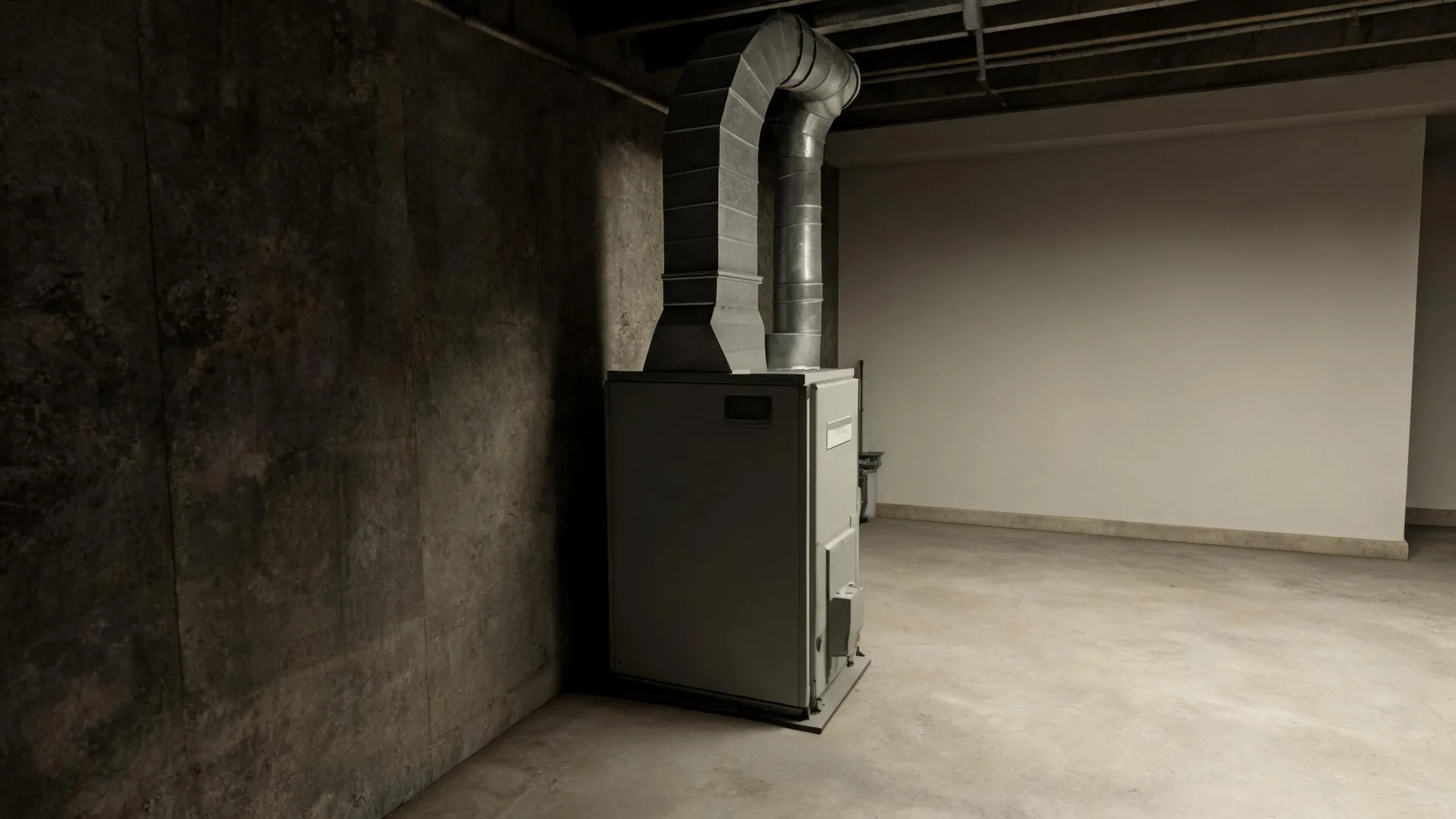
The furnace itself sits in a utility closet, basement, or garage and is the box that generates heat for the house. Inside it, a burner assembly and a heat exchanger work together, and a blower motor pushes conditioned air outward. These are the core pieces a contractor brings in and sets into place.
The flue pipe runs from the furnace up and out of the house, carrying combustion gases away. A thermostat goes on an interior wall and gives the homeowner control over the whole system. The contractor also fits a fresh air intake if the unit requires one, and connects the furnace to the existing supply and return air openings.
The drawing shows a typical layout, and a licensed contractor determines exactly what applies to your home.
Get matched in Fayette CountyFayette County, by the numbers
57 severe weather events were recorded in Fayette County, Texas between 2015 and 2024.
NOAA National Centers for Environmental Information, Storm Events Database, bulk CSV export, events 2015-01-01 through 2024-12-31.Half the homes in Fayette County, Texas were built in 1984 or earlier (2020-2024 ACS 5-year).
U.S. Census Bureau, 2020-2024 American Community Survey 5-Year EstimatesFayette County, Texas holds 13,233 housing units (2020-2024 ACS 5-year).
U.S. Census Bureau, 2020-2024 American Community Survey 5-Year EstimatesOwners occupy 79.4% of the occupied homes in Fayette County, Texas (2020-2024 ACS 5-year).
U.S. Census Bureau, 2020-2024 American Community Survey 5-Year EstimatesFurnace Installation Rules on the Books for Fayette County, Texas5 codes, standards & licensing rules
What the Installation Actually Looks Like
Non-weatherized gas furnaces manufactured on or after November 19, 2015 must reach 80.0 percent AFUE.
Non-weatherized oil-fired furnaces manufactured on or after November 19, 2015 must reach 83.0 percent AFUE.
Mobile home gas furnaces manufactured on or after November 19, 2015 must reach 80.0 percent AFUE.
Non-weatherized gas furnaces manufactured on or after December 18, 2028 must reach 95.0 percent AFUE, up from the 80.0 percent minimum that applies to units manufactured before that date.
Licensing and Legal Requirements in Fayette County, Texas
In Texas a person may not engage in air conditioning and refrigeration contracting unless that person holds a license issued under the state air conditioning and refrigeration contractor law.
Severe Weather Events in Fayette County
Weather puts a measurable load on heating and cooling equipment, and that load varies by location. What happens in Fayette County shapes how hard a furnace has to work and how well it needs to be sized and installed to hold up over time.
57 severe weather events, 2015–2024. Source: NOAA National Centers for Environmental Information, Storm Events Database.