Tell us about the job
Takes about a minute. No obligation.
A contractor quoting a furnace repair in Anderson County has to separate what the weather has actually demanded from what years of ordinary use have worn out. 82 severe weather events were recorded in Anderson County, Texas between 2015 and 2024. At that rate, severe weather is an occasional event here, not a standing condition, so a heat exchanger crack or a failed inducer motor almost always traces back to the system's age or how it was serviced, not to climate strain. That distinction changes what a contractor prices first and what they tell you afterward about the useful life left in the unit.
Furnace parts do not age on the same clock as the house, but they age against the same repair history. Half the homes in Anderson County, Texas were built in 1985 or earlier (2020-2024 ACS 5-year). A system that has been serviced and patched across decades can reach a point where the failed component is no longer in production, and that is what shapes the repair scope here. A contractor opening the unit has to establish whether the part it needs is still made, and in what form, before a repair estimate means anything.
The Parts of a Furnace a Contractor Checks First
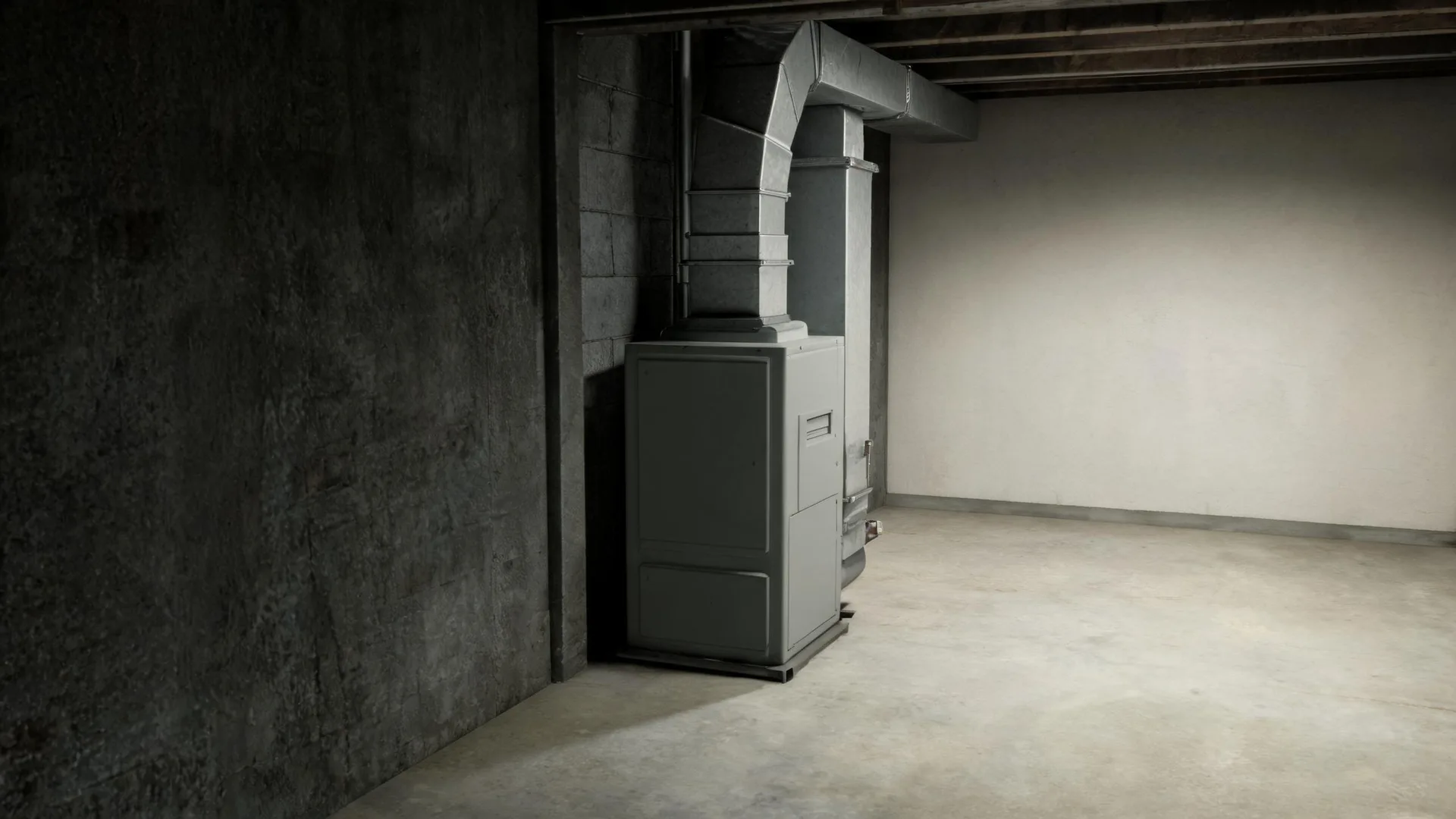
The heat exchanger sits at the core of the furnace cabinet in the utility room or closet, and it is where most serious problems show up. The burner assembly fires below it, and a cracked exchanger or a burner that misfires will stop the system or make it unsafe to run. The blower motor, housed in the lower section of the cabinet, is the other piece a contractor reaches for early.
The draft inducer pulls combustion gases out through the flue before and during each cycle, and a failed inducer motor is one of the more common reasons a furnace shuts itself off on a safety lockout. The control board and the igniter both sit inside the cabinet and govern when and how the burner fires. A faulty igniter is usually the first thing a contractor swaps when the burner fails to light.
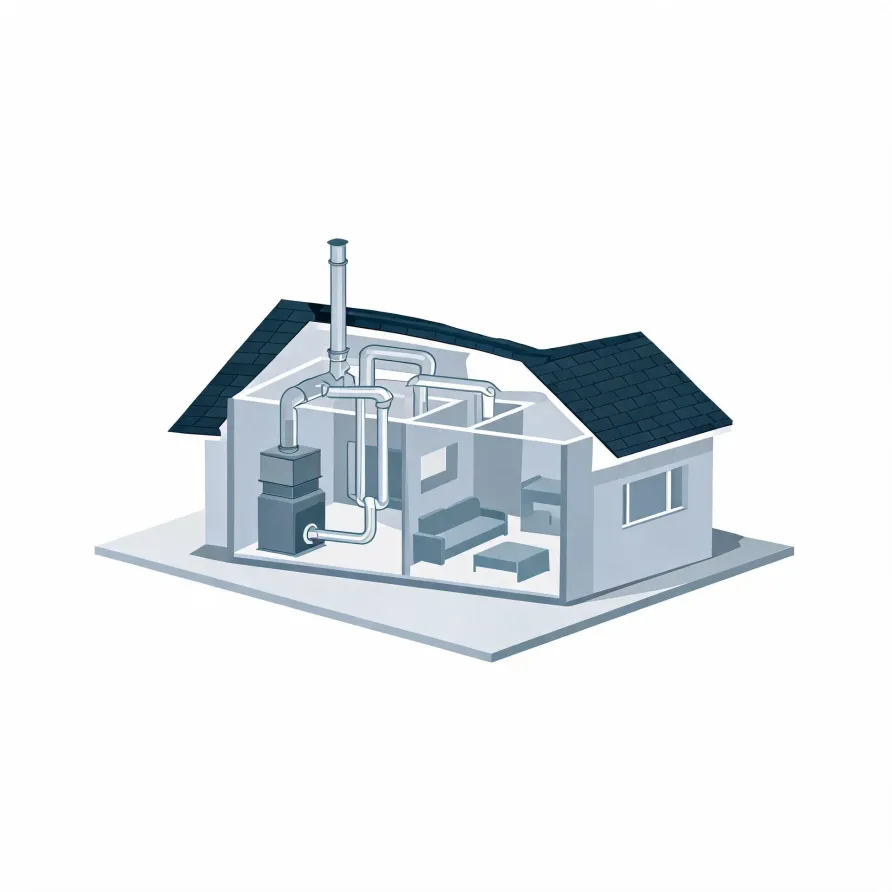
The drawing shows a typical furnace layout, and a licensed contractor determines which components apply to the specific equipment and installation in your home.
Get matched in Anderson CountyAnderson County, by the numbers
82 severe weather events were recorded in Anderson County, Texas between 2015 and 2024.
NOAA National Centers for Environmental Information, Storm Events Database, bulk CSV export, events 2015-01-01 through 2024-12-31.Half the homes in Anderson County, Texas were built in 1985 or earlier (2020-2024 ACS 5-year).
U.S. Census Bureau, 2020-2024 American Community Survey 5-Year EstimatesAnderson County, Texas holds 20,648 housing units (2020-2024 ACS 5-year).
U.S. Census Bureau, 2020-2024 American Community Survey 5-Year EstimatesOwners occupy 72.3% of the occupied homes in Anderson County, Texas (2020-2024 ACS 5-year).
U.S. Census Bureau, 2020-2024 American Community Survey 5-Year EstimatesCodes & Standards Governing Furnace Repair in Anderson County, Texas5 sourced rules and standards
What Happens When a Contractor Comes to Your Home
Non-weatherized gas furnaces manufactured on or after November 19, 2015 must reach 80.0 percent AFUE.
Non-weatherized oil-fired furnaces manufactured on or after November 19, 2015 must reach 83.0 percent AFUE.
Mobile home gas furnaces manufactured on or after November 19, 2015 must reach 80.0 percent AFUE.
Non-weatherized gas furnaces manufactured on or after December 18, 2028 must reach 95.0 percent AFUE, up from the 80.0 percent minimum that applies to units manufactured before that date.
Licensing Rules for HVAC Repair in Anderson County, Texas
In Texas a person may not engage in air conditioning and refrigeration contracting unless that person holds a license issued under the state air conditioning and refrigeration contractor law.
Severe Weather Events in Anderson County
Storms and temperature swings put real hours on a furnace, and those hours accumulate differently depending on where a home sits. Repair frequency, part wear, and the timing of breakdowns in Anderson County all connect to what the local climate asks of the equipment.
82 severe weather events, 2015–2024. Source: NOAA National Centers for Environmental Information, Storm Events Database.