Running quiet
A furnace that's heating right makes a low whoosh when it kicks on and a steady hum while it runs. No bangs, no squeals. The burners light clean and the blower spins smoothly, pushing air through the ducts without complaint.
A loud noise from your furnace usually points to one of a few things. A bang when it kicks on means gas is building up before it lights, then igniting all at once. That happens when the burners are dirty or the igniter is slow to fire. A screech or squeal points to the blower motor or its bearings. A rattle is often a loose panel or a part worn loose inside the cabinet. With cold winters here in Lubbock, the furnace runs hard for months at a time, and a problem that starts small tends to get worse the longer it runs. Some of these noises mean the furnace is still safe to run for now. A bang on startup is not one of them, since it points to a delayed ignition that stresses the heat exchanger each time it happens. Either way, the noise is the furnace telling you something is already wrong, not something about to go wrong.
A furnace that's heating right makes a low whoosh when it kicks on and a steady hum while it runs. No bangs, no squeals. The burners light clean and the blower spins smoothly, pushing air through the ducts without complaint.
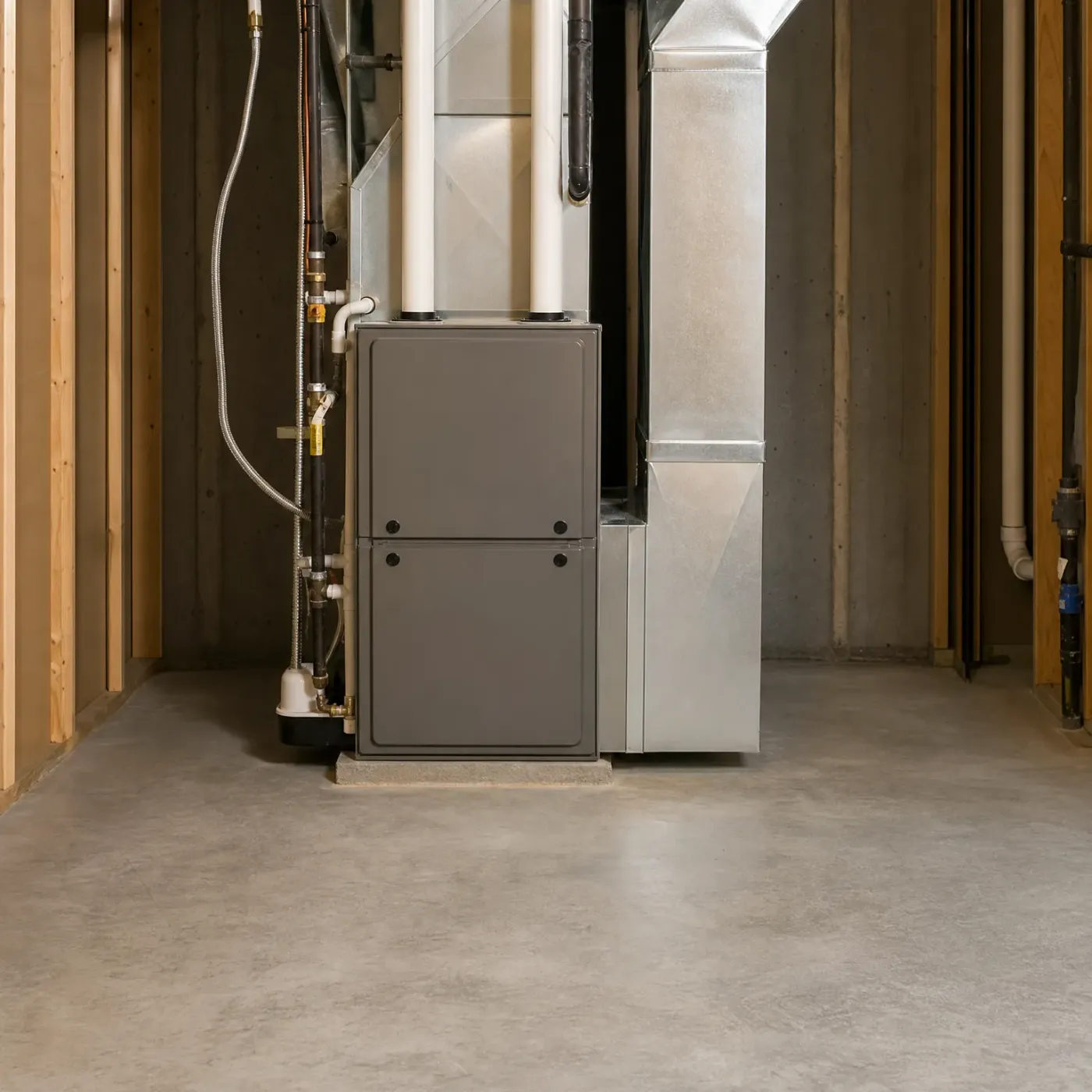
A furnace set on a pallet still has to push air through the same ductwork overhead. If you're hearing a bang, a squeal, or a rattle, something inside is worn, loose, or out of position, and it won't fix itself by running longer.
You're hearing it from another room, maybe the bang when the furnace first kicks on, or a squeal that keeps going the whole time it runs. Check the vents near you. If you smell gas with the noise, that's not something to wait on. A bang at startup, left alone, keeps stressing the heat exchanger every time the furnace fires, and that's the part that keeps carbon monoxide out of your air. A squeal usually means a motor bearing or blower wheel is wearing out, and that part can seize if it goes unchecked. Either way, the furnace still runs, which is why it's easy to put off. The noise is the furnace telling you something's already wrong.
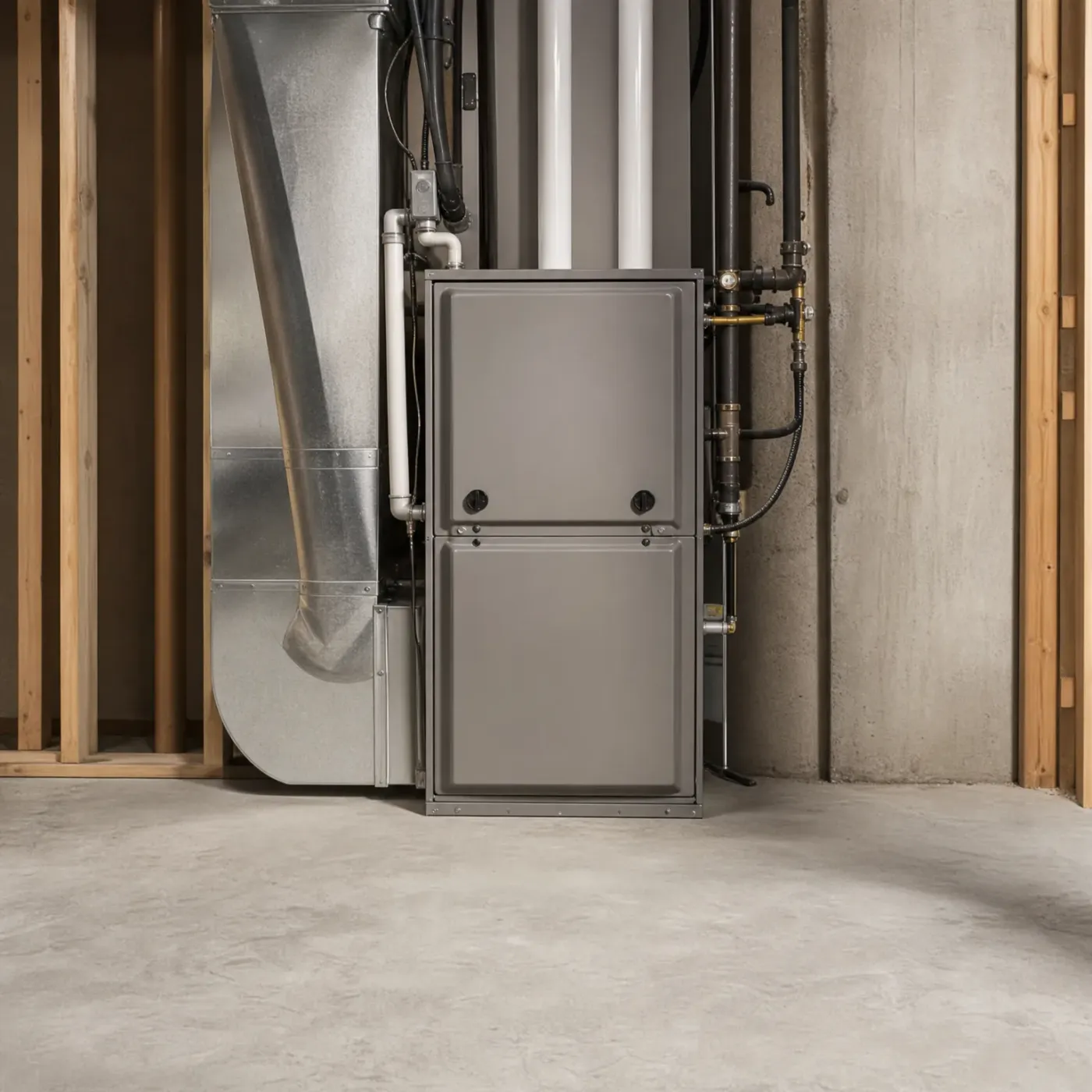
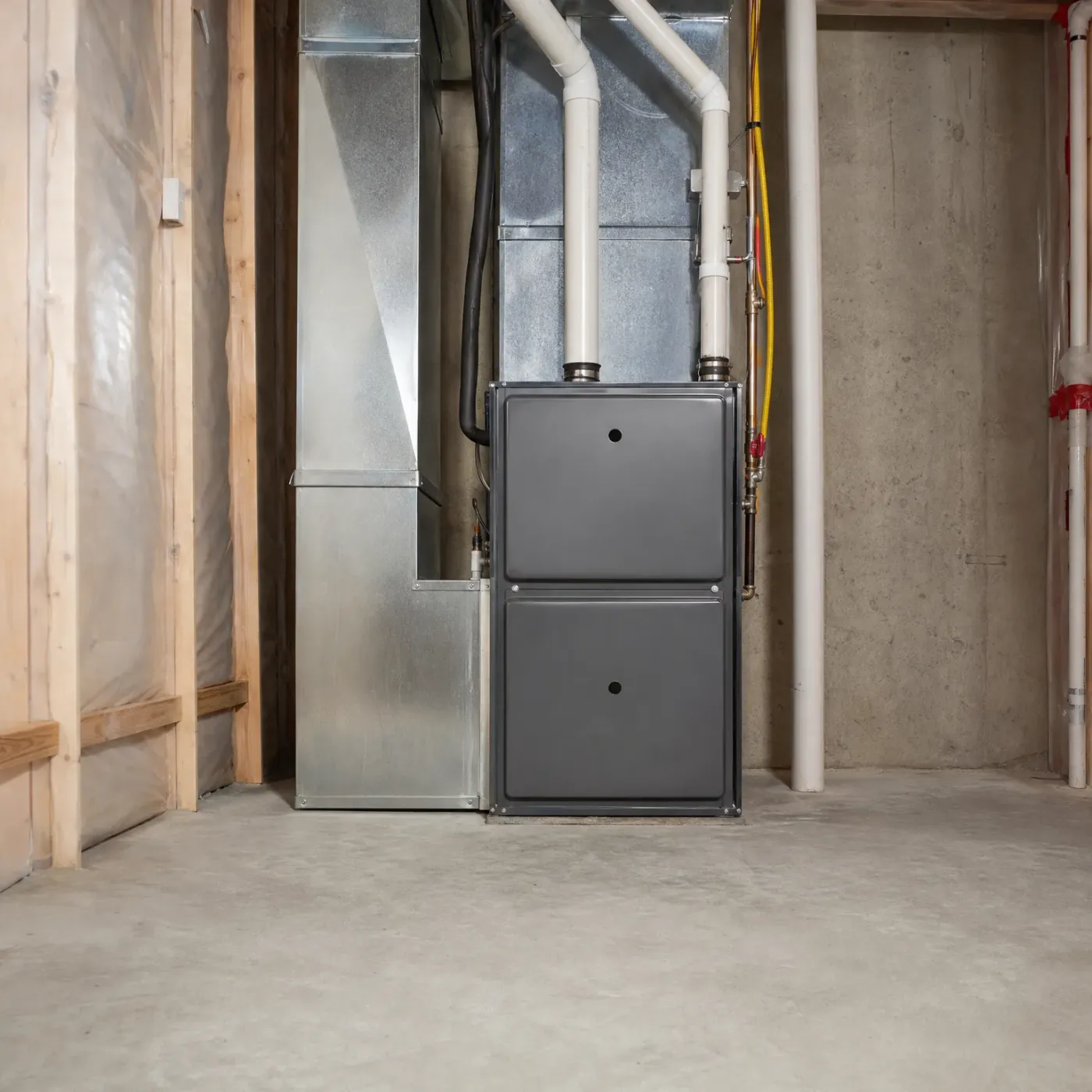
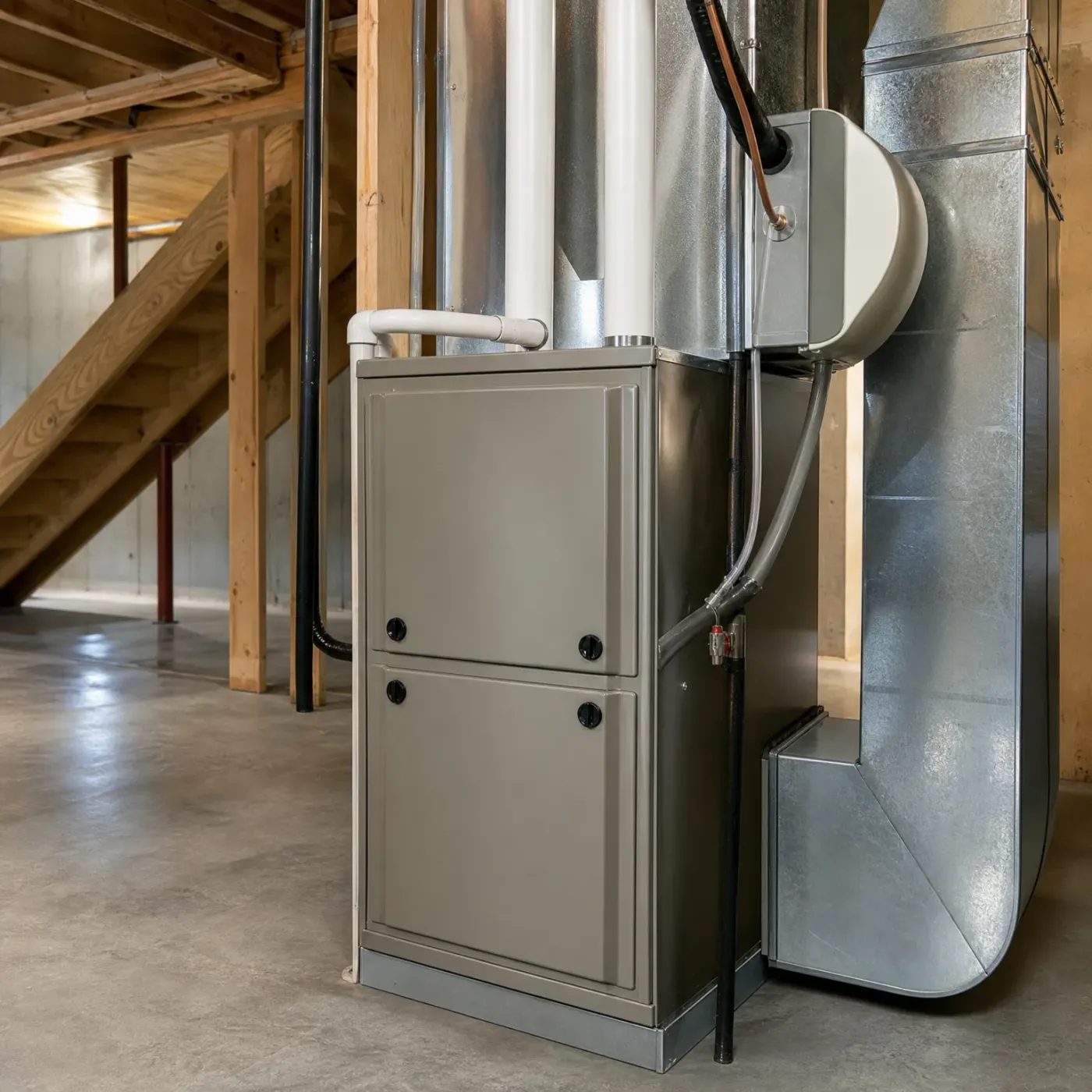
This is a furnace doing its job. Air moves through the duct on the left without a rattle. The pipes feed it fuel and carry exhaust out, and none of it makes a sound worth noticing. A furnace set up right and running clean just works in the background.
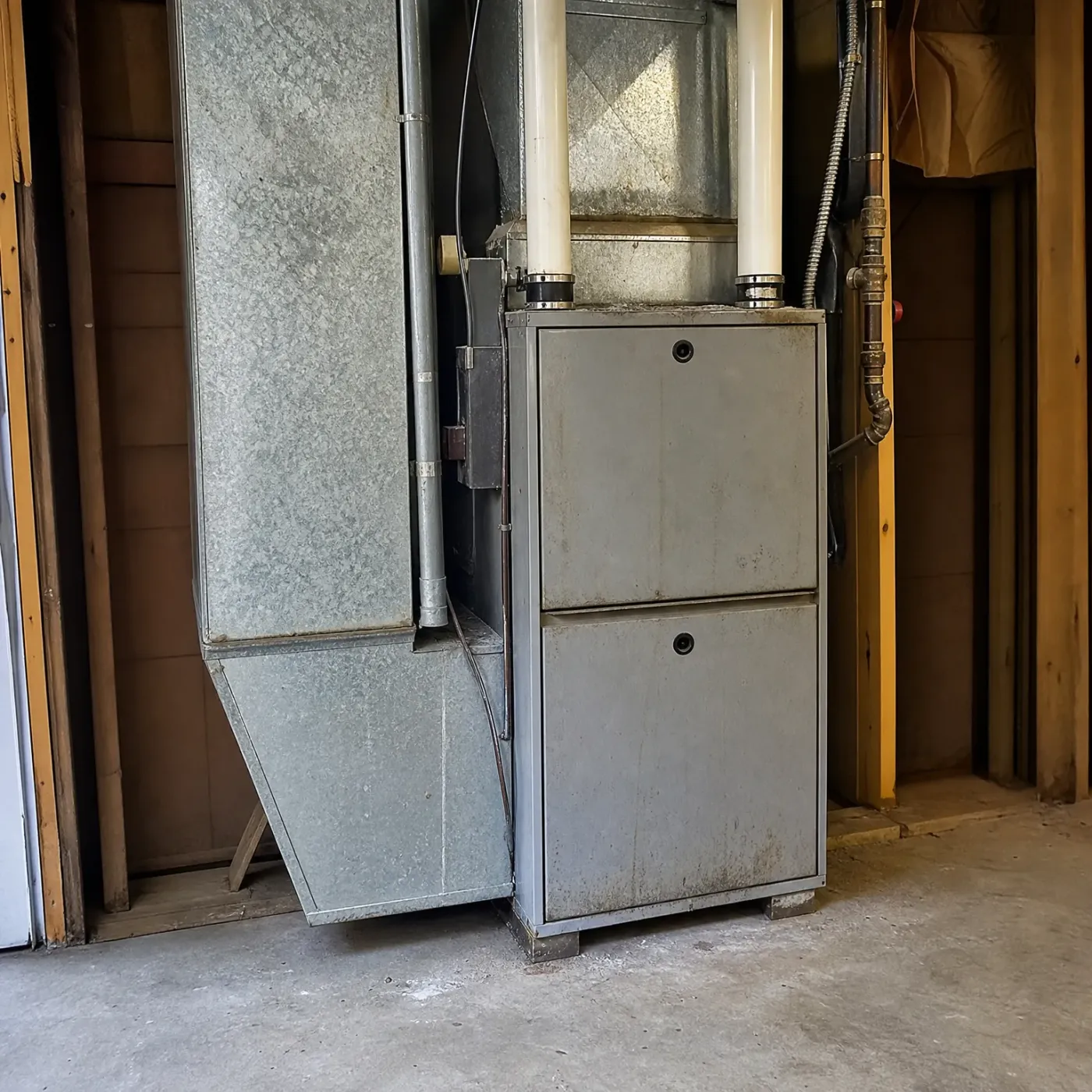
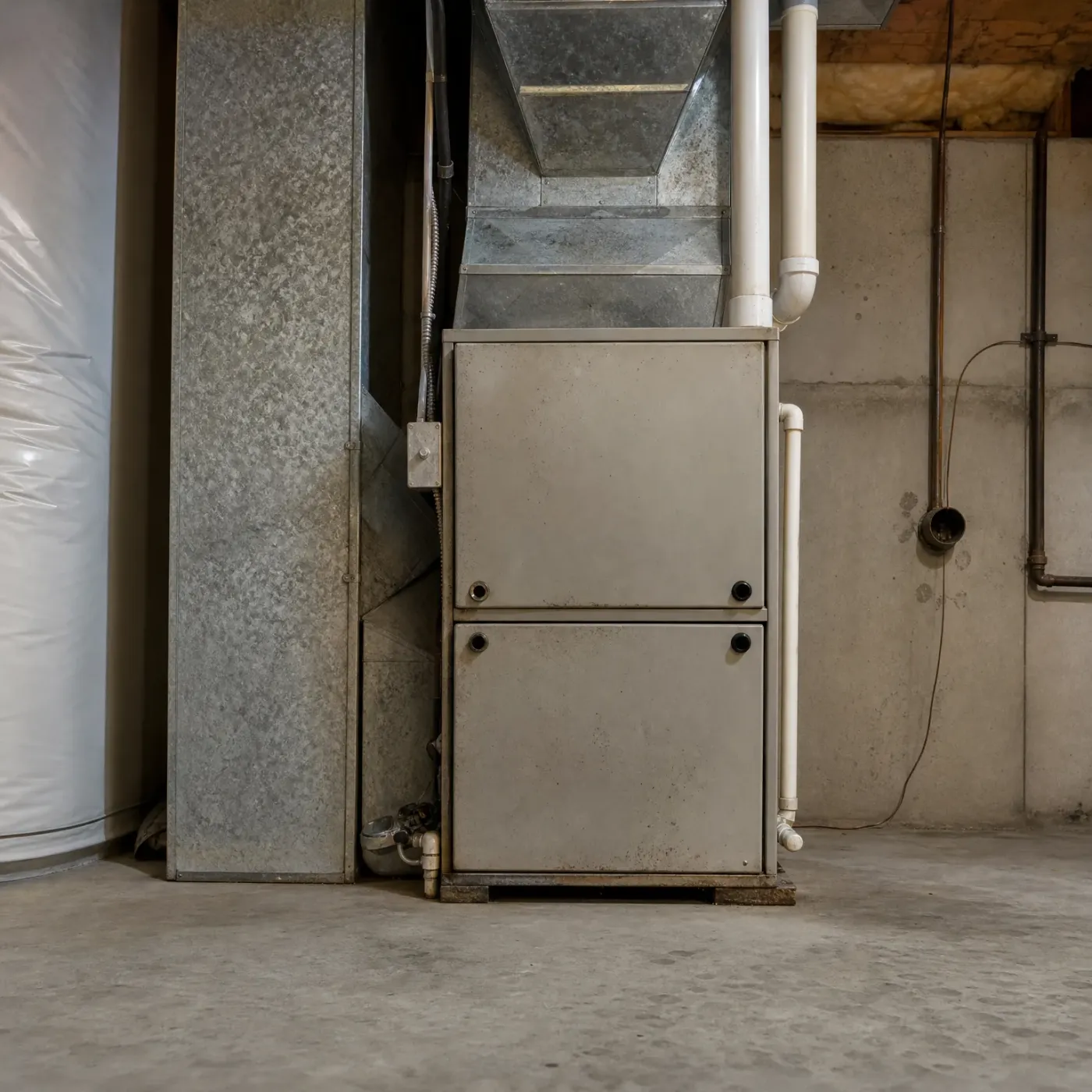
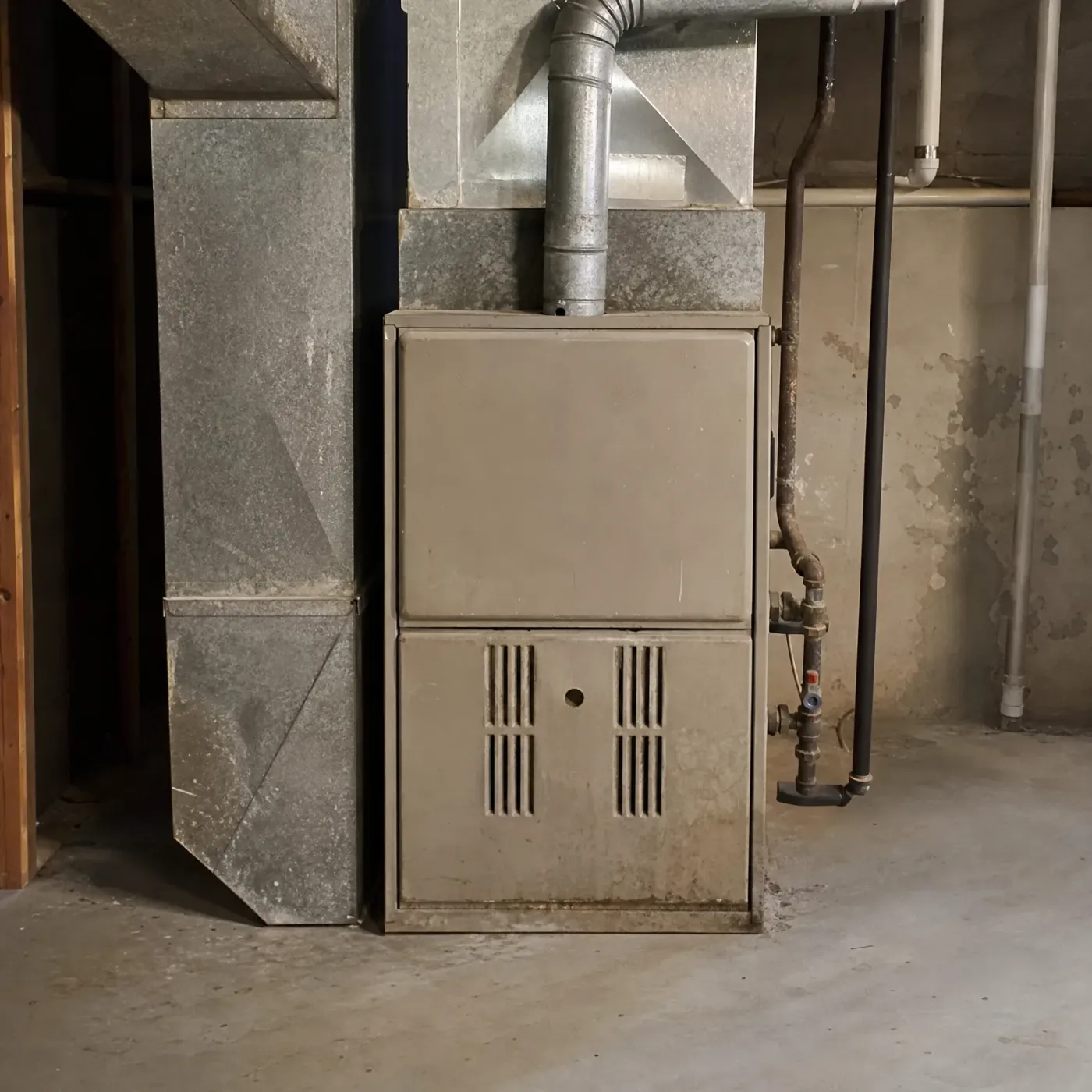
This furnace is older and it shows. Surface rust on the cabinet, a plenum that's been patched into over the years. A unit in this shape is the one that bangs on startup or squeals as the blower turns. Lubbock winters ask a lot of a furnace already working past its prime.




Every sound your furnace makes starts in a specific place, and the timing tells you where. A bang right at startup is the burner compartment, usually carbon on the flame sensor or igniter slowing things down until gas pools and catches all at once. A grinding or whining sound before that bang points earlier in the sequence, to the inducer motor that has to clear exhaust before the burners are allowed to fire. Once the burners are lit, any noise that keeps going is coming from somewhere else entirely. A steady squeal through the whole cycle is almost always the blower motor bearing, since the burners themselves go quiet once ignition happens. Pops and ticks from the ductwork are just metal flexing as warm air moves through it, worse in a run that was cut tight to begin with. Rattling panels or loose screws show up when the blower hits high speed and shake against the cabinet frame. None of these sound alike once you know what each one is doing.
A licensed pro who works in Lubbock County gets your request.
Answer a few questions instead of calling shop after shop.
You're not committing to anything by asking.
Thermostat calls for heat and the furnace control board wakes up.
Inducer motor starts, clearing the heat exchanger before gas flows.
Igniter heats up or sparks to light the gas at the burners.
Burners ignite and warm the heat exchanger inside the furnace.

A furnace that bangs or squeals doesn't stay that way. The noise is a sign something's already wearing, and most homes here heat with electricity, so a furnace that's straining to light or straining to spin is pulling harder every cycle it runs. Through a Lubbock winter, that's a lot of cycles. A blower wheel knocking against its housing can wear through the housing itself. A delayed ignition bang stresses the heat exchanger a little more each time it happens.
You don't need to track down who works on furnaces around Lubbock, read through reviews, or get quotes from three different companies to compare against each other. You'd be describing the same bang or squeal over and over to whoever picks up. One contractor, local to the area and familiar with what fails on these systems after a few winters, takes the call and takes a look. That's the part that's slow when you're on your own. Getting the noise looked at isn't.

Overnight lows here average 29°F through December, January and February, so your furnace is firing up night after night for months, not just on the occasional cold snap. That's a lot of cycles for a bang or squeal to repeat on before the part behind it gives out.
NOAA nClimDiv 1991-2020
The inducer motor runs for a few seconds before the burners light, clearing exhaust gas out of the heat exchanger so nothing pools before ignition.
If that motor is worn or the sequence gets interrupted, gas has longer to build before it catches, and the bang you hear is that delay playing out.
Winter nights average 29°F
Overnight lows average 29°F through December, January and February, so a furnace that bangs or squeals at ignition is doing it on the coldest nights, when you need it most.
Heat runs November through April
Heat runs November through April here, about six months of the year. A noise that starts small has months of cycles to turn into a furnace that won't start at all.
53.4% of homes heat with electricity
More than half of homes in Lubbock County heat with electricity. If a part tied to ignition or airflow is wearing out, that's the system carrying your whole winter.
NOAA nClimDiv 1991-2020 · ACS 2020-2024
A furnace that bangs, squeals or knocks isn't broken in some vague way. It's one part, doing one specific thing wrong, and a contractor who hears it can usually narrow down where to look before the panel's even off. The bang on startup points to the burners or the igniter. The squeal that holds through the whole cycle points to the blower. A knock that gets worse points to something loose or bent inside the housing. None of that changes if you wait. The part behind the noise doesn't fix itself over a few more cold nights, and Lubbock winters give it plenty of chances to get worse before it gets looked at.
What changes is how much work it takes you to get there. Instead of calling around, explaining the same noise to three or four different companies, and lining up quotes to guess who actually knows furnaces, you get matched with one licensed contractor local to the area. Someone who works on these systems all winter and has heard this bang or this squeal before, on someone else's furnace the week before yours. You explain it once. You get looked at once.
The noise itself isn't a mystery, even if it sounds like one from the next room. It has a cause, and that cause has a fix. The only question left is which part on your furnace it turns out to be, and that's what the visit tells you.
It costs nothing to send, and you don't have to hire anyone.
One call gets a Lubbock contractor out to look at the noise, instead of you spending the evening searching around, phoning a few companies, describing the bang or squeal each time, and weighing quotes against each other. Send the request once and let someone who knows these furnaces sort out what's wrong.