Furnace keeps shutting off in Lubbock, TX

Step 1 of 3: Equipment

A furnace that keeps shutting off is almost always protecting itself. Most furnaces around Lubbock run on electric heat, and the two usual causes are a dirty filter choking airflow or a flame sensor that's coated and can't confirm the burner is lit. Either one trips a safety switch and the system shuts down rather than risk overheating or running gas unburned. A clogged filter starves the blower, the heat exchanger gets too hot, and a limit switch cuts power. A dirty flame sensor reads a weak signal, decides no flame is present, and shuts the gas valve even though the burner lit fine. Cold nights make this worse, since the furnace runs longer and cycles more often, giving a marginal filter or sensor more chances to fail. Short cycling that happens only when it's coldest points to airflow or load. Shutdowns at any temperature point more to the flame sensor or a cracked limit switch, and either needs a furnace technician to check it properly.

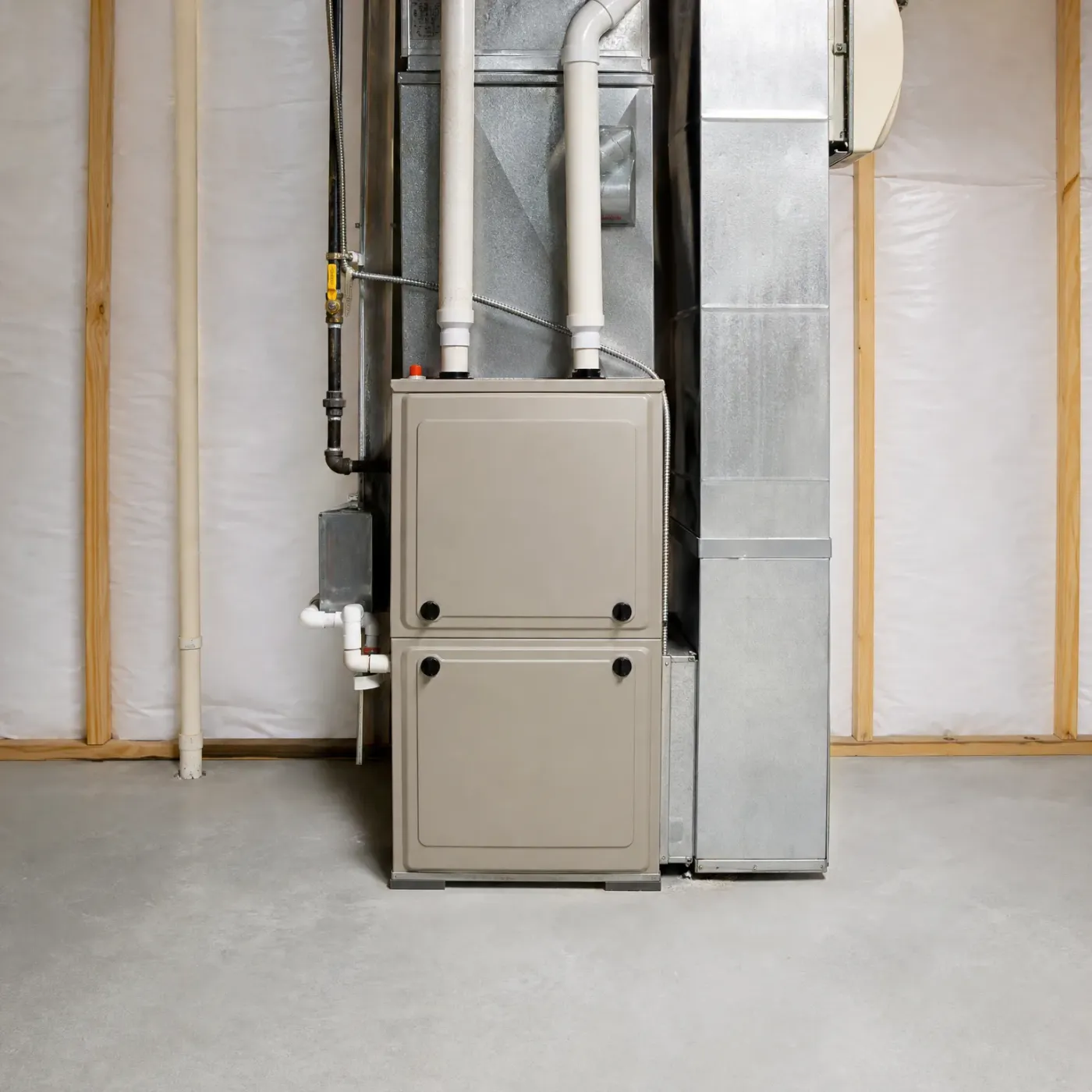
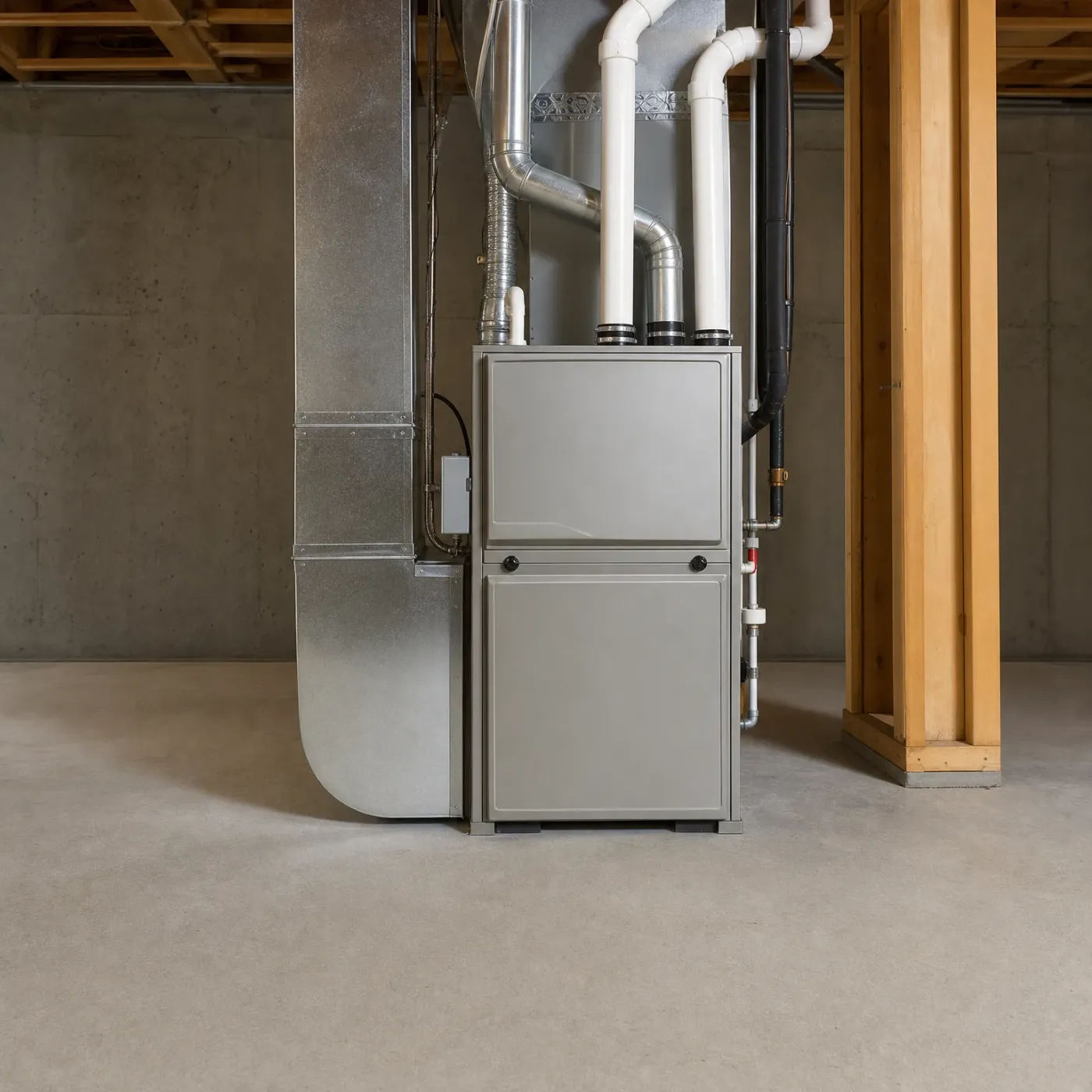
A beige high-efficiency furnace stands on a concrete basement floor beside sheet-metal ductwork, with white PVC vent pipes and a gas line running along an insulated wood-framed wall.

Running the way it should

Air moves steady through the vents and the burner stays lit without tripping off. A clean filter and a clear flame sensor let the furnace finish its cycle every time, instead of shutting down halfway through to protect itself.

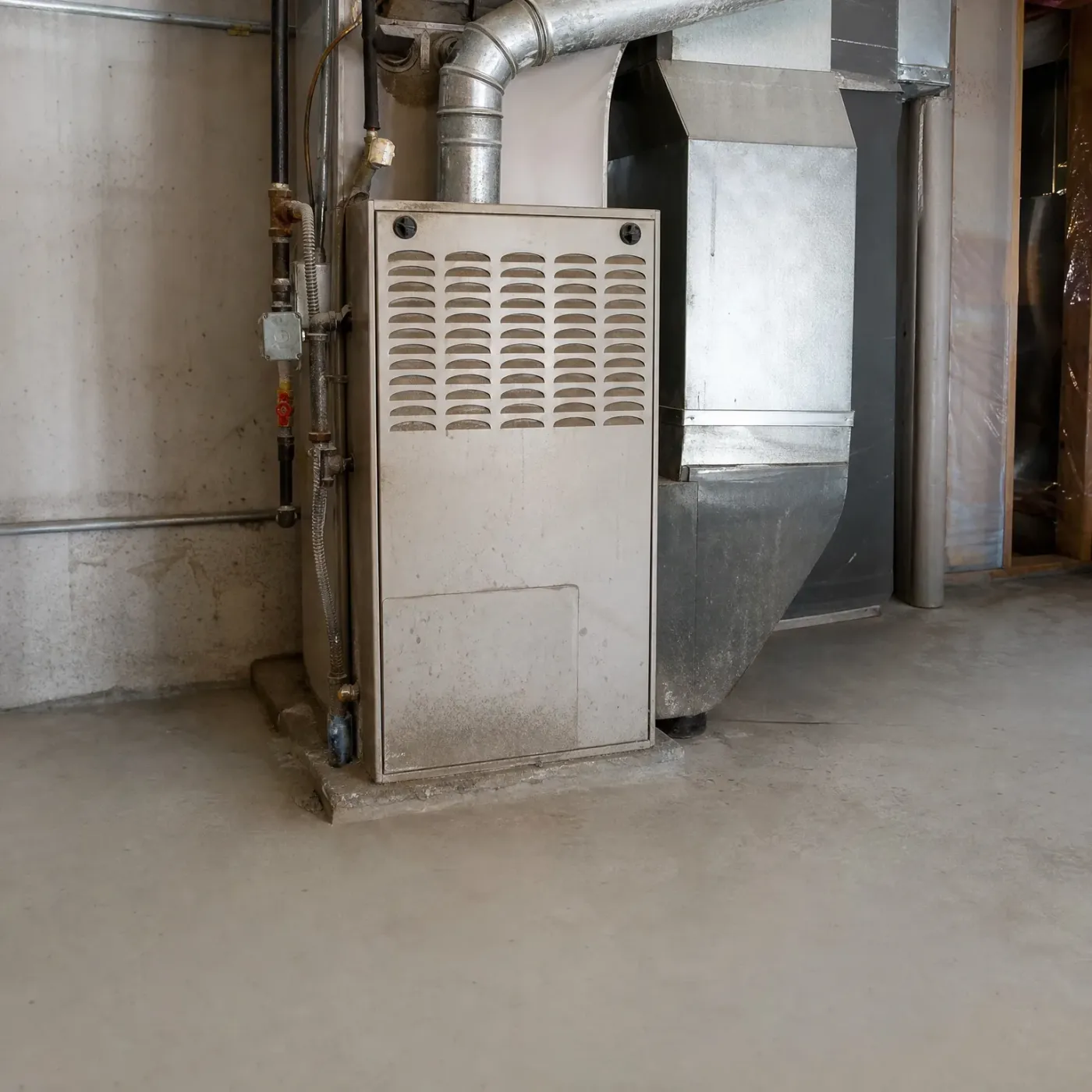
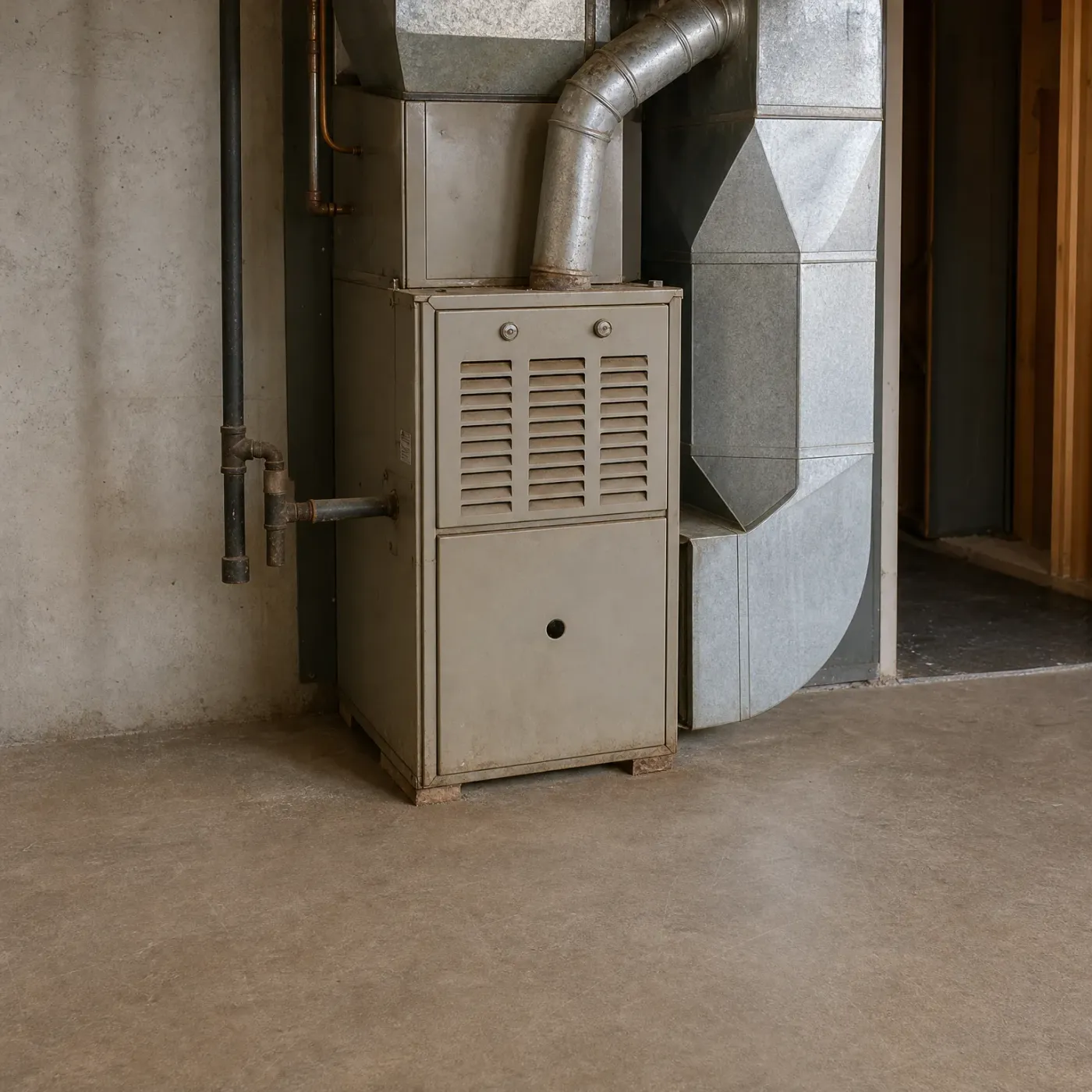
An older metal furnace with a louvered front panel stands against a concrete basement wall, connected to sheet-metal ductwork and a flue pipe, with copper and steel pipes running alongside.

Shutting off early

Dust built up around the cabinet and vents points to a filter that hasn't been changed in a while. That same dust settles on the flame sensor, and once it's coated enough, the furnace reads no flame and cuts off before the room warms up.

Why does your furnace run for a few minutes, then quit?

You'll notice a pattern before you notice a cause. The furnace fires, you feel warm air start, then it cuts off and the house goes quiet, sometimes with the blower still running on cold air. It might do this every ten or fifteen minutes, or only after it's run a while. You may hear the burner click on and off more than usual, or notice one room staying cold while the rest of the house warms up fine. Left alone, this isn't just an annoyance. A furnace that keeps tripping off is working harder for less heat, and on the coldest nights in Lubbock, a unit that shuts down for good leaves the house without any way to heat it.

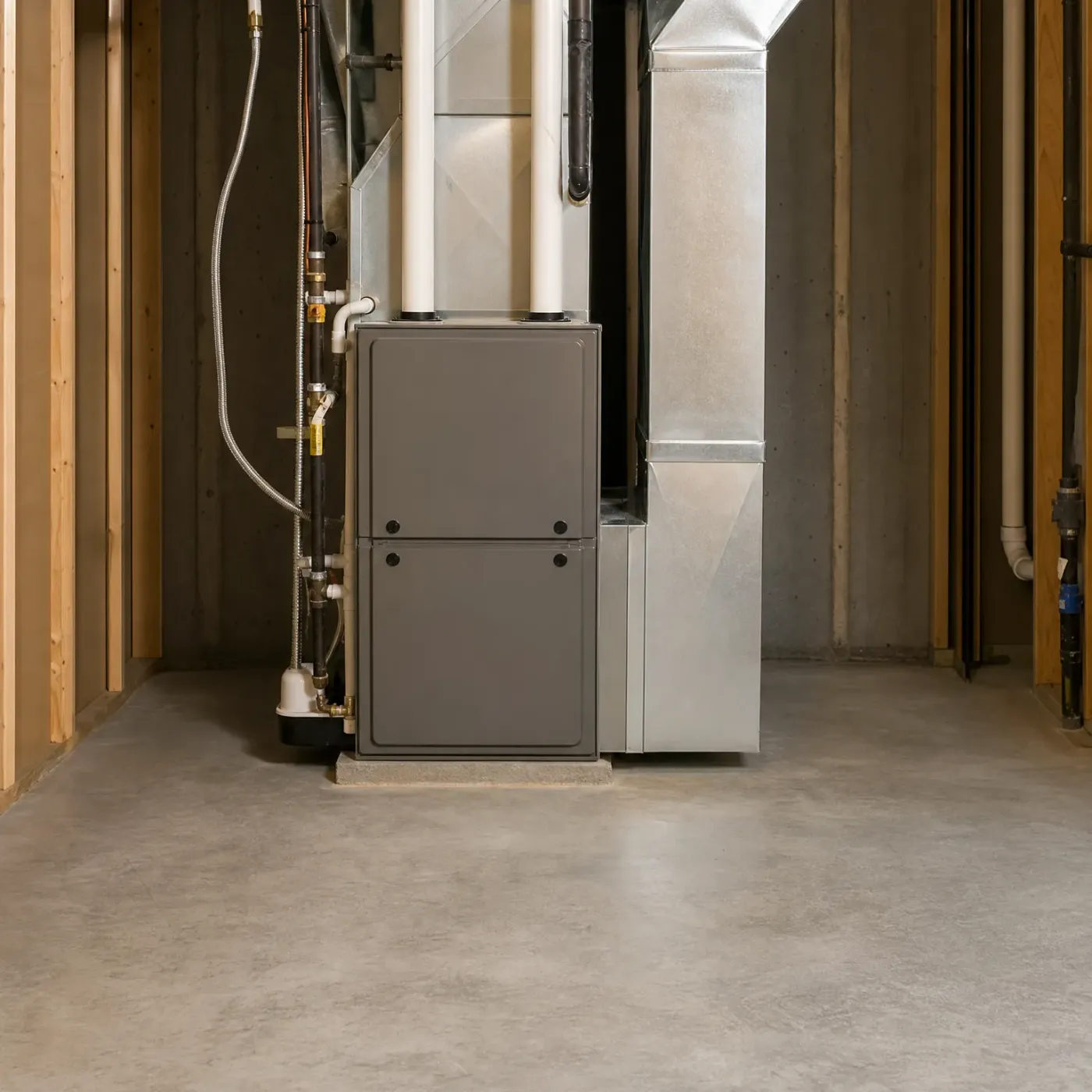
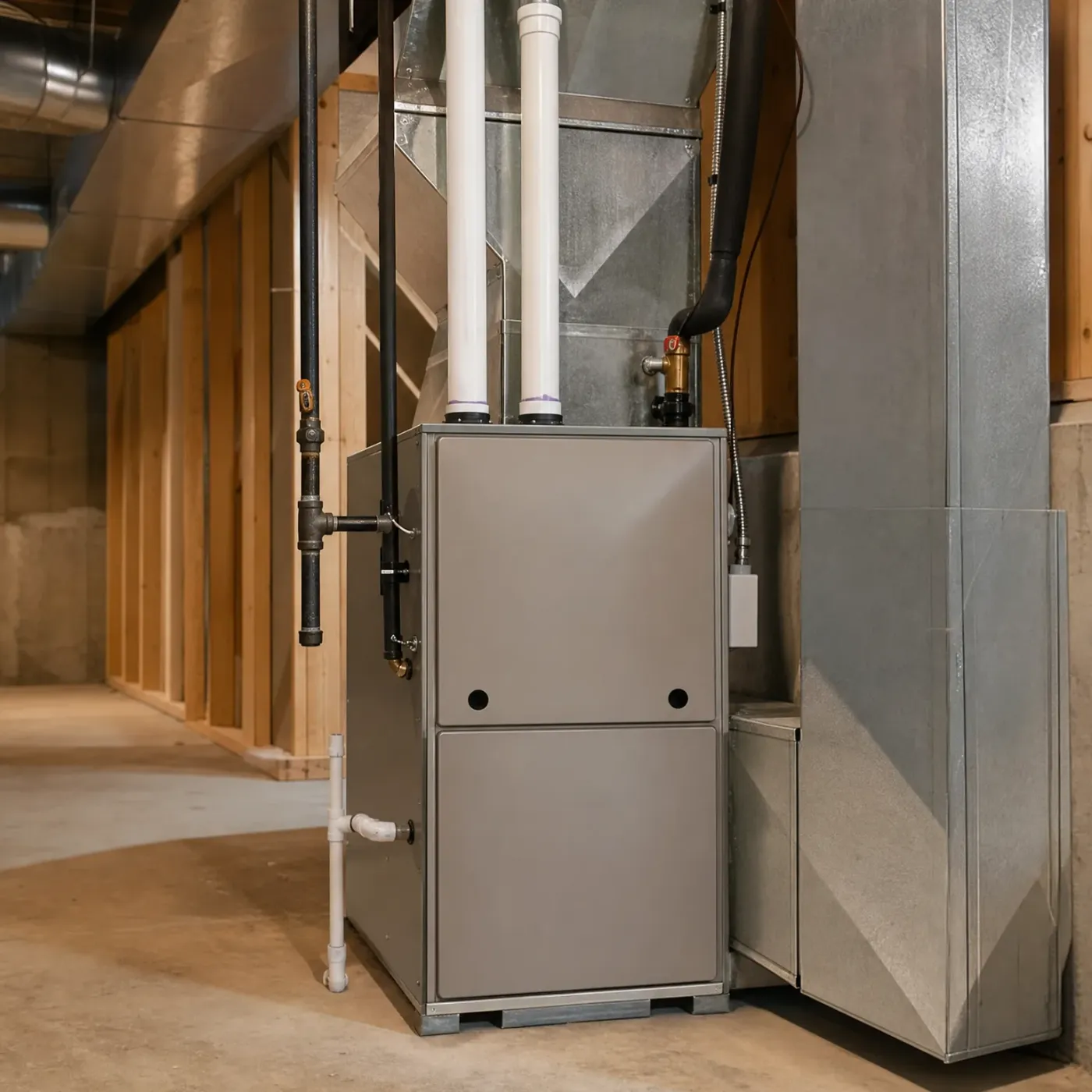
A gray high-efficiency furnace with white PVC vent pipes stands on a concrete pad in a basement, beside sheet-metal ductwork, copper piping and a poured concrete wall with wood framing at left.

Running clean and sized right

A furnace like this gets a filter change on schedule and a flame sensor that stays clear. Air moves freely through the ducts, the burner lights, and the cycle runs to completion. Nothing about the setup is forcing the furnace to protect itself.

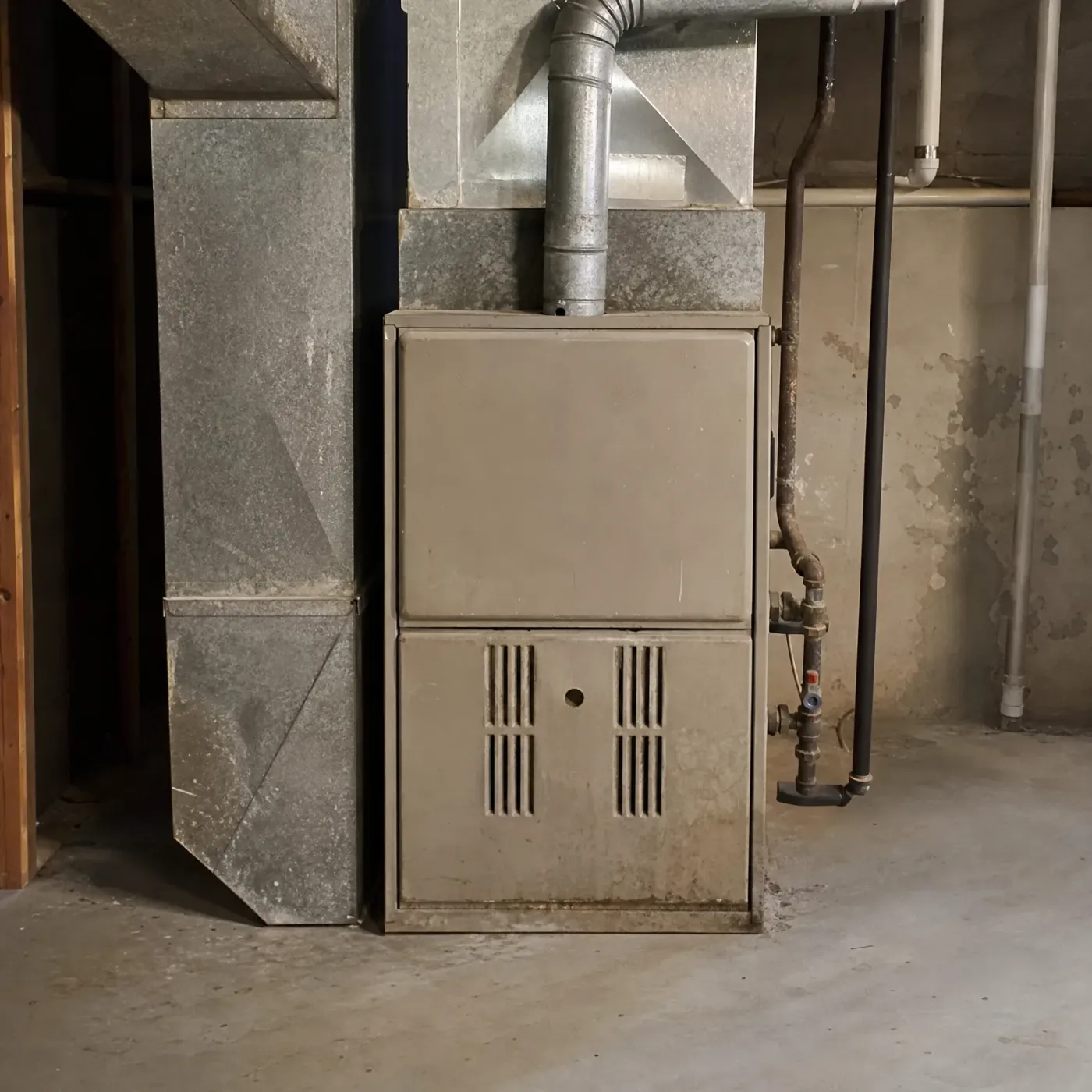
A beige gas furnace in a basement with a metal flue pipe, galvanized sheet-metal ductwork to its left, and gas and water pipes along the concrete wall to its right.

Older unit, worse odds

A furnace this age has had more years for the flame sensor to coat and the burner to drift out of tune. The shutoff valves nearby mean a gas line is close by too, so a furnace that quits mid-cycle here is worth a look sooner rather than later.

A smiling man in a blue denim shirt over a white tee sits at a light stone kitchen counter with a grey mug and a bowl of oranges and bananas, with pendant lights and shelving behind him.
A smiling bearded man in a grey long-sleeved shirt sits at a kitchen counter with a dark mug, with a dining table, pendant light and glass doors onto greenery behind him.
A bearded man in a dark green knit sweater smiles and looks off to the side while standing at a kitchen counter with a white mug of coffee, with open shelving, a potted tree, and a dining table near large windows behind him.
A man with dark curly hair in a dark green sweater stands smiling and looking to the side in a kitchen with white cabinets, a potted plant, a stone countertop with a ceramic mug, and a dining area with framed art in the background.

What a dirty filter does

A furnace pulls return air through the filter before it ever reaches the burner compartment. When that filter is packed with dust, less air gets through, and the heat exchanger starts holding more heat than it's built to pass along. A limit switch sits near the exchanger watching for that. Once the metal gets hotter than it should, the switch opens and cuts power to the burner, sometimes leaving the blower running on what feels like cold air. Swap the filter and airflow goes back to normal, and the switch stops tripping. A filter that looks gray and matted, rather than white, is usually the one causing it.

What a dirty flame sensor does

The flame sensor is a short metal rod sitting right in the burner flame. It has one job: confirm to the control board that gas is actually burning. A thin layer of soot builds up on it over time, and once that coating is thick enough, the rod can't read the flame anymore. The board waits a few seconds, gets no signal, and shuts the gas valve as a safety step. That's why the furnace often runs a few minutes before quitting, rather than failing to start at all. A technician cleans the rod with a light abrasive pad, and most of the time that alone stops the shutdowns.

A beige metal furnace with a louvered front panel stands on a concrete floor against a concrete wall, connected to galvanized sheet-metal ductwork and a metal pipe.
Before you get your furnace repair
A gray high-efficiency furnace stands on a concrete basement floor beside sheet-metal ductwork, with white PVC vent pipes and a black flexible line running up to exposed wood floor joists, next to a wood-framed post against a concrete wall.
After you get your furnace repair
A gray high-efficiency furnace in an unfinished basement, connected to sheet metal ductwork, white PVC vent pipes, a black gas line and flexible conduit, with concrete floor and wood-framed walls nearby.

Hand off the search today

Your request stays with one local pro.

Once you send the form, finding a pro is off your list.

Hand off the search

No fee to send it, and nothing to sign.

Clean It Yourself or Call a Contractor

Fix it yourself

  • A filter swap takes a few minutes and costs you the price of the filter, nothing more.
  • You can see right away if the airflow problem was the filter, because the furnace either keeps running or it doesn't.
  • You won't know if the flame sensor is the real problem until you've cleaned it or until shutoffs keep happening after a clean filter.
  • A flame sensor takes a light touch and the wrong move can scratch the rod or crack the porcelain around it.
  • If the shutoffs keep happening after a new filter, you've spent time ruling out one cause but you still don't have heat.

Call a furnace repair contractor

  • A contractor who works on furnaces around Lubbock all winter knows whether a filter or a flame sensor is the likelier culprit before they open the panel.
  • They can test the flame sensor's signal directly instead of guessing from how the furnace behaves.
  • If the cause turns out to be something past the filter and sensor, like a cracked heat exchanger or a failing limit switch, they can catch it on the same visit.
  • One contractor comes out, not several companies competing for the job, so you're not fielding calls while your house is cold.
  • A local contractor already knows what tends to fail in furnaces running through a Lubbock winter.
  1. Thermostat calls for heat and the inducer motor starts

  2. Igniter heats up or the pilot lights the burner

  3. Flame sensor confirms the burner is lit

  4. Blower pushes air across the heat exchanger and through the ducts

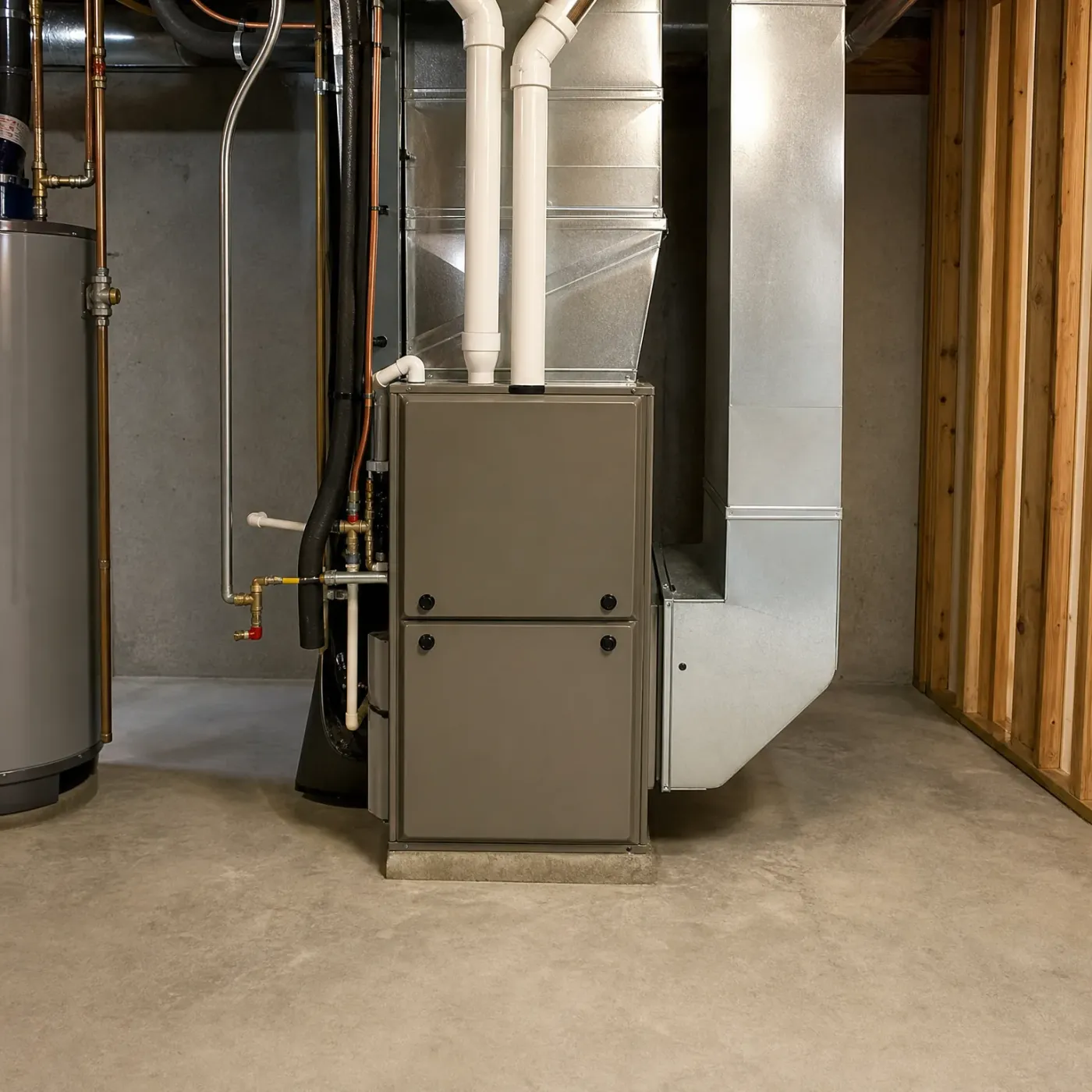
A gray high-efficiency furnace in a basement with PVC vent pipes, sheet-metal ductwork, copper and insulated pipes, a water heater at left, and an unfinished wood-stud wall at right.
A clean filter lets air move freely, so the burner stays lit and the furnace completes its cycle without tripping a safety switch.
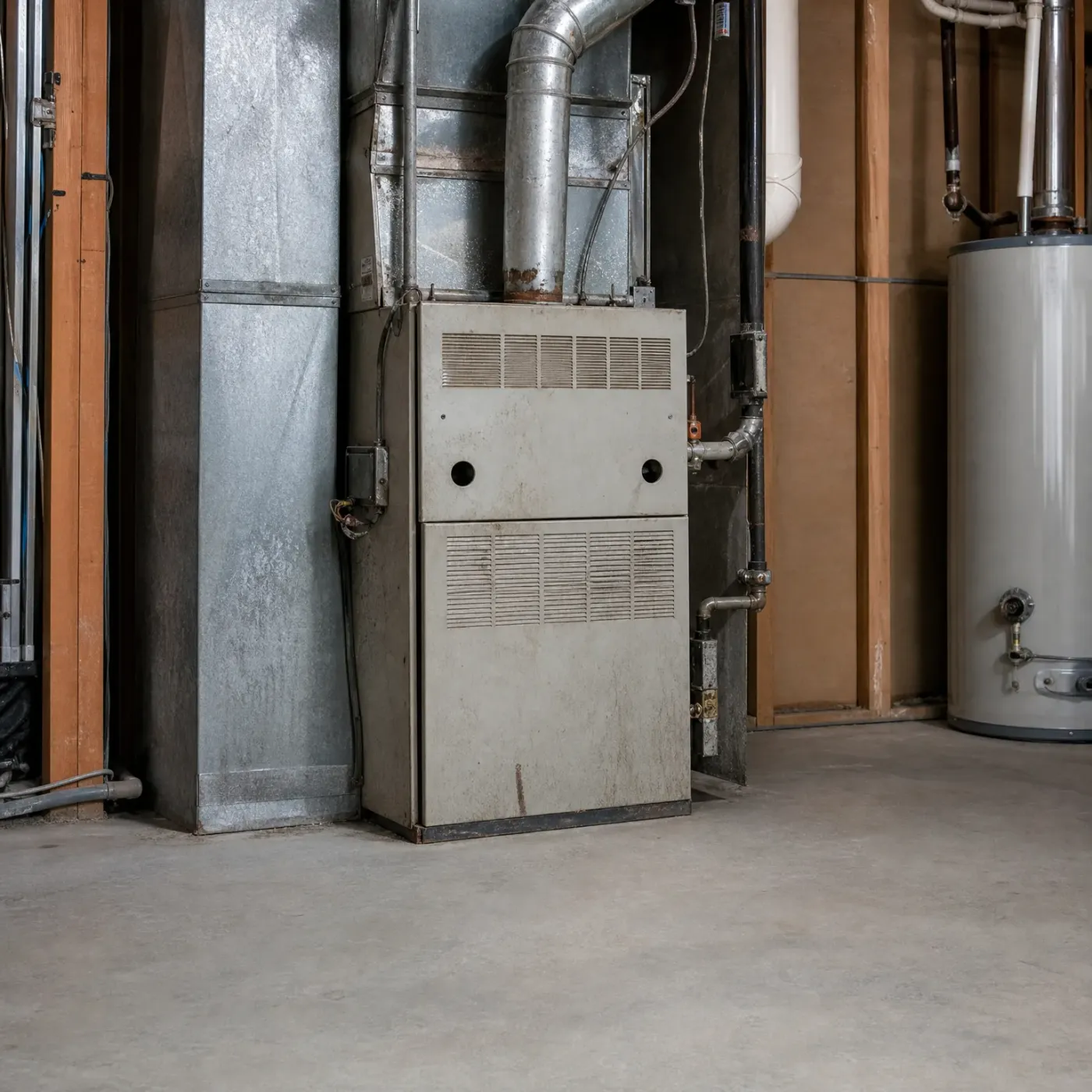
An older beige furnace with louvered front panels stands on a concrete basement floor beside galvanized ductwork, metal and plastic pipes, exposed wood framing, and a cylindrical water heater at right.
Galvanized ductwork like this restricts airflow as it ages, and a furnace working against that resistance is more likely to overheat and shut down.

Why does Lubbock cold make a furnace shut off?

  • Winter nights average 29°F

    Nights averaging 29°F mean the furnace runs long cycles to keep up, and a dirty filter or dirty flame sensor shows itself faster under that load.

  • Heat runs November through April

    Six months of heat, November through April, means more hours for dust to pack into the filter and film to build on the sensor.

  • 53.4% of homes heat with electricity

    Most homes here heat with electricity, and an electric furnace trips the same safety switches when airflow drops or the flame sensor can't confirm the burner.

NOAA nClimDiv 1991-2020 · ACS 2020-2024

The filter is the problem

A filter clogged with dust is the easier fix to spot. The furnace starts, runs for a while, then shuts off as the heat exchanger overheats behind the blockage. Swap the filter and the cycles go back to running full length right away. You'll know within the next cycle or two whether that was the whole problem, because the furnace either keeps running or it shuts off again. If it keeps shutting off after a clean filter is in, the cause is somewhere else, most likely the flame sensor.

The flame sensor is the problem

A flame sensor coated with residue can't confirm the burner is lit, so the furnace shuts the gas off a few seconds into the cycle, over and over. There's no way to see the coating without pulling the sensor out, and no way to clean it without the furnace apart. A homeowner can replace a filter in minutes. Cleaning or replacing a flame sensor means shutting off power to the furnace and opening the burner compartment, work a licensed contractor in Lubbock handles in one visit.

Winter nights average 29°F

At 29°F, your furnace runs long stretches to keep the house warm, not short bursts. That extra run time is exactly when a dirty filter or a dirty flame sensor causes a shutoff, since the furnace has more hours each night to hit that limit.

NOAA nClimDiv 1991-2020

What to do about the shutoffs

  • A furnace shutting off mid-cycle is the safety switch doing its job, not the furnace failing on its own.
  • The filter and the flame sensor account for most of these shutoffs, and both get fixed in a single visit.
  • A local contractor who works on Lubbock furnaces every winter has seen this pattern enough times to find it fast.
  • Sending one request means one contractor calls back, not a string of companies competing for the job.
  • Once the cause is confirmed, the furnace should run full cycles again through the rest of the cold months.
  • Leaving a shutoff unresolved just means more nights of a cold house and a furnace tripping the same switch.

A furnace that keeps tripping off is telling you something specific, not failing at random. Most of the time it comes down to one of two things: airflow blocked by a dirty filter, or a flame sensor too coated to confirm the burner is lit. Both are common, both are fixable, and both get handled in the same visit once someone's looked at the unit.

That's where a local contractor matters more than it might seem. Someone who services furnaces around Lubbock through the winter has already seen this exact pattern, probably more than once this season alone. They're not guessing at what it could be. They check the filter, check the sensor, and know which one is usually the culprit before they finish pulling the panel off.

Sending in one request keeps this simple too. Instead of fielding calls from several companies trying to win the job, you hear from the one contractor matched to it, and that's the one who shows up. No comparing quotes, no repeating the problem to five different people.

Once that switch stops tripping, there's nothing more to chase. The furnace should run its full cycle again, night after night, through whatever's left of the cold months. Put off the call and nothing changes on its own. The furnace keeps hitting the same limit, the house keeps losing heat partway through the night, and the fix waiting on the other side stays exactly as simple as it is right now.
A dark wood cabinet with a drawer and black knob holds a ceramic vase of green leafy branches and a wooden bowl, beside a window with a woven basket of knit blankets.
Sunlit interior corner with white baseboard molding, cream walls, a wood floor, a woven jute rug, and a potted green plant on a window sill with trees visible outside.
Sunlight falls across a marble countertop by a window, where a small stone bowl with pebbles sits beside a potted pothos plant in a ceramic planter and a folded beige towel.
Exterior corner of a house with lap and shingle-style siding, a white gutter and downspout with offset elbows, a stone veneer base, a window at right, and flowering hydrangea shrubs at lower left in warm low-angle light.
A wooden console cabinet with a caned front holds a ceramic vase of green leafy branches and a shallow wooden bowl, below a framed landscape print on a beige wall beside a curtained window.

Hand off the furnace problem

A licensed pro who repairs furnaces in Lubbock County gets your request.

Send my request

Sending the form costs nothing.