
Tell us about the job
Takes about a minute. No obligation.
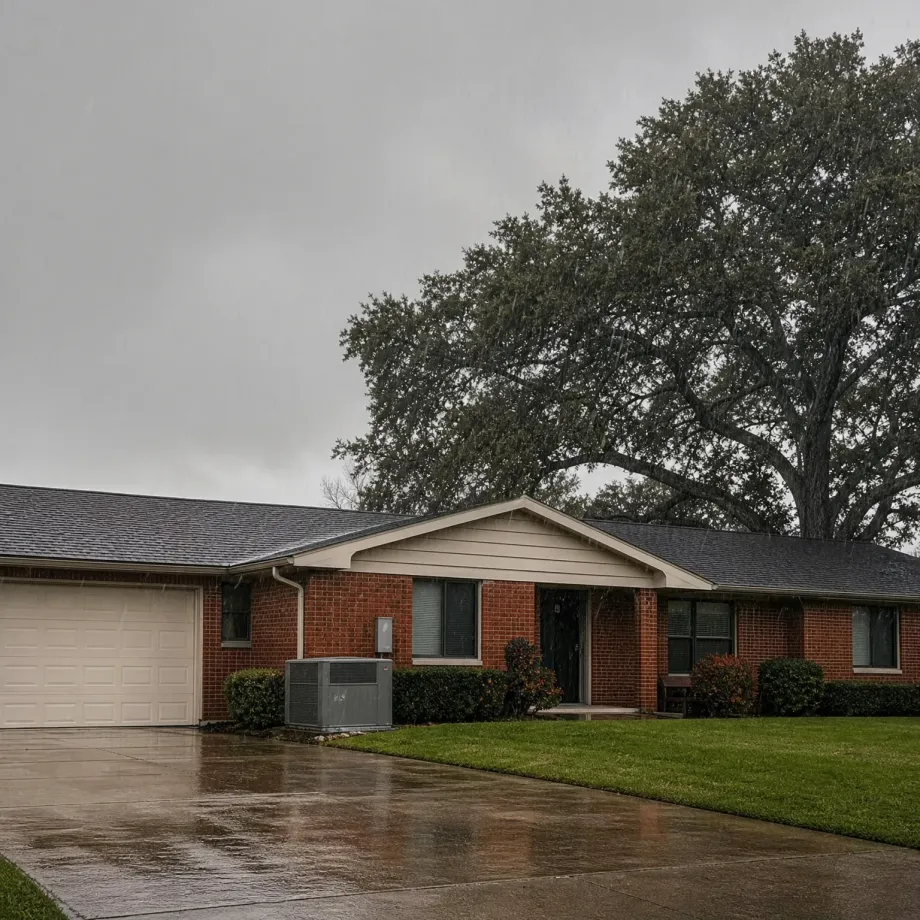
Sizing a furnace for a house in Bexar County starts with what the local weather has been asking of systems here. 387 severe weather events were recorded in Bexar County, Texas between 2015 and 2024. At that rate, severe weather is a standing condition rather than an occasional disruption, and a contractor quoting an installation has to account for it before selecting equipment. A unit matched to a milder climate will be wrong from day one. That means load calculations, duct sizing, and equipment selection all turn on conditions specific to this area, and a contractor working here does that arithmetic with this weather record in mind.
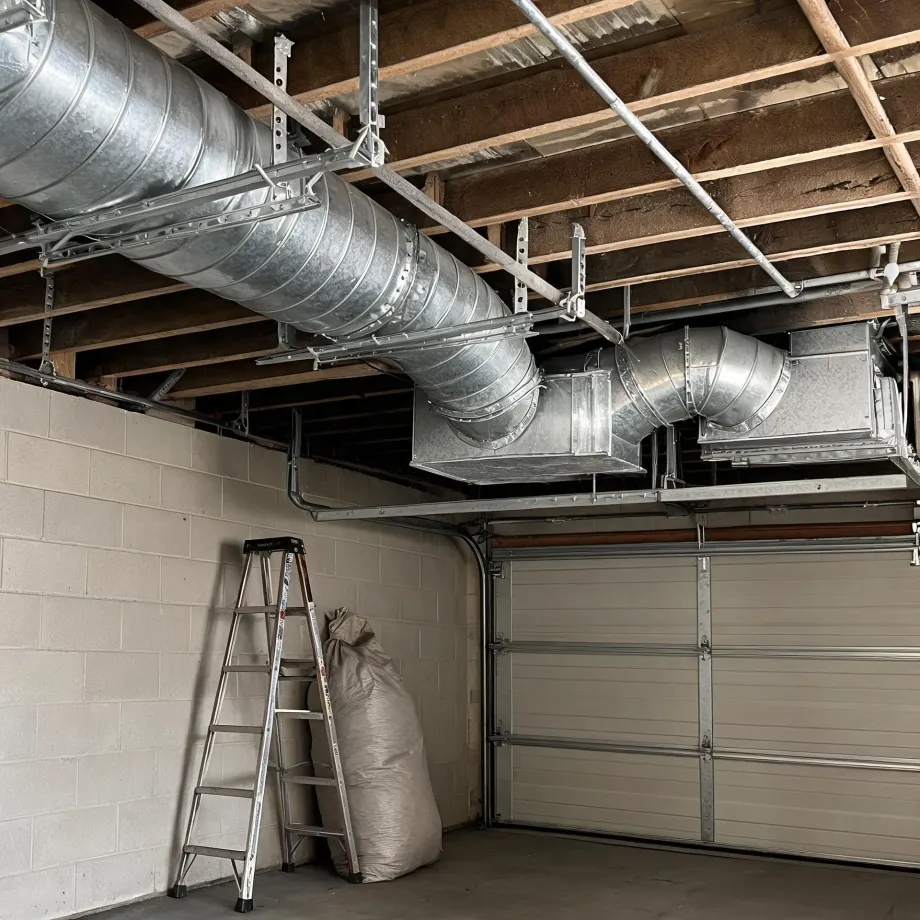
Ductwork laid down for equipment that has since been discontinued is what a contractor finds inside a large share of Bexar County homes. Half the homes in Bexar County, Texas were built in 1990 or earlier (2020-2024 ACS 5-year). That matters for furnace installation because a new unit's airflow and static pressure requirements rarely match what older trunk-and-branch layouts were built around. If the existing ductwork cannot carry the new system's output without leaking or restricting, the installation scope grows before the furnace itself is even priced. Electrical service is worth checking too, but the duct layout is usually where the answer lives.
What Gets Installed With a New Furnace
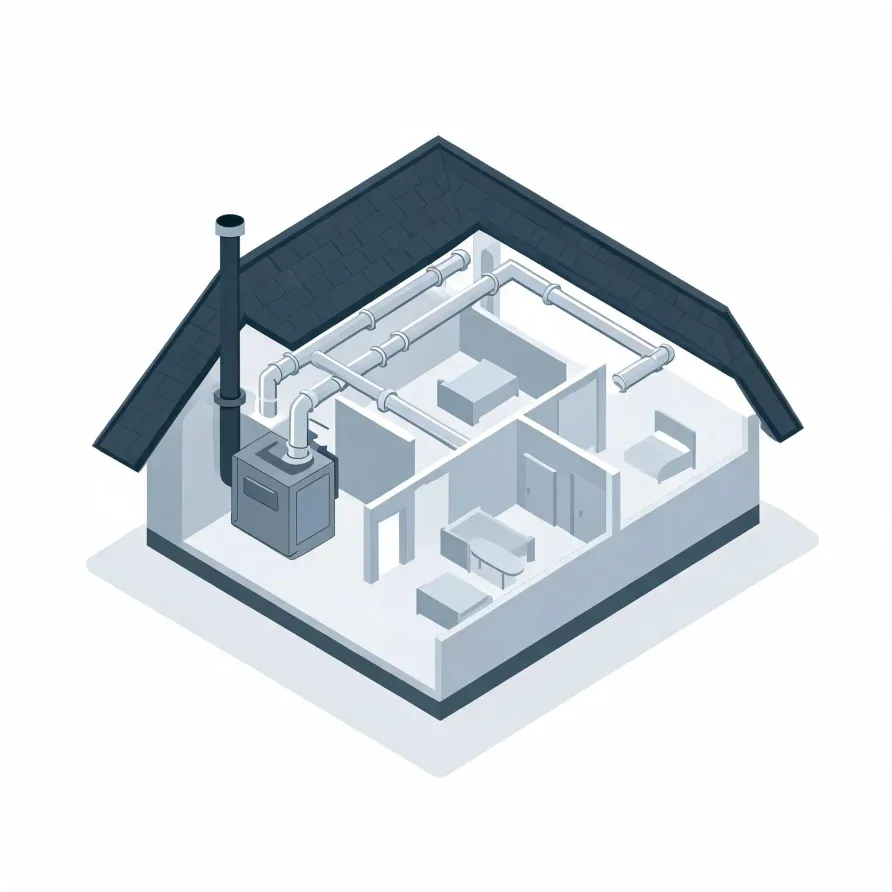
The furnace itself sits in a utility room, basement, or closet at the center of the house. It holds the burner assembly, the heat exchanger, and the blower, each one housed in a single cabinet. The burner draws fuel and produces heat; the exchanger transfers that heat to moving air; the blower pushes the warmed air out.
The flue pipe runs from the furnace cabinet through the wall or roof, carrying combustion gases out of the house. Alongside it, the contractor installs a new thermostat on an interior wall and connects the furnace to the home's existing supply and return air openings. The gas line connection and any new wiring tie into these same points.
The drawing shows a general layout of these components, and a licensed contractor determines exactly what applies to your house.
Get matched in Bexar CountyBexar County, by the record
387 severe weather events were recorded in Bexar County, Texas between 2015 and 2024.
NOAA National Centers for Environmental Information, Storm Events Database, bulk CSV export, events 2015-01-01 through 2024-12-31.Half the homes in Bexar County, Texas were built in 1990 or earlier (2020-2024 ACS 5-year).
U.S. Census Bureau, 2020-2024 American Community Survey 5-Year EstimatesBexar County, Texas holds 820,780 housing units (2020-2024 ACS 5-year).
U.S. Census Bureau, 2020-2024 American Community Survey 5-Year EstimatesOwners occupy 58.8% of the occupied homes in Bexar County, Texas (2020-2024 ACS 5-year).
U.S. Census Bureau, 2020-2024 American Community Survey 5-Year EstimatesFurnace Installation Rules & Standards for Bexar County, Texas5 sourced rules and standards
What happens when the contractor shows up
Non-weatherized gas furnaces manufactured on or after November 19, 2015 must reach 80.0 percent AFUE.
Non-weatherized oil-fired furnaces manufactured on or after November 19, 2015 must reach 83.0 percent AFUE.
Mobile home gas furnaces manufactured on or after November 19, 2015 must reach 80.0 percent AFUE.
Non-weatherized gas furnaces manufactured on or after December 18, 2028 must reach 95.0 percent AFUE, up from the 80.0 percent minimum that applies to units manufactured before that date.
Licensing and Legal Requirements in Bexar County, Texas
In Texas a person may not engage in air conditioning and refrigeration contracting unless that person holds a license issued under the state air conditioning and refrigeration contractor law.
Severe Weather Events in Bexar County
Weather puts a measurable load on heating and cooling equipment, and that load varies by location. A furnace sized and installed for what Bexar County actually sees will hold up differently than one built to a generic spec.
387 severe weather events, 2015–2024. Source: NOAA National Centers for Environmental Information, Storm Events Database.