Tell us about the job
Takes about a minute. No obligation.
A furnace install in Lamar County is not a straight catalog job. The equipment will run against real seasonal pressure, and a contractor has to size for it honestly. 89 severe weather events were recorded in Lamar County, Texas between 2015 and 2024. At that rate, severe weather is a standing variable here, but it sits at roughly the midpoint of what counties across the country see. That means the install decisions that shape long-term performance are ones the contractor controls: how the unit is sized for the actual load, how the ductwork is routed, and whether the air handler placement suits the structure. A weather record at this level does not override those choices.
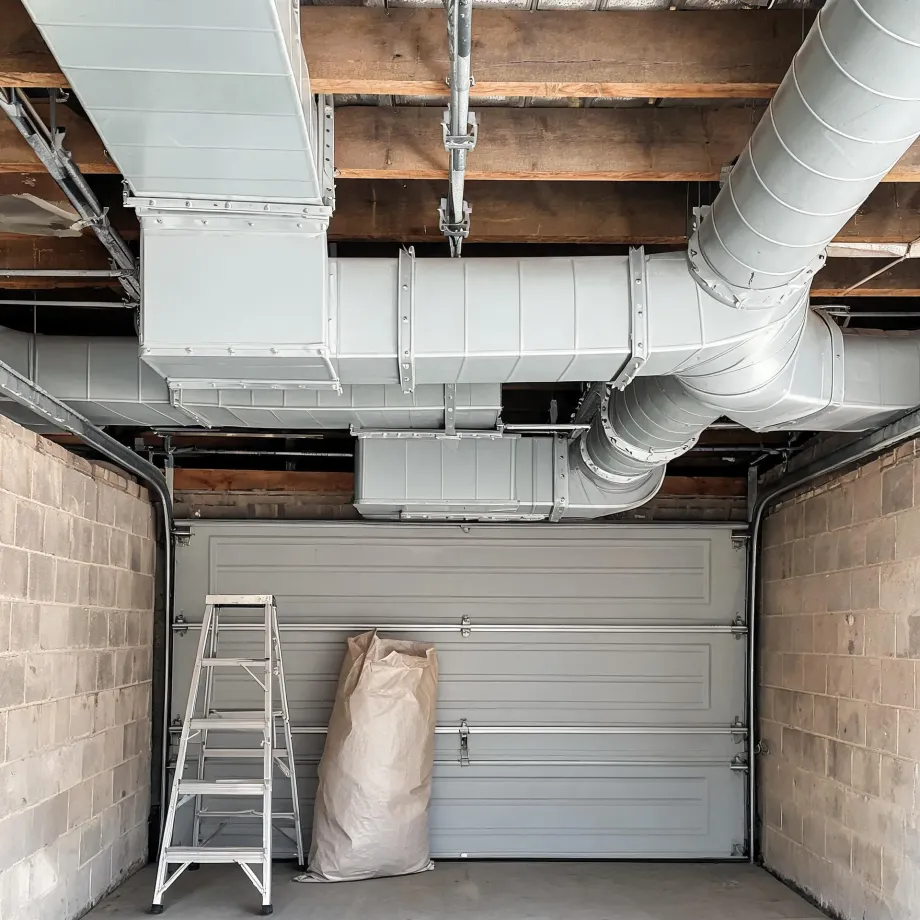
Existing ductwork in a house this age was designed around equipment generations removed from what a contractor installs today, and whether those runs can carry the airflow a modern furnace demands is what a contractor has to resolve before anything else on a job here. Half the homes in Lamar County, Texas were built in 1987 or earlier (2020-2024 ACS 5-year). That gap between when the house was framed and what now runs in it means the ductwork gets evaluated against the new unit's specs, not assumed to be compatible. The electrical service gets the same look, since load requirements have shifted alongside the equipment.
What Gets Installed With a New Furnace
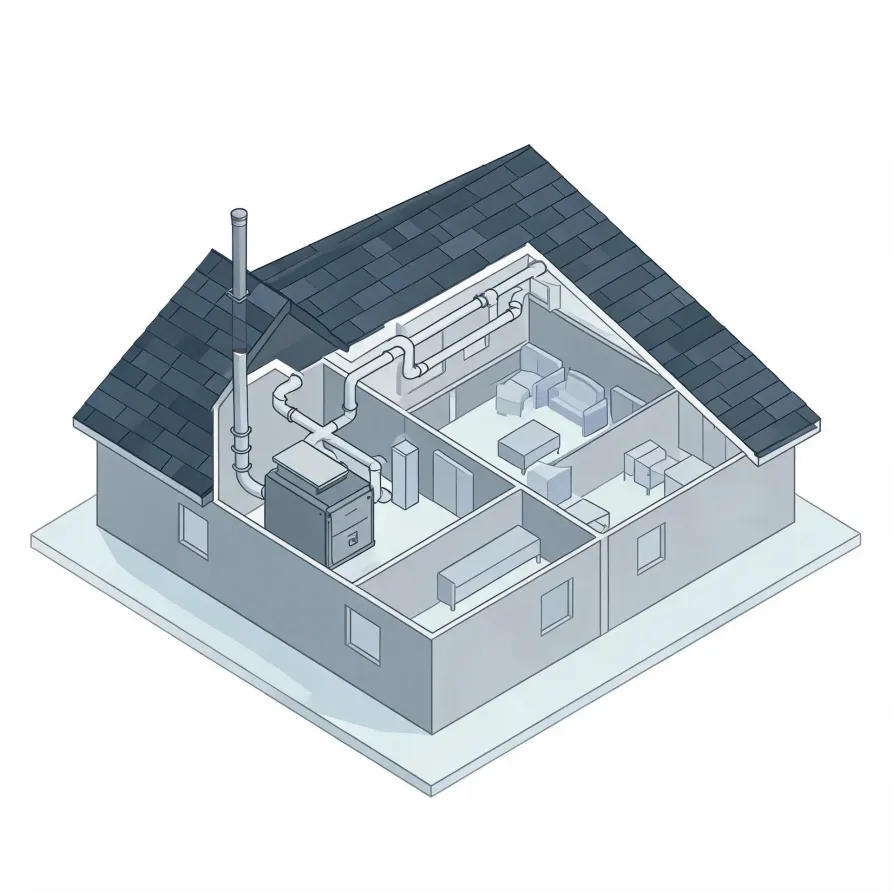
The furnace itself sits inside the house, most often in a utility closet, basement, or attic. It is the box that produces the heat. Attached to it is the heat exchanger, a metal chamber where combustion gases are kept separate from the air that moves into your living spaces.
The flue pipe runs from the furnace to an exterior wall or roofline, carrying exhaust gases out of the house. The blower motor sits inside the furnace cabinet and pushes conditioned air into the supply side of your duct system. A thermostat, mounted on an interior wall, is the control point that tells the furnace when to fire and when to stop.
The drawing shows a typical layout, and a licensed contractor determines exactly what applies to your home.
Find a contractor in Lamar CountyLamar County, by the numbers
89 severe weather events were recorded in Lamar County, Texas between 2015 and 2024.
NOAA National Centers for Environmental Information, Storm Events Database, bulk CSV export, events 2015-01-01 through 2024-12-31.Half the homes in Lamar County, Texas were built in 1987 or earlier (2020-2024 ACS 5-year).
U.S. Census Bureau, 2020-2024 American Community Survey 5-Year EstimatesLamar County, Texas holds 22,824 housing units (2020-2024 ACS 5-year).
U.S. Census Bureau, 2020-2024 American Community Survey 5-Year EstimatesOwners occupy 66.1% of the occupied homes in Lamar County, Texas (2020-2024 ACS 5-year).
U.S. Census Bureau, 2020-2024 American Community Survey 5-Year EstimatesFurnace Installation Rules on the Books for Lamar County, Texas5 codes, standards & statutes
What Happens During HVAC Installation in Lamar County
Non-weatherized gas furnaces manufactured on or after November 19, 2015 must reach 80.0 percent AFUE.
Non-weatherized oil-fired furnaces manufactured on or after November 19, 2015 must reach 83.0 percent AFUE.
Mobile home gas furnaces manufactured on or after November 19, 2015 must reach 80.0 percent AFUE.
Non-weatherized gas furnaces manufactured on or after December 18, 2028 must reach 95.0 percent AFUE, up from the 80.0 percent minimum that applies to units manufactured before that date.
Licensing Rules for HVAC Work in Lamar County, Texas
In Texas a person may not engage in air conditioning and refrigeration contracting unless that person holds a license issued under the state air conditioning and refrigeration contractor law.
Severe Weather Events in Lamar County
Weather puts direct mechanical demands on heating equipment: harder cycles, longer run times, more stress on components. How much of that load a furnace carries depends on where it sits, which makes local conditions a real factor in what you install and how it is sized.
89 severe weather events, 2015–2024. Source: NOAA National Centers for Environmental Information, Storm Events Database.