Tell us about the job
Takes about a minute. No obligation.
A furnace installed in Midland County is going to run against real weather pressure, and a contractor has to account for that before they commit to a size or a setup. 264 severe weather events were recorded in Midland County, Texas between 2015 and 2024. At that rate, severe weather is a standing condition in this area, which means the load baked into a furnace's operating life here is not a guess a contractor makes at the end of a quote. It is the first thing they establish. A unit sized and sealed for this load runs efficiently and lasts; one that was quoted off a catalog spec without accounting for local demand gets pushed past its design limits early.
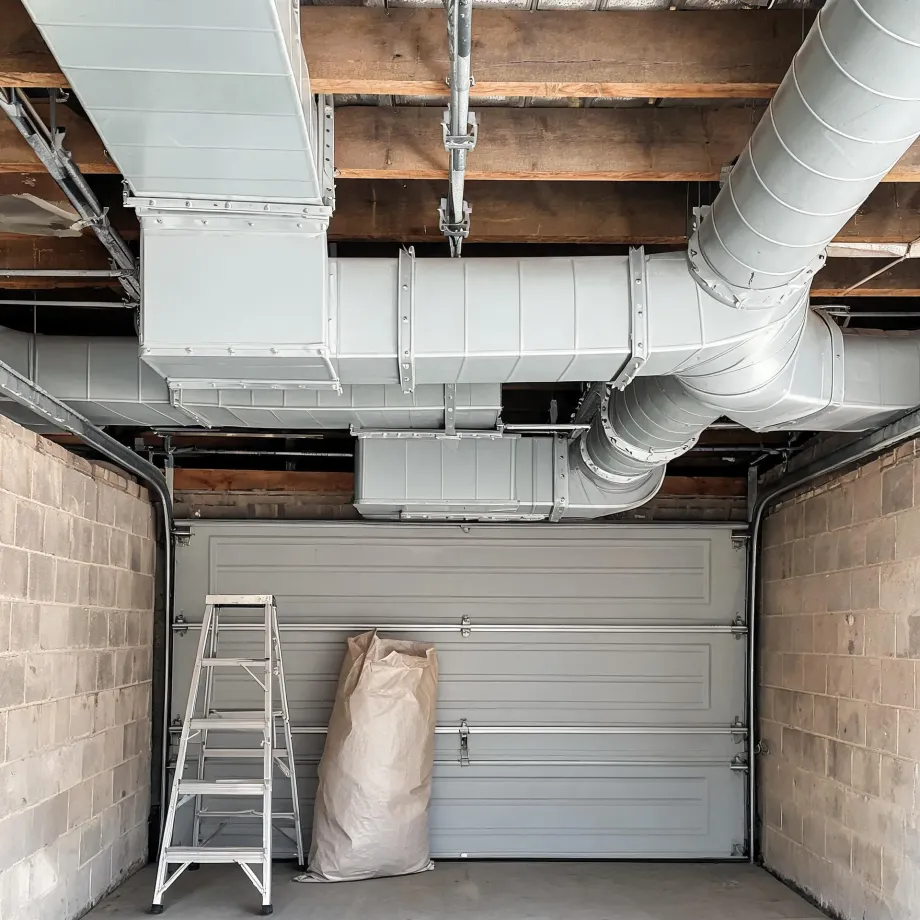
Ductwork designed for an older furnace generation does not always move air the way a current unit needs. Half the homes in Midland County, Texas were built in 1992 or earlier (2020-2024 ACS 5-year). A contractor quoting a furnace replacement has to walk the existing duct runs before the equipment choice settles anything, because a system that is correctly sized for the house can still underperform if the trunk lines and branch runs feeding each room were laid out for a different heat output. The electrical is a secondary check, but the ductwork is where the job either straightens out or gets longer.
What Gets Installed With a New Furnace
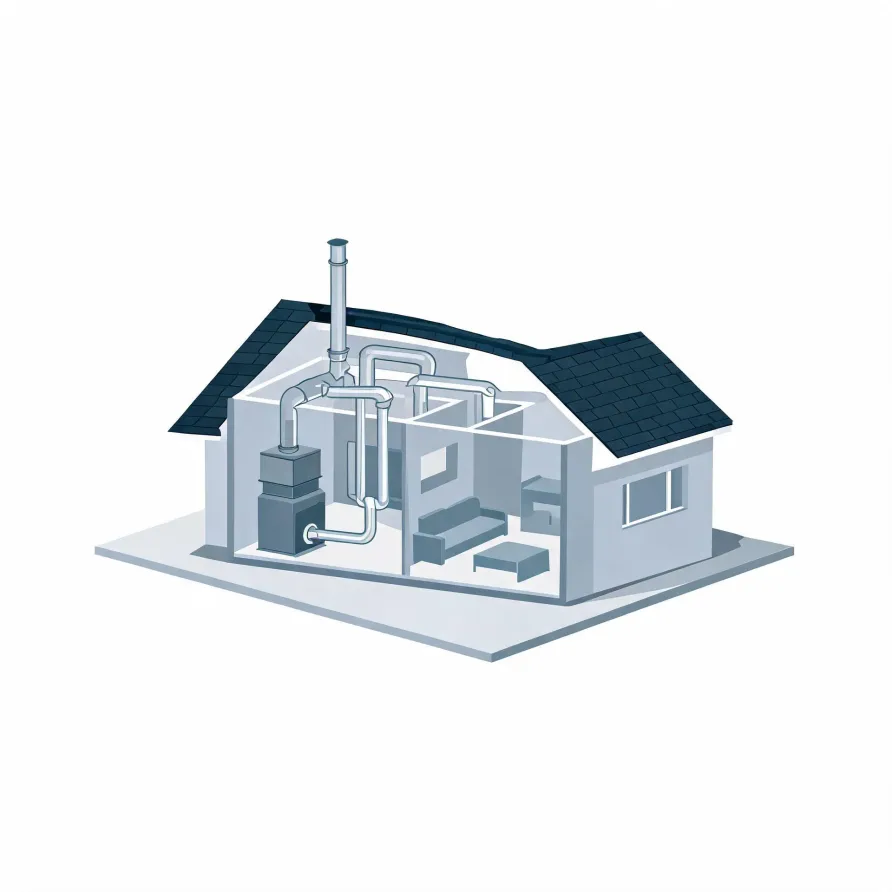
The furnace itself sits in a utility room, basement, or garage and is the unit a homeowner will recognize on sight. Inside it, a heat exchanger and a burner assembly work together to produce warm air, while a blower motor pushes that air out into the home. These are the core pieces a contractor sets in place first.
A flue pipe runs from the furnace to an exterior wall or roof, carrying combustion gases out of the house. Alongside that, a filter housing mounts at the air return to catch debris before it reaches the furnace, and a thermostat goes on an interior wall to give the homeowner control over the whole system.
The drawing shows a typical layout, and a licensed contractor determines exactly what applies to your house and its existing setup.
Find a contractor in Midland CountyMidland County, by the numbers
264 severe weather events were recorded in Midland County, Texas between 2015 and 2024.
NOAA National Centers for Environmental Information, Storm Events Database, bulk CSV export, events 2015-01-01 through 2024-12-31.Half the homes in Midland County, Texas were built in 1992 or earlier (2020-2024 ACS 5-year).
U.S. Census Bureau, 2020-2024 American Community Survey 5-Year EstimatesMidland County, Texas holds 72,723 housing units (2020-2024 ACS 5-year).
U.S. Census Bureau, 2020-2024 American Community Survey 5-Year EstimatesOwners occupy 67.6% of the occupied homes in Midland County, Texas (2020-2024 ACS 5-year).
U.S. Census Bureau, 2020-2024 American Community Survey 5-Year EstimatesFurnace Installation Rules on the Books for Midland County, Texas5 codes & standards
What a Furnace Installation Looks Like in Midland County
Non-weatherized gas furnaces manufactured on or after November 19, 2015 must reach 80.0 percent AFUE.
Non-weatherized oil-fired furnaces manufactured on or after November 19, 2015 must reach 83.0 percent AFUE.
Mobile home gas furnaces manufactured on or after November 19, 2015 must reach 80.0 percent AFUE.
Non-weatherized gas furnaces manufactured on or after December 18, 2028 must reach 95.0 percent AFUE, up from the 80.0 percent minimum that applies to units manufactured before that date.
Licensing Rules for HVAC Work in Midland County, Texas
In Texas a person may not engage in air conditioning and refrigeration contracting unless that person holds a license issued under the state air conditioning and refrigeration contractor law.
Severe Weather Events in Midland County
Weather in West Texas puts real demands on heating equipment. How hard a furnace works, and how long it holds up, is shaped by local conditions, and that makes equipment choices in Midland County a different conversation than the one you would have somewhere else.
264 severe weather events, 2015–2024. Source: NOAA National Centers for Environmental Information, Storm Events Database.