Tell us about the job
Takes about a minute. No obligation.
A contractor quoting a furnace installation in Dallas County has to work out what the equipment will be running against before they can size it correctly. 379 severe weather events were recorded in Dallas County, Texas between 2015 and 2024. Severe weather at that rate is a standing feature of life here, and it bears directly on how a furnace is specified. A unit sized for a gentler climate runs harder to meet demand, and components that run hard wear sooner. Getting the load estimate right at installation is what keeps that wear from being built into the job from day one.
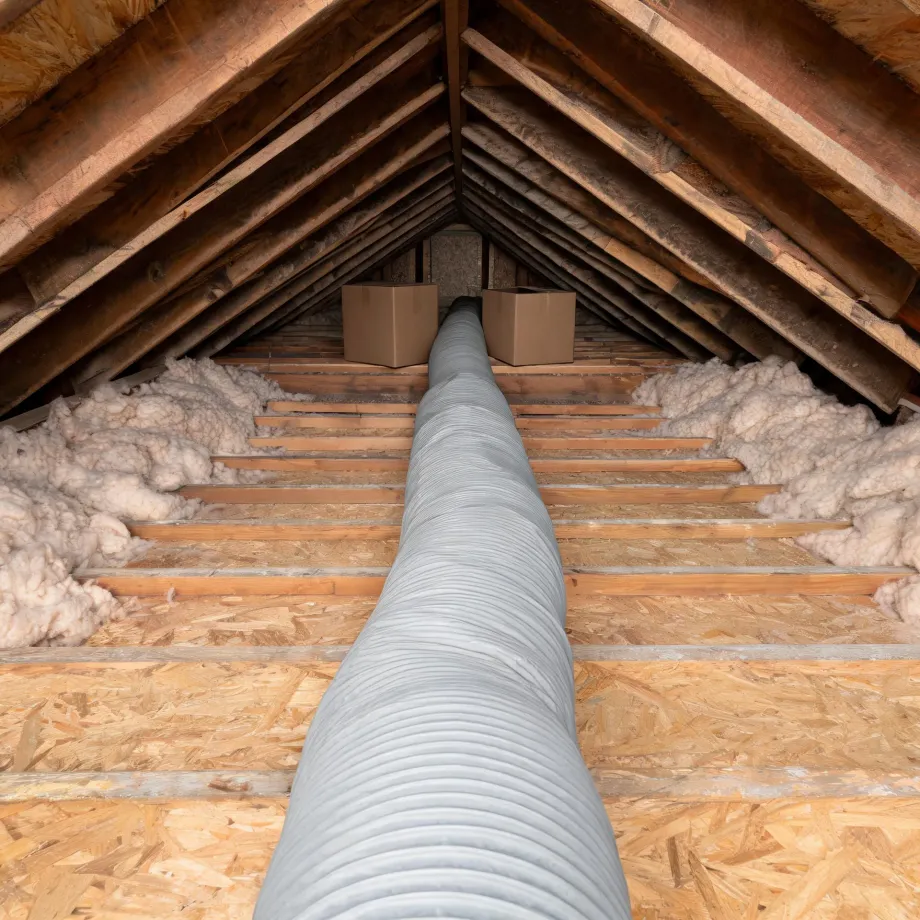
Ductwork designed for an older furnace generation does not always move air the way a current system needs it to. Half the homes in Dallas County, Texas were built in 1983 or earlier (2020-2024 ACS 5-year). A contractor quoting a furnace replacement has to assess whether the existing duct layout handles the airflow a new unit delivers, and whether the electrical service at the panel supports it. If the ducts are undersized, poorly routed, or leaking at the joints, the equipment choice becomes secondary to what the house will actually carry. That assessment shapes the quote before the furnace itself is priced.
What Gets Installed With a New Furnace
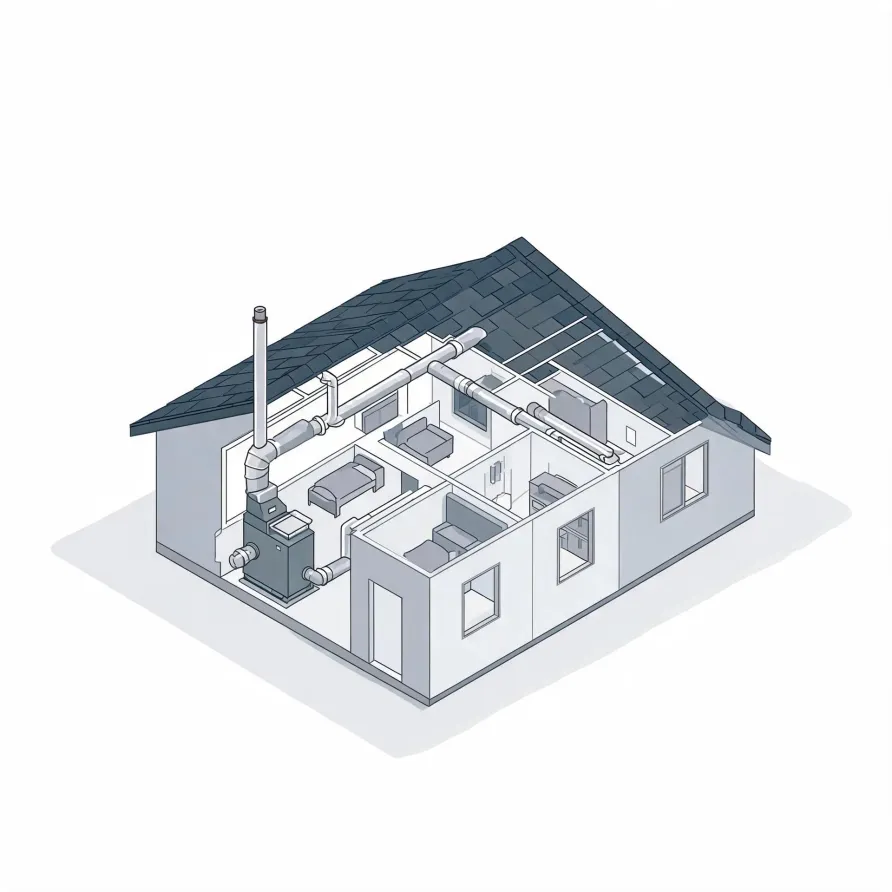
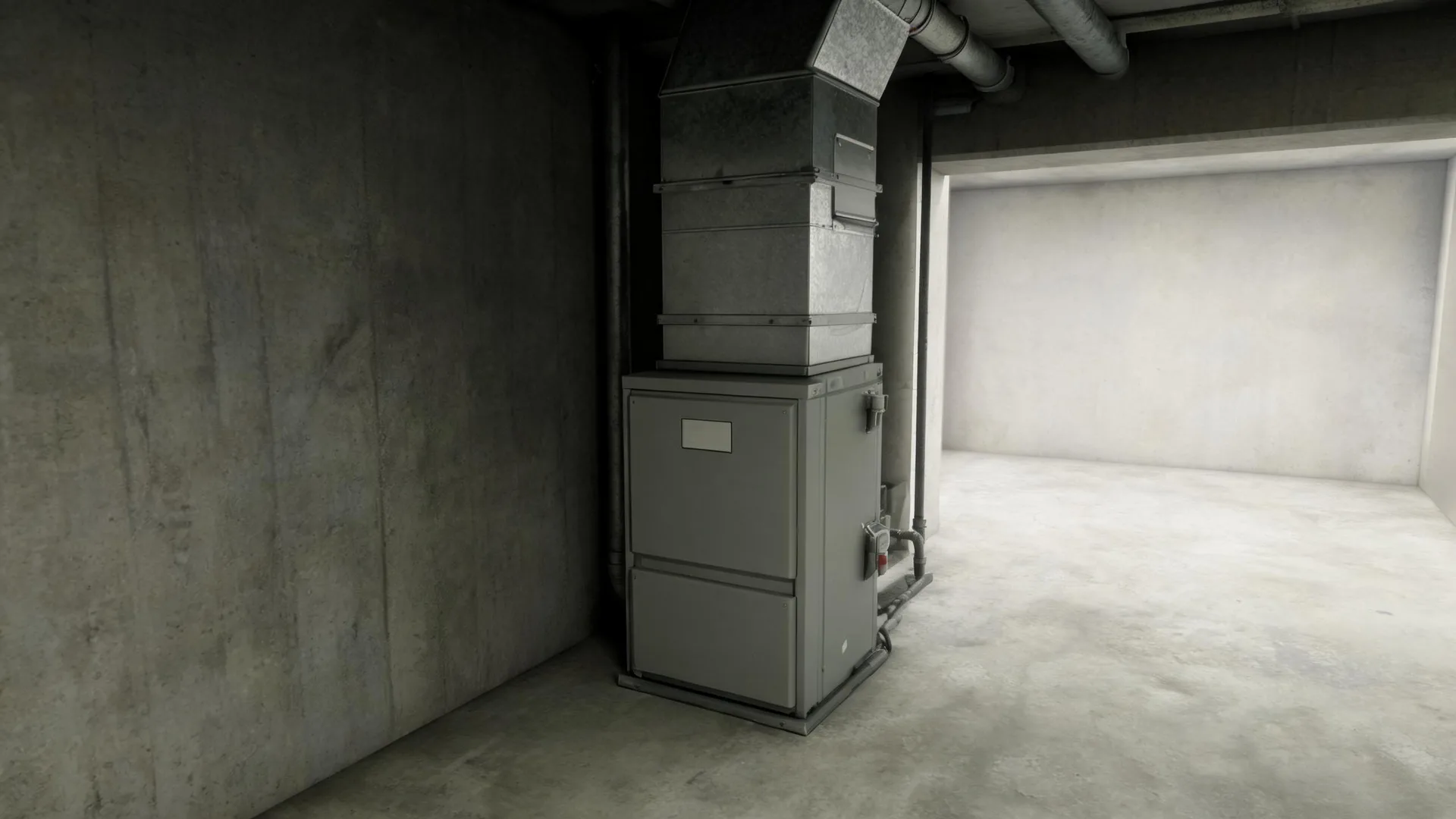
The furnace itself sits inside the house, most often in a utility closet, basement, or attic. It holds the heat exchanger, the blower, and the burner assembly, all housed in a single metal cabinet. That cabinet is what a contractor sets in place and connects to the rest of the system.
The flue pipe runs from the furnace up and out of the house, carrying combustion gases away. The thermostat mounts on an interior wall and gives the homeowner a point of control. A new furnace also gets a gas line connection at the cabinet, along with a disconnect and a condensate drain where the equipment calls for one.
The drawing shows a typical layout, and a licensed contractor determines exactly what applies to this house.
Get matched in Dallas CountyDallas County, by the numbers
379 severe weather events were recorded in Dallas County, Texas between 2015 and 2024.
NOAA National Centers for Environmental Information, Storm Events Database, bulk CSV export, events 2015-01-01 through 2024-12-31.Half the homes in Dallas County, Texas were built in 1983 or earlier (2020-2024 ACS 5-year).
U.S. Census Bureau, 2020-2024 American Community Survey 5-Year EstimatesDallas County, Texas holds 1,064,965 housing units (2020-2024 ACS 5-year).
U.S. Census Bureau, 2020-2024 American Community Survey 5-Year EstimatesOwners occupy 50.8% of the occupied homes in Dallas County, Texas (2020-2024 ACS 5-year).
U.S. Census Bureau, 2020-2024 American Community Survey 5-Year EstimatesFurnace Installation Rules for Dallas County, Texas5 codes, standards, and licensing rules
What HVAC Installation Looks Like in Dallas County
Non-weatherized gas furnaces manufactured on or after November 19, 2015 must reach 80.0 percent AFUE.
Non-weatherized oil-fired furnaces manufactured on or after November 19, 2015 must reach 83.0 percent AFUE.
Mobile home gas furnaces manufactured on or after November 19, 2015 must reach 80.0 percent AFUE.
Non-weatherized gas furnaces manufactured on or after December 18, 2028 must reach 95.0 percent AFUE, up from the 80.0 percent minimum that applies to units manufactured before that date.
Licensing and Legal Requirements in Dallas County, Texas
In Texas a person may not engage in air conditioning and refrigeration contracting unless that person holds a license issued under the state air conditioning and refrigeration contractor law.
Severe Weather Events in Dallas County
Extreme weather puts real stress on heating equipment, shortening its working life and raising the odds of a failure at the worst moment. How hard Dallas County pushes its furnaces is a local fact, and it shapes what a well-matched installation looks like here.
379 severe weather events, 2015–2024. Source: NOAA National Centers for Environmental Information, Storm Events Database.