
Why your house is dry with the heat on in Texas

A local pro who services furnaces gets in touch about the tune-up.

Find a pro near me

Cold air holds less moisture than warm air, so when your furnace heats up the cold air coming into your house, the relative humidity inside drops even though no water actually left the air. That's why skin feels tight, static shocks happen more, and wood furniture or floors can shrink a little in the winter months. In Texas this surprises people because summer here is so muggy that dry air never crosses their mind. Most homes in Texas heat with electricity, and an electric furnace does the same thing to the air as a gas one does. It heats without adding any moisture back, so the dryness is about the heating itself, not the type of system running it. A furnace that's maintained and running an even, steady cycle won't make the air any less dry, but one that's struggling or short-cycling can make the swings feel worse.

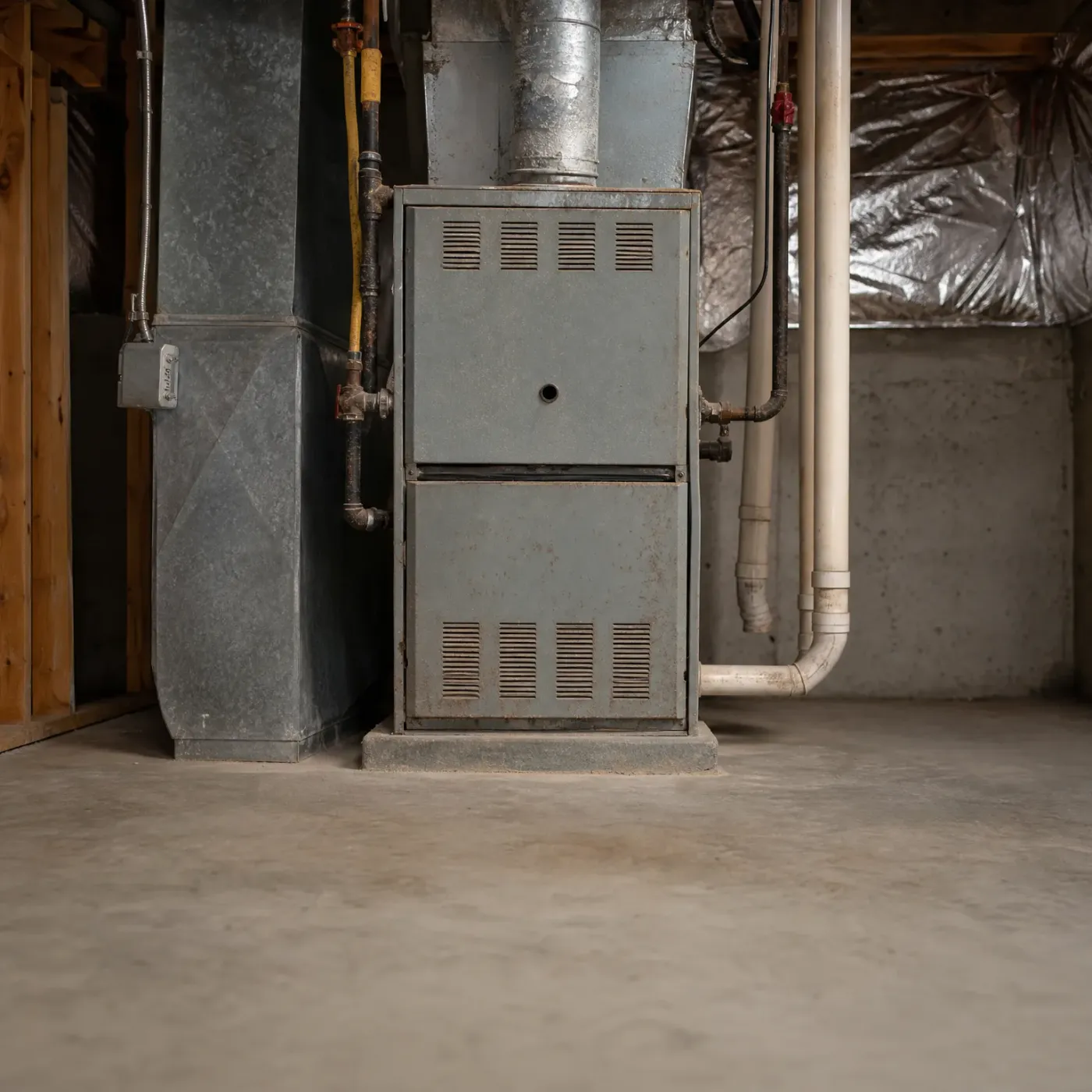
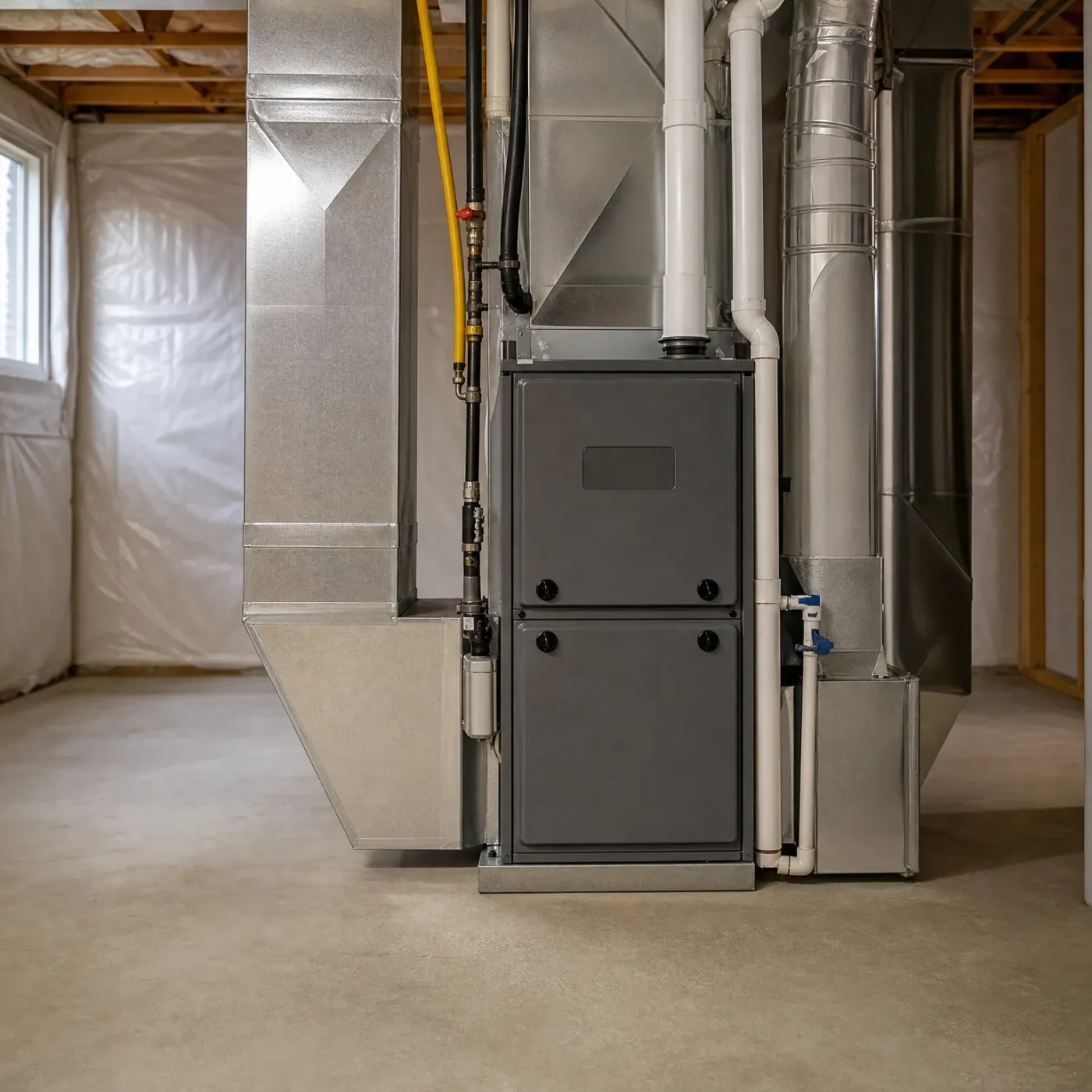
A gray gas furnace stands on a concrete basement floor, connected to sheet-metal ductwork, white PVC vent pipes, and a yellow gas line, with plastic sheeting covering the walls.

Furnace running clean

This is what a well-kept furnace looks like: tight connections, clear venting, nothing choking the airflow. Air moves through freely and heats evenly, so the dryness you feel is just the normal drop in humidity, not made worse by a clogged filter or a cracked heat exchanger leaking unheated air around the system.
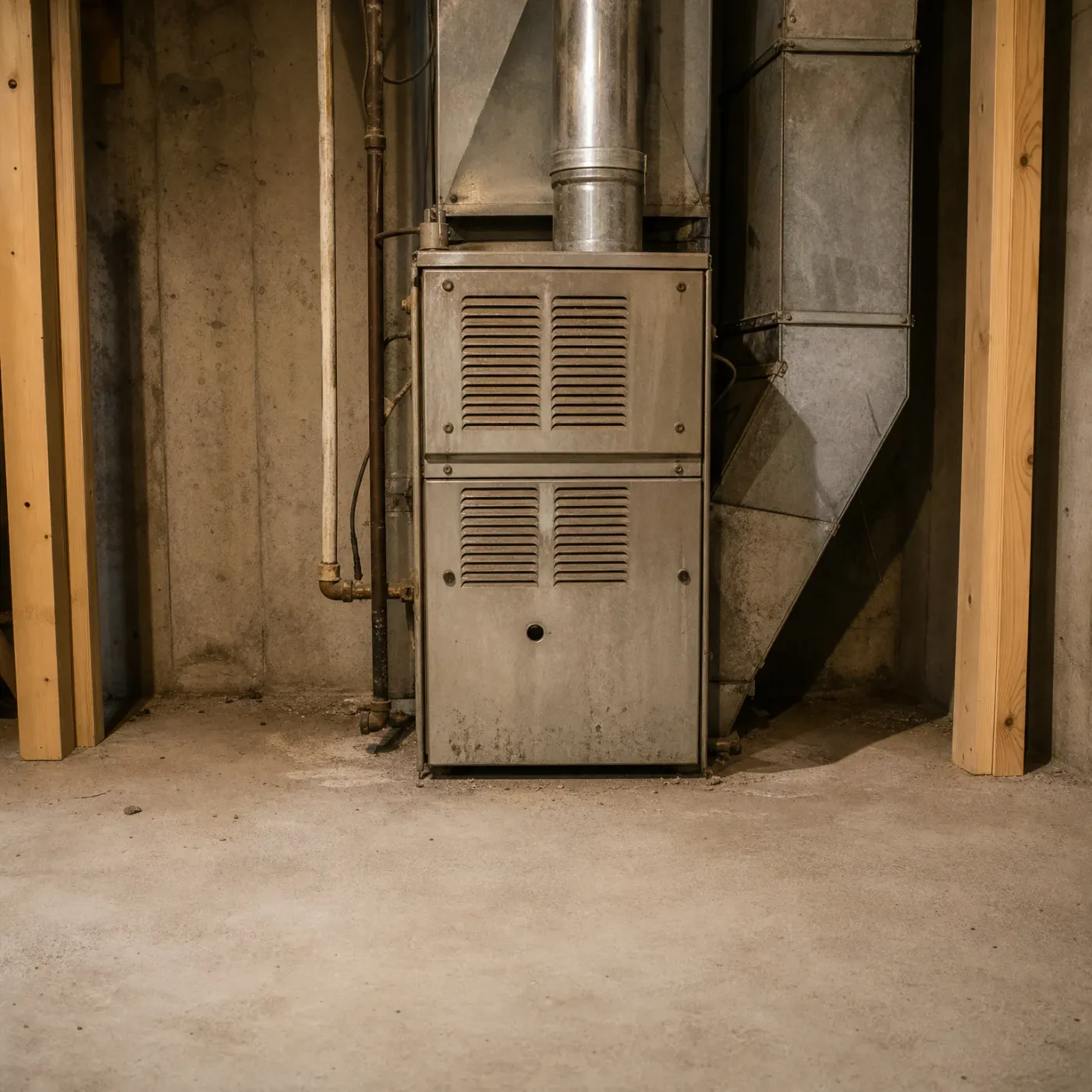

A metal furnace with louvered panels stands against a concrete basement wall, connected to sheet-metal ductwork and a round flue pipe, with wooden framing posts and a pipe nearby.

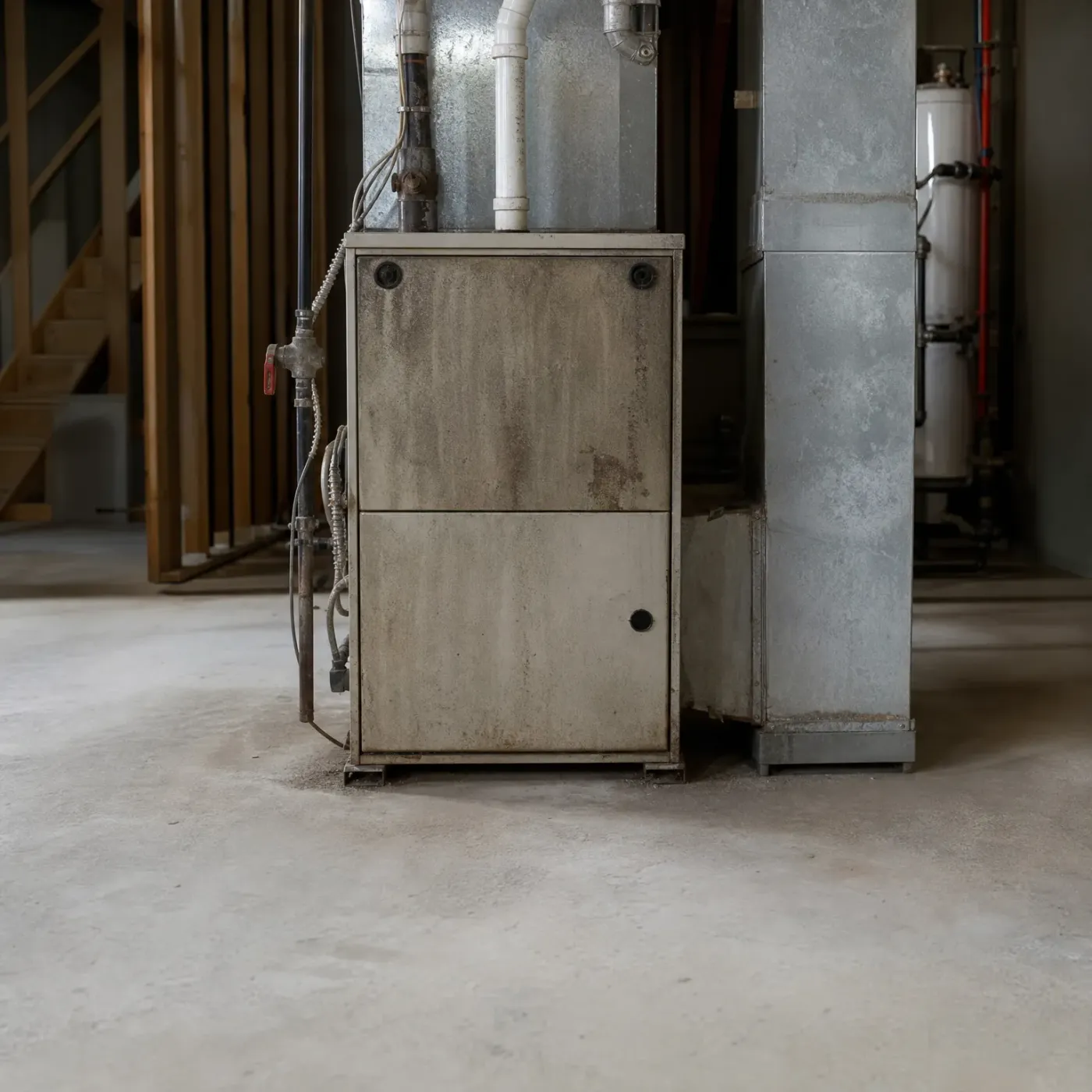
Furnace neglected

Dust like this builds up on a furnace that hasn't had a filter change or a tune-up in a while. A dirty filter slows airflow and makes the blower work harder to push heat through your house, which can leave rooms drier and less even, especially in homes heating with electricity through a Texas winter.

Does running the furnace actually make the air in my house drier?

Does running the furnace actually make the air in my house drier?

Yes, and the furnace itself isn't adding dryness beyond that

The furnace doesn't pull moisture out of the air. It just heats the air that's already in your house, and warm air can hold more water vapor than cold air, so the relative humidity reading drops once that air warms up. Nothing left the room. A furnace with dirty burners or a cracked heat exchanger doesn't make this worse either, since it changes how clean the heat is, not how wet the air is. What does make it worse is a duct leak pulling in outside air all day, or a filter so clogged the system runs longer than it should to reach the same temperature on your thermostat.

A gray-haired bearded man in a dark coat and scarf dusted with snow stands smiling in a dimly lit entryway with a white front door, a side table with a lit lamp, an oval mirror, and a patterned rug.
An older bearded man in a dark snow-dusted coat and gray scarf stands just inside a dimly lit home entry, with a framed picture, lit table lamp, and an adjoining room with a fireplace behind him, and snow visible through the open door.
A gray-haired, bearded man in a dark snow-dusted coat stands smiling in a dimly lit entry hall with a staircase, a lit table lamp, a framed picture, and a living room visible through a doorway.
An older man with gray hair and a beard, wearing a dark jacket dusted with snow, stands smiling in a dimly lit hallway with lamps and a living room visible behind him.

Matched to your furnace job

Fill out one form instead of calling around for a furnace tune-up.

There's no charge for the request.

Why a dirty furnace makes it worse

A furnace that's gone a while without a filter change or a cleaning has to run longer to get the house to temperature. Dust on the burners or a clogged filter cuts down airflow, so each cycle takes more time to warm the same air. Longer cycles mean more cold outside air gets pulled in and heated, and that's more of your house's moisture turning into the same dry air. The furnace isn't working harder because the air is dry. The air gets drier because the furnace is working harder than it should have to.

What a maintenance visit checks

A technician checking a furnace looks at the burners, the flame sensor, and the blower wheel for the dust and buildup that slow a system down. Electric furnaces get the heating elements and the blower checked the same way. None of that puts moisture back into your air, since a furnace was never built to do that. What it does is get the unit back to moving air the way it's supposed to, so you're not running longer cycles than the house actually needs. In Texas, with electricity rates typical and furnaces running most of the winter, that difference shows up on the bill too.

An older metal furnace with PVC and metal pipes stands on a concrete basement floor beside galvanized ductwork, with wooden stairs and a water tank in the background.
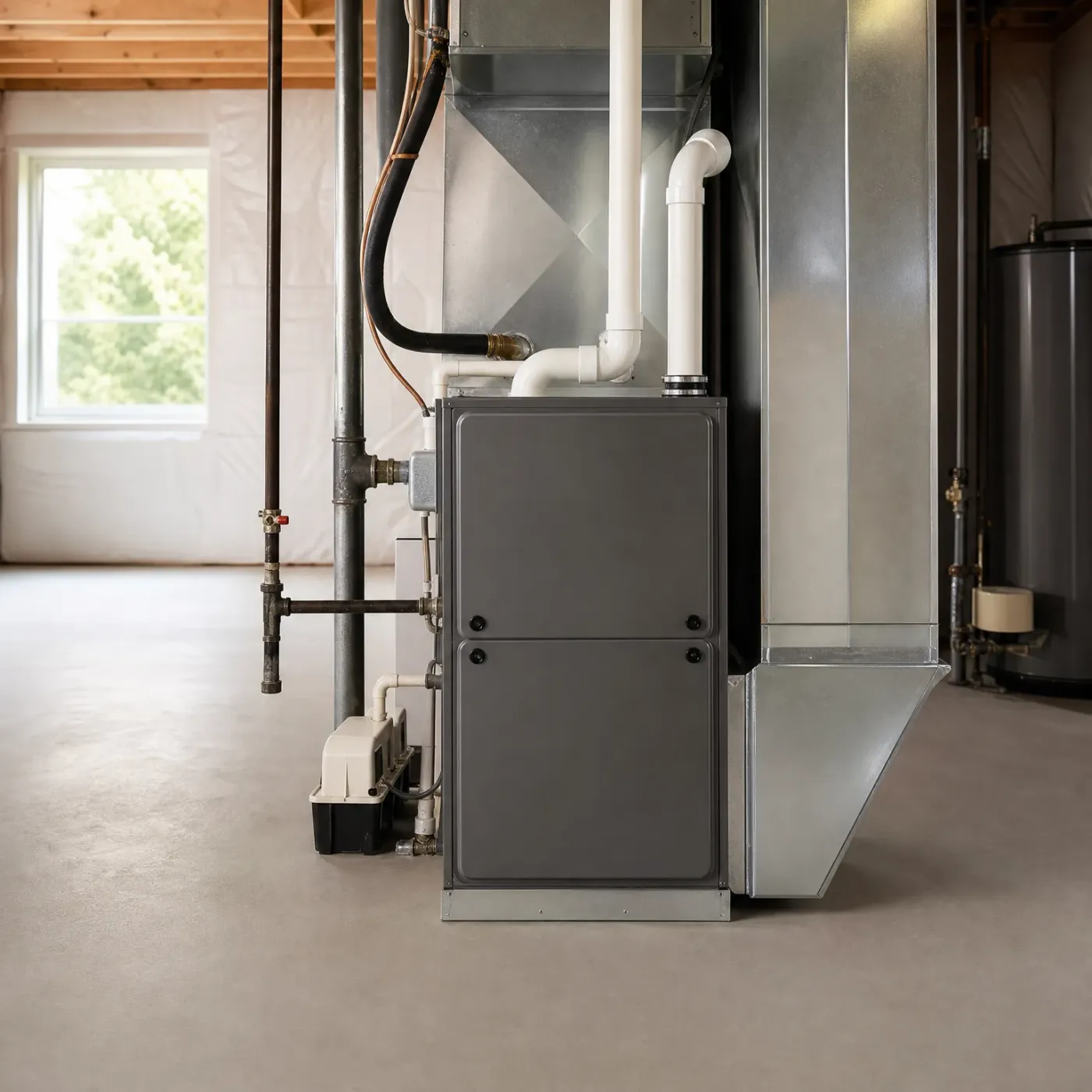
Before you get your furnace maintenance
A gray high-efficiency furnace in a basement with sheet-metal ductwork, white PVC vent pipes, metal plumbing lines, a condensate pump on the floor, and a window showing green trees outside.
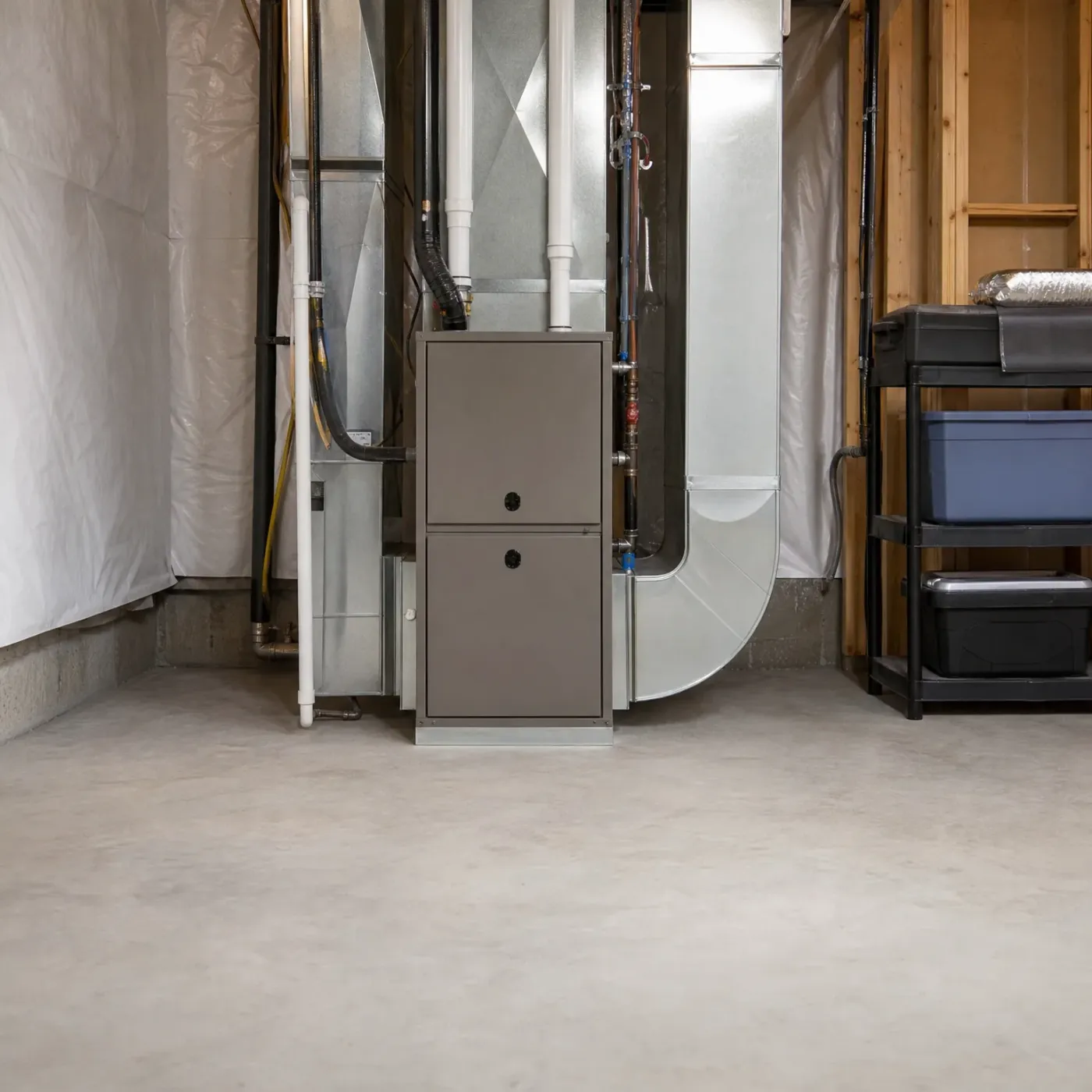
After you get your furnace maintenance
A basement utility area with a gray furnace, sheet-metal ductwork, pipes, plastic-covered walls, a concrete floor, and a black shelving unit holding storage bins.

Furnace in good shape

Connections are tight, the venting is clear, and nothing blocks airflow through the ducts. Air moves through evenly and the burners fire the way they're supposed to, so the house warms up without the furnace running longer than it needs to.

A gray metal furnace with louvered vent panels stands on a concrete basement floor beside galvanized ductwork, gas and plastic pipes, and foil-faced insulation along the ceiling and wall.

Furnace showing its age

Rust on the cabinet and a worn gas line are signs a furnace has been left alone too long. A unit in this shape works harder to push heat through the same ductwork, running longer cycles that pull more moisture out of the house air.

Winter nights average 41°F statewide

Nights here average 41°F in December, January and February, so the furnace is cycling on most nights all winter, not just during the odd cold snap. Every one of those cycles pulls in cold air and dries it out further. That steady pull is what you're feeling, and it keeps going as long as the nights stay cold.

NOAA nClimDiv 1991-2020 county normals weighted by homes

A woman wrapped in a thick beige fleece blanket sits on a sofa with an open book on her lap, beside a lit table lamp, with a frost-covered window behind her.
An older woman with gray hair in a bun and glasses, wearing a beige knit sweater, smiles while looking to the side in a warmly lit kitchen, with a loaf of bread on the counter in the foreground and a snowy scene outside the window.
A woman in a cream cardigan and jeans stands with one hand raised facing an open front door of a gray horizontal-siding house, with a black lantern wall light, a potted shrub with yellow flowers, and a stone-faced porch column.

The dryness is normal. How hard your furnace works for it isn't fixed

Your house is dry because the furnace is heating cold Texas winter air, and warm air holds moisture better than cold air does. That part happens in every home with a furnace. What's different from house to house is how long the furnace has to run to get there, and that comes down to whether it's clean, the filter is clear, and the burners are firing the way they should.

You don't have to sort out which of those is true for your furnace on your own. Getting it matched with a contractor who services furnaces in your area means you skip the part where you'd otherwise call around, describe what's going on more than once, and weigh quotes against each other. Someone who knows this equipment looks at what's actually happening in your house and goes from there.

Interior corner of a room with a window and sheer curtain at left, a gray upholstered sofa with a cushion at right, and a round wooden table holding stacked books and a round vase with an olive branch.
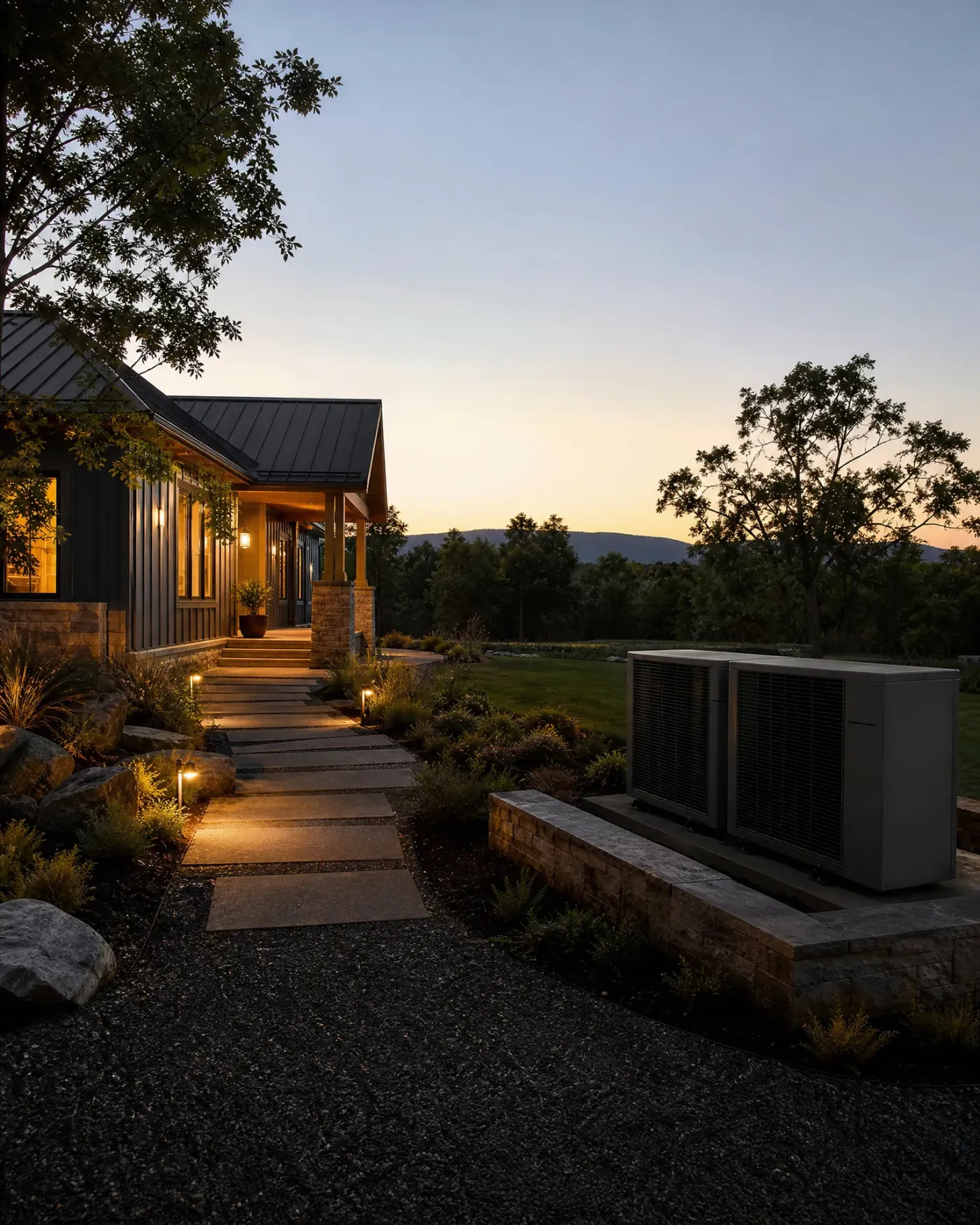
At dusk, a dark board-and-batten house with a standing-seam metal roof and lit entry walkway of stone pavers, with two large outdoor heat pump units on a stone-walled pad at right and trees and hills in the background.

Furnace Maintenance

A furnace pro near you

Step 1 of 3: Equipment
  • A corner of a room with an upholstered wood-framed armchair holding a floral pillow, a round side table with a ceramic lamp, books and a vase of greenery, a framed landscape painting on the wall, a patterned rug, and a sunlit multi-pane window.
    • Say what's going on with your furnace, and a pro who works on them reaches out.
  • Interior corner with a wood-framed window showing green foliage outside, a framed landscape print on a beige wall, and a rounded stone vase of leafy branches on a wooden cabinet.
    • Send the form, and lining up the furnace tune-up stops being yours to chase.
    • Send the form and the furnace tune-up stops being something to remember.
  • A pale ceramic vase holding olive branches sits on a dark wooden countertop beside a carved wooden dough bowl, next to a wood-framed window and a light painted plank wall.
    • One form replaces the calls you'd make to find a furnace pro.
    • Skip calling around to set up a furnace tune-up.
  • A dark wood round side table holding a brass lamp with a cream shade, a blue-and-white patterned bowl, and a white textured pot of greenery, beside an upholstered chair with a gray patterned cushion and a white-framed window showing green trees and flowering shrubs.
    • A licensed local pro takes the request for your furnace tune-up.
    • Your request goes to one pro, not a list of companies.