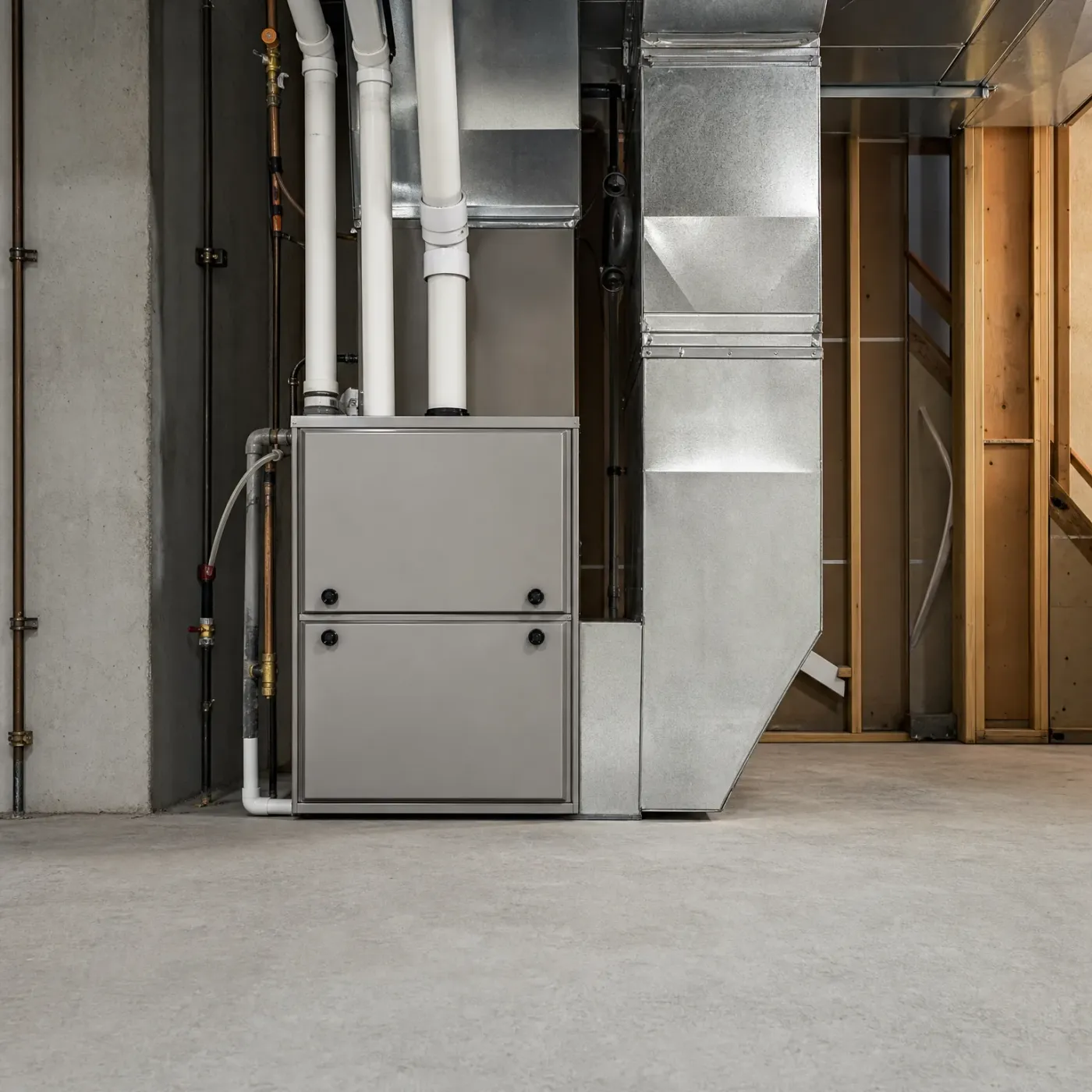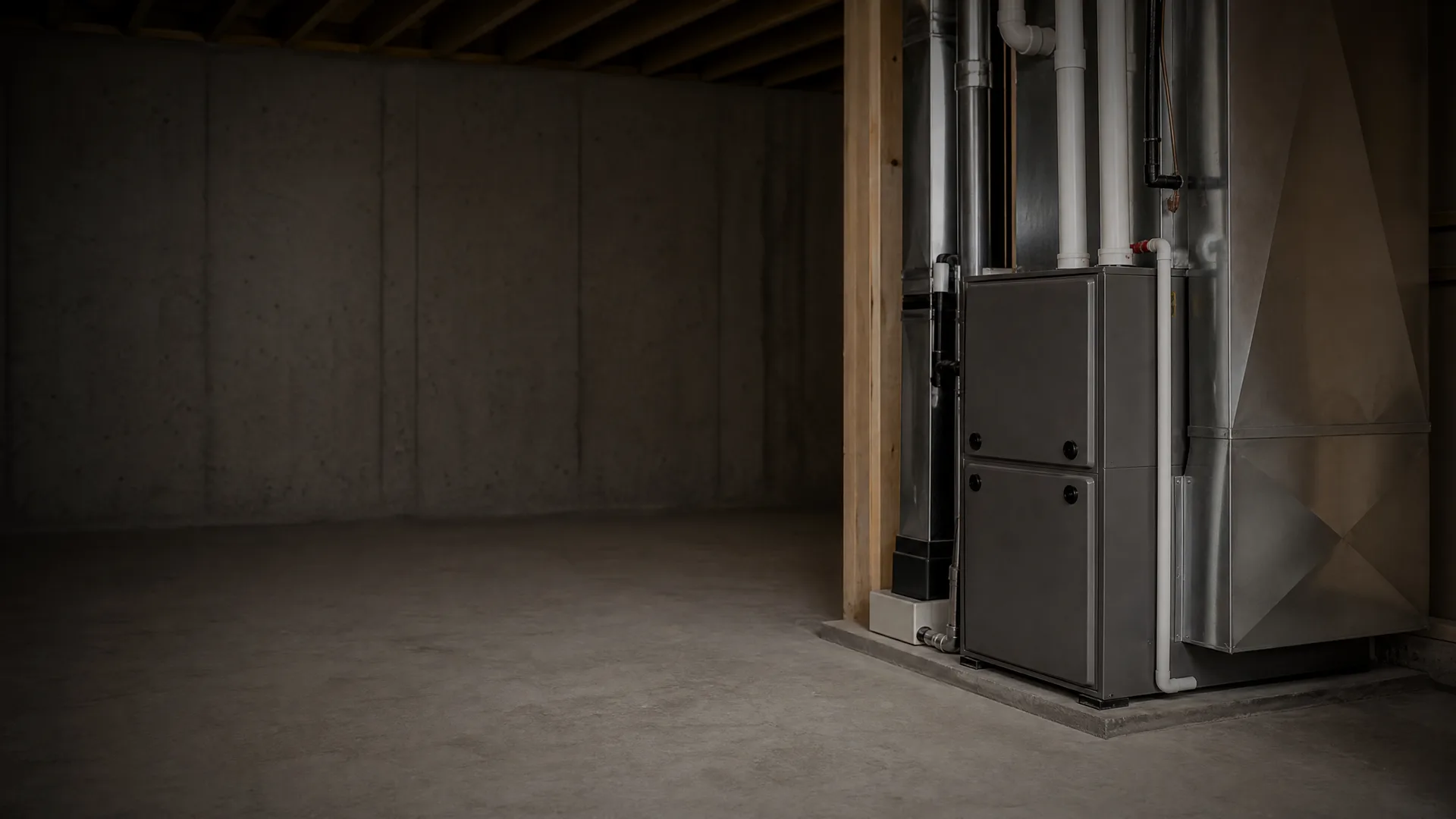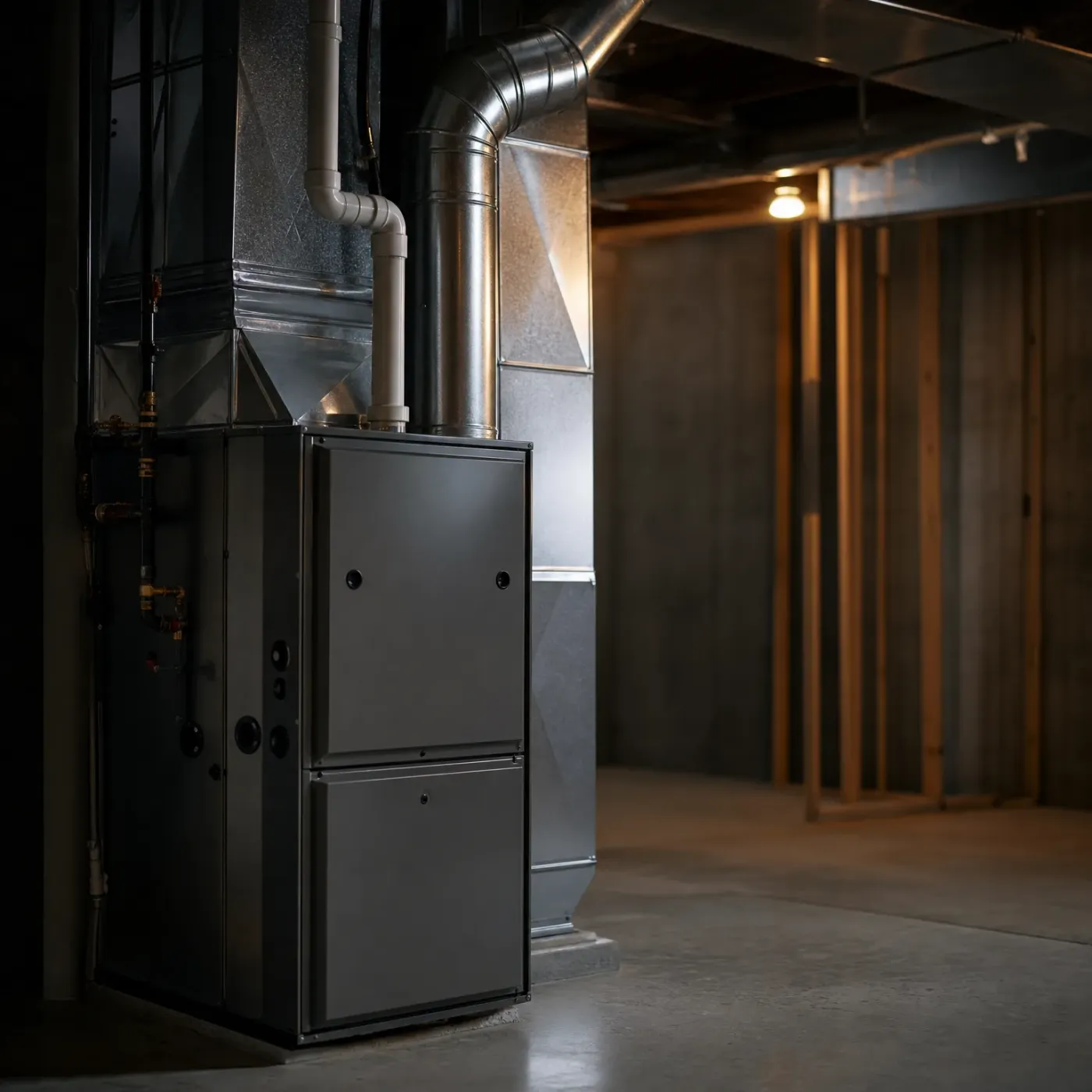
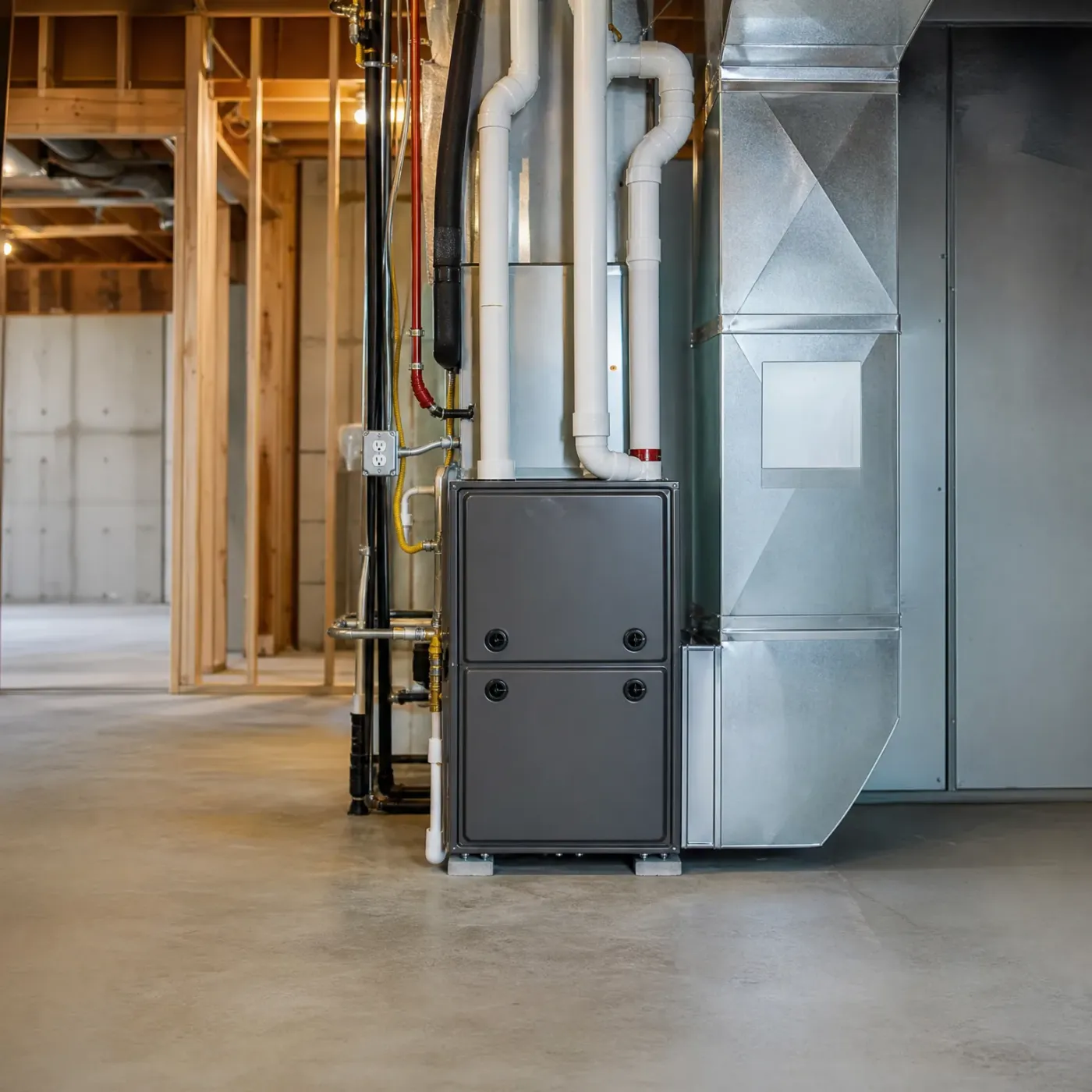








A dark gray furnace with two access panels stands in a basement, connected to galvanized sheet-metal ductwork and PVC pipes, with exposed wood framing and a bare bulb light in the background.

Skip calling around

Why your furnace filter gets dirty fast in Texas

Dust and humidity both get pulled into your furnace, and a Texas summer gives you plenty of both. This page gets into what's actually loading up that filter and how fast you should be checking it. Skip the search for a contractor, the calls, and the back and forth explaining the problem, and get matched with someone local who services furnaces like yours all year.

Skip the calls

Your furnace filter is loading up fast because it's not just catching heating dust. In Texas, that filter sits in the airflow nearly all year, since the same blower that pushes winter heat also moves air every time the AC runs. Summer humidity makes it worse. Damp air carries more dust and lets it stick to the filter fibers instead of passing through, so the filter mats up faster than it would somewhere dry. Add in a dusty attic or a house with pets, and a filter rated for 90 days can be choked in half that. A clogged filter forces the blower to work harder, which can strain the motor and let unfiltered dust reach the furnace's coil and burners. Checking it monthly, especially through the muggy months, tells you when it actually needs changing instead of guessing. If your system is choking through filters faster than it should, a furnace maintenance visit can show whether the ductwork or the blower itself is pulling in more dust than normal.

A gray high-efficiency furnace stands on a concrete basement floor beside galvanized sheet-metal ductwork, with white PVC vent pipes, gas and water lines, and unfinished wood framing behind it.
Here the filter is doing its job, pulling air through cleanly with the blower moving heat on a normal run.
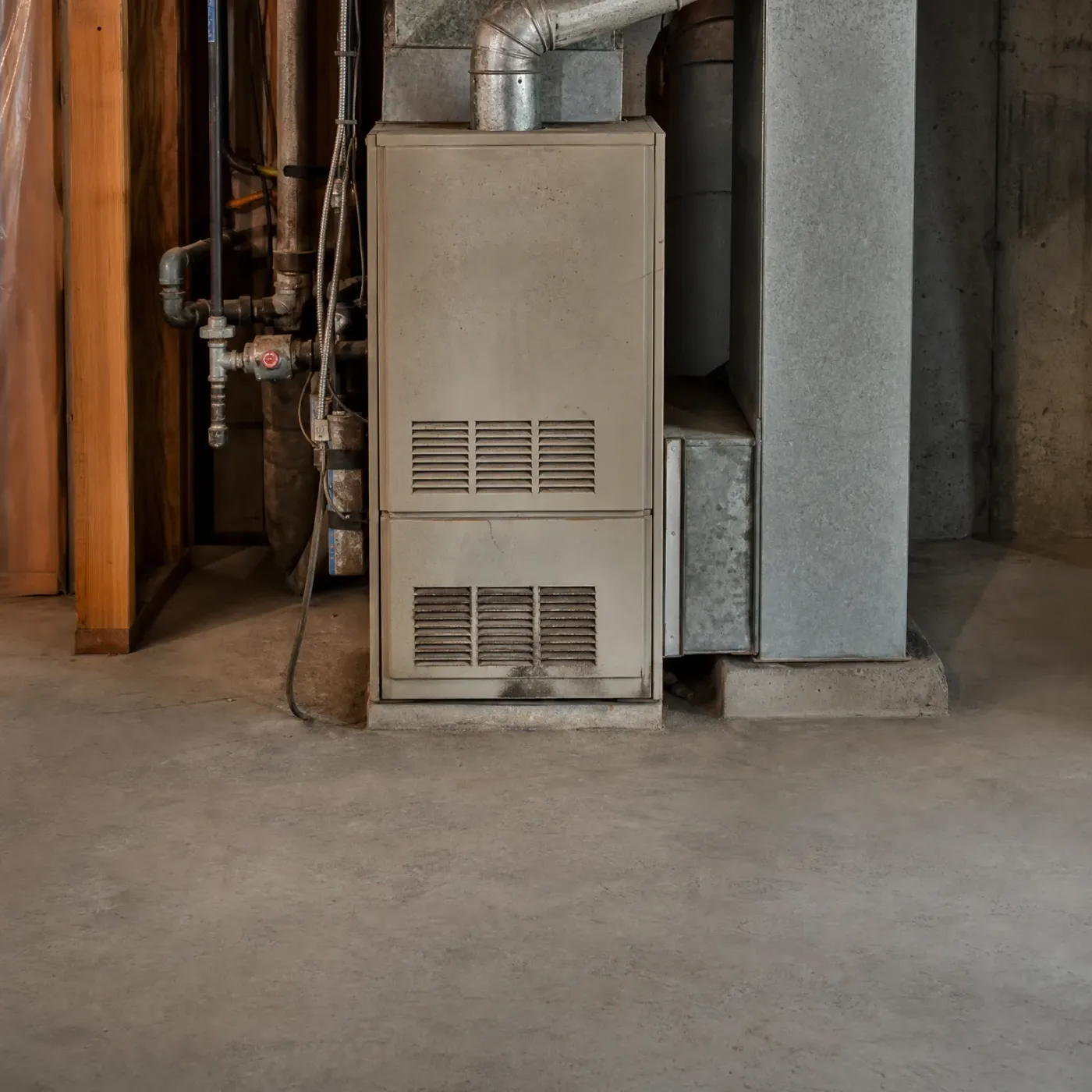
A beige furnace with two louvered front panels stands on a concrete basement floor beside galvanized ductwork, metal pipes, and a wooden post.
Here the filter is caked solid, and the blower is working against a clog instead of through clean air.
A smiling woman with dark shoulder-length hair in a cream V-neck sweater sits at a marble counter with a glass of red wine, with a kitchen and softly lit living room behind her.
A woman in a dark green sweater laughs while seated at a marble kitchen island with a glass of red wine, with open shelving, cabinets and a living room visible behind her.
A woman with long dark hair in a cream knit sweater laughs while looking off to the side, seated at a counter with a glass of red wine, in a dimly lit living room with a sofa, lamp, framed pictures and houseplant behind her.
A smiling woman with long dark hair in a beige sweater sits at a marble kitchen counter with a glass of red wine, with a dimly lit living room behind her.

Why does your filter look gray after just a few weeks?

Pull the filter and check it against a light. If you can't see light through it, it's past due. You might notice the house feels stuffier than it should, or a room or two that never quite gets warm even with the thermostat turned up. Some furnaces run longer to hit the set temperature, which you'd notice as higher electric bills since most homes here heat with electric furnaces. A clogged filter also lets more dust settle on furniture and windowsills, since the air moving through the house isn't getting filtered the way it should. Left long enough, the blower is working harder than it needs to, and that strain doesn't fix itself.

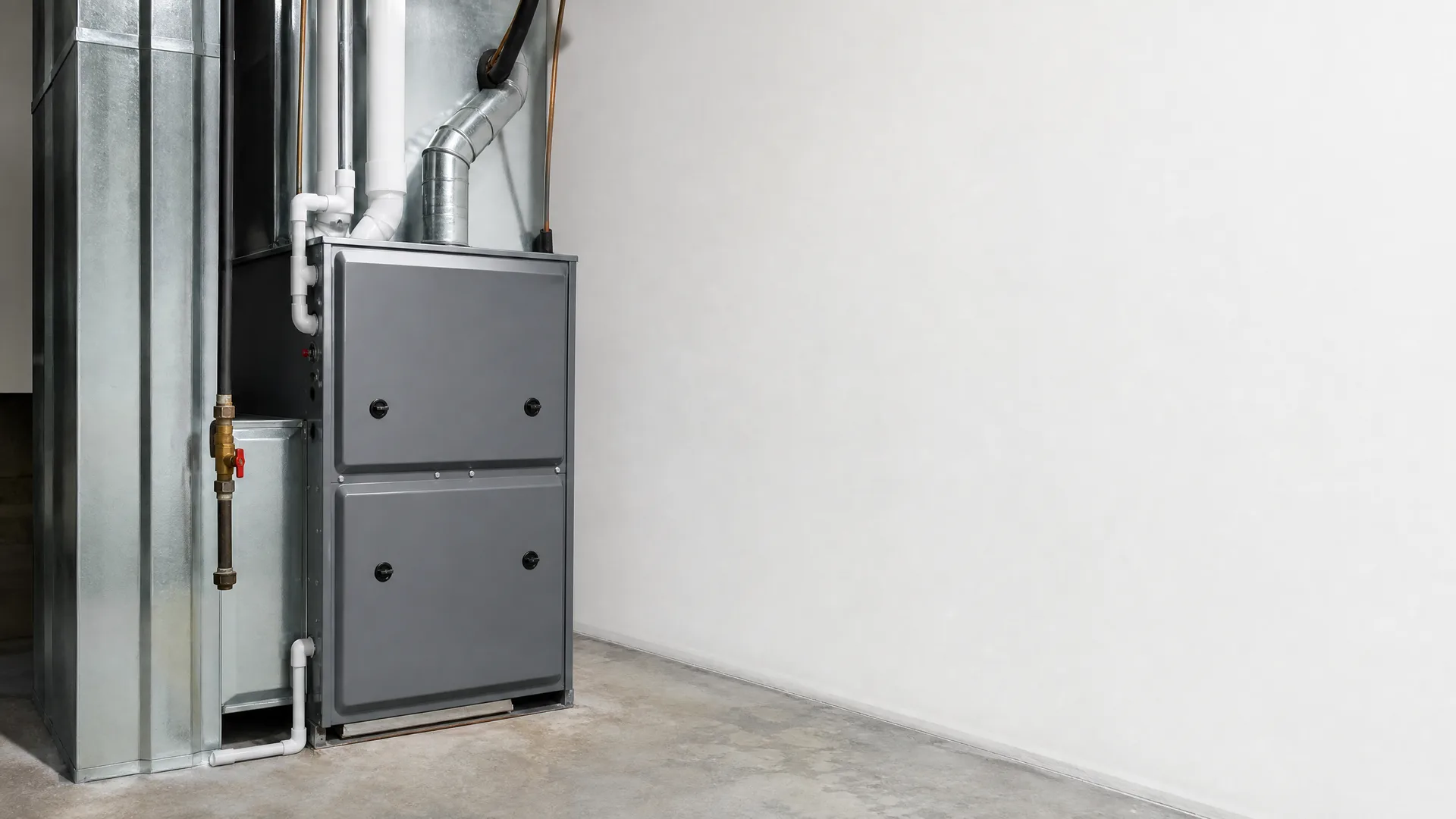
A gray residential furnace with two panel doors stands against a plain light wall in a concrete-floored room, connected to metal ductwork and white and copper pipes.

Why the blower never really stops

Your furnace and your AC share the same blower and the same filter, so that filter is working in July as much as it does in January. Warm air carries moisture, and moisture carries dust and pollen with it. Every pass through the blower deposits a little more on the filter's surface. A filter that might last two or three months in a drier climate can clog in half that time here, because it's filtering humid summer air for most of the year, not just a few winter months.

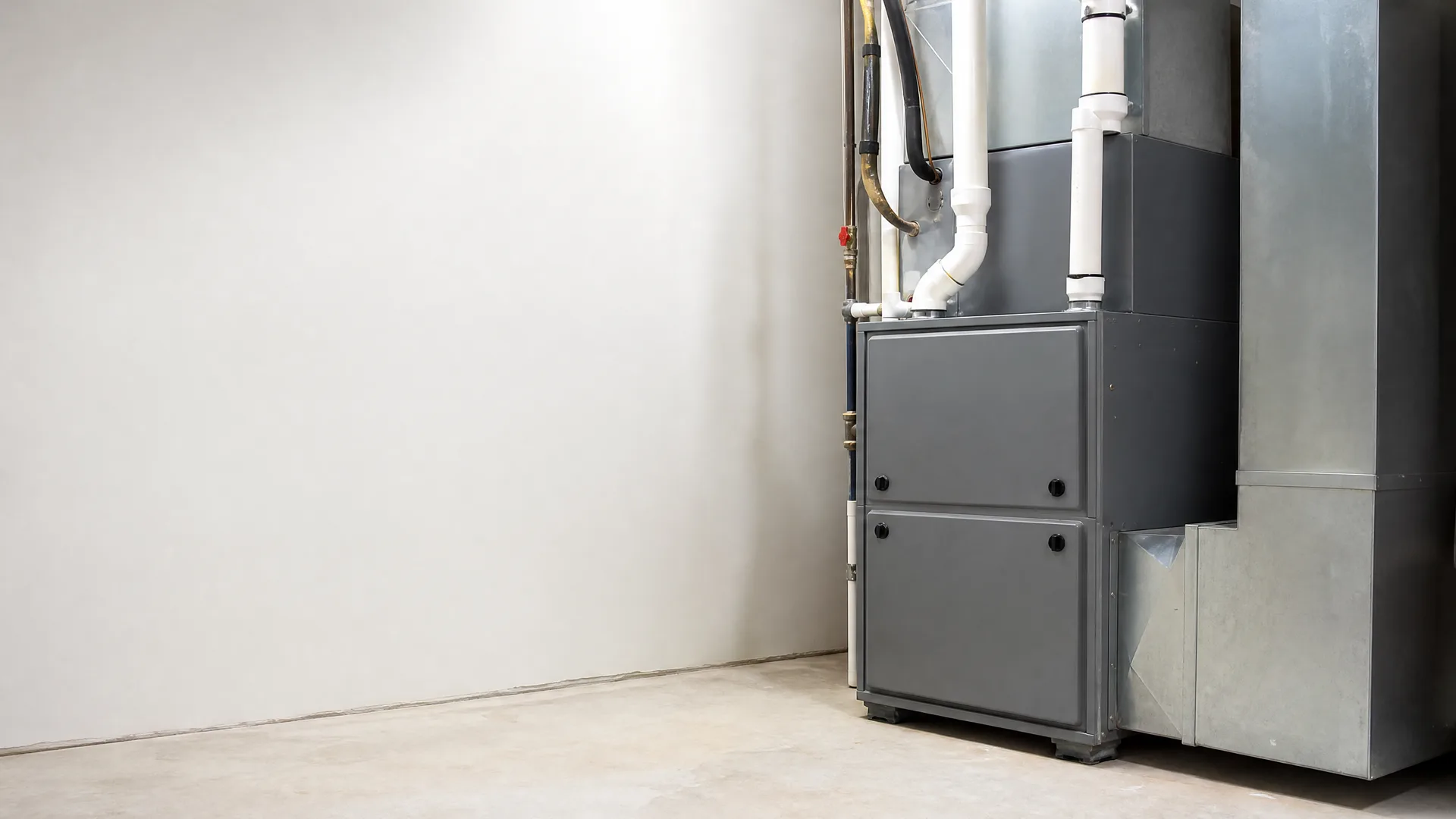
A gray high-efficiency furnace with white PVC venting pipes stands against a plain wall in a basement, connected to sheet-metal ductwork on a concrete floor.

What a clogged filter does to the blower

A clean filter lets air pass through with little resistance. A clogged one forces the blower motor to pull harder to move the same amount of air, and some systems respond by running longer to reach the temperature on the thermostat. That longer runtime pulls more dust-laden air through what filter surface is still open, which packs it in faster. A filter that's already behind tends to fall further behind unless it gets checked and swapped on a shorter cycle than the box recommends.

A closed laptop and a cream mug of coffee on a coaster sit on a dark wooden table, with a potted plant at left and a kitchen counter, tiled backsplash and shelf of ceramics in the background.

What's actually stuck in there

Pull a loaded filter apart and you'll find more than dust. Humidity swells the fibers in the filter material, and that makes the mesh tighter, so it grabs finer particles than it would on a dry day. Pollen flattens into the damp fibers instead of sitting loose on top. That's why a filter from a muggy stretch feels heavier and looks grayer than one pulled after a dry month, even on the same schedule.

A heat pump or electric furnace runs its blower in short, frequent cycles rather than long steady ones, so air passes through that filter more times a day than people expect. Each pass adds a little more to what's already caught. Finding someone to check it means the usual round of calls and quotes if you go looking on your own. A local contractor who works on electric furnaces all year already knows how fast Texas humidity loads a filter and checks it against that, not a guess.

A gray upholstered sofa with a textured cushion sits beside a dark round side table holding a vase of green foliage, with a table lamp and sheer-curtained window behind.
A smiling bearded man in a navy crewneck sweater sits at a dinner table with a glass of red wine, plates and glasses in the foreground, in a dimly lit room with a lamp and framed picture behind him.
A woman in a dark gray sweater reclines on a light sofa with eyes closed and a slight smile, under a textured gray blanket with an open book resting on her lap, with a lit table lamp and plant in the background.

Describe it once

A clogged furnace filter is easy to spot once you know to check it, but checking isn't the same as fixing what's behind it. Maybe the return duct is undersized, or the filter slot lets air sneak around the edges instead of through it, or the blower's been running harder than it should for a while now. That's the kind of thing a filter change doesn't solve and a homeowner isn't set up to diagnose. Finding someone who works on furnaces around here, one who's seen what a Texas summer does to a filter and a blower month after month, usually means a run of calls, explaining the same gray filter and stuffy room to each one, then weighing quotes that don't quite describe the same job. One contractor, local, licensed, and already familiar with what this climate does to a heating system, skips that part. You're left with the actual problem in your house, not a stack of estimates to sort through.

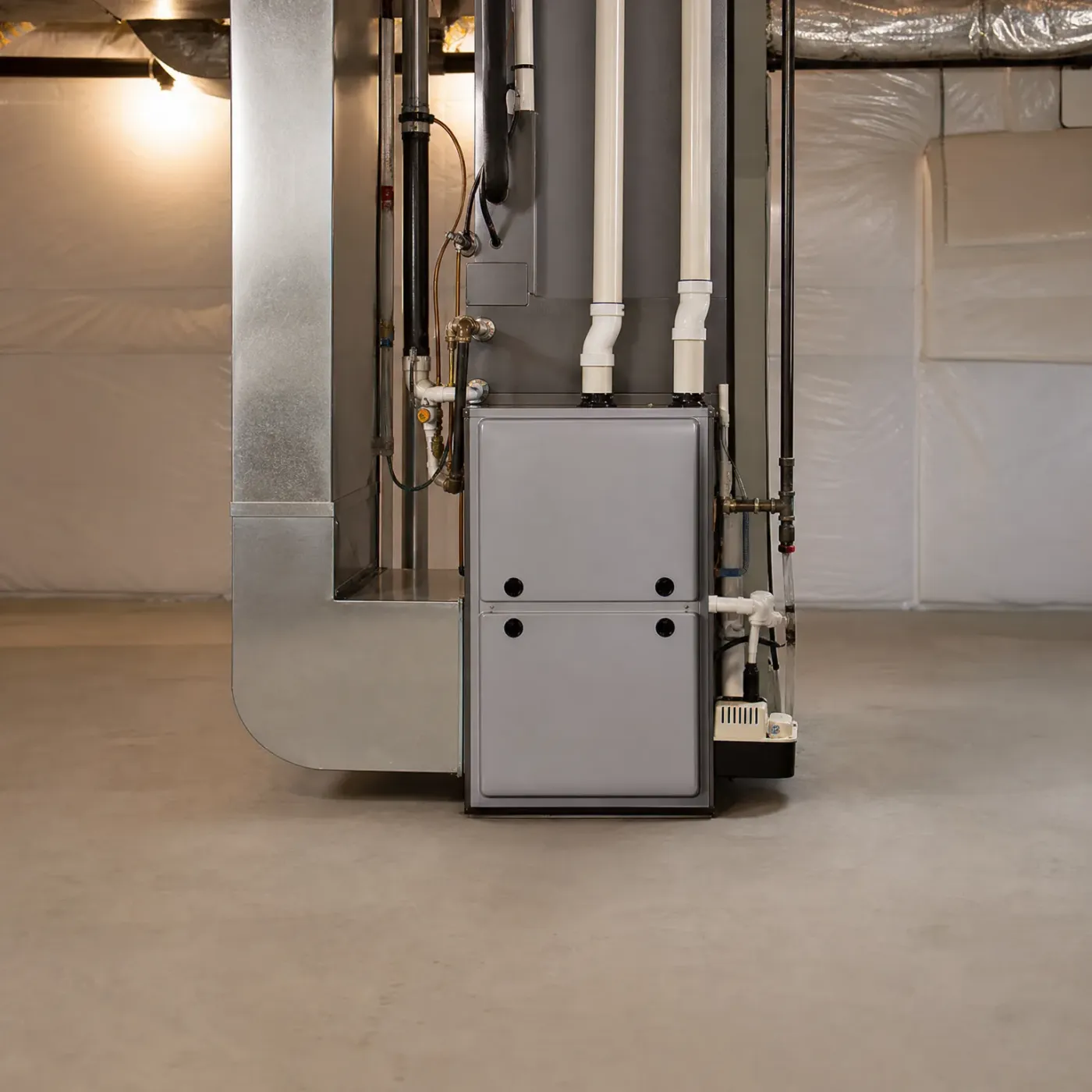
A gray high-efficiency furnace in a basement with white PVC vent pipes, sheet-metal ductwork, copper and black piping, a condensate pump, and insulated walls above a concrete floor.

Clean filter, clear airflow

This is what a fresh filter looks like at work. Air moves through the blower without resistance, and the system holds whatever heat setting you gave it. The ductwork and drain lines run the way they were installed to, with nothing fighting the airflow.
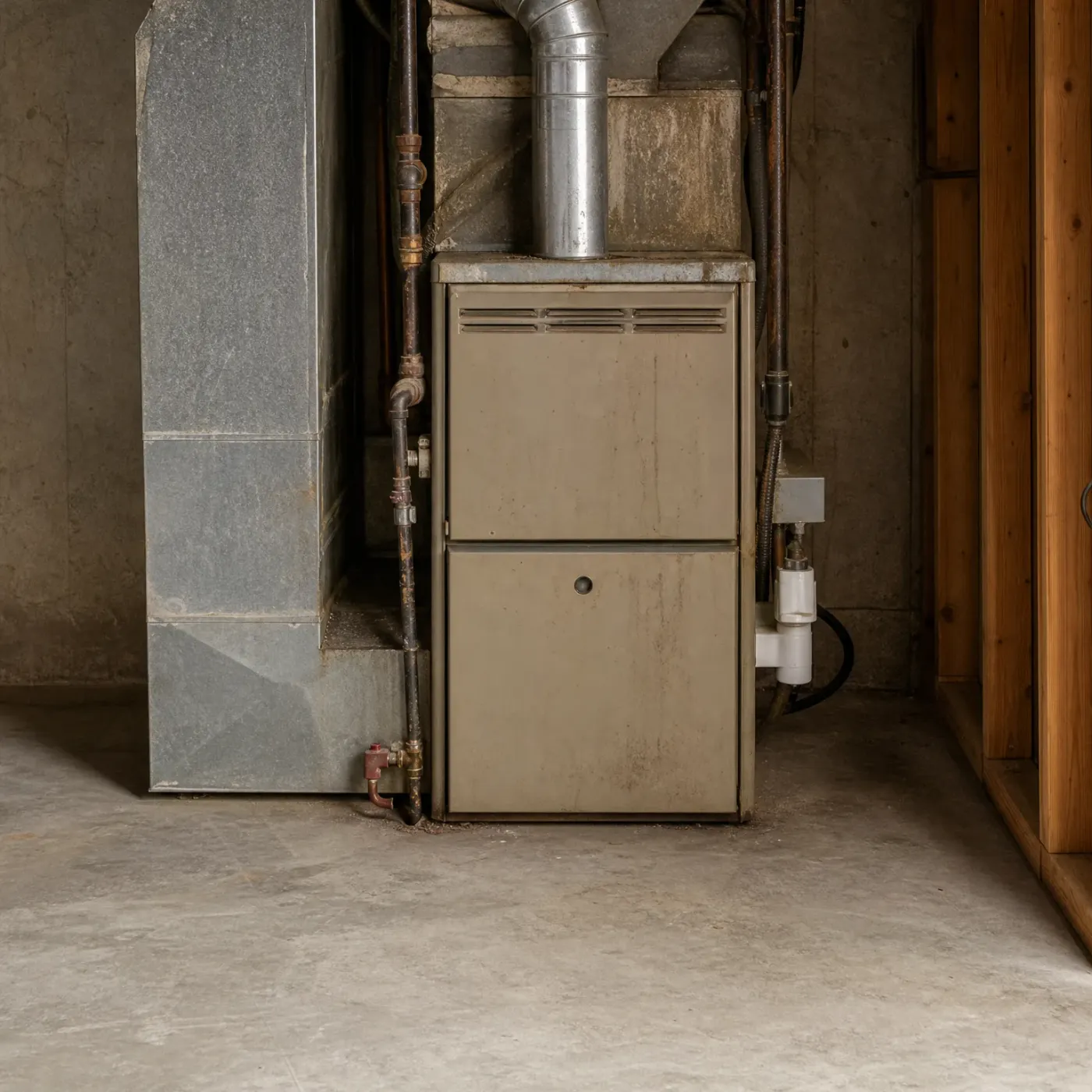
A beige residential furnace stands on a concrete basement floor beside galvanized sheet-metal ductwork, a round flue pipe, copper gas piping, and a PVC condensate line, with a wood-paneled wall at right.

A furnace left too long between filters

Grime builds up on the cabinet and the panels because airflow has been restricted long enough that dust has somewhere to settle. A furnace in this state is pulling air through a clog instead of a clean filter, and the blower runs longer to move the same amount of heat.

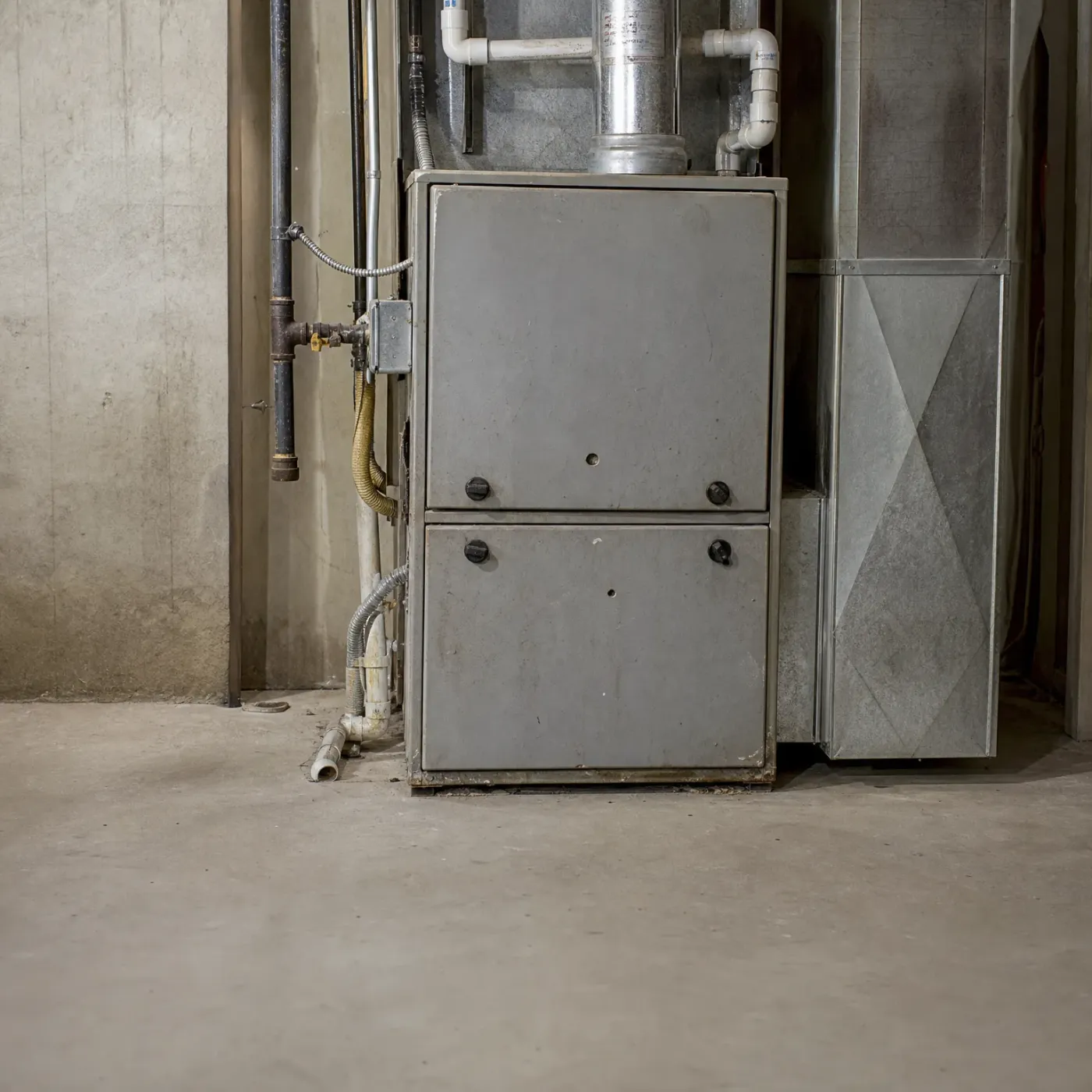
A gray furnace with two access panels stands on a concrete basement floor beside sheet-metal ductwork, with pipes, flexible conduit and an electrical box on the concrete wall to the left.
Before you get your furnace maintenance
A gray high-efficiency furnace stands on a concrete basement floor beside galvanized sheet-metal ductwork, white PVC vent pipes, copper and black piping, and unfinished wood stud framing.
After you get your furnace maintenance

Checking the filter yourself tells you it's dirty. It doesn't tell you why it loaded up in five weeks instead of twelve, or whether the duct sizing or the blower setting is making it worse.

A furnace tech who works on these systems all year in Texas has seen the undersized return and the leaky filter slot before. One visit, one contractor, and you get an answer instead of another filter to swap out next month.

Winter nights average 41°F statewide

A 41°F night doesn't ask much of your furnace. It cycles on in short bursts rather than running long and hard, so the blower never gets a real break between those runs and summer's AC cycles. That's less about heat and more about why the filter stays in the airflow nearly year round.

NOAA nClimDiv 1991-2020 county normals weighted by homes

What a dirty filter actually tells you

  • Your filter loads up fast because the same blower runs behind both the furnace and the AC, so it's working close to year round.
  • Humidity swells the filter fibers and tightens the mesh, which is why it traps more in a muggy stretch than it would on a dry day.
  • A filter you can't see light through is past due, whether that took five weeks or twelve.
  • A furnace tech who services these systems through Texas summers and winters can tell you if duct sizing or blower settings are making it worse.
  • One local contractor looks at your system instead of several companies working off a phone description, so you get an answer instead of a stack of quotes to sort through.
  • Checking the filter tells you it's dirty, but it takes someone who works on this equipment all year to tell you why.

A furnace filter in Texas does double duty. It sits behind the same blower that runs your AC all summer and your heat the rest of the year, and summer humidity swells the fibers so the mesh catches more than it would on a dry day. That's why your filter can look fine one week and gray the next. Pull it and hold it to a light. If you can't see through it, it's done its job and needs to come out, whether that took five weeks or twelve.

What the filter can't tell you is why it loaded that fast. Maybe the duct sizing is off, maybe the blower setting is running harder than it needs to, maybe the slot lets air slip past the edges instead of through the filter itself. Those aren't things you catch by looking. They're things a tech catches by working on furnaces like yours through enough Texas summers and winters to know what usually causes it.

That's the difference between checking a filter and having someone look at the system behind it. One contractor, local to where you live, can walk through your furnace and tell you straight what's driving it. You're not fielding calls from three companies guessing off a description over the phone. You're getting one answer from someone who already knows what a Texas summer does to a system like yours.

A gas furnace with attached PVC and metal piping and sheet-metal ductwork stands on a concrete pad in a dim unfinished basement with concrete walls and exposed floor joists.

No phone calls to make

The pro who reaches out is licensed in Texas.

Step 1 of 3: Equipment