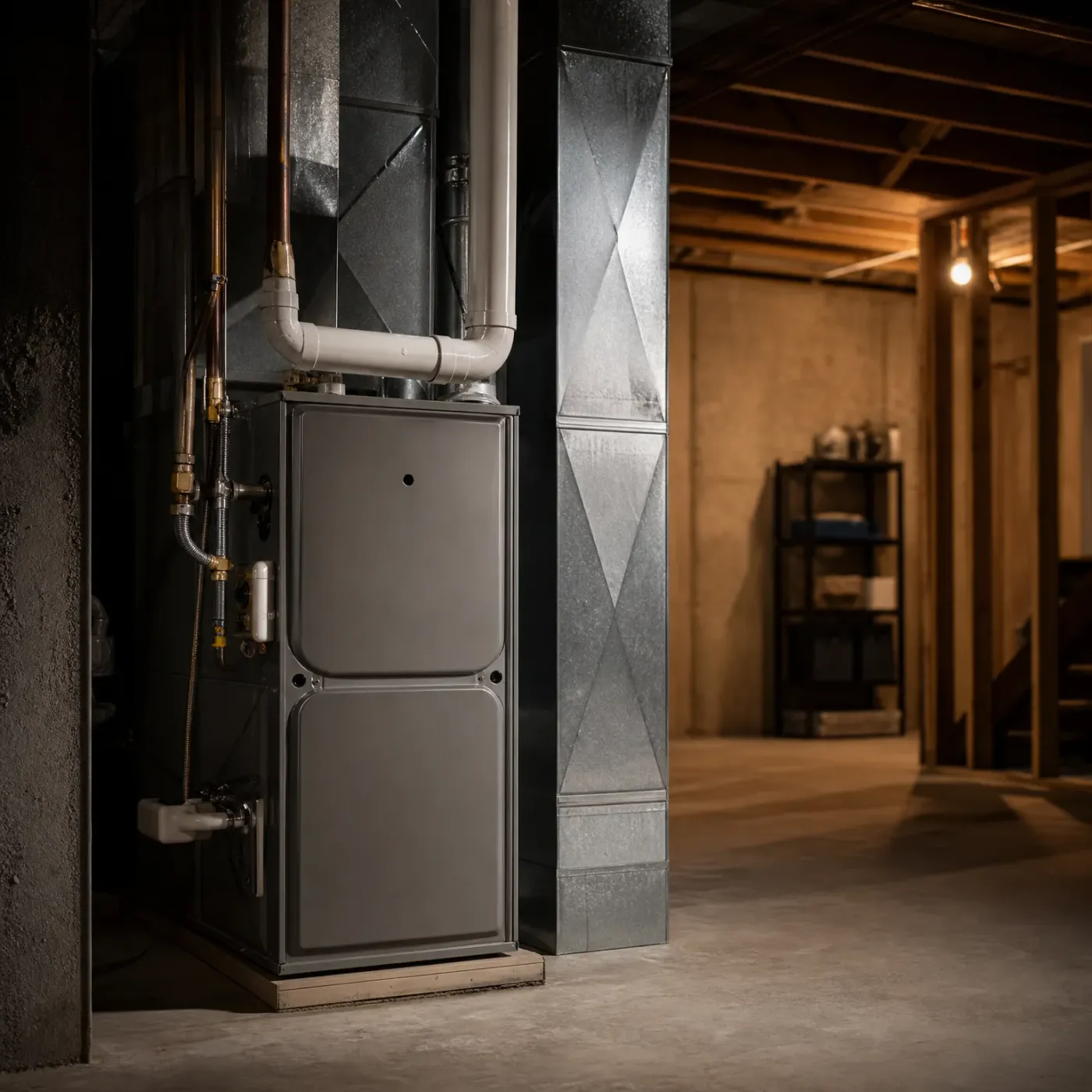




A gray gas furnace with copper and PVC piping stands beside large galvanized sheet-metal ductwork in an unfinished basement with concrete floor, wood framing, and a glowing bare bulb in the background.

A pro who works on furnaces

Is a high-efficiency furnace worth it in Denton, TX

Most houses in and around Denton heat with electricity, so a high-efficiency gas furnace doesn't pencil out the same way it does elsewhere. Whether it's worth it here depends on what you have now and what it would take to change it. A local contractor who installs furnaces around Denton County can look at your setup and tell you what actually makes sense.

Find a furnace pro

For most homes in Denton, a high-efficiency gas furnace is not worth the switch. Winters here are mild, so a furnace only has to work hard for a handful of weeks a year. Most houses already heat with electricity, usually a heat pump or electric furnace, and adding a high-efficiency gas furnace means running a gas line, venting it correctly, and paying for a unit built to squeeze more heat out of every therm of fuel you may rarely need to burn. That extra efficiency pays off where furnaces run for months straight against hard cold. Here, it mostly sits unused. If you already have a gas furnace and it's old or struggling, replacing it with a similarly efficient gas model, or switching to electric heat, usually makes more sense than paying for the highest efficiency tier on the market.

An older man with gray hair and a beard, wearing a dark coat dusted with snow, stands smiling in a doorway of a warmly lit home with a sofa, lamp and window visible behind him.
An older man with grey hair and a beard, wearing a dark coat dusted with snow, stands in a dimly lit entryway with a ceiling lamp, a side table with two shaded lamps, and a lit fireplace visible in a room beyond.
A bearded older man in a dark snow-dusted coat and scarf stands just inside a home's front door, with a lamp-lit room and snowy window visible behind him.
An older man with gray hair and a beard stands in a doorway of a home, wearing a dark coat dusted with snow, with a lit fireplace and lamp visible in the blurred room behind him.

Why does your heat feel like it's always running or never quite enough?

If what you have is an older electric furnace or a heat pump that's lost some of its punch, you've probably noticed the blower running long stretches on the colder mornings, or certain rooms staying cooler than others no matter where you set the thermostat. You might hear it cycling more than it used to, or notice the air coming out doesn't feel as warm as it should. None of that means you need gas. It usually means the electric system you already have is aging out or was undersized for the house to begin with. Left alone, that shows up as higher bills through the winter and a system working harder than it has to, which shortens how long it lasts.

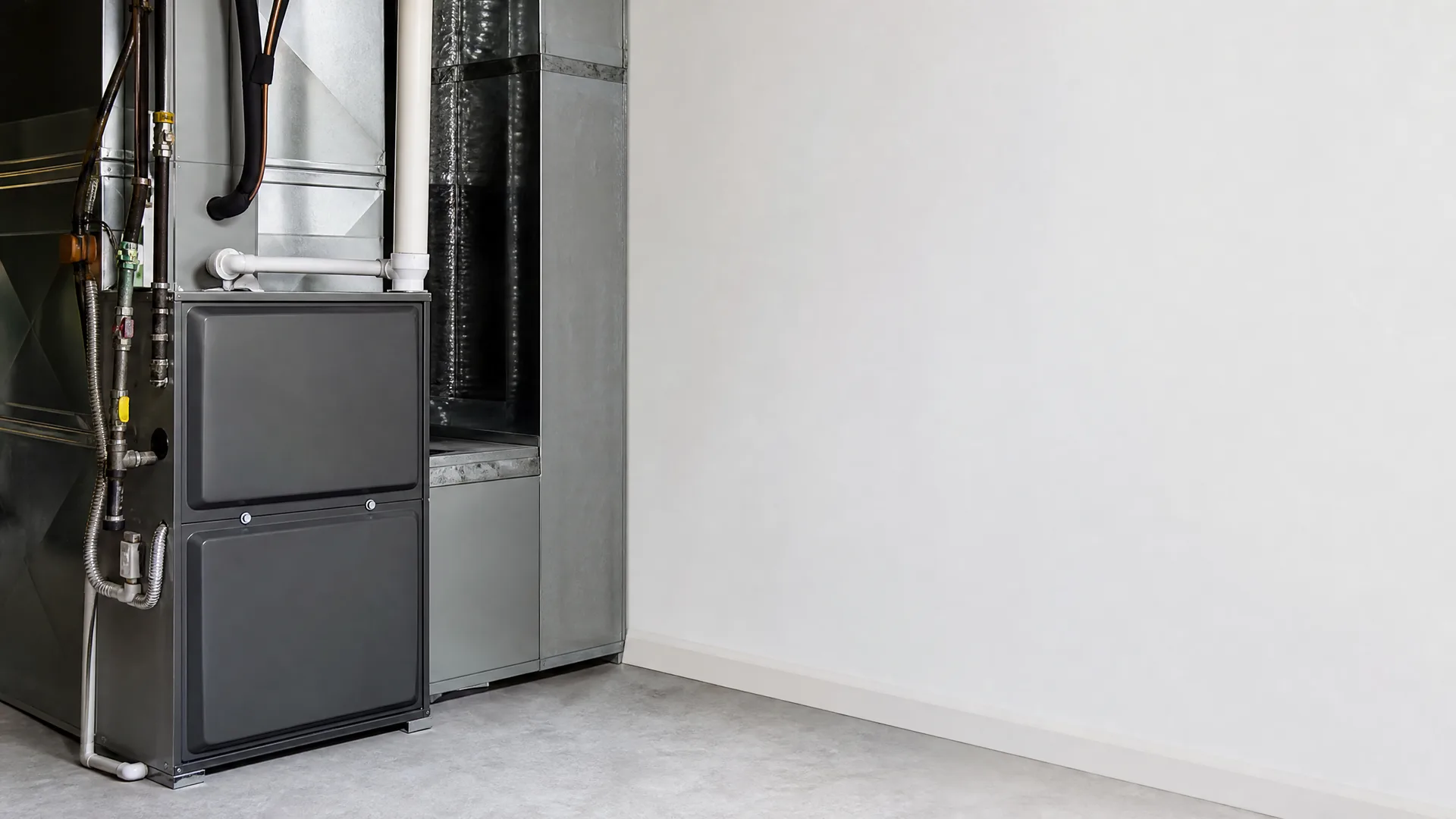
A dark gray furnace unit with connected ductwork, pipes and flexible hoses stands in the corner of an empty room with bare white walls and a concrete floor.

What a gas furnace changes

A gas furnace heats the air hotter than a heat pump does, so the air coming out of your vents feels warmer right away instead of gradually catching up. It also keeps working the same way no matter how cold it gets outside, where a heat pump loses capacity as the temperature drops. In Denton, that difference shows up on the handful of nights each winter that dip into the 20s, not on an average day.

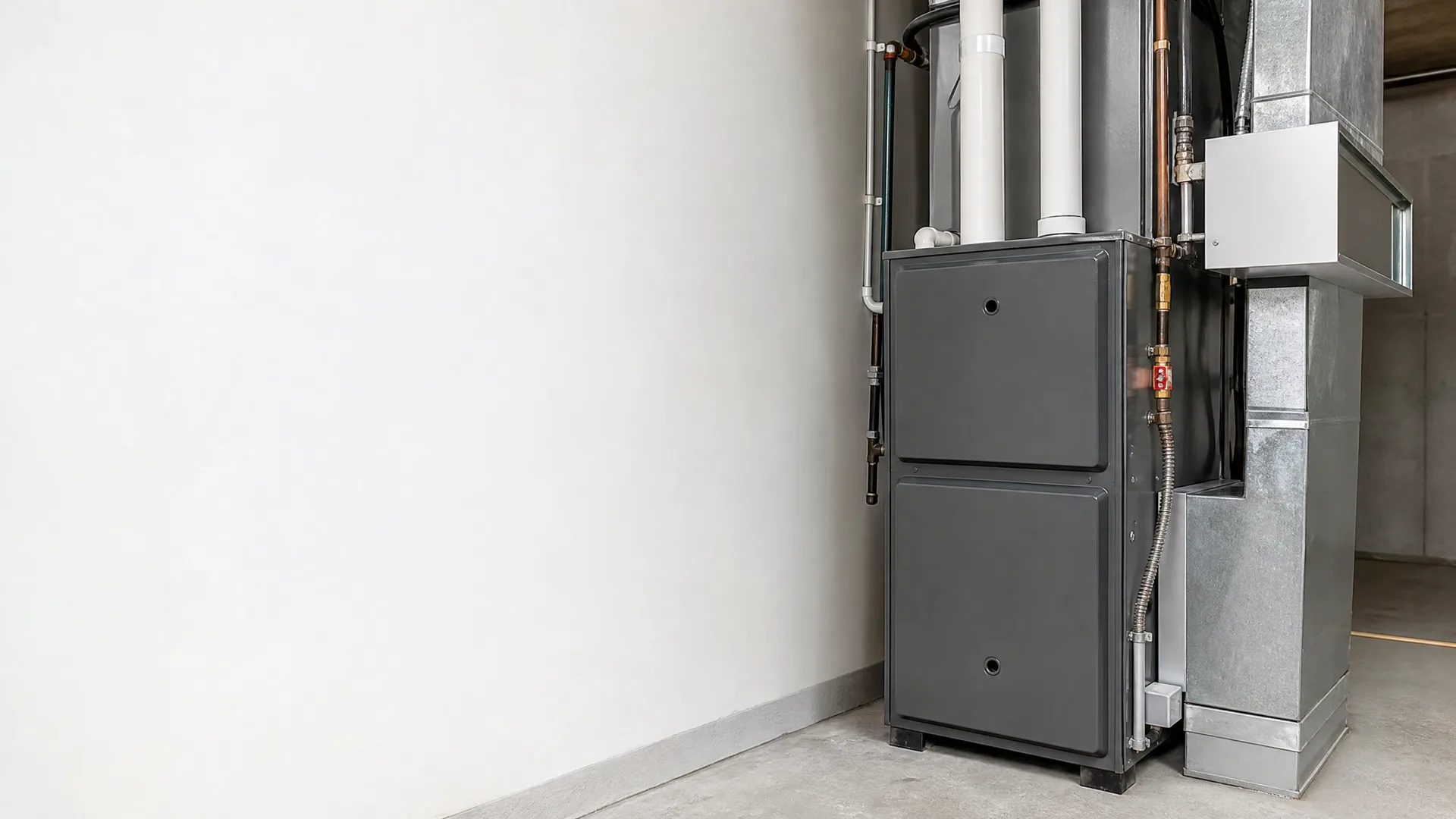
A gray high-efficiency furnace stands against a plain white wall in a concrete-floored utility room, connected to white PVC vent pipes, copper gas lines, and sheet-metal ductwork.

What it takes to add gas

Switching to a gas furnace means running a gas line to the unit if your house doesn't already have one, plus venting for the exhaust. A high-efficiency model also needs a drain for the condensate it produces, which older furnace setups didn't require. None of that is impossible, but it's work beyond swapping one furnace for another, and it's part of what a contractor has to price when you ask about it.

Keep Electric Heat or Switch to Gas

Keep electric heat

  • If your electric furnace or heat pump is heating the house fine, there's no mechanical reason to swap it for gas.
  • Adding a gas furnace means running a new gas line to the house if one isn't already there, which adds to the job.
  • Electric heat here already has less to do, since Denton's winters only push a system hard for a few weeks a year.
  • A heat pump that's working well also cools the house in summer, so you're not paying for a separate AC system.
  • Staying electric means one less fuel bill and one less appliance that needs its own venting and combustion air.
  • If the issue is weak or uneven heat, the fix might be the existing system's coil, controls, or refrigerant charge, not the fuel it runs on.

Switch to gas

  • A gas furnace puts out hotter air at the vents, so rooms warm up faster on the coldest mornings.
  • It keeps delivering that same heat regardless of how low the temperature drops outside, unlike a heat pump losing capacity in a hard freeze.
  • You'll need a gas line run to the furnace if the house doesn't already have one, plus venting for the exhaust.
  • A gas furnace still needs a separate air conditioner for summer, since it only handles the heating half of the year.
  • If your current system is old enough that it needs replacing anyway, that's the point where switching fuel types costs the least extra.
  • Natural gas service has to reach your property for this to make sense at all, and not every lot in the county has it.
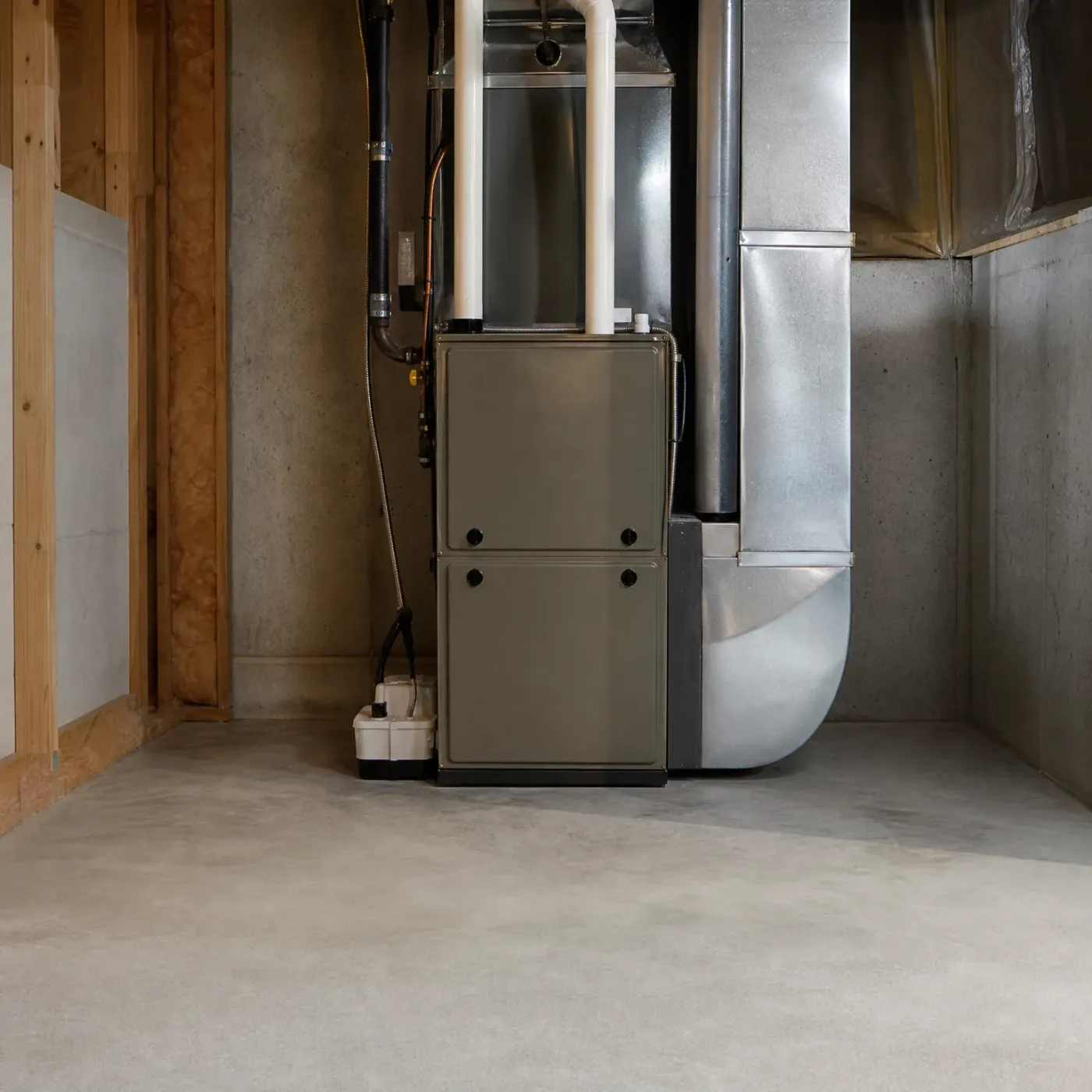
A gray high-efficiency furnace with white PVC vent pipes stands against a concrete basement wall beside sheet-metal ductwork, a small condensate pump on the floor, and exposed wood framing at left.

Gas furnace, properly vented

This is what a high-efficiency unit looks like installed. The PVC pipes handle intake and exhaust, and the condensate pump drains the moisture it produces as it runs. It needs a gas line and a spot for that drain, but once it's in, it runs on its own.
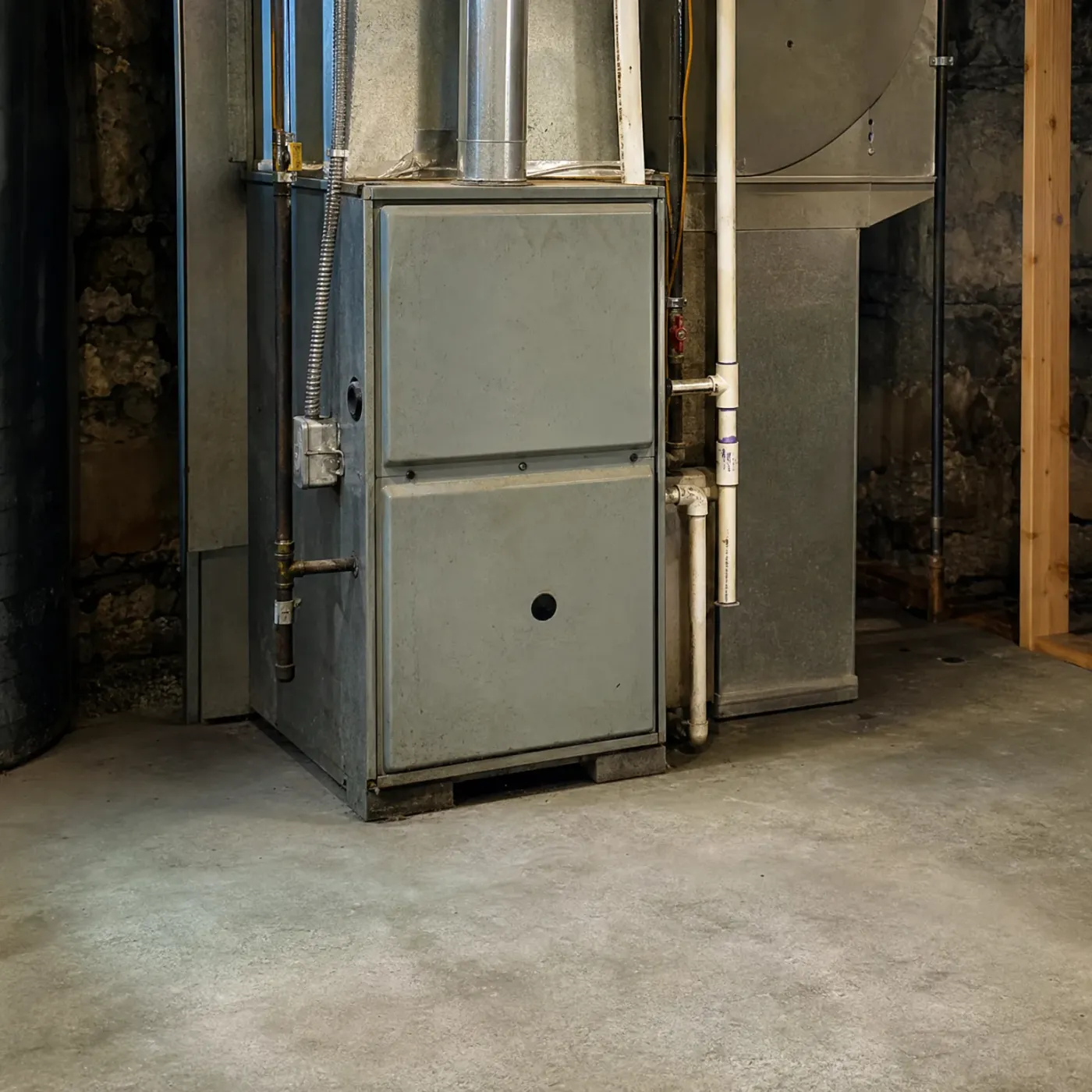
A gray sheet-metal furnace with flue pipe and adjacent ductwork stands against a stone basement wall on a concrete floor, with white PVC and metal pipes running nearby.

Older setup, more to work around

Flex tubing, a mix of gas and condensate lines, and a mechanical room that wasn't built for this equipment. Fitting a gas furnace in here means routing new lines through walls that don't already have them. That work is part of what decides whether switching makes sense.

How does a high-efficiency furnace actually get more heat out of the same gas?

You've read that a high-efficiency furnace isn't the usual move in Denton, but you still want to know what the term means mechanically. A furnace that's rated at 95 percent or higher isn't just a bigger version of a standard one. The difference is in how it pulls heat out of the exhaust before that exhaust leaves the house, and that's worth understanding even if you end up sticking with electric heat.

It cools the exhaust gas down before letting it go

A standard furnace burns gas, pulls some heat off the exhaust, and vents the rest out hot through a metal flue. A high-efficiency furnace adds a second heat exchanger downstream of the first one, so the exhaust passes through twice and gives up more of its heat before it leaves. That exhaust cools enough to turn to water, which is why these furnaces drain condensate instead of just venting through metal, and why the vent pipe is PVC instead of metal, since metal would corrode from the moisture. Less heat going out the vent means more of what you paid for in gas ends up in the house instead of outside. In a place like Denton, where the furnace only runs hard a few weeks a year, that gain adds up to less than it would somewhere colder.

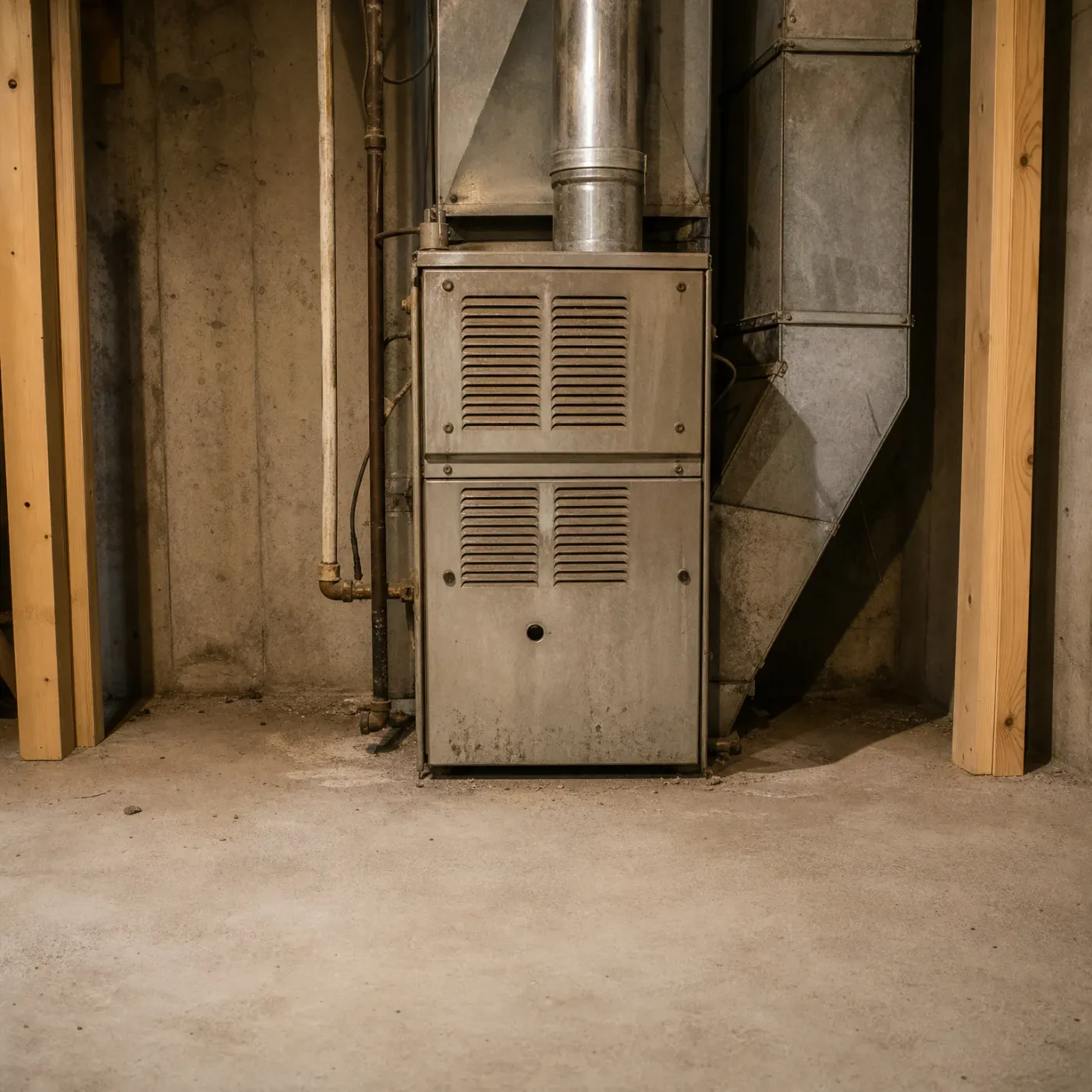
A metal furnace with louvered panels stands against a concrete basement wall, connected to sheet-metal ductwork and a round flue pipe, with wooden framing posts and a pipe nearby.
Before you get your furnace installation
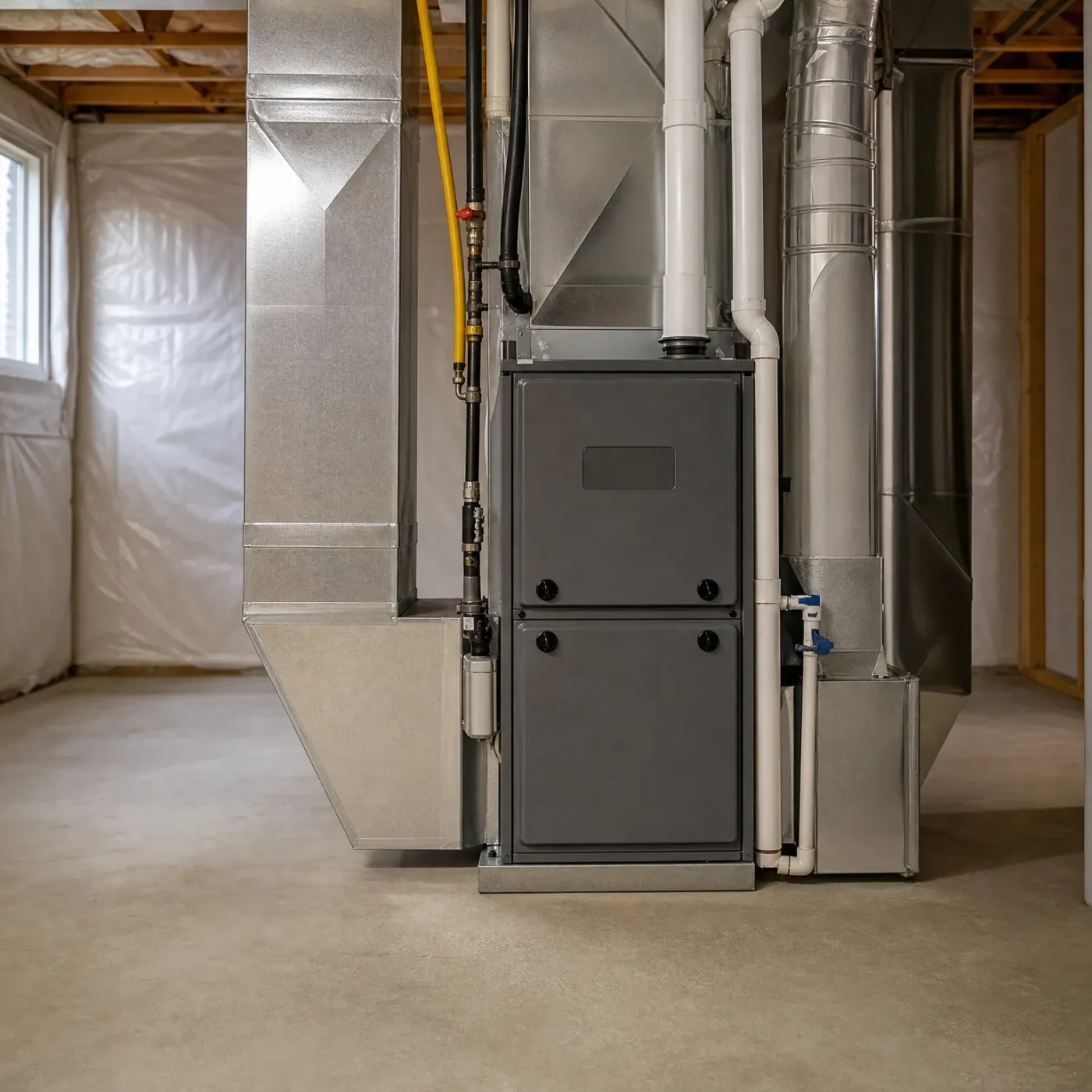
A gray gas furnace stands on a concrete basement floor, connected to sheet-metal ductwork, white PVC vent pipes, and a yellow gas line, with plastic sheeting covering the walls.
After you get your furnace installation

Get your furnace to the right pro

If you've read this far, you already know a high-efficiency gas furnace is the exception here, not the default. Most of the time, the electric heat in Denton homes is doing its job and there's no case for ripping it out. But exceptions are real. If you're adding a gas line for a stove or a dryer anyway, or your ductwork already has one and you're weighing a true replacement, the math changes, and so does the work involved: the vent pipe, the condensate drain, the gas line sizing all need someone who's actually run this calculation for a house like yours, not a general rule of thumb. A local contractor who installs both electric and gas systems around Denton can tell you quickly whether your situation is the rare one where gas wins, or whether your money is better spent on the electric side. Either way, that's a conversation worth having before you decide anything.

If you're heating with propane now

Some homes outside Denton proper aren't on natural gas and heat with propane instead, either through a furnace or a propane tank setup. Propane costs more per unit of heat than natural gas does, so the math on a high-efficiency furnace looks different if that's what you're running. A furnace rated at 95 percent or higher stretches every gallon further than an older propane furnace would, and over a full winter of mild but real heating demand, that difference is more noticeable than it would be on natural gas. If propane is already piped to your house, swapping in a high-efficiency furnace is a smaller job than adding gas service from scratch, since the fuel line is already there.

What a contractor checks before you decide

A contractor who installs furnaces around Denton regularly can tell you quickly what your house already has to work with: whether gas is run to the street, what your current ductwork can handle, and whether your attic or utility closet has room for the venting a high-efficiency unit needs. That's specific to your house, not something a general answer can cover. One contractor looking at your actual setup, rather than several companies quoting off a phone call, means the answer you get accounts for what's already there instead of assuming a blank slate.

How cold does it actually get, and for how long?

  • Winter nights average 36°F

    Winter nights average 36°F across December, January and February, per NOAA climate data. That's cold enough to run heat, not cold enough to push a furnace to its limit.

  • Heat runs November through March

    Homes here run heat about five months a year, November through March. A gas furnace spends most of the year sitting unused.

  • 54.2% of homes heat with electricity

    54.2% of homes in Denton County heat with electricity, per Census data. If yours is one of them, there's no gas furnace to upgrade in the first place.

NOAA nClimDiv 1991-2020 · ACS 2020-2024

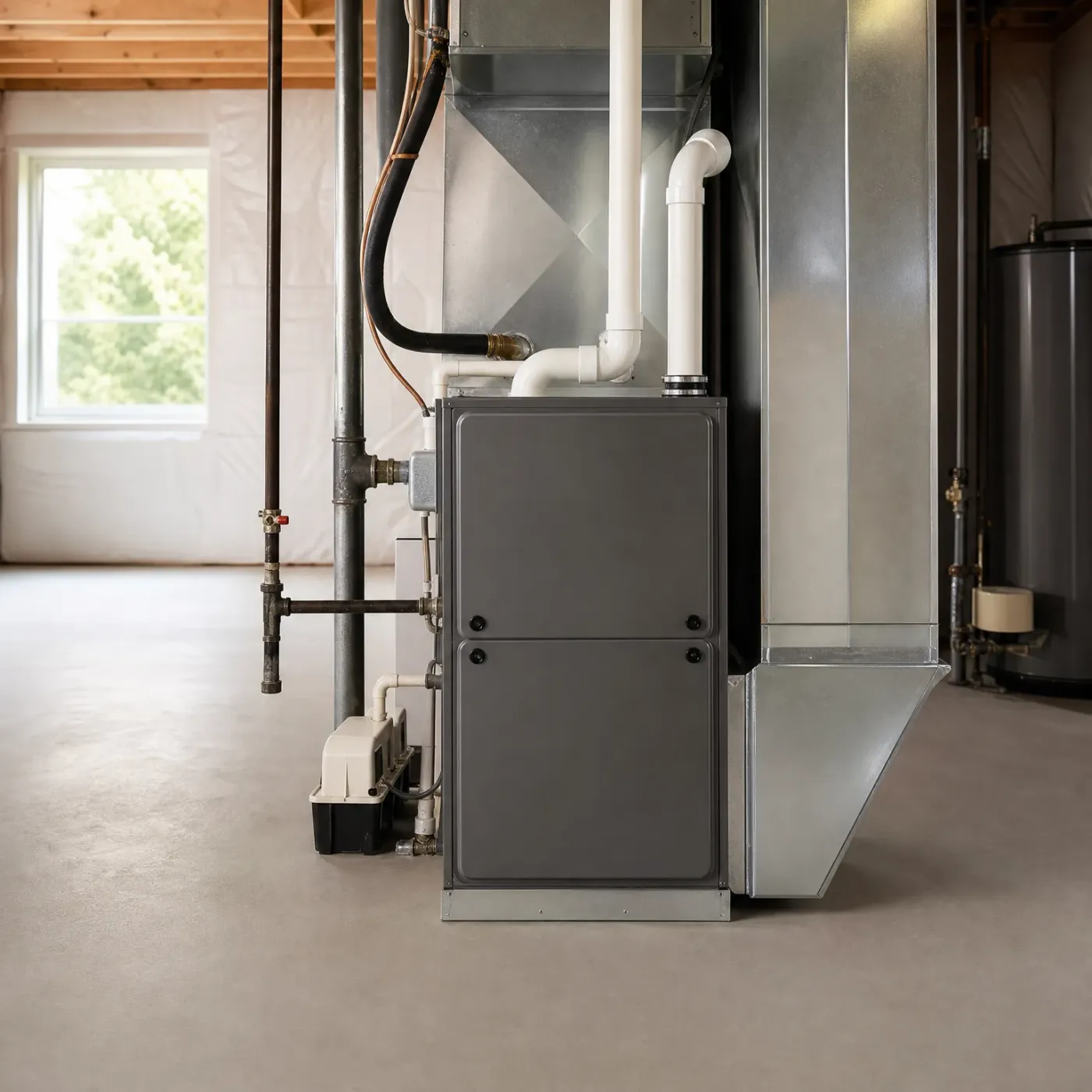
A gray high-efficiency furnace in a basement with sheet-metal ductwork, white PVC vent pipes, metal plumbing lines, a condensate pump on the floor, and a window showing green trees outside.

Running the way it should

This is what a properly vented high-efficiency furnace looks like: PVC intake and exhaust pipes, a condensate pump handling the moisture it produces, and ductwork sized to move the air it heats. Nothing here is working harder than it has to.

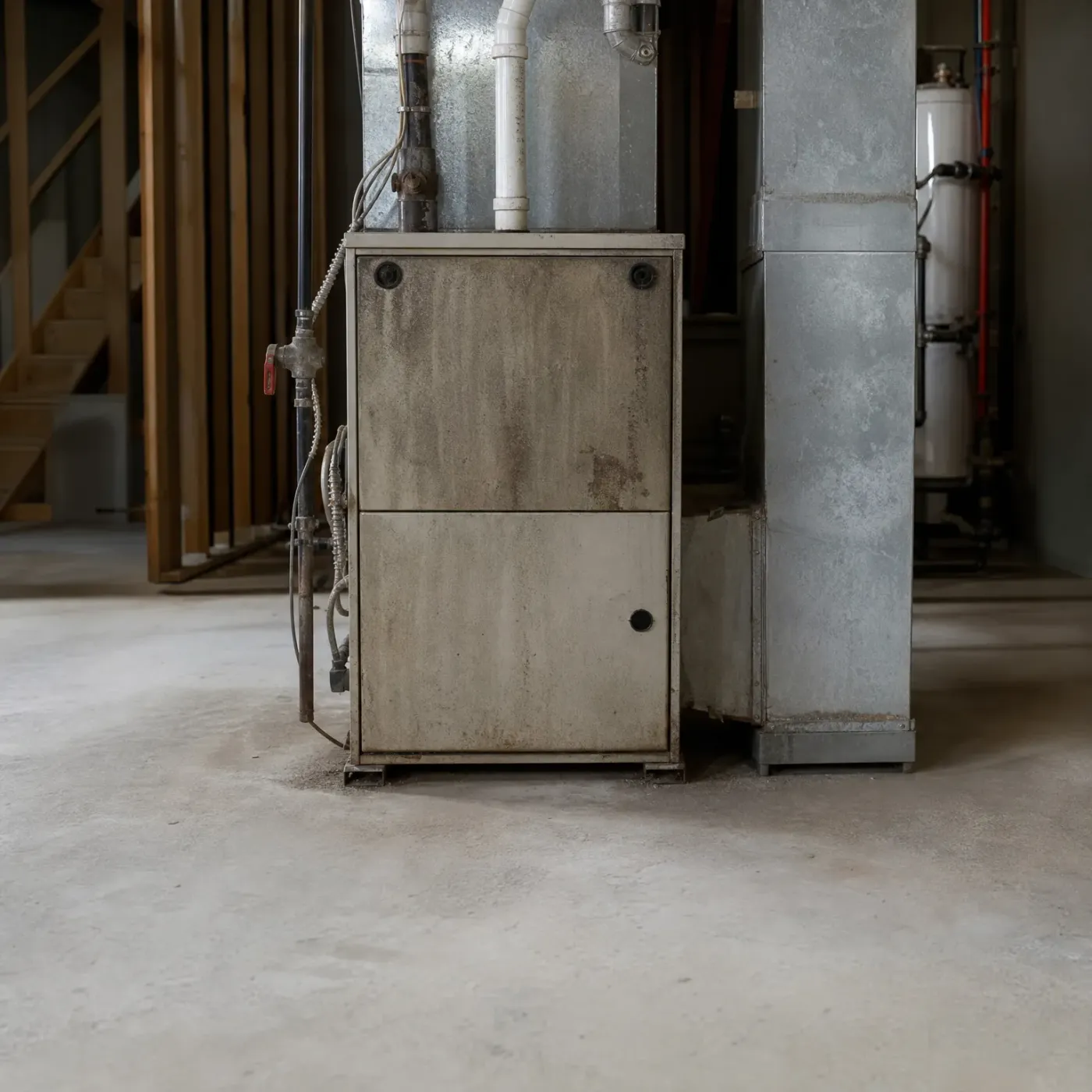
An older metal furnace with PVC and metal pipes stands on a concrete basement floor beside galvanized ductwork, with wooden stairs and a water tank in the background.

Old, dusty, and ignored

This furnace has sat in the same spot for years without much attention. Dust like this on the cabinet usually means the filter hasn't been changed on schedule, and that makes the blower work harder to push air through the ducts above it.

Winter nights average 36°F

A 36 degree night is a cold start, not a cold snap. Whatever is heating your house, electric furnace, heat pump, or gas, only needs to close that gap for a few hours before sunrise, not fight the cold all day.

NOAA nClimDiv 1991-2020

A woman in a long cream cardigan and jeans stands at an open wooden front door of a gray shingled house with stone-based porch columns, with a second person visible inside, and potted flowers and shrubs beside the entry.

Where that leaves you

For most houses in Denton, the electric heat you already have is the right tool for the mild winters here, and a high-efficiency gas furnace doesn't change that math. The exceptions are real but narrow: a gas line already run to the house, a propane setup costing more than it should, an electric system that's aging out and needs a real decision made about what replaces it.

If you fall into one of those cases, the next step isn't guesswork, it's getting someone who works on heating systems in this county every winter to look at what you have and tell you straight whether gas makes sense for your house. That's a local contractor, matched to your situation, not a sales call from whoever answers first.

Interior corner with sheer white curtains at a window, a brown upholstered sofa in the foreground, and a wooden multi-drawer cabinet holding a round ceramic vase with leafy branches.
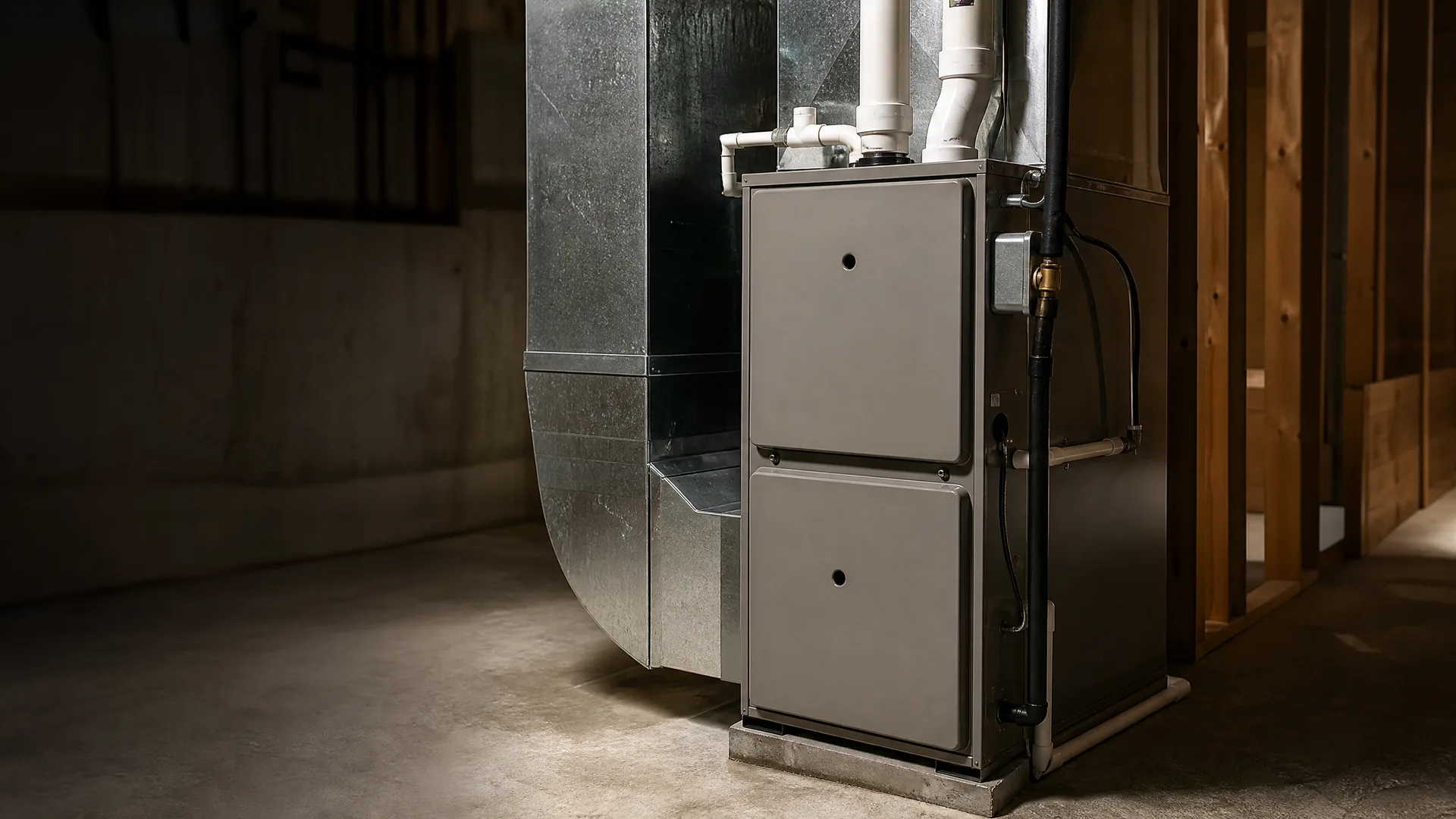
A gray high-efficiency furnace with white PVC vent pipes stands on a concrete basement floor beside galvanized sheet-metal ductwork and exposed wood framing.

Find a furnace installation pro in Denton County

Step 1 of 3: Equipment