




Texas Furnace Service

How long a furnace lasts in Brownsville, TX

Skip the round of in-home estimates for a new furnace.

Skip calling around

A furnace in Brownsville usually lasts 15 to 20 years. Most homes here heat with electricity, and that furnace runs only a handful of cold nights each winter since winters in Cameron County stay mild. A system that light on duty wears out slowly, so age alone isn't a good sign something's wrong. What actually ends a furnace this old is rust in the heat exchanger or a blower motor that's seized, not hours of runtime. If yours is past 15 years, it's worth having someone check the heat exchanger before the next cold snap, rather than waiting for it to fail on the one night you need it.

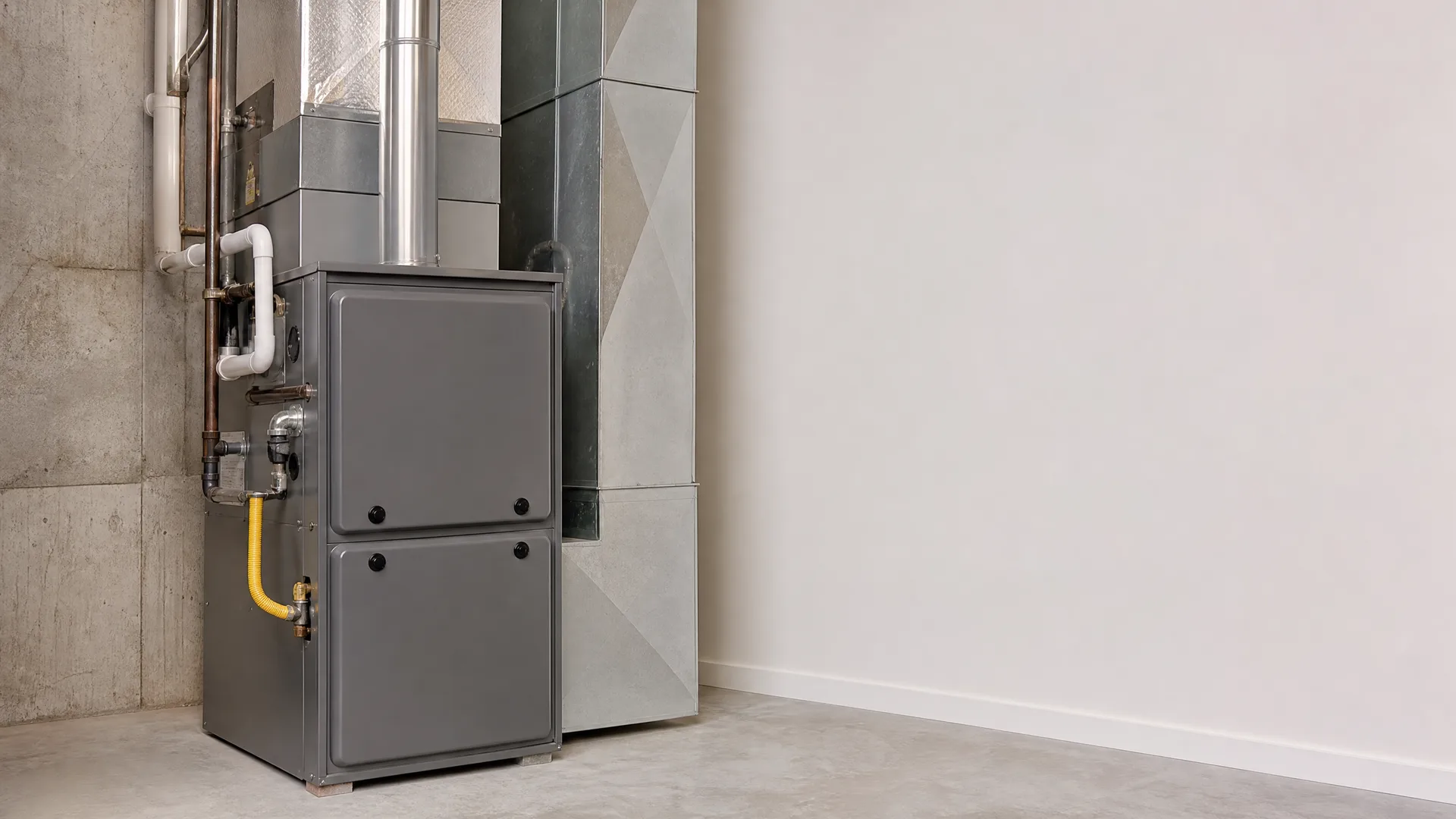
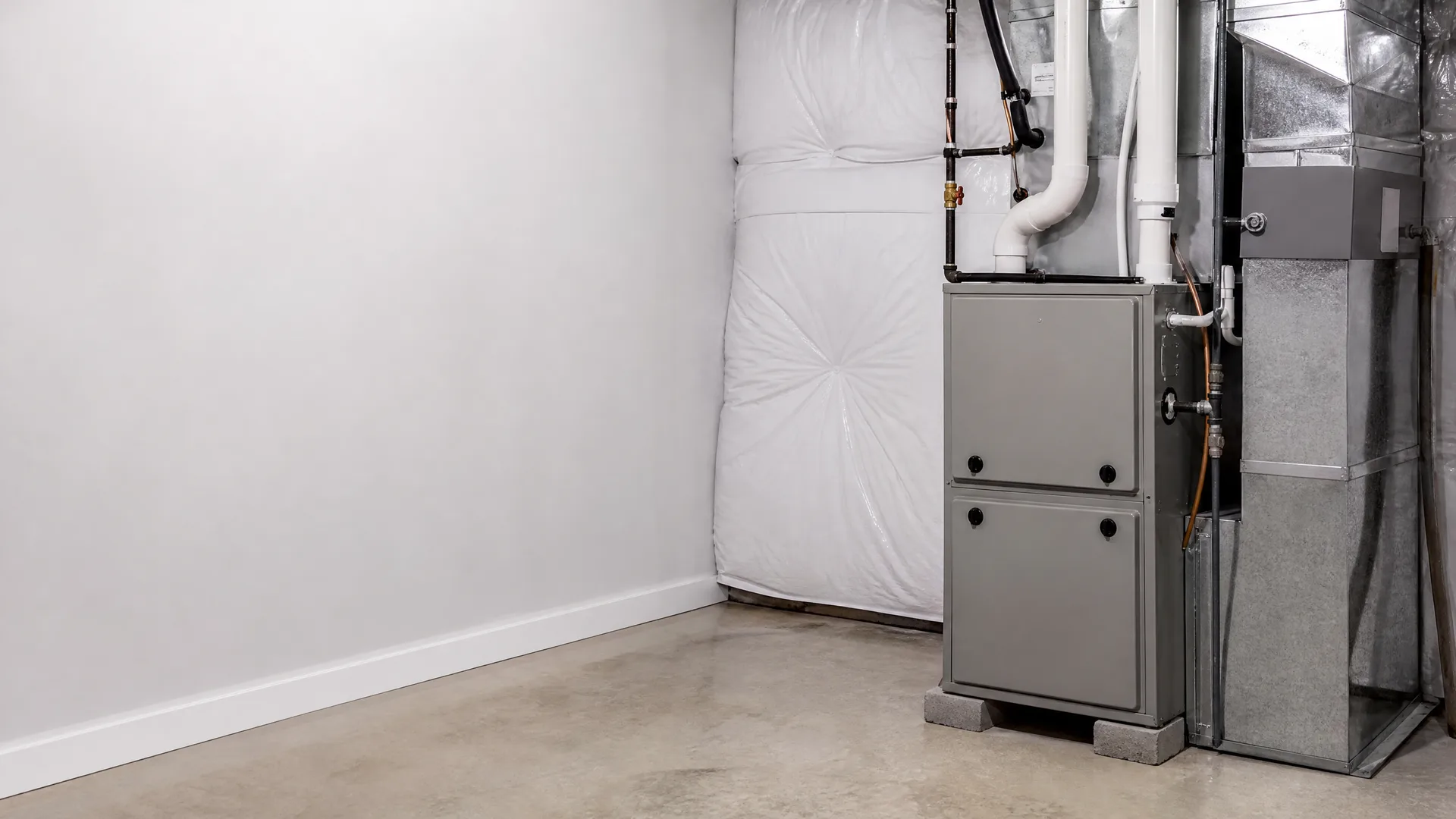
A gray gas furnace with attached sheet-metal ductwork, copper and PVC piping, and a yellow gas line stands against a concrete wall in a bare room with a light floor.

Why light duty adds years

An electric furnace has no burner, no flame sensor, no igniter to wear out. The heat comes from electric resistance coils, so there is less that can fail compared to a gas furnace. In Cameron County that furnace might only cycle on during a cold snap in January, then sit idle the rest of the year. Fewer hours running means less wear on the blower motor and the heating elements, which is most of what decides how long the unit holds up.

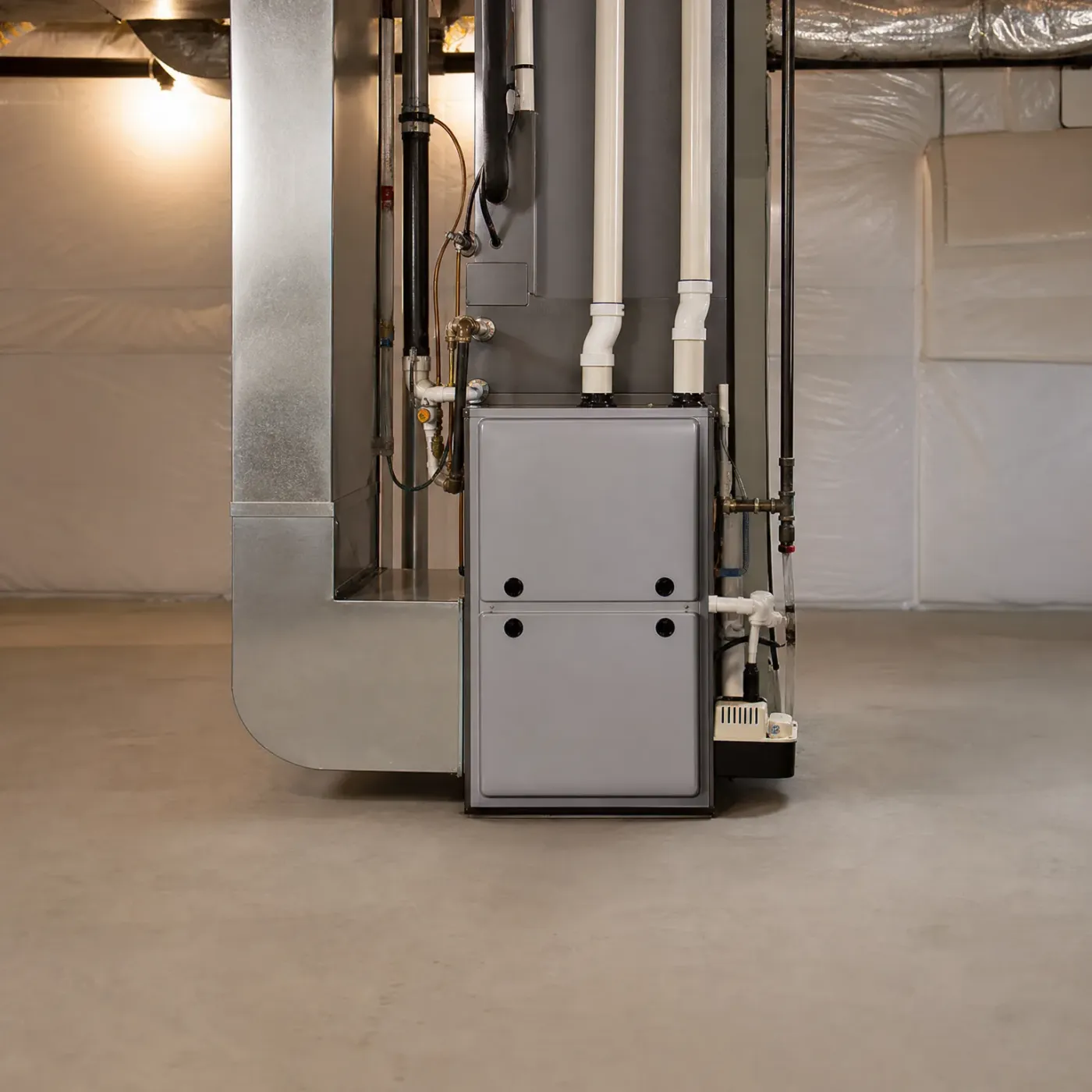
A gray high-efficiency furnace with attached metal ductwork and overhead PVC and copper piping stands in a basement corner with bare white walls and a concrete floor.

What actually ends its life

The blower motor is usually what gives out first, since it runs any time the furnace calls for heat. Dust and corrosion on the heating elements can also shorten things, especially if the filter gets ignored. Because the furnace works so little here, a unit can look barely used at 15 years and still be original to the house. Checking the age on the nameplate or the installer's sticker tells you more than how the house feels in January.

Is your furnace starting to act its age?

You might hear it click on and run a while before warm air actually comes through the vents. Or it short cycles, kicking off a few minutes after it starts. Some rooms stay cooler than others even with the thermostat set the same. You might notice a burnt dust smell the first time it runs after months sitting idle, which usually clears in a few minutes and isn't on its own a sign of trouble. If the furnace trips the breaker, or you've had it repaired more than once in the last year or two, that's wear catching up with it. Left alone, an electric furnace with failing coils can leave the house without reliable heat on the nights you need it most.

A smiling woman with long dark hair in a gray sweater sits behind a white countertop holding a glass of red wine, with a dimly lit living room and dark kitchen island in the background.
A woman in a beige knit sweater with her hair up laughs while looking to the side, seated in a dimly lit living area with a sofa, windows and a kitchen counter behind her, a glass of red wine in the lower right foreground.
A woman in a black sweater laughs while seated at a light stone counter with a glass of red wine, in a dimly lit living and dining room with bookshelves, a table lamp and framed artwork behind her.
A smiling woman with long dark hair in a beige sweater sits at a granite counter with a glass of red wine, with a living room, fireplace and dining area behind her.

Keep It or Replace It

Keep running it

  • An electric furnace with no cracked heat exchanger and no burner to foul can keep heating reliably well past the 15 year mark if it's been maintained.
  • If it still brings the house to temperature on the coldest nights without running constantly, the coils and blower are doing their job.
  • A furnace that only cycles on a handful of nights each winter in Cameron County has a lot less wear on it than the same age system somewhere colder.
  • Repairs on an electric furnace tend to be straightforward, since there's no gas valve or ignition system to diagnose.
  • If the blower motor and coils are original and sound, replacing them piecemeal can cost less upfront than a full swap.

Replace it

  • Once a furnace is short cycling or leaving some rooms cold, the coils or blower motor are likely failing and a repair may only hold for a season.
  • A new furnace sized correctly for your home heats evenly from the first cold night, instead of running long cycles to make up for a weak unit.
  • If yours is pushing past 20 years, replacing it now means you choose the timing instead of waiting for it to fail on the one cold week of the year.
  • A newer electric furnace runs on less power to produce the same heat, which matters even where winters are mild and usage is light.
  • Swapping it out also means not gambling on finding parts for an older unit when something finally does break.
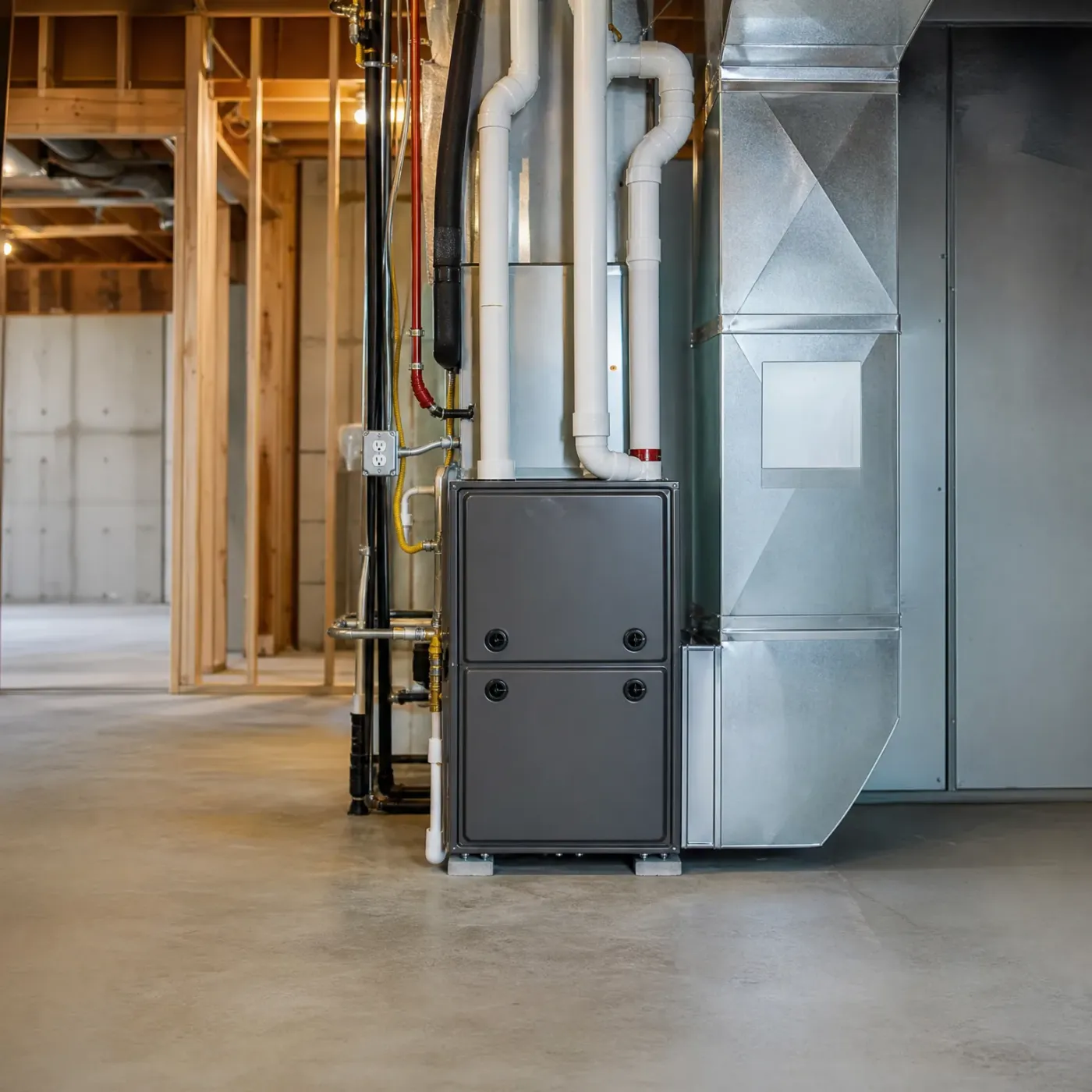
A gray high-efficiency furnace stands on a concrete basement floor beside galvanized sheet-metal ductwork, with white PVC vent pipes, gas and water lines, and unfinished wood framing behind it.
A furnace like this is still moving heat the way it should, warming the house evenly night after night.
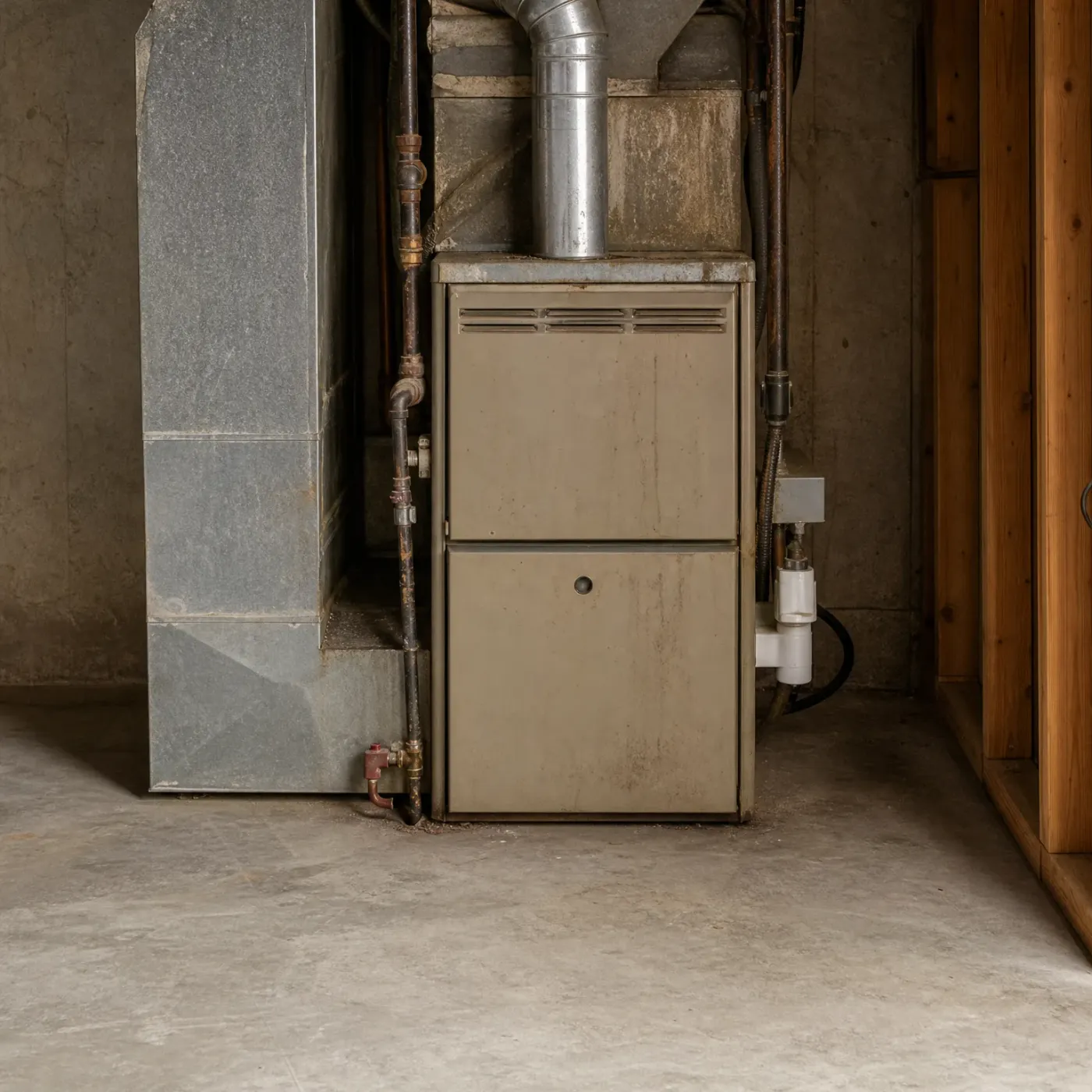
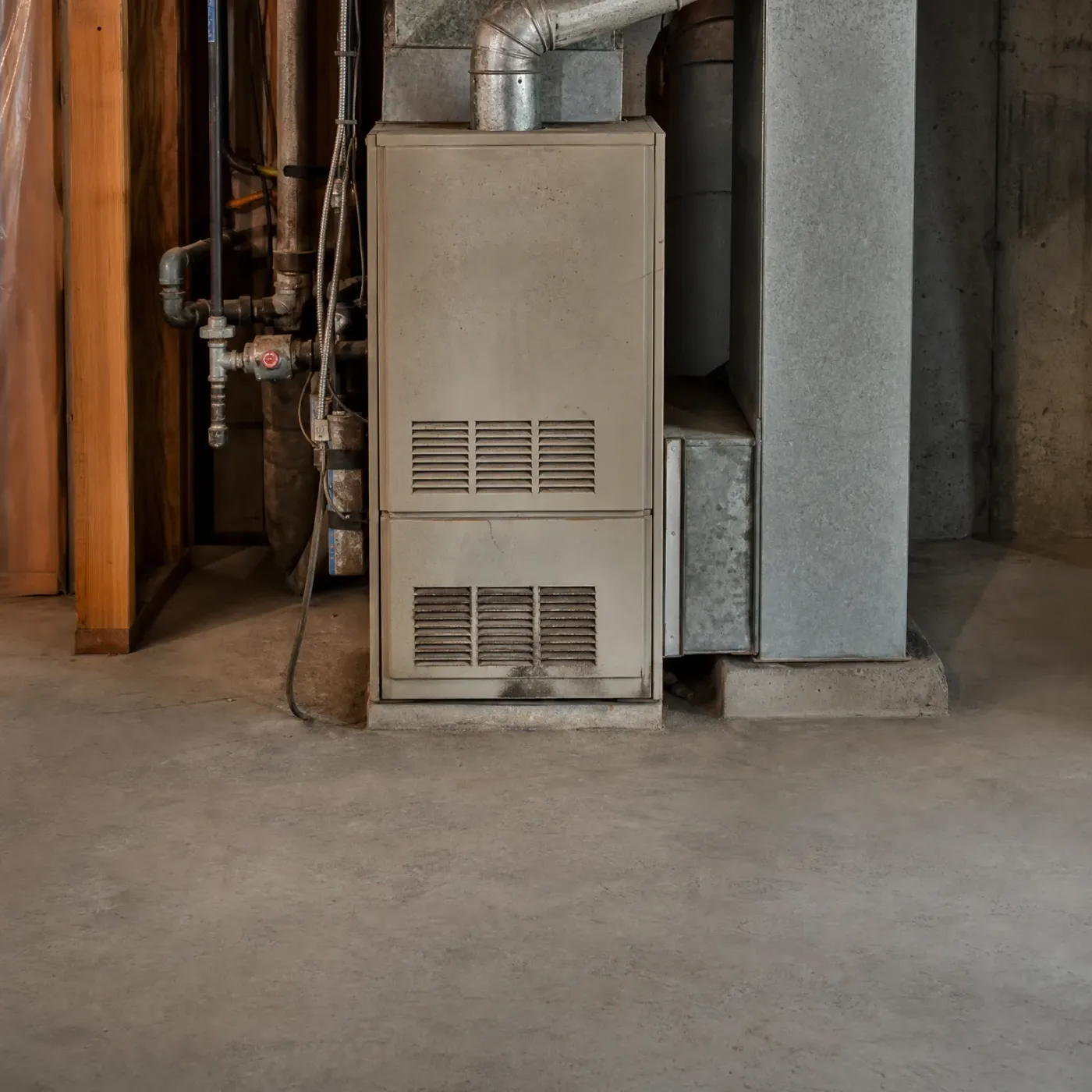
A beige furnace with two louvered front panels stands on a concrete basement floor beside galvanized ductwork, metal pipes, and a wooden post.
A furnace like this is losing the fight, straining to keep up and running longer than it used to for the same warmth.
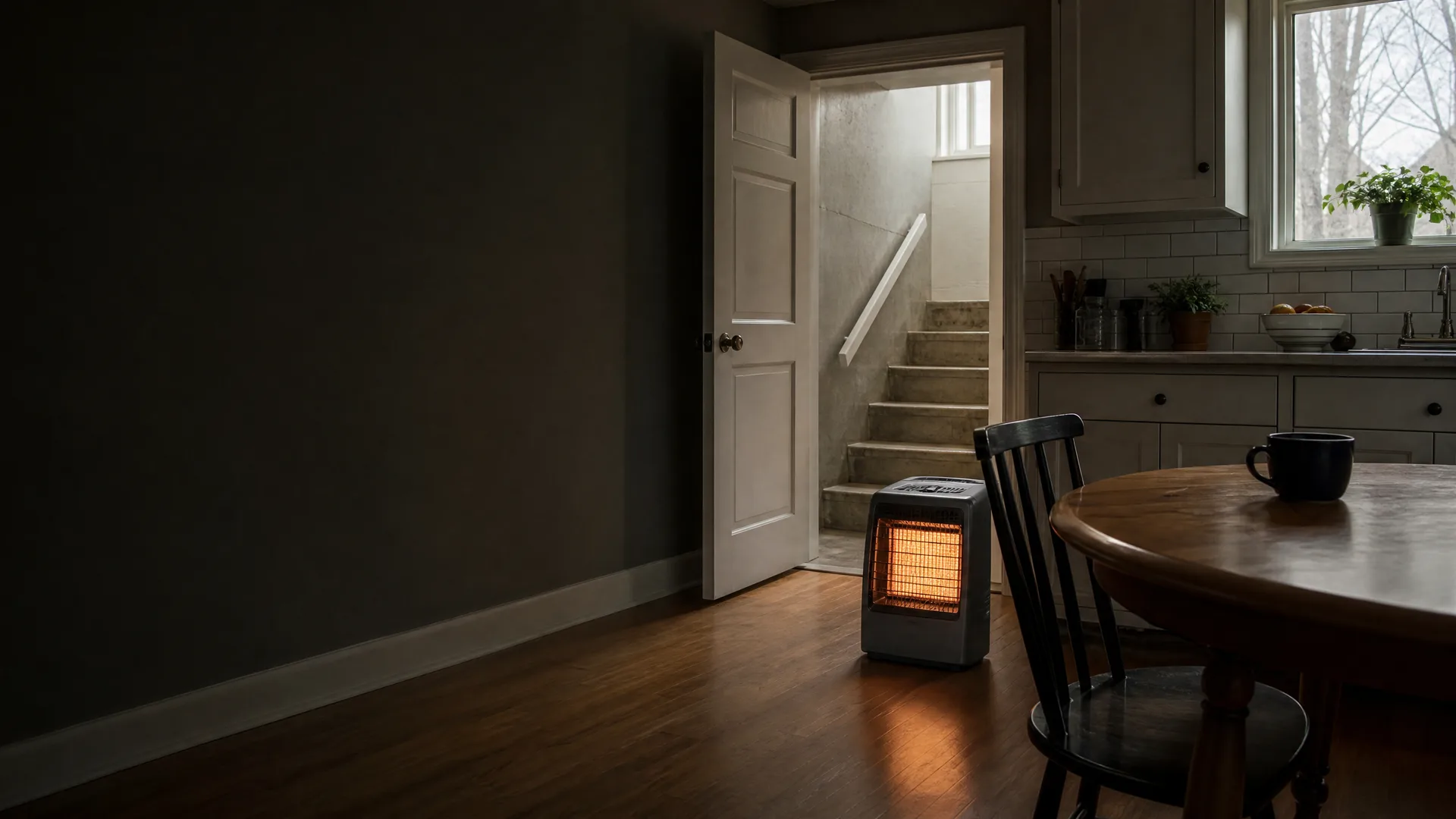
A portable space heater with a glowing orange element sits on a wood floor in a dim room beside a round table and black wooden chair, with an open door leading to a stairwell and a kitchen counter with a window at right.

It's early, still dark outside, and the kitchen is the only warm room. You've got the space heater pulled close to the table, its coil glowing orange, because the vents haven't put out anything but cool air for a few minutes now. The basement door stands open behind it. You went down last night to look at the furnace, flashlight out, listening for whatever's making it run long before the house warms up. Cameron County mornings like this don't come often, maybe a handful all winter, but this is one of them, and you're sitting with your coffee doing the math on how many more cold snaps this furnace has in it.

Explain it one time

A furnace that finally quits in Brownsville doesn't give you much warning, and finding someone to replace it isn't something most people want to do twice. You'd normally be the one calling around, telling each company what's going on with the system, waiting on quotes, trying to tell apart who actually works on electric furnaces from who just lists it on a website. Submitting the request here hands that off. It goes to one contractor local to Cameron County, someone who's in homes with the same setup all winter and knows what tends to go first in a furnace that's been running on electric coils for 15 or 20 years here. You're not fielding calls from five different companies trying to win the job. If the clicking and cool air and uneven rooms you're noticing mean the furnace is on its way out, better to know now, before a cold night makes the decision for you.

Replace it before it fails

Scheduling the swap while the old furnace still runs means you pick the week. A contractor can size the new unit, check the ductwork and wiring, and do the install on a day that works for you. You're not standing in a cold house making a rushed decision. Electric furnaces are straightforward to swap, and doing it on your terms usually means less disruption, not more cost. You also get to compare how the new system runs against the old one, since the old one is still there to judge it by.


Wait for it to quit

Some homeowners ride it out until the furnace actually stops heating. Winters in Cameron County are mild, so a dead furnace in January is an inconvenience, not a crisis, the way it would be somewhere colder. You lose the choice of timing though. If it quits on a cold night, you're calling a contractor same-day instead of picking a date that suits you, and you're heating the house with space heaters or nothing until the new one goes in.

A smiling bearded man in a dark sweater sits at a dinner table with lit candles, a glass of red wine, and bowls of food, in a dimly lit room with a lamp and houseplant behind him.
A woman with dark hair in a bun sits on a beige sofa under a knit blanket with her eyes closed and an open book in front of her, with a lit lamp and houseplant in the background.

15 to 20 years

That's the usual run for a furnace here, since Cameron County winters are mild and an electric furnace only has to work a handful of cold nights each year.

Skip the search

Past 20 years

Some electric furnaces keep going longer if they've had little strain and regular upkeep, but by this point a repair call is worth weighing against replacing it.

Skip the search
A closed laptop and a ceramic mug on a wooden table in front of a kitchen with green cabinets, marble counter, black pot, cutting board, wooden bowl, and a white vase with greenery.

What actually happens inside an electric furnace

Flip the thermostat up and a sequencer brings the heating elements on one at a time, not all at once. That staged start keeps the draw on your electrical panel from spiking. A blower motor then pushes air across those coils and out through the ducts. There's no igniter, no flame sensor, no gas valve, just the elements, the sequencer, the blower, and a limit switch that shuts things off if the air around the coils gets too hot.

That limit switch matters more than people think. It trips when airflow is restricted, usually from a dirty filter or a blocked return, and it's one of the most common reasons an electric furnace stops putting out heat even though the breaker's fine and the blower still runs. When a part does fail after years of mild winters, knowing which one it is, and finding a contractor who actually stocks sequencers and elements for the brand in your attic or closet, is most of the work. A local contractor who services this equipment every winter already knows what's likely to go and won't need to order parts blind.

Interior corner of a room with a dark upholstered sofa and textured cushion, a potted plant, sheer curtains at a multi-pane window showing blurred green and yellow trees, and a dark table holding a wooden tray with stacked coasters and a small ceramic vase.

How cold do Cameron County winters really get?

  • Winter nights average 53°F

    Winter nights here average 53°F, according to local weather data. That's cold enough to want heat, not cold enough to push a furnace hard.

  • Heat runs December through January

    Heat runs December through January in most homes here. Two months of real use a year is a light load for any furnace to carry.

  • 89.9% of homes heat with electricity

    89.9% of homes in Cameron County heat with electricity, per the Census Bureau. That's the furnace behind most of these numbers, including yours if it came with the house.

NOAA nClimDiv 1991-2020 · ACS 2020-2024

A beige residential furnace stands on a concrete basement floor beside galvanized sheet-metal ductwork, a round flue pipe, copper gas piping, and a PVC condensate line, with a wood-paneled wall at right.
Before you get your furnace installation
A gray high-efficiency furnace in a basement with white PVC vent pipes, sheet-metal ductwork, copper and black piping, a condensate pump, and insulated walls above a concrete floor.
After you get your furnace installation

Winter nights average 53°F

At 53°F, the furnace isn't fighting much. It cycles on, takes the chill off, and shuts back down long before it would ever strain. That's a mild load for the coils to carry night after night, which is why so many of these furnaces are still running strong past 15 years.

NOAA nClimDiv 1991-2020

What this comes down to

  • A furnace here typically runs 15 to 20 years because Cameron County winters only ask it to work a handful of cold nights.
  • Short cycling, cool air at the vents, or uneven heat from room to room are signs the furnace is losing ground, not proof it's done.
  • An electric furnace with no cracked heat exchanger can often be kept running past 20 years with the right upkeep.
  • Replacing a furnace before it fails lets you pick the week and avoid troubleshooting a cold house on the worst night of the year.
  • A licensed local contractor who services this equipment every winter knows what typically fails first in an electric furnace this age.
  • Matching with one contractor means one visit, one conversation about what's going on with the system, and no fielding calls from several companies.

A furnace in Brownsville gets to 15 or 20 years because the job is easy on it. Mild winters, a handful of cold nights, electric coils with nothing to burn or crack. That's the whole reason these systems hold up as long as they do. Whether yours gets there or falls short comes down to how it's been run and maintained, not just the year it went in.

If yours is starting to miss, short cycling, cool air at the vents, rooms that won't even out, that's worth having someone look at before you decide it's done. Plenty of furnaces showing early signs like that get repaired and keep going. Plenty of others are far enough gone that replacing it on your schedule beats waiting for it to quit on its own, probably on a cold night when you'd rather not be dealing with it.

Either way, the person who should look at it is someone who works on electric furnaces in Cameron County all winter, every winter. That's who knows whether a staged heat sequencer or a blower motor is the part giving out, and whether it's worth fixing or time to size a new one for your house. You'd get matched with one contractor, local and licensed, not a list of five companies all calling you back the same afternoon. One visit, one person who already knows what tends to fail in a furnace like yours at this age.

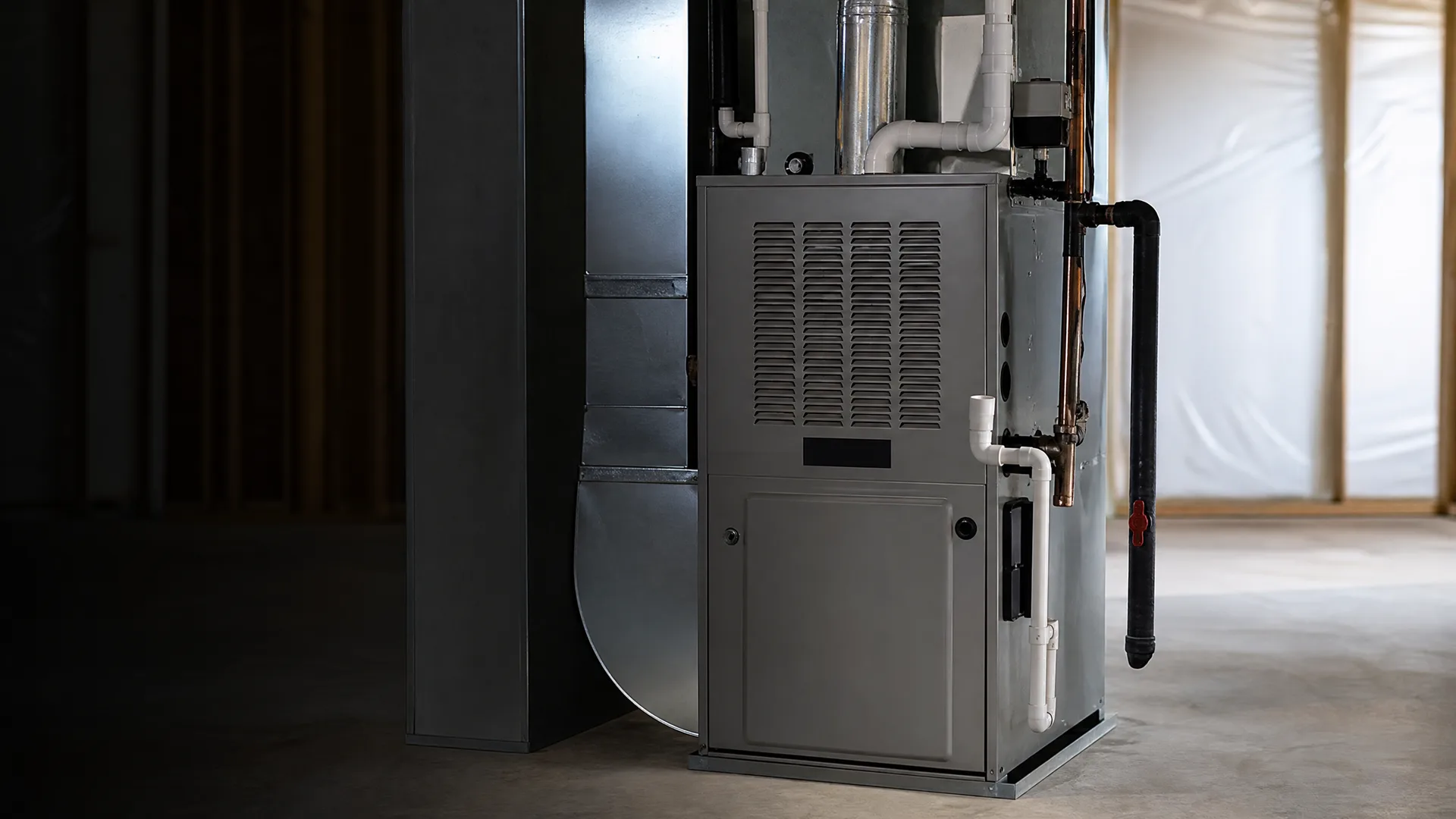
A gray gas furnace installed in an unfinished basement, connected to sheet-metal ductwork and PVC, copper, and black iron piping, with plastic sheeting over a stud wall behind it.

Skip the calls to every shop

Step 1 of 3: Equipment