47°F average low
That's the typical overnight temperature in Pearland this time of year, enough to run a furnace that's gone untested since last winter.

A furnace tune-up before winter checks the parts that only get used once the weather turns, before you find out one of them failed on a cold morning. A technician cleans the burner, checks the igniter, tests the flame sensor, and makes sure the system shuts off the way it should if something goes wrong. Winters in Pearland are mild, so a furnace here sits idle most of the year, and that idle time is when dust settles on parts and small problems go unnoticed. Most homes in the area heat with electricity, and electric furnaces still have components worth checking: the heating elements, the blower motor, the wiring connections. A tune-up now means you find out about a weak part while it's still warm out, not during the one stretch of cold nights you actually need the heat to work.
Winter nights average 47°F
Overnight lows here average 47°F in December, January and February. That's cold enough that a furnace left unchecked can leave a house uncomfortable on its worst mornings.
Heat runs December through February
Heat only runs three months a year in Brazoria County, December through February. A furnace that sits idle the other nine months needs to work right the moment it's asked to.
48.3% of homes heat with electricity
Electricity heats 48.3% of homes in Brazoria County, more than any other fuel. If that's how your furnace runs, a tune-up should include a look at the electric components, not just a gas burner.
NOAA nClimDiv 1991-2020 · ACS 2020-2024
Most winters in Pearland, a furnace that was never touched before the cold still gets you through to March. Lows in the high 40s don't push a system hard, and plenty of furnaces here run a few months a year with no service at all and no complaint. If the furnace worked fine last winter, there's a real chance it just keeps working this one. You save whatever a tune-up would have cost and you don't lose anything if nothing was wrong to begin with. The risk is you don't know which kind of furnace you have until a cold morning tells you.
A tune-up before winter finds the igniter that's about to fail or the flame sensor that's already fouled, while there's still time to fix it on a warm afternoon instead of a 47-degree morning. That matters more here than it sounds, since most homes in Pearland heat with electricity and electricity here isn't cheap, so a furnace working harder than it should shows up on the bill before anyone notices anything else is wrong. Instead of searching around for someone to look at it once something quits, you get matched with a contractor who handles this and they reach out to set it up. One call instead of several, and it happens before the cold does.




Most of this work happens in an order that makes sense once you see it. The flame sensor comes first, a thin metal rod that tells the furnace a flame is actually burning. Over a summer sitting idle, it picks up a layer of oxidation, and a coated sensor is the single most common reason a furnace fires for a few seconds and then quits. The igniter gets a resistance test rather than just a look, since one can glow orange and still not deliver enough heat to catch the gas reliably. Burners come out next. A Pearland furnace sits unused for most of the year, and dust and spiderwebs settle into the burner ports during that stretch, enough to block even gas flow when the weather finally turns. The heat exchanger gets checked for cracks, which matters even on a furnace that barely runs, because it shares ductwork with the AC blower that runs all summer. Gas pressure at the manifold gets measured against the furnace's rating. Low pressure leaves a room under-heated on a cold morning. High pressure pushes the exchanger harder than it was built for. Last comes the blower wheel, checked for a buildup of dust that makes it move less air for the same draw of electricity, which shows up on a bill in a county where power already costs more than most places.
That's the typical overnight temperature in Pearland this time of year, enough to run a furnace that's gone untested since last winter.
A short heating season is exactly why a bad igniter or sensor can sit undiscovered until the one morning you need the heat to work.
A furnace that only runs a few months a year doesn't give you much warning before it fails. You might notice the burners taking longer to catch, or a burning smell the first time it kicks on after sitting all year. Some furnaces short cycle, turning off seconds after starting, which usually points to a dirty flame sensor. Others blow air that never gets warm enough to matter on a 47°F morning. If the furnace shares a closet or attic space with other equipment, a cracked heat exchanger or blocked vent can let exhaust back into the house instead of outside, and that's not something you'd necessarily smell or see before it becomes a real problem.
Technician shuts off gas and power before opening the cabinet.
Burner assembly comes out and gets cleaned of dust and rust.
Flame sensor is wiped clean, then tested for proper reading.
Igniter is checked for resistance and physical cracks.


Fill out one form instead of calling around for a furnace tune-up.
Sending the form costs nothing.
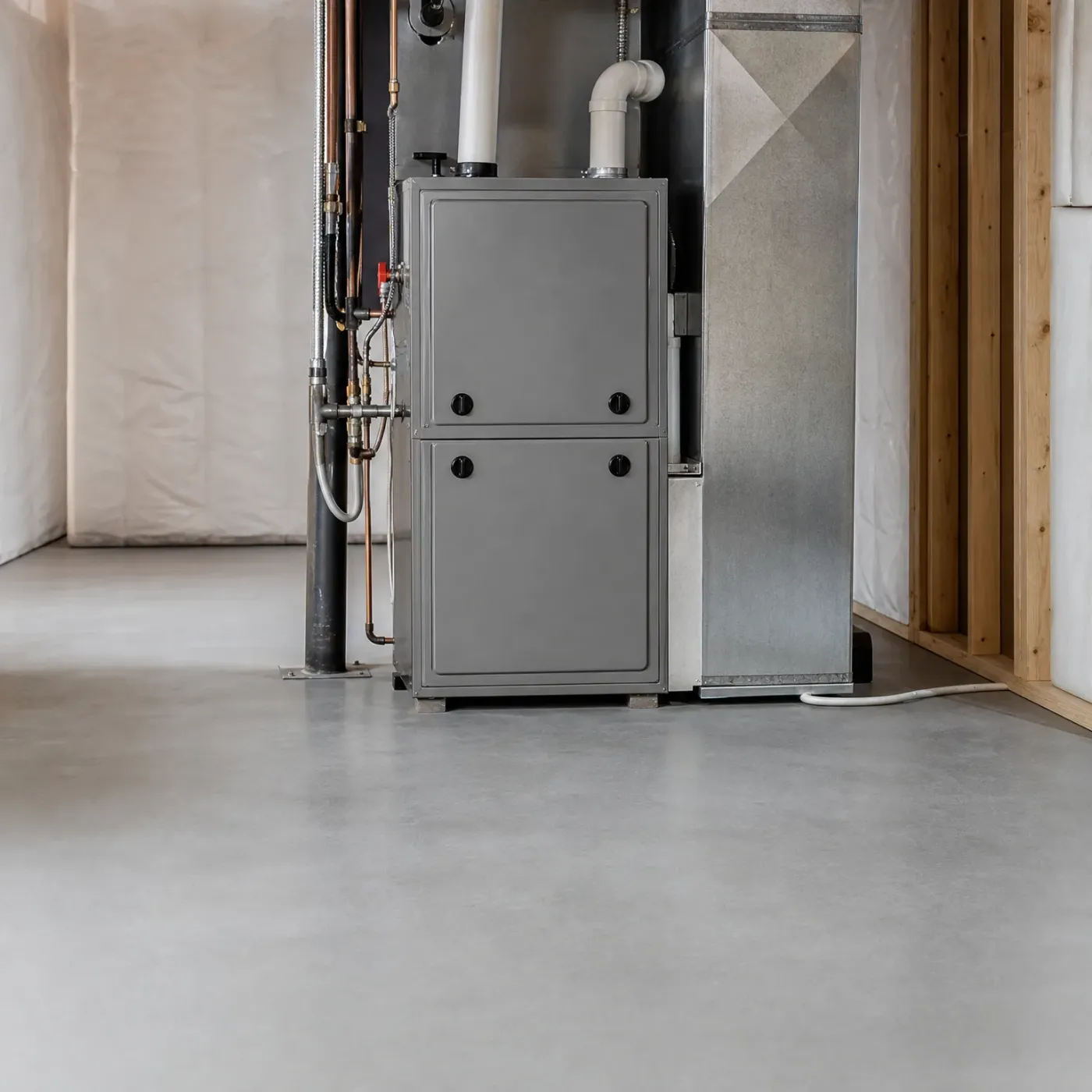
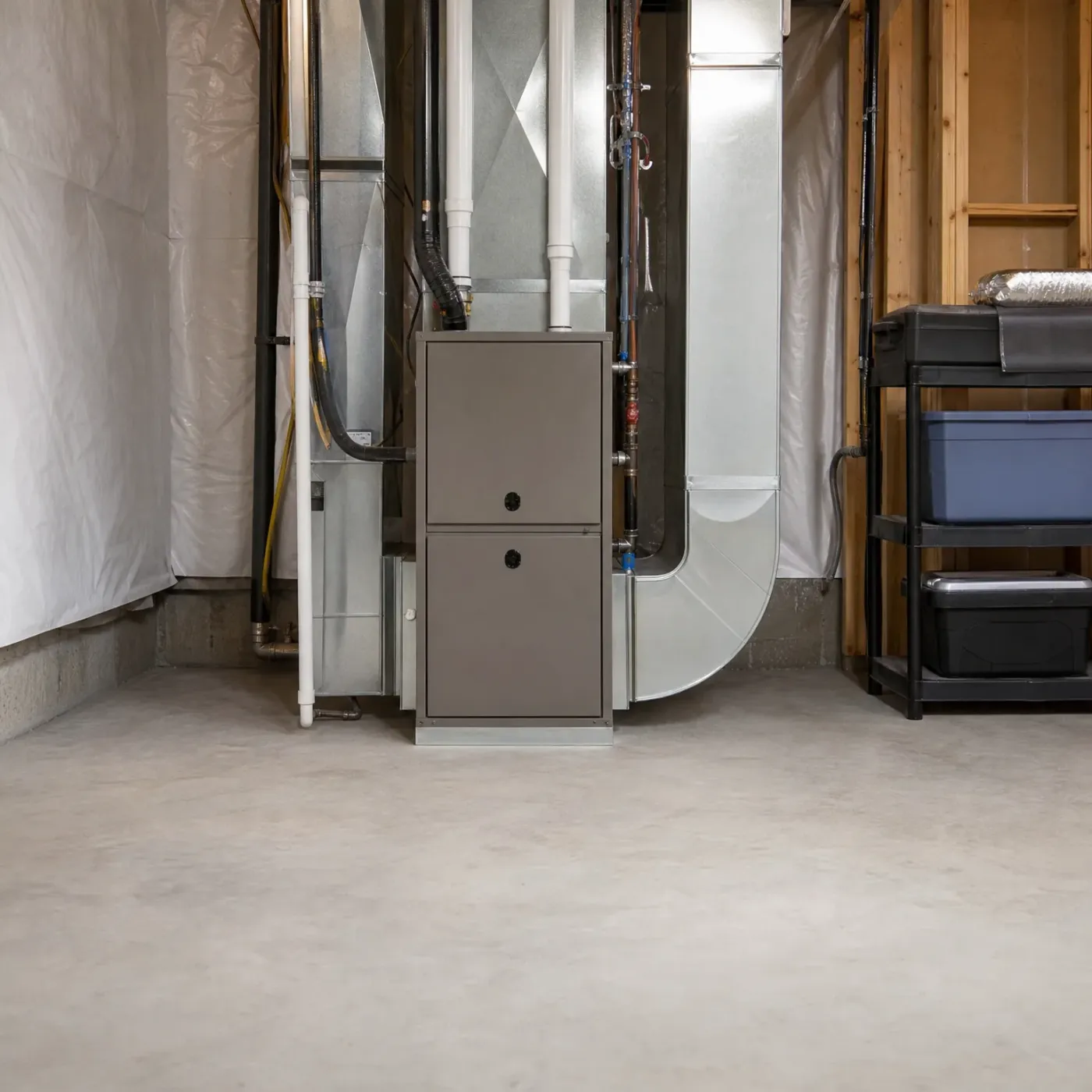
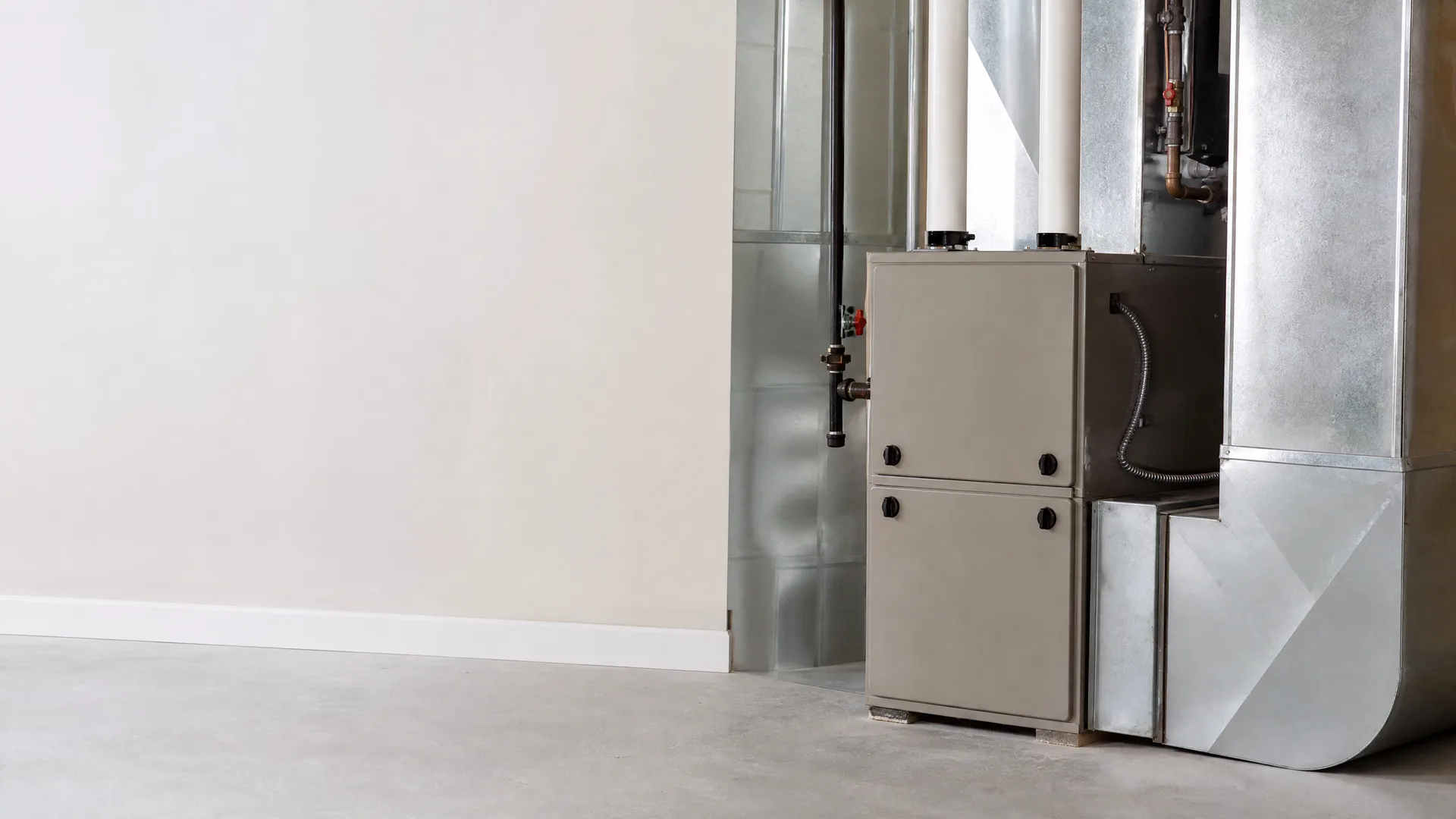
This is what a furnace looks like when the burner's clean and the gas line connections are sound. Burners light on the first try, the flame sensor reads properly, and the blower moves air the way it's supposed to. Nothing here surprises you on a cold morning.
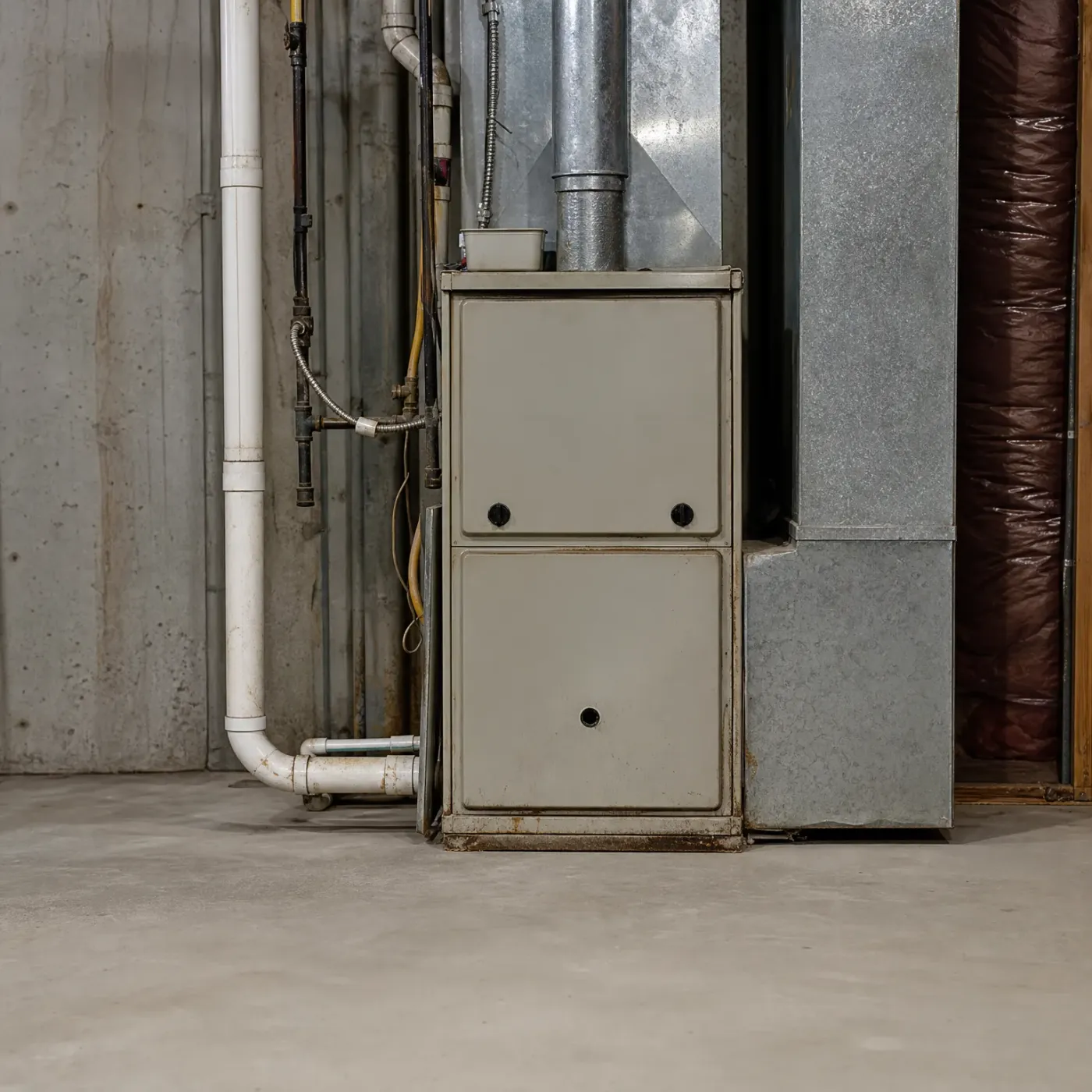
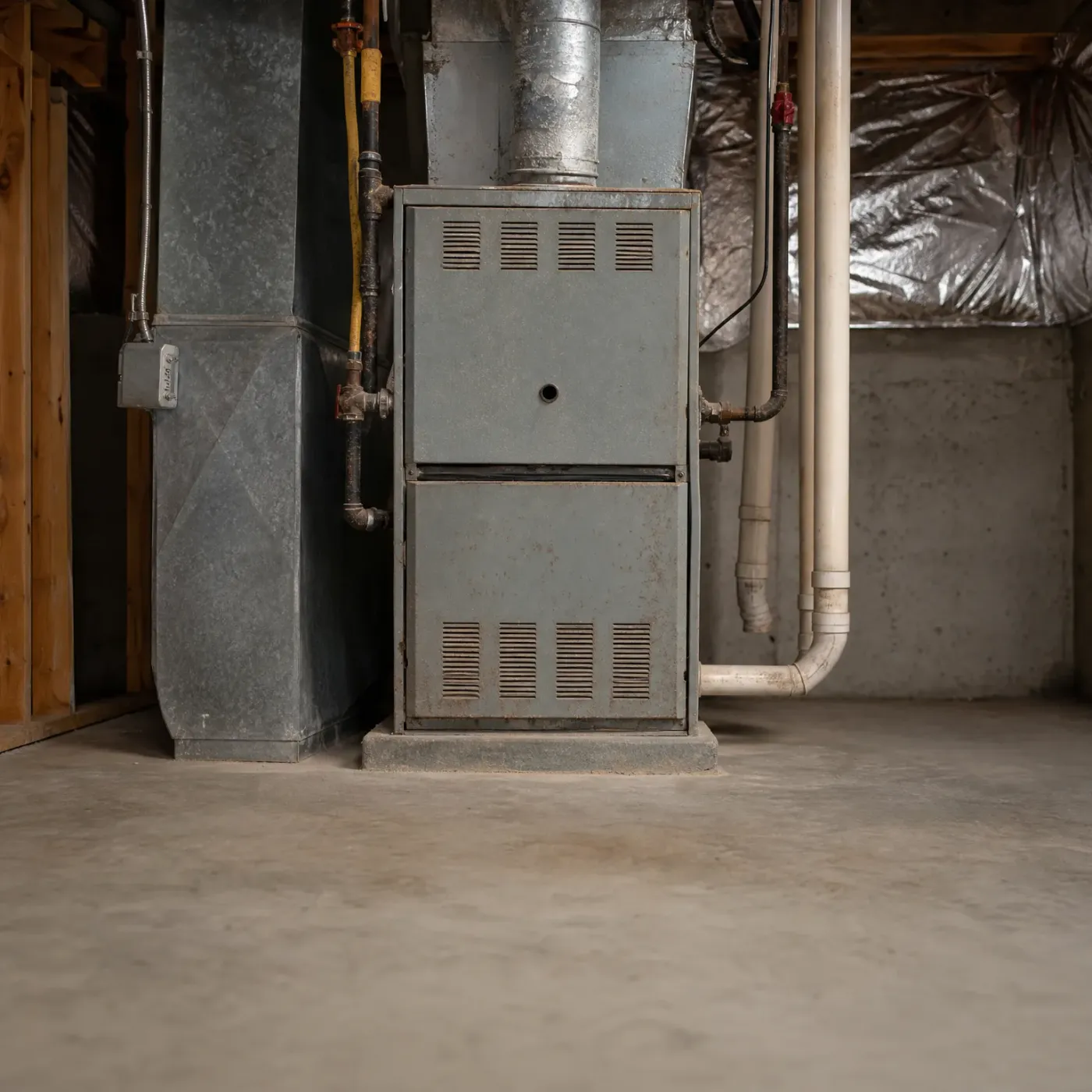
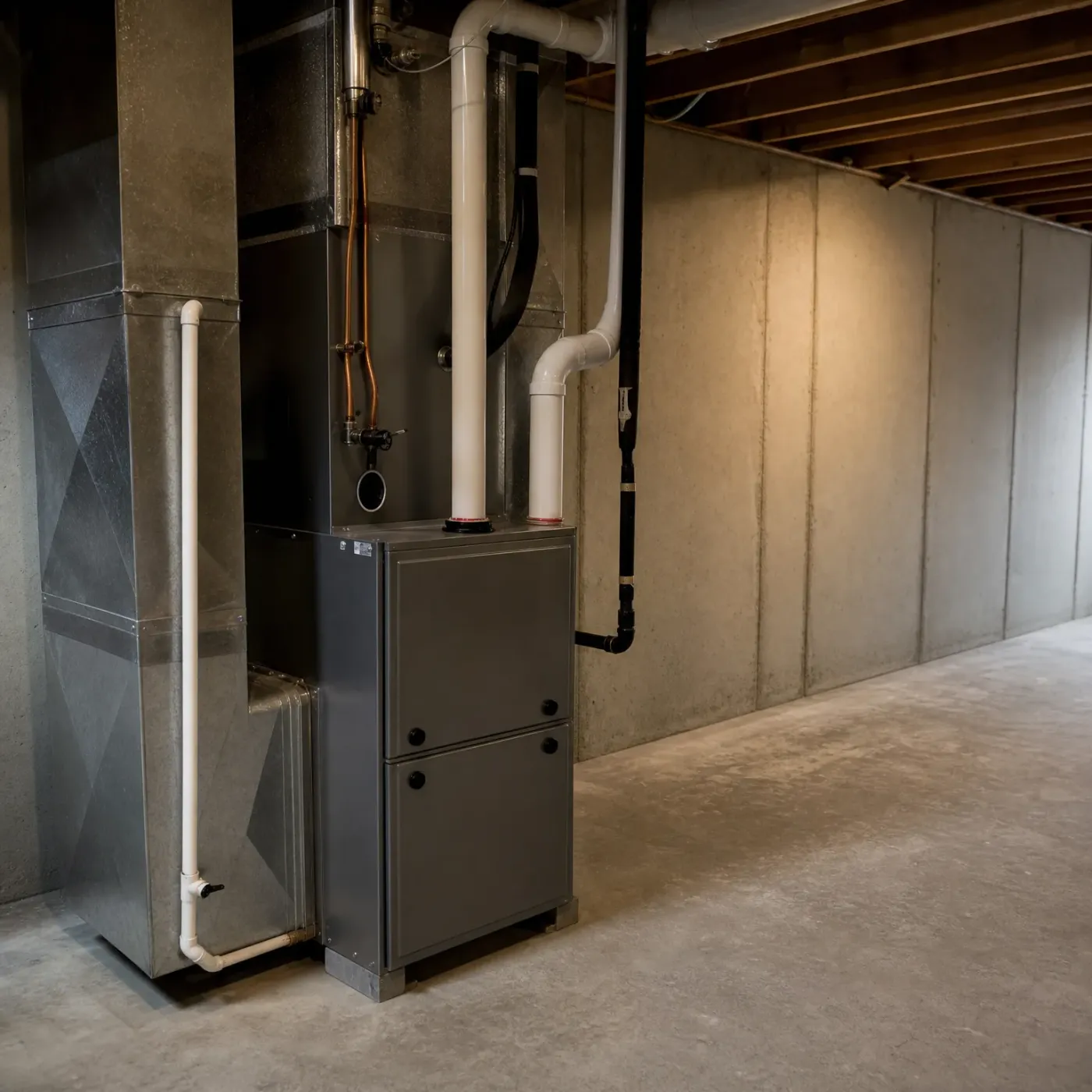
Rust on the cabinet and wear on the piping don't stop a furnace from running, but they're a sign nothing's been checked in a while. A furnace in this shape is more likely to have a dirty burner or a failing igniter underneath, the kind of thing that shows up when you need heat most.
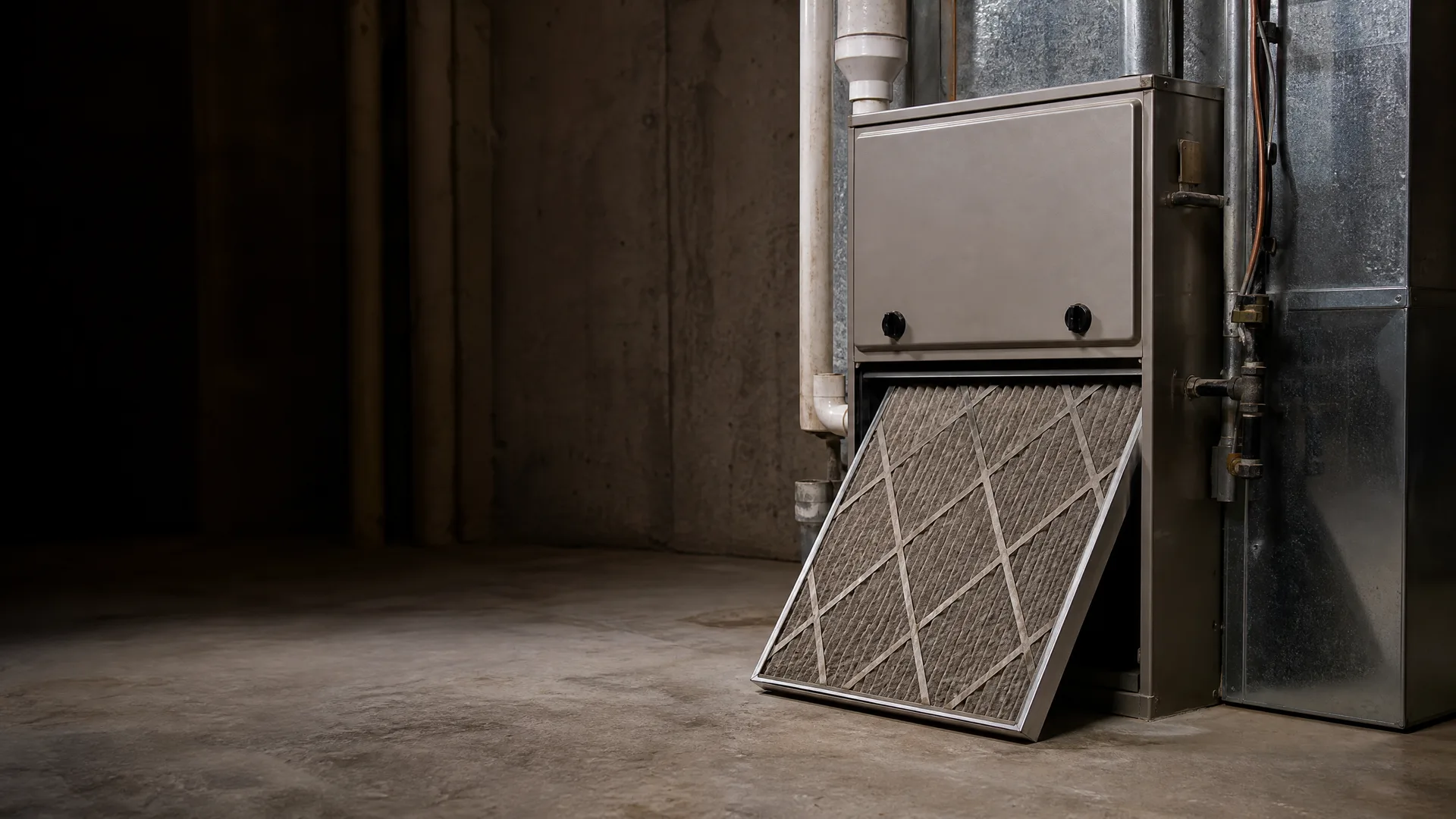
The furnace sits at the back of the garage, filter pulled halfway out. It's an October afternoon, warm enough outside that the furnace hasn't run yet this year. The filter is grey, matted with a season of dust it never shed. You hold it up to the light from the garage door and nothing comes through. Behind it the blower housing has the same film on it, fine and even, the kind that builds up over months nobody's looking. You think about the first cold snap, whenever it comes, and whether the burners will catch clean or whether this is the year something coated in dust decides not to work right. You set the filter down to go find a new one.
47°F isn't brutal, but it's enough that your furnace has to actually fire and run, not just idle. If a connection's loose or the burner's dirty, that's the temperature where you'll feel it, usually in the middle of the night.
NOAA nClimDiv 1991-2020
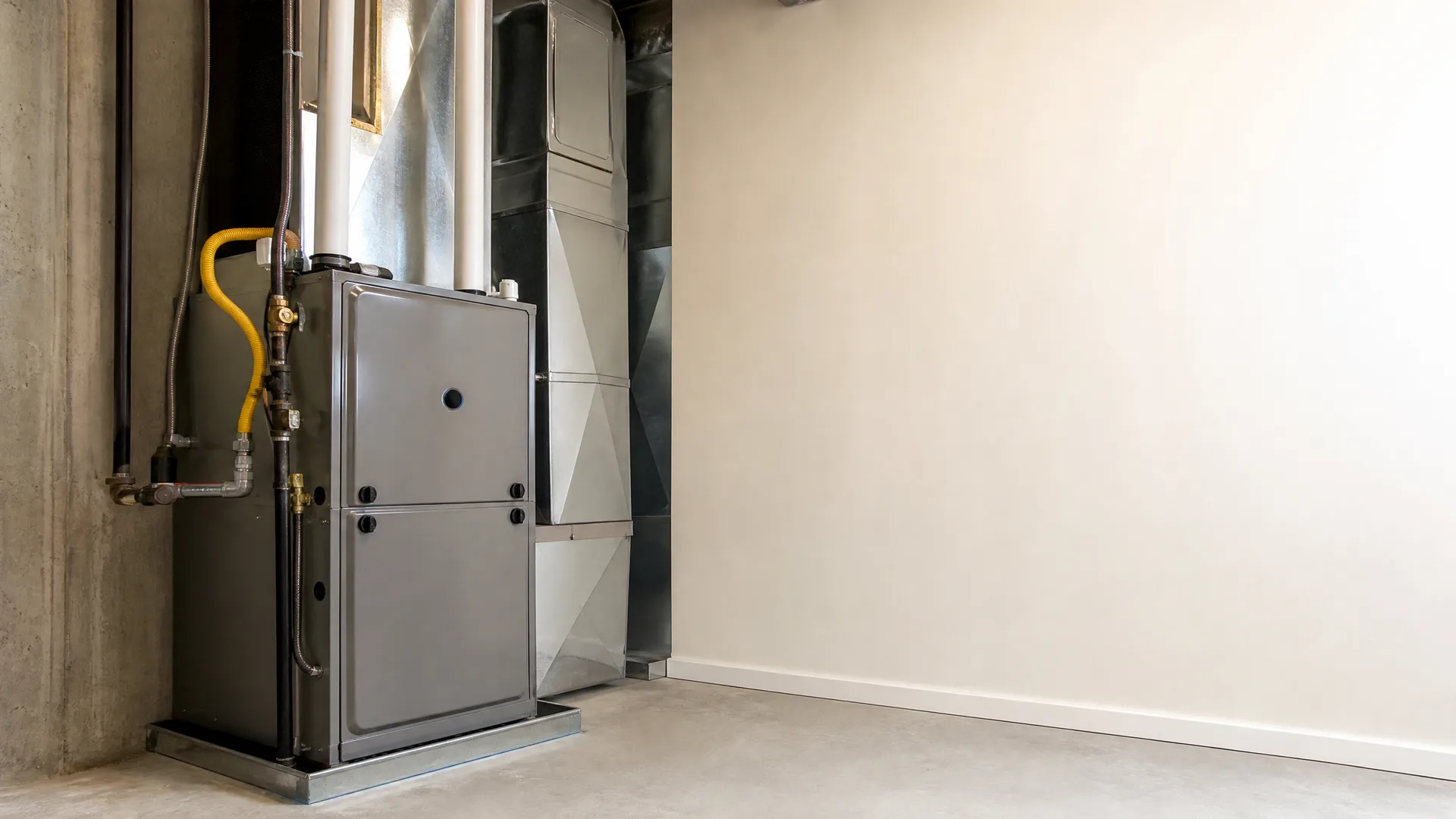
You could search for furnace contractors in Pearland, read through reviews that all sound the same, then call three or four and ask if they even cover maintenance this time of year. Some won't answer the first time. The ones who do ask you to describe the furnace and the problem again before they'll quote anything, and then you're left comparing what each one said against what you half remember.
You answer a few questions about your furnace once, and a contractor who handles tune-ups in your area gets in touch with you. No calling around, no repeating the same details to a second or third company, no guessing which quote covers what. You still decide who you want working on your furnace. You just don't have to find them on your own first.

Pearland winters are mild, but a furnace that only runs three months a year doesn't get many chances to show you something's wrong before it matters. A tune-up checks the burner, the igniter, the flame sensor, and the blower while there's still time to fix what needs fixing, instead of finding out on a 47°F morning.
You don't have to track down who does this kind of work. You've already read what a tune-up covers and what gets skipped without one. The next step is getting matched with a contractor who knows Pearland furnaces and has you reach out, so you're not calling around, repeating the same symptoms, and comparing quotes on your own.

Skip calling around to set up a furnace tune-up.
You're not committing to anything by asking.