Tell us about the job
Takes about a minute. No obligation.
A contractor quoting a furnace repair in Sherman County has to decide early whether the system failed because of how it was maintained or because of what the climate has asked of it. 171 severe weather events were recorded in Sherman County, Texas between 2015 and 2024. At that rate, severe weather is a recurring feature of life here, not a freak occurrence, so a contractor checks heat exchangers, igniters, and blower motors for the cumulative fatigue that steady seasonal stress produces. Age and service history still explain most failures, but a unit that has run through repeated hard seasons can arrive at the same failure point sooner.
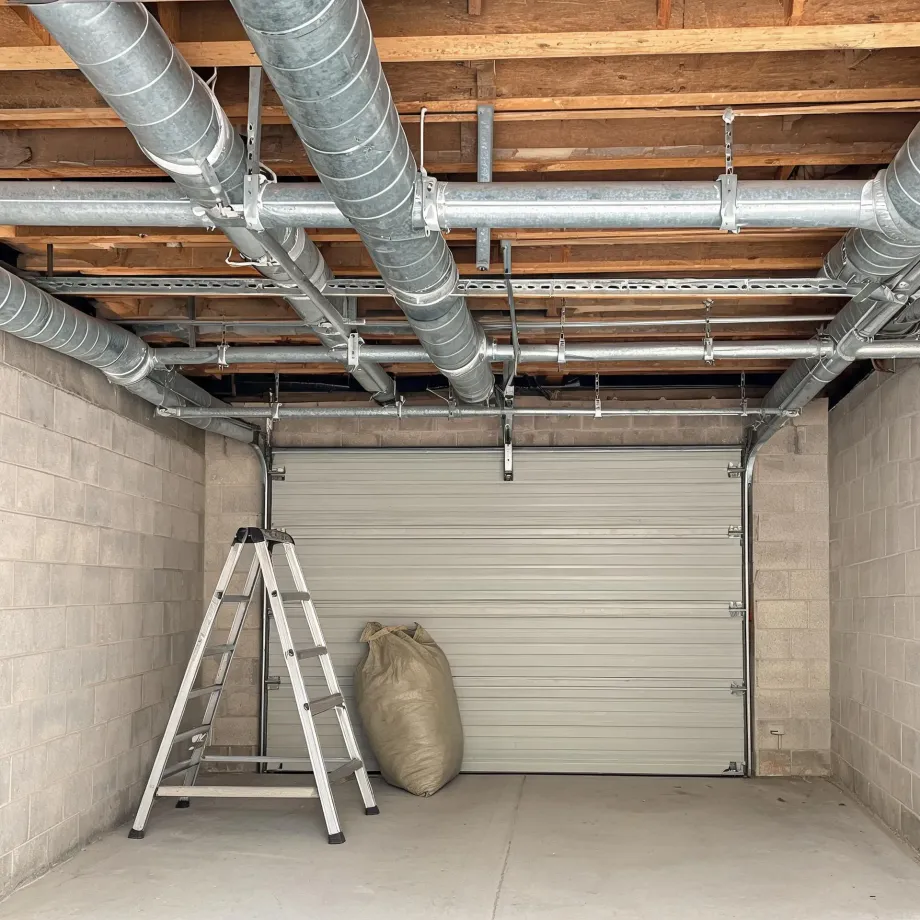
Ductwork in houses this old has been through enough heating seasons that what a contractor pulls apart often looks nothing like what was installed. Half the homes in Sherman County, Texas were built in 1966 or earlier (2020-2024 ACS 5-year). Furnaces cycling through winters in stock this aged build up heat exchanger fatigue, corroded burner assemblies, and cracked components that a surface inspection will not catch. When the unit is open, the question shifts to whether the parts it takes are still in production, and that answer drives the repair bill more than anything on the outside of the cabinet.
The Parts of a Furnace a Contractor Checks First
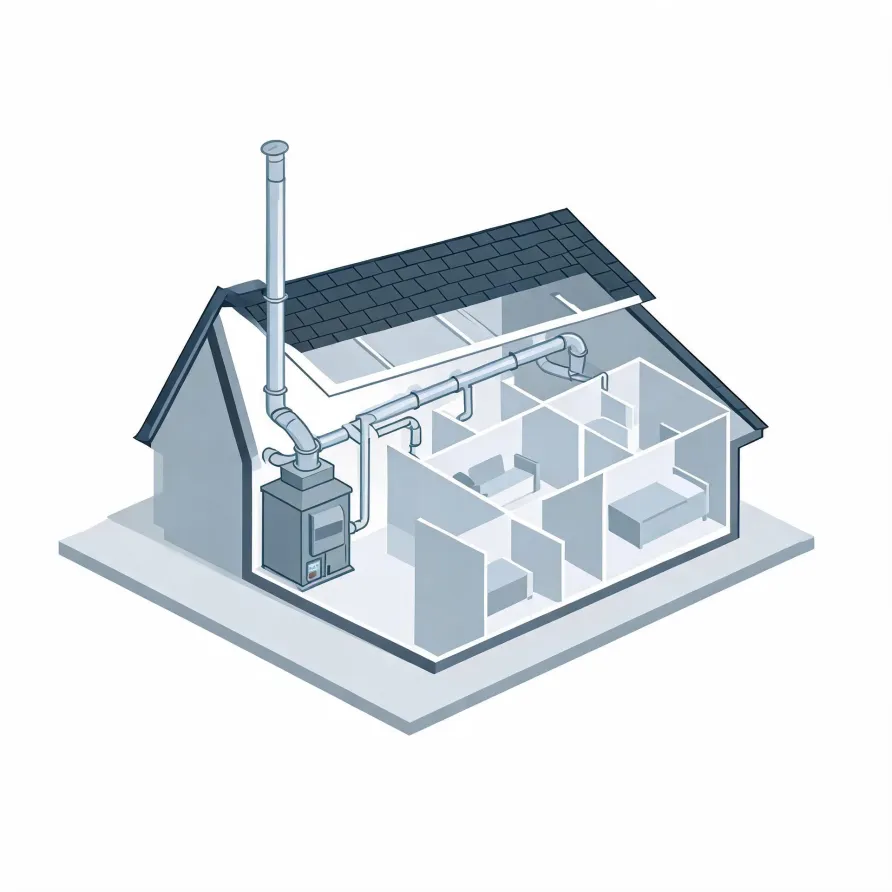
The heat exchanger sits at the core of the furnace cabinet and is the first place a contractor looks when a furnace runs but fails to warm the house. The burner assembly, which fires directly into the exchanger, gets checked next. A cracked exchanger or a dirty, misfiring burner accounts for a wide range of heating complaints.
The blower motor and its fan wheel sit in the lower half of the cabinet and push conditioned air out through the supply side of the house. The control board, the limit switches, and the igniter all live inside the cabinet as well. When a furnace short-cycles, fails to start, or throws an error code, those components are where a contractor focuses.
The drawing shows the general layout of a furnace system, and a licensed contractor determines which parts apply and what condition they are in for your specific home.
Find a contractor in Sherman CountySherman County by the Numbers
171 severe weather events were recorded in Sherman County, Texas between 2015 and 2024.
NOAA National Centers for Environmental Information, Storm Events Database, bulk CSV export, events 2015-01-01 through 2024-12-31.Half the homes in Sherman County, Texas were built in 1966 or earlier (2020-2024 ACS 5-year).
U.S. Census Bureau, 2020-2024 American Community Survey 5-Year EstimatesSherman County, Texas holds 1,135 housing units (2020-2024 ACS 5-year).
U.S. Census Bureau, 2020-2024 American Community Survey 5-Year EstimatesOwners occupy 76.3% of the occupied homes in Sherman County, Texas (2020-2024 ACS 5-year).
U.S. Census Bureau, 2020-2024 American Community Survey 5-Year EstimatesCodes & Standards Governing Furnace Repair in Sherman County, Texas5 sourced rules and standards
What Furnace Repair Looks Like in Sherman County
Non-weatherized gas furnaces manufactured on or after November 19, 2015 must reach 80.0 percent AFUE.
Non-weatherized oil-fired furnaces manufactured on or after November 19, 2015 must reach 83.0 percent AFUE.
Mobile home gas furnaces manufactured on or after November 19, 2015 must reach 80.0 percent AFUE.
Non-weatherized gas furnaces manufactured on or after December 18, 2028 must reach 95.0 percent AFUE, up from the 80.0 percent minimum that applies to units manufactured before that date.
Licensing and Legal Requirements in Sherman County, Texas
In Texas a person may not engage in air conditioning and refrigeration contracting unless that person holds a license issued under the state air conditioning and refrigeration contractor law.
Severe Weather Events in Sherman County
Extreme weather puts real hours on heating equipment. Furnaces that cycle hard through weather stress are the ones that show up in repair records, and that pattern is local to Sherman County.
171 severe weather events, 2015–2024. Source: NOAA National Centers for Environmental Information, Storm Events Database.