Tell us about the job
Takes about a minute. No obligation.
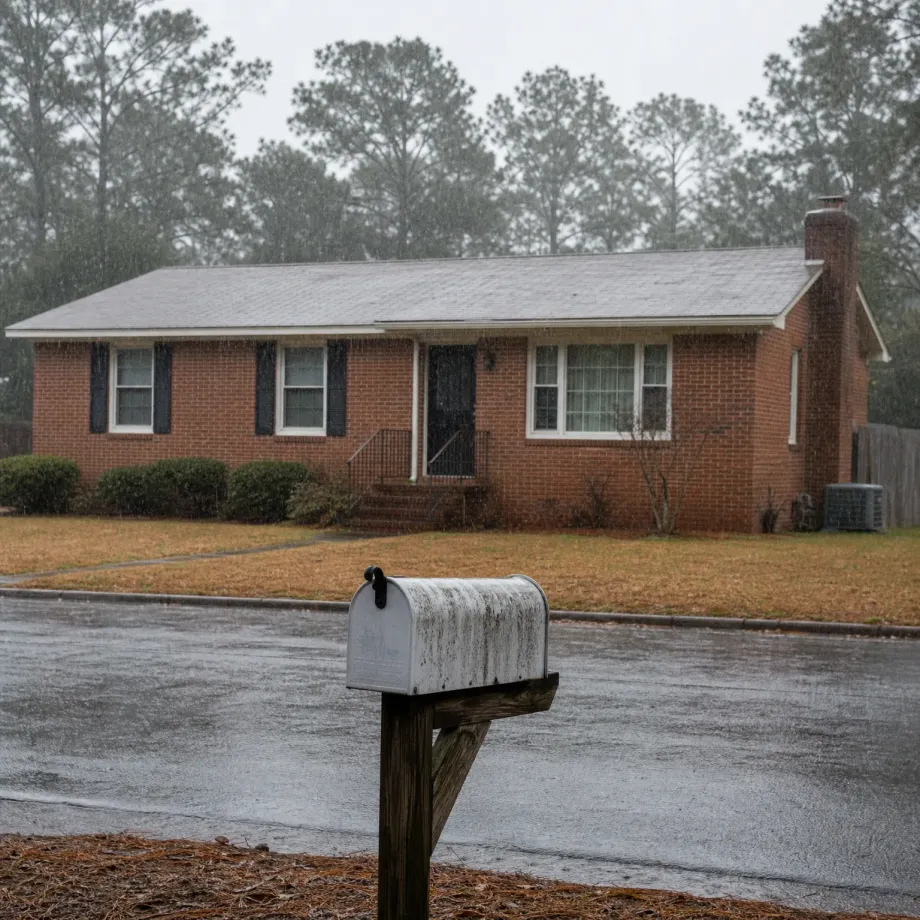
A furnace repair in Pecos County starts with a question a contractor in quieter areas rarely has to ask: how much has this system already been through? 277 severe weather events were recorded in Pecos County, Texas between 2015 and 2024. At that rate, severe weather is part of the normal operating environment for every system in this county, and its effects accumulate in the components that cycle hardest. A contractor checking a failed igniter or a cracked heat exchanger here weighs that load history before concluding the part simply wore out on its own schedule.
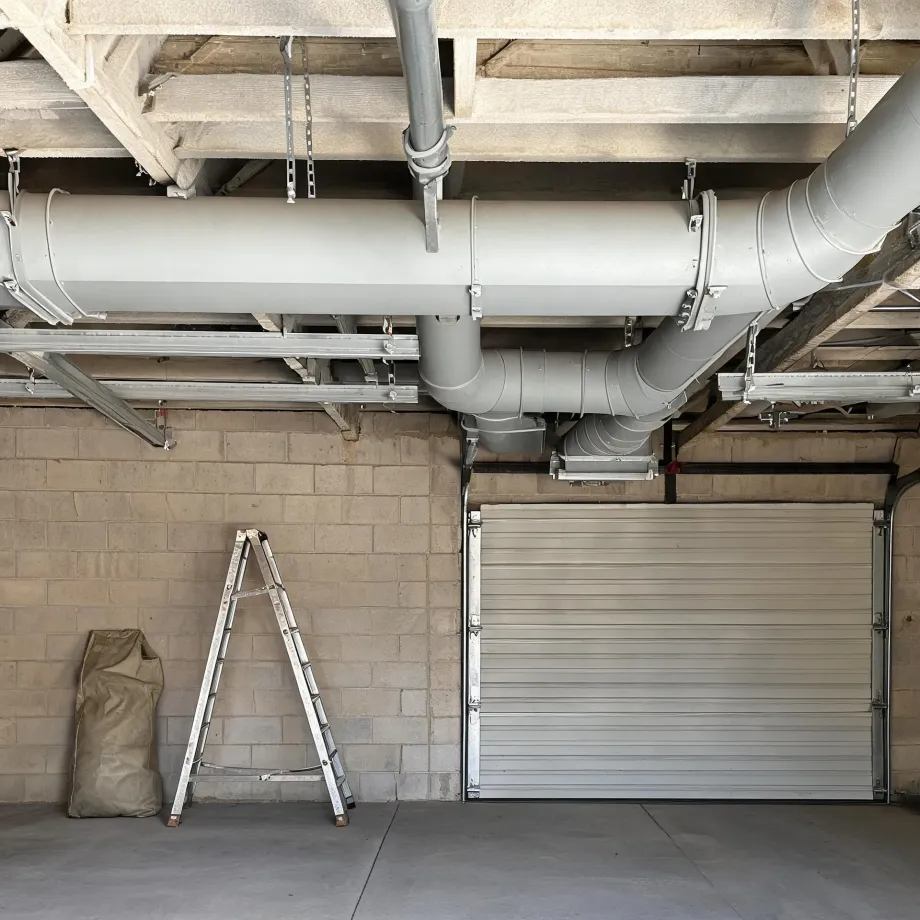
Half the homes in Pecos County, Texas were built in 1981 or earlier (2020-2024 ACS 5-year). A furnace that old has had time to accumulate a repair history, and the contractors who open them here find that the real variable is not the failure mode but the part it takes to fix it. Heat exchangers, draft inducer motors, and control boards from systems installed in that era are increasingly hard to source through standard supply channels. What a contractor quotes and how long the repair takes both hinge on whether that part still exists.
The Parts of a Furnace a Contractor Checks First
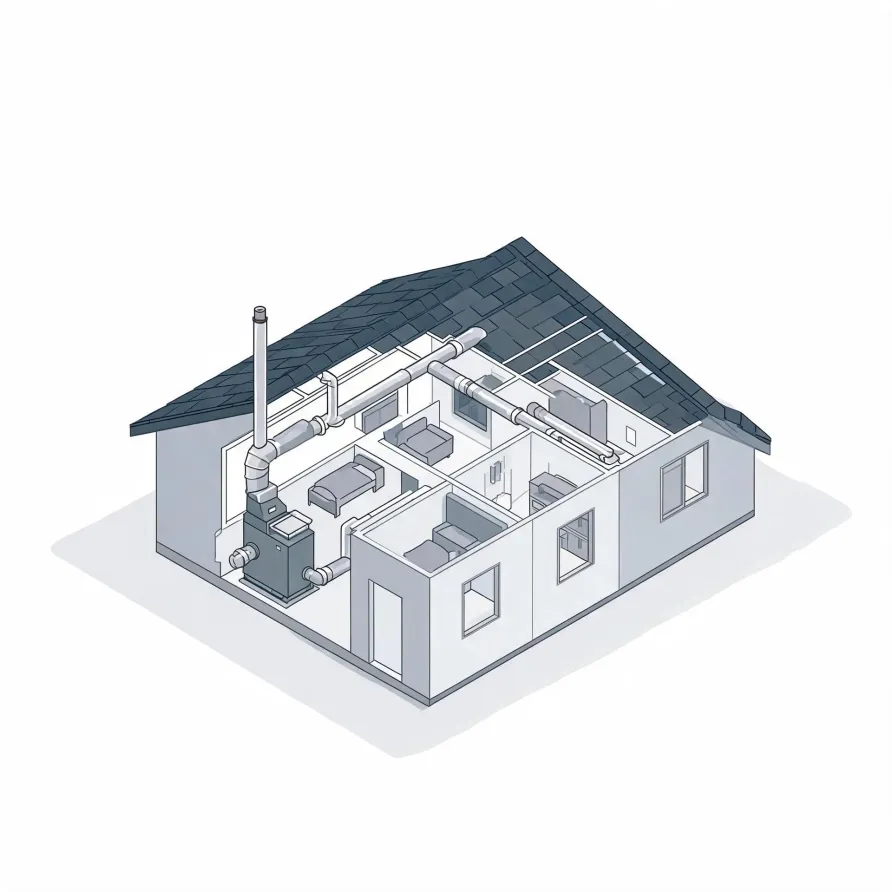
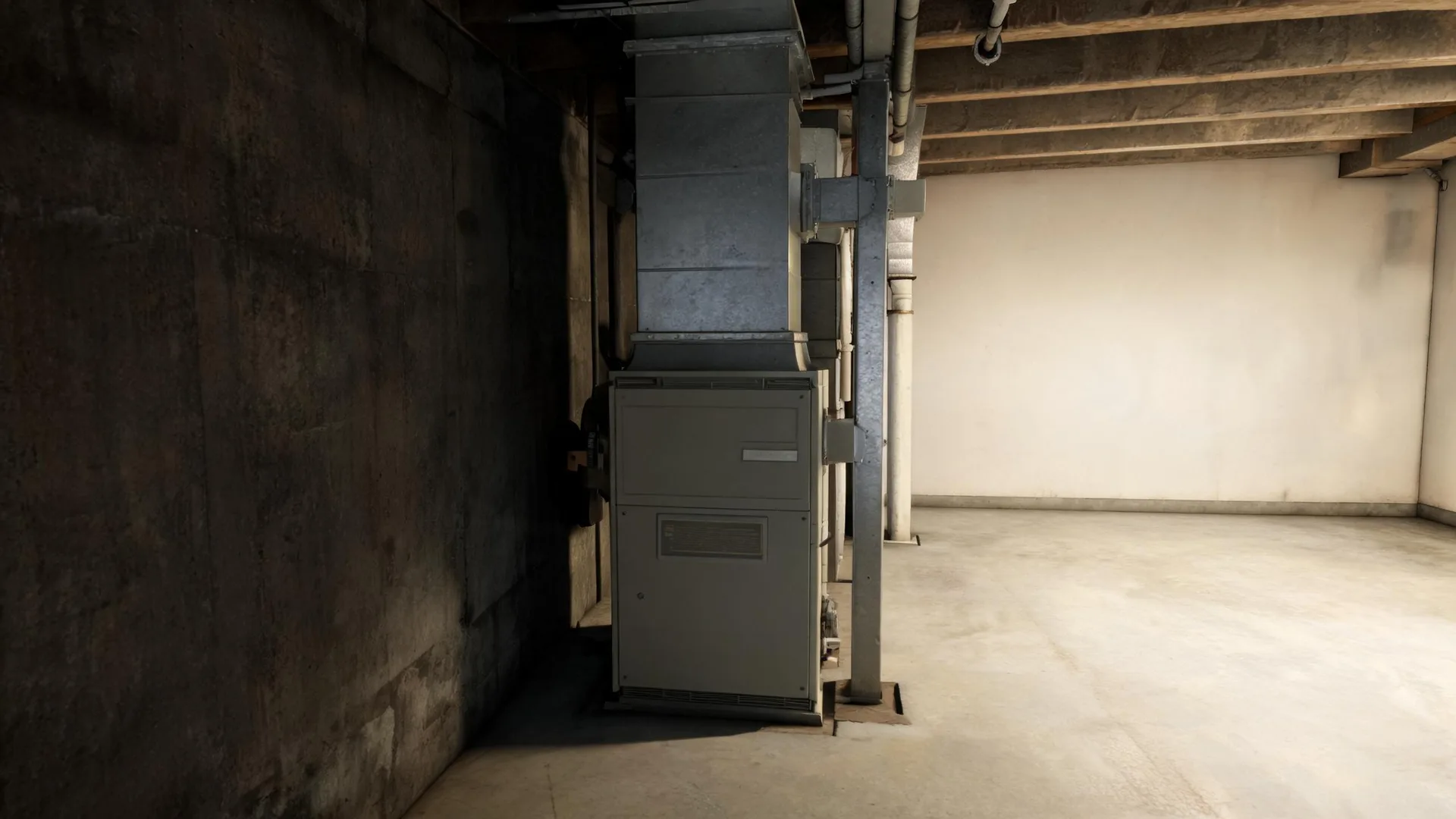
The heat exchanger sits inside the furnace cabinet, usually in a utility closet, basement, or garage, and it is the piece that actually warms the air your home circulates. Cracks or buildup here mean the furnace works harder or stops working entirely. The burner assembly sits just below it and is the first place a contractor looks when the furnace runs but produces little heat.
The blower motor sits at the base of the cabinet and pushes conditioned air out through the supply side of the system. The control board, mounted inside the cabinet door, reads signals from the thermostat and tells every other part when to run. A failed board can mimic the symptoms of several other faults, so contractors check it alongside the thermostat itself.
The drawing shows a typical furnace layout, and a licensed contractor determines which components apply to your specific system and what condition each one is in.
Find a contractor in Pecos CountyPecos County, by the record
277 severe weather events were recorded in Pecos County, Texas between 2015 and 2024.
NOAA National Centers for Environmental Information, Storm Events Database, bulk CSV export, events 2015-01-01 through 2024-12-31.Half the homes in Pecos County, Texas were built in 1981 or earlier (2020-2024 ACS 5-year).
U.S. Census Bureau, 2020-2024 American Community Survey 5-Year EstimatesPecos County, Texas holds 5,897 housing units (2020-2024 ACS 5-year).
U.S. Census Bureau, 2020-2024 American Community Survey 5-Year EstimatesOwners occupy 72.0% of the occupied homes in Pecos County, Texas (2020-2024 ACS 5-year).
U.S. Census Bureau, 2020-2024 American Community Survey 5-Year EstimatesCodes & Standards Behind Furnace Repair in Pecos County, Texas5 sourced rules & standards
What the Repair Visit Looks Like
Non-weatherized gas furnaces manufactured on or after November 19, 2015 must reach 80.0 percent AFUE.
Non-weatherized oil-fired furnaces manufactured on or after November 19, 2015 must reach 83.0 percent AFUE.
Mobile home gas furnaces manufactured on or after November 19, 2015 must reach 80.0 percent AFUE.
Non-weatherized gas furnaces manufactured on or after December 18, 2028 must reach 95.0 percent AFUE, up from the 80.0 percent minimum that applies to units manufactured before that date.
Licensing and Legal Requirements in Pecos County, Texas
In Texas a person may not engage in air conditioning and refrigeration contracting unless that person holds a license issued under the state air conditioning and refrigeration contractor law.
Severe Weather Events in Pecos County
Pecos County weather puts real stress on heating equipment, and that stress shows up as repair calls. How hard a furnace works over its life is largely a function of what the local climate throws at it.
277 severe weather events, 2015–2024. Source: NOAA National Centers for Environmental Information, Storm Events Database.