Send the request and finding a pro stops being your problem.
A pilot light that won't stay lit usually means the thermocouple has worn out, or there's a draft reaching the burner compartment, or the gas valve itself is failing. It could also be a dirty pilot orifice choking the flame down to nothing. None of these are things to guess at twice. A furnace in most homes around Waco only has to work a few cold weeks a year, so when it won't light, you need it fixed, not fiddled with.
Most houses in McLennan County heat with electricity, which means when the furnace goes quiet, there isn't always a simple backup keeping the house warm that night. And with power costing what it does here, running space heaters to get by isn't something you want to do for long.
This isn't a job to work through by trial and error. A furnace that keeps snuffing its pilot can be telling you something about a cracked part or a gas connection that needs a trained eye, not another match.
What you don't need right now is the search that usually comes next: calling one place, getting put on hold, calling another, explaining the same problem a third time, trying to figure out who actually answers calls in Waco versus who's three counties over. Send the form below and that part of it is done. You're not the one tracking down who's available or sorting through quotes anymore. A licensed contractor who works on furnaces in this area gets your information and takes it from there.
The fix itself might be quick or it might take some parts on order. That part depends on what's actually wrong. But finding someone who knows what they're looking at, that part ends the moment you hit send.
Why does my furnace pilot light keep going out?
Your furnace lights, runs for a bit, and then the pilot goes dark again. You relight it and the same thing happens an hour or a day later. In a McLennan County winter that isn't brutal, it's tempting to just keep relighting it yourself rather than deal with it, but a pilot that won't hold usually points to something that gets worse, not better, if it's left alone.
Usually a worn thermocouple
Most of the time a pilot that won't stay lit comes down to the thermocouple, the small sensor rod that sits in the pilot flame and tells the gas valve it's safe to keep gas flowing. Once it wears out, it stops reading the flame correctly and shuts the gas off even though the pilot is burning fine. A draft hitting the burner compartment or a gas valve on its way out can cause the same symptom, so the part that needs replacing isn't always obvious from the outside. Since most homes in the Waco area heat with electricity and lean on the furnace for only part of the year, a gas furnace sitting unused for months is often where this shows up first.
Pilot lit, furnace running
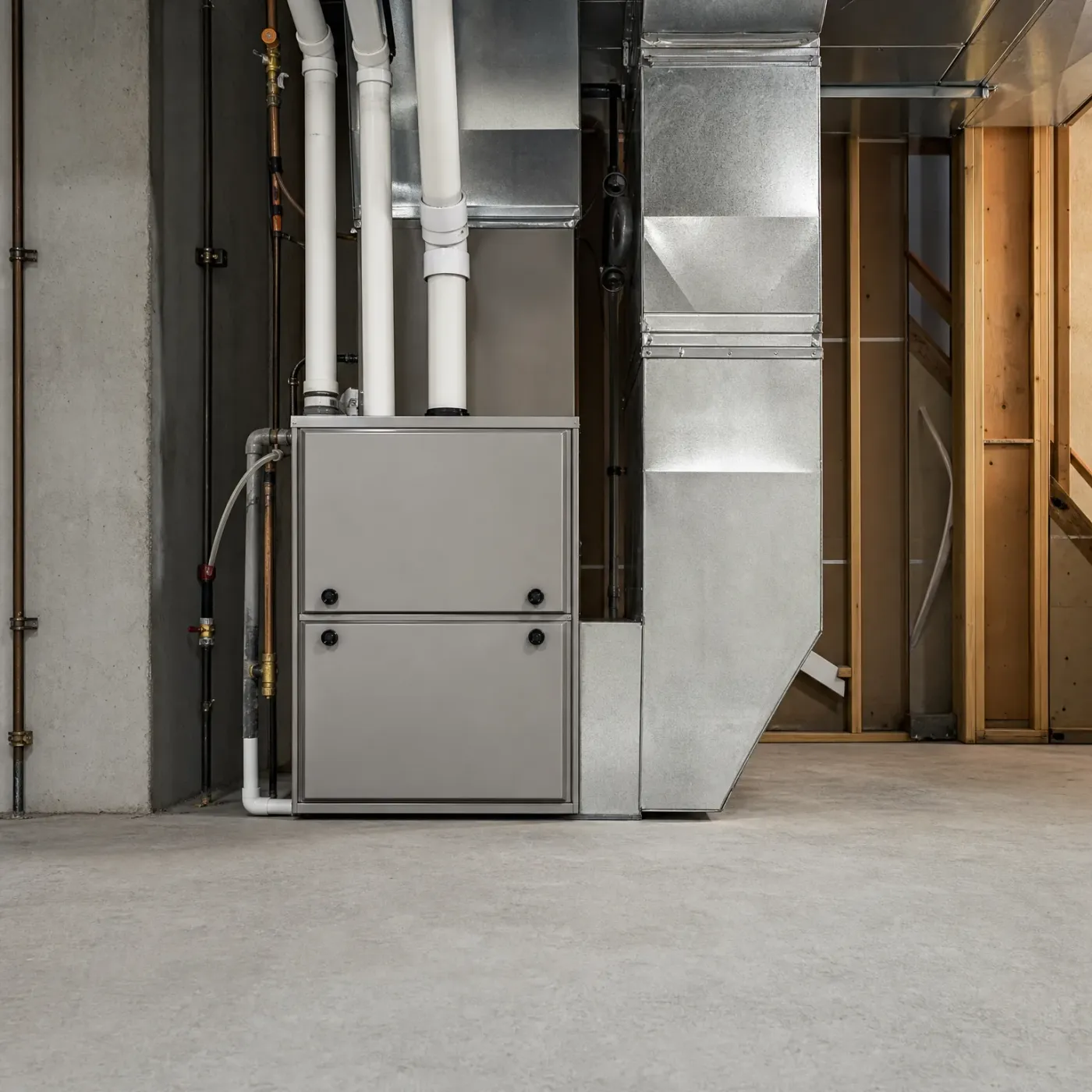
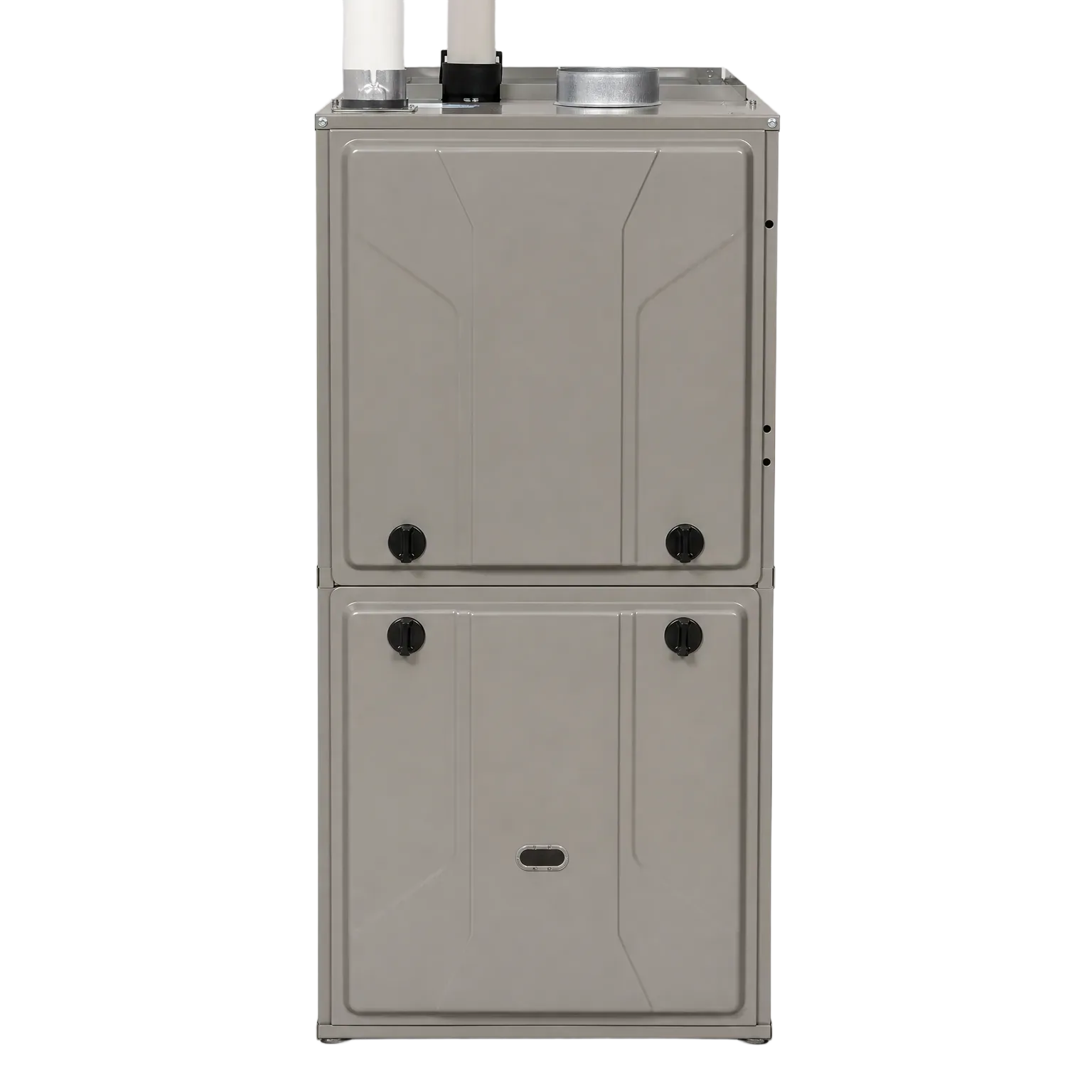
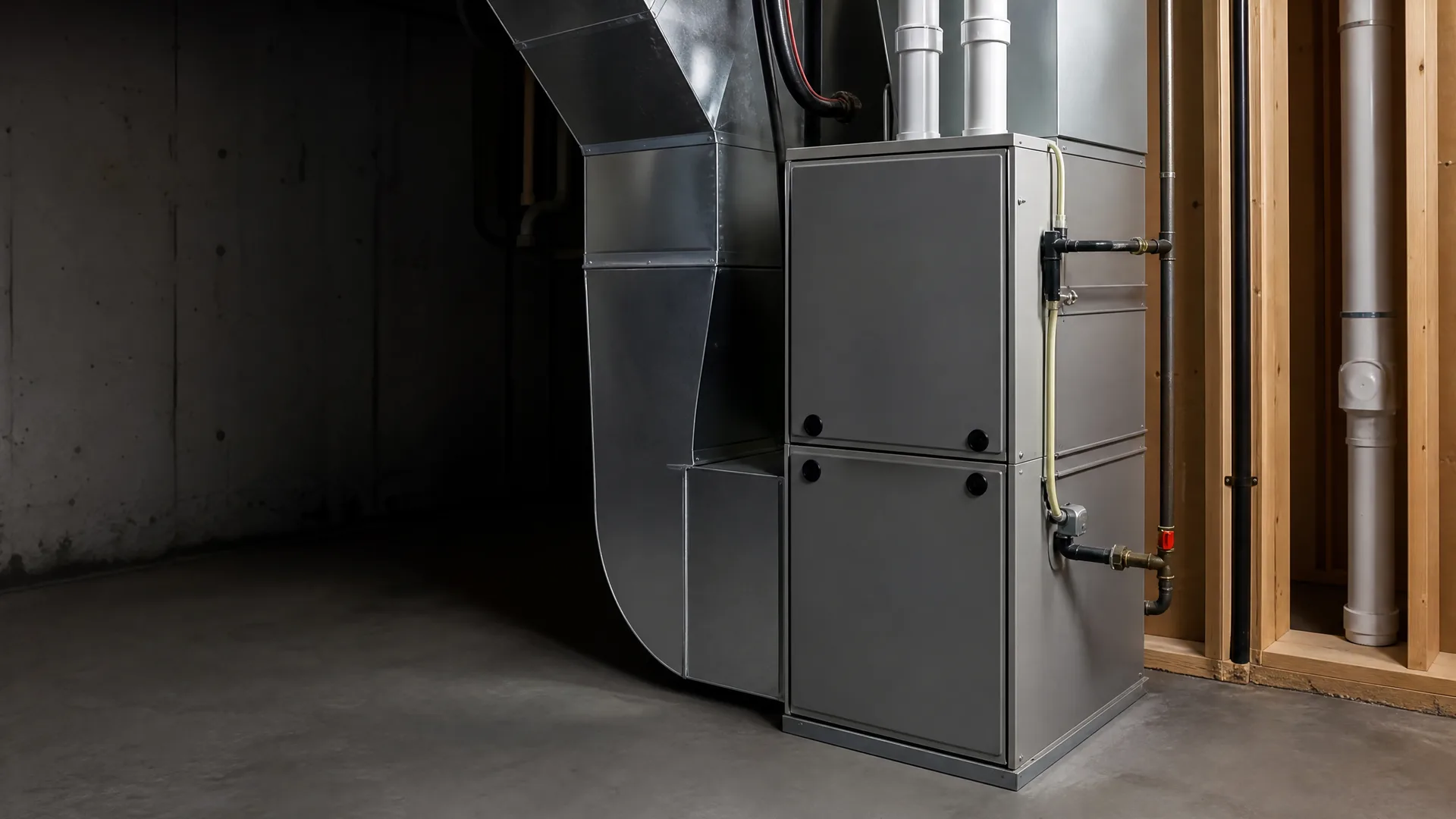
This is what it should look like. The flame burns steady and blue, the burners fire when the thermostat calls, and the furnace cycles on and off without you touching it. Gas pipes, condensate lines, and ductwork all do their job quietly in the background.
Pilot won't hold
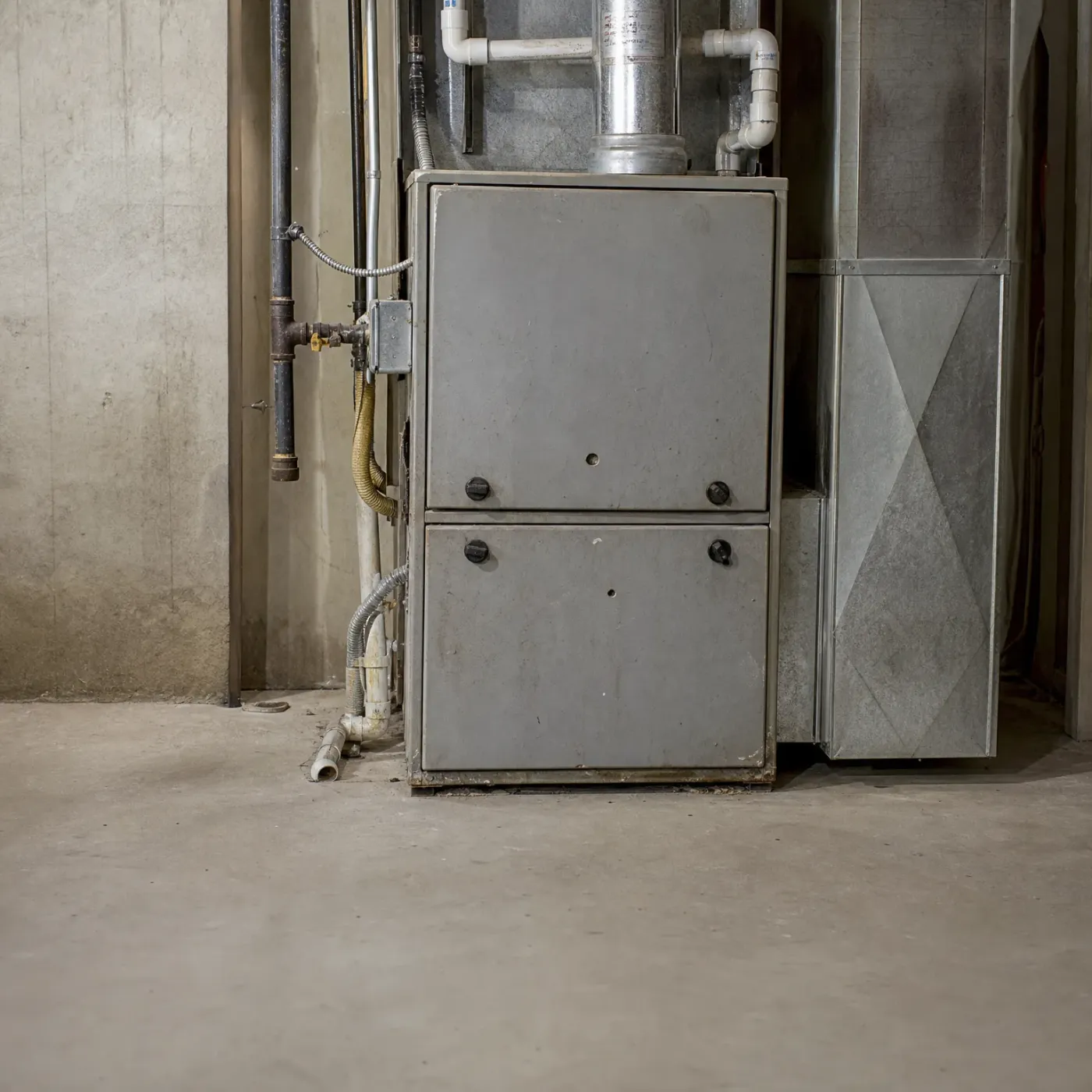
Here the pilot keeps dying, even though the gas line, the ductwork above, and the panels are all the same as they should be. Something inside, a worn thermocouple, a dirty orifice, a failing gas valve, is keeping the flame from staying lit. The furnace looks fine from the outside. It just won't stay running.
A furnace that won't stay lit is a furnace you can't trust
Most houses in McLennan County heat with electric systems, so a gas furnace here usually gets light, infrequent use. That's exactly why a worn thermocouple or a dirty orifice goes unnoticed so long. The furnace sits idle for months, then the first cold snap in December finds the weak part. You're not using this thing enough to catch a small problem before it becomes a dead pilot on a 38 degree morning.
A furnace that won't hold a flame doesn't heat, and a house with electric backup or none at all gets cold fast. Worse, repeated relighting of a failing valve or a cracked thermocouple is how small gas problems turn into bigger ones. You don't have to figure out which part it is or who's free to look at it this week. Send the details once and the search for a licensed contractor, the phone calls, the back and forth explaining the same problem twice, that part is off your plate.
What a thermocouple actually does
The thermocouple is a thin metal rod that sits in the pilot flame. Heat from the flame generates a tiny electric signal that tells the gas valve the pilot is lit and it's safe to open. If that rod weakens, or soot builds up on it, the signal drops too low. The valve reads that as no flame, even when one is burning, and shuts the gas off. That's the pilot going dark with no warning.
A sixty second check you can do
Pull the access panel and look at the pilot assembly before you call anyone. A healthy flame is mostly blue with maybe a small yellow tip, and it wraps around the thermocouple rod, not off to the side of it. If the flame looks weak, orange, or doesn't touch the rod, that's usually your answer. A furnace used only a few months a year in McLennan County can carry a worn part a long time before it finally fails.
What are you noticing when you go check the pilot
You've probably been down to the furnace more than once, match or lighter in hand, watching the flame to see if it holds. Maybe it goes out as soon as you let go of the gas knob, or it stays lit for a day and then you find it dark again when the house feels cooler than it should. You might notice the flame looks small or yellow instead of a steady blue, or there's a faint gas smell near the unit right before it quits. On a mild McLennan County night none of this feels urgent, but a furnace that won't hold its pilot is a furnace you can't count on to heat the house when you actually need it to.
Fill out one short form instead of calling around.
No fee to send it, and nothing to sign.
Relighting it yourself
You can hold the gas knob in, get the pilot lit, and let it run until it goes out again. Some homeowners do this for a whole winter without calling anyone, since McLennan County winters are mild enough that a day or two without heat isn't an emergency. It costs nothing but your time, and if the furnace only sees light use, you might only be down there a handful of times before spring. The trouble is you're not fixing anything. A worn thermocouple doesn't heal itself, and a dirty orifice doesn't clean itself out. Each relight is just buying a few more hours before the flame drops again, and you're the one who has to notice and act every time it does.
Having it diagnosed
A contractor can test the thermocouple's millivolt output, check the pilot orifice for soot, and look for a draft reaching the burner compartment, which tells you which of those it actually is instead of leaving you to guess. That matters because the fix for a weak thermocouple isn't the fix for a blocked orifice. Once it's diagnosed, the furnace goes back to lighting and running on its own, no more trips downstairs with a lighter. It also means you're not relying on your own judgment about whether a furnace that keeps relighting itself is still safe to leave running unattended overnight.
Keep relighting it yourself
You check the pilot, relight it, and hope it holds. If it goes out again tonight, you're back down there with a lighter, still not knowing why.
Why does a pilot problem matter more here than the fix itself
Winter nights average 38°F
Winter nights here average 38°F. That's not cold enough to make a dark furnace an emergency, but it's cold enough that you'll notice by morning.
Heat runs November through March
Heat only runs here from November through March. A furnace that sits unused most of the year gives a weak thermocouple or a dirty orifice months to fail quietly before you ever strike a match.
70.7% of homes heat with electricity
70.7% of homes in McLennan County heat with electricity, so gas furnace trouble is something fewer of your neighbors deal with, and fewer people around you to ask what's normal.
NOAA nClimDiv 1991-2020 · ACS 2020-2024
You keep track of the relight, how long it held, whether it was the same length of time as last time. That's useful information, but you're still the one holding the lighter every time it goes dark.
A contractor reads the same clues differently. How long the pilot holds, what the flame looks like, whether it goes out on its own or when the furnace cycles tells them which part is failing before they open the panel.
Winter nights average 38°F
A 38°F night won't freeze your pipes if the furnace sits dark for a few hours. But it's cold enough that a pilot going out at 2 a.m. means a cold house by the time you wake up and check it.
NOAA nClimDiv 1991-2020
A pilot that won't stay lit is a worn thermocouple, a draft, a dirty orifice, or a gas valve wearing out, and no amount of relighting it fixes any of those. You can keep track of how long it holds each time, but that only tells you something is wrong, not which part it is. A contractor opens the burner compartment, tests the thermocouple's signal, checks for the draft you can't see, and knows within one visit which of those it is. That's the difference between another night with a lighter in your hand and a furnace that holds its flame through a 38°F night without you checking on it. Finding that contractor is the part that otherwise falls on you: searching, calling around, explaining what the pilot's been doing to one company after another, waiting on quotes to compare. Send the form and that work is done. You're left with one plain fact, the pilot either holds or it doesn't, and someone qualified finding out why.