A local pro who knows furnaces gets your details and gets in touch.
A loud noise from your furnace is not something to live with until it stops working. Most homes in the Houston area heat with electricity, so what you are hearing is usually coming from the blower, the motor, or the ductwork around the unit, not a gas burner. A bang when it kicks on, a squeal that rises and falls, or a rattle that gets worse over time each point to something different going on inside the cabinet.
Winters here are mild, so your furnace does not run as many hours as it would somewhere colder. That actually makes a new noise easier to notice. You are not used to hearing it, which is exactly why it is worth paying attention to now rather than waiting for the next cold snap.
Figuring out whether it is a loose panel, a motor bearing, or something with the blower wheel takes someone who can actually get inside the unit and look. That is not a guess you want to make from the next room, and it is not something this page can tell you from here either.
What happens next is simple. You answer a few questions about your furnace and what you are hearing, and that gets passed to a licensed contractor who works in Harris County and handles furnace calls like this one all season. You are not handing your information to a stack of companies hoping one calls back. One contractor gets it, and that contractor reaches out to you directly, already knowing what you told them.
Power costs add up fast here, and a furnace that is straining to run, grinding through a bad bearing or fighting a loose part, is not running efficiently while it does it. Getting the noise looked at is also a way of making sure the unit is not working harder than it should be.
The button below starts that process.
A loud noise from your furnace usually points to the blower assembly, not a gas burner, since most homes around Houston heat with electric furnaces. A bang when it starts is often the blower wheel hitting a loose panel or a piece of ductwork flexing as air pressure changes. A rattle that continues while it runs points to a screw worked loose somewhere in the cabinet or a bent blower blade clipping the housing. A squeal or grinding sound usually means the blower motor bearing is wearing out, which is a part that fails on its own timeline and does not improve by waiting. A heavy thump when the system shuts off can mean the blower wheel is unbalanced. None of these point to a gas leak, since there is no burner involved, but a motor that is failing can overheat or trip its own safety switch and leave you without heat on a cold night. Winters here are mild, but the nights that do turn cold are exactly when you do not want the blower giving out.
Before you get your furnace repairAfter you get your furnace repair
A licensed pro who repairs furnaces in Harris County gets your request.
There's no charge for the request.
Why a rattle turns into a bang
A loose panel or a screw backed out on the blower housing starts as a rattle you barely notice. Electric furnaces run the blower on nearly every cycle through a Houston winter, since the mild weather here means short bursts of heat rather than long steady runs. Each cycle flexes that loose metal a little more. A rattle that would take years to worsen in a climate with long, continuous heating runs can turn into a bang or a scrape within a season here, simply because the blower is starting and stopping so often. The noise is not the furnace working harder. It is the same small problem repeating itself more times than it would somewhere colder.
What a local tech checks first
A contractor who works on electric furnaces around Harris County all winter knows the blower motor and wheel take the most wear here, since they run more cycles than furnaces in colder climates ever do. The first checks are usually the blower wheel for a bent blade or buildup throwing it off balance, the motor mounts for wear, and the panels and ductwork near the unit for anything loose enough to vibrate. Matching you with one local contractor, rather than sending the request to several companies, means one person looks at your specific furnace and tells you what they find, instead of you fielding calls from competing crews guessing over the phone.
Run the blower with a loose wheel or a failing motor bearing long enough and the noise stops being the problem. The motor draws harder to turn, heats up, and eventually seizes, taking your heat out with it.
A furnace that still runs costs less to fix than one that quit. Catching a loud blower early is a repair. Waiting for it to stop is a repair plus a cold house until someone gets to it.
Winter nights average 45°F
Nights here only drop to about 45°F on average in December and January, so your furnace isn't running long or hard most winters. A loud noise now isn't from strain, it's a part already loose or wearing, and it won't quiet down on its own.
NOAA nClimDiv 1991-2020
Running quiet
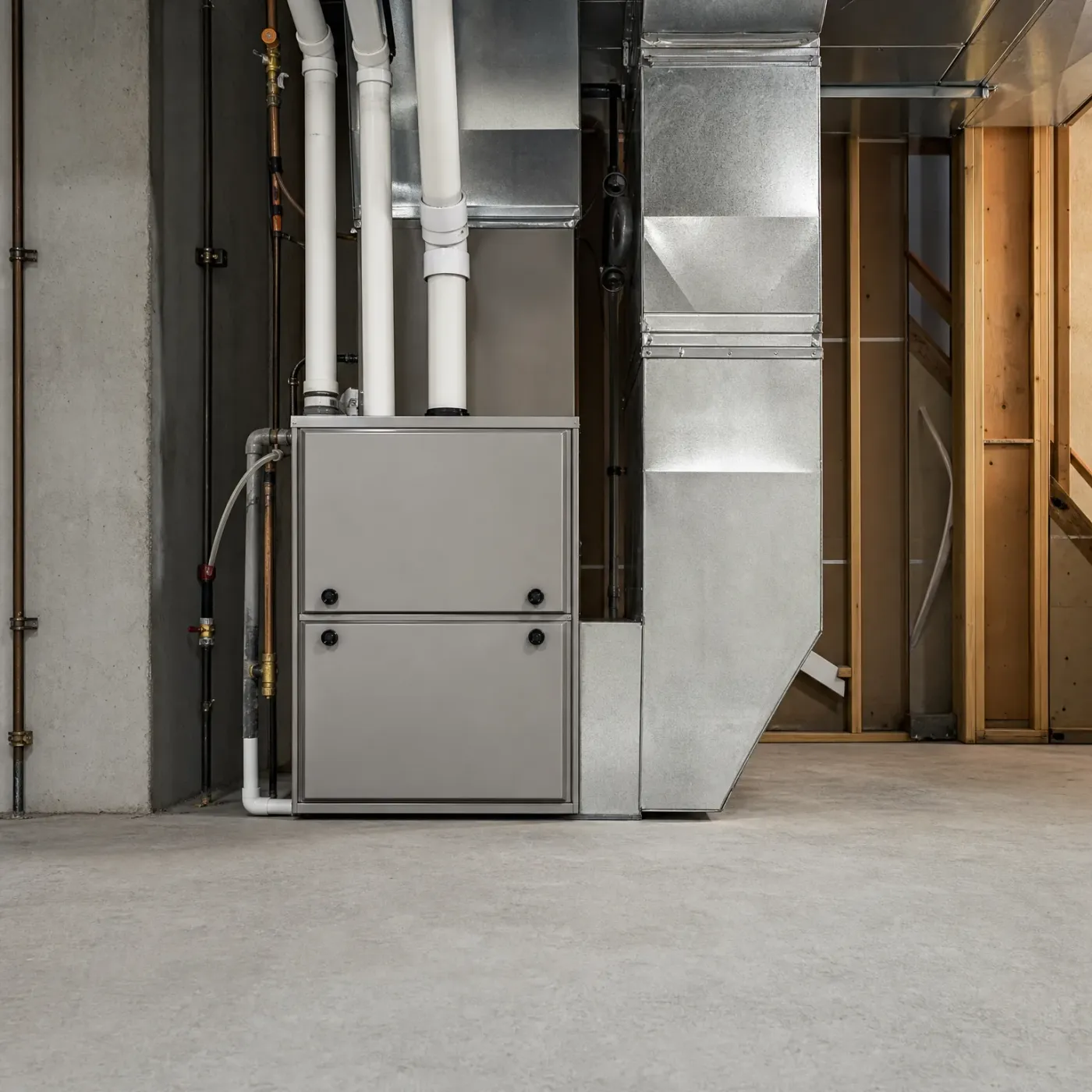
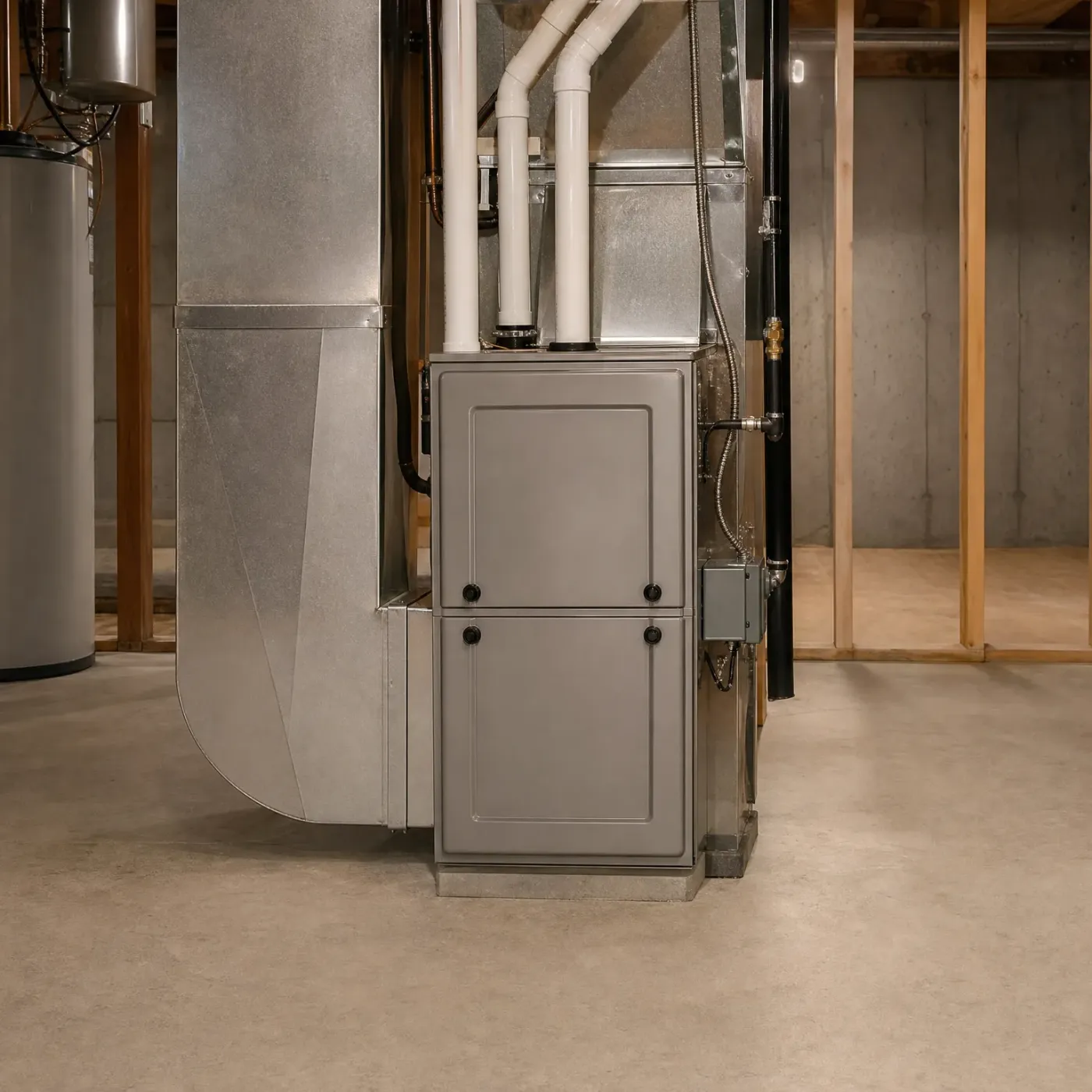
This is what a furnace sounds like when the blower wheel is tight and balanced and the motor bearings are good. Air moves through the ducts and out the vents without a rattle or a bang. Panels sit flush against the cabinet, so nothing flexes or hums when the blower kicks on.
Running loud
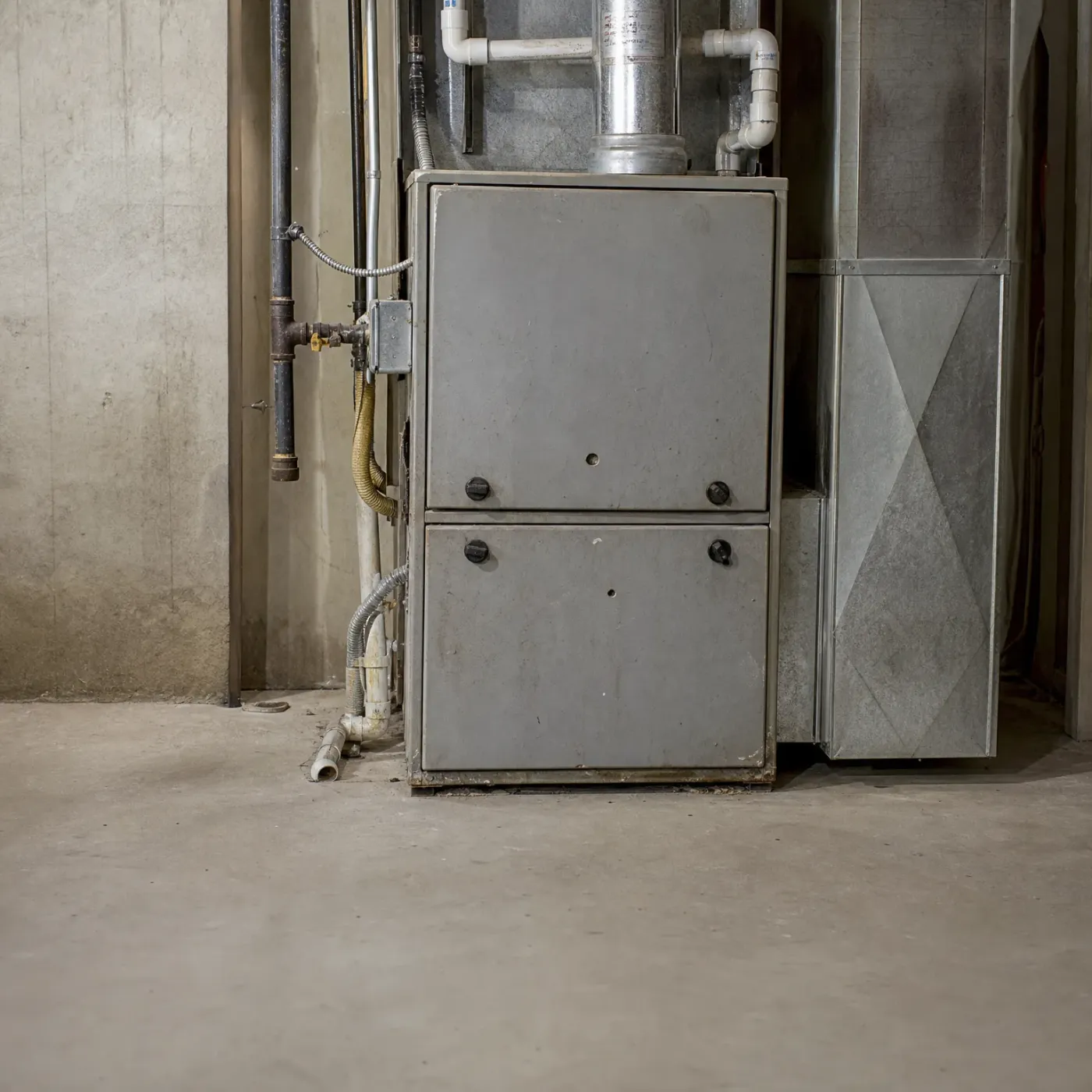
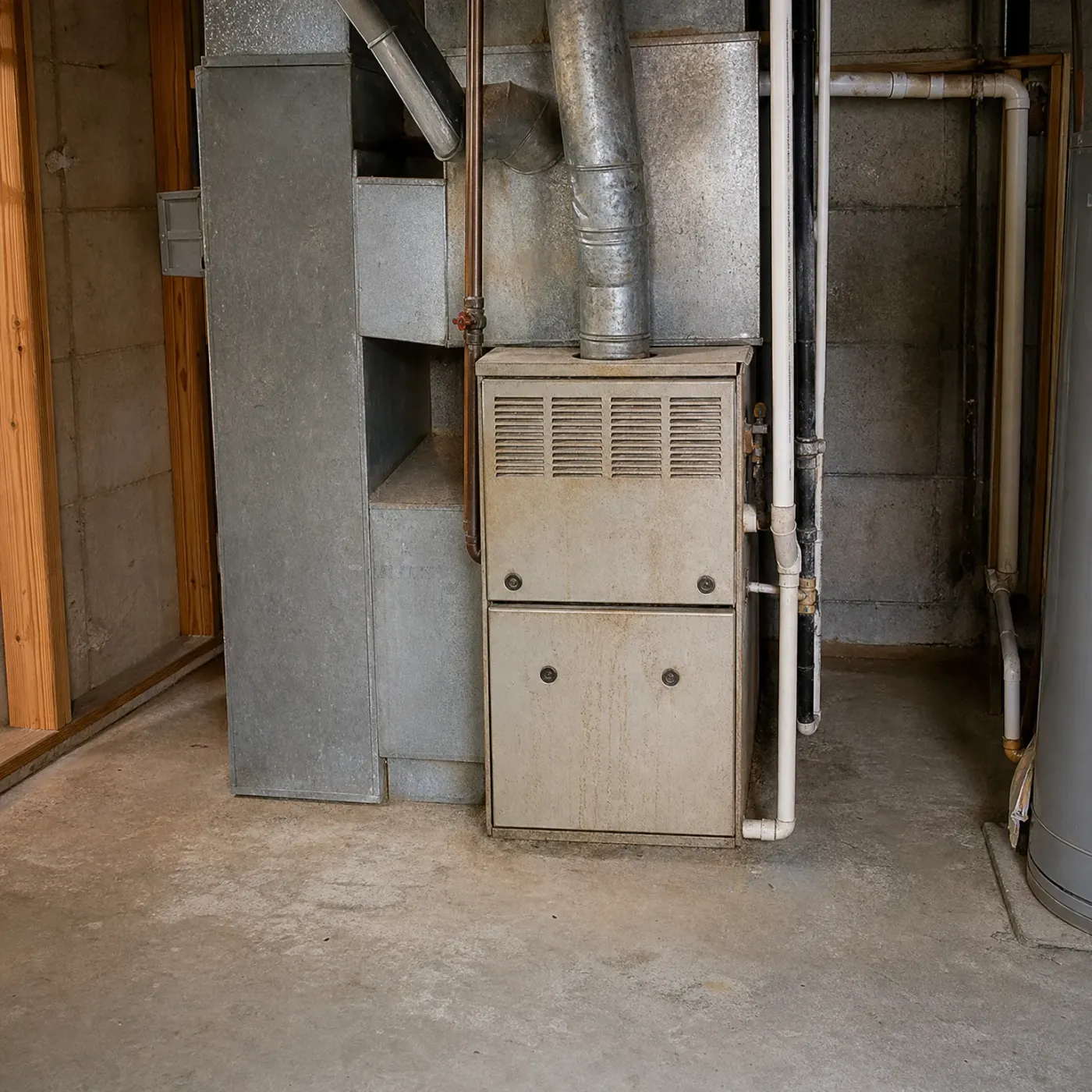
This is an older furnace with a bang or a rattle every time it starts. A loose panel, a worn bearing, or a blower wheel knocking against the housing all sound different, but none of them get quieter with time. Left alone, the motor works harder until it seizes.
A loud furnace does not go back to quiet on its own
The noise is telling you something specific: a loose part, a wheel out of balance, a motor working harder than it should. None of that corrects itself, and none of it needs guesswork to find. It needs someone who opens the panel and looks.
Furnaces in Harris County mostly run on electricity, and the person who sorts out a blower problem in League City or Pasadena is working on the same kind of unit every winter. That's who gets matched to your call, someone local, licensed, familiar with electric furnaces like yours, and they'll reach out to you directly rather than leaving you to field calls from a handful of companies. Tell them what you're hearing and when it happens, and they'll know where to start.
Furnace Repair
Get matched with a furnace pro in Harris County
Your request goes to one pro, not a list of companies.