Furnace leaking water in San Marcos, TX

Step 1 of 3: Equipment

A furnace that's leaking water is most likely a high-efficiency condensing furnace, which produces water as it burns gas and sends it out through a drain line and condensate pump. If that line clogs or the pump fails, the water backs up and drips out of the unit instead of draining away. It can also be a cracked heat exchanger letting moisture collect, or, if the furnace sits near your AC's indoor coil, a clogged coil drain line that looks like it's coming from the furnace. Homes in Hays County mostly heat with electricity, but if yours runs on gas, don't ignore this. Water near a gas furnace's burners and electrical parts can cause a short or trip it into shutdown. Shutting the unit off and finding the source before running it again is worth doing now rather than waiting.

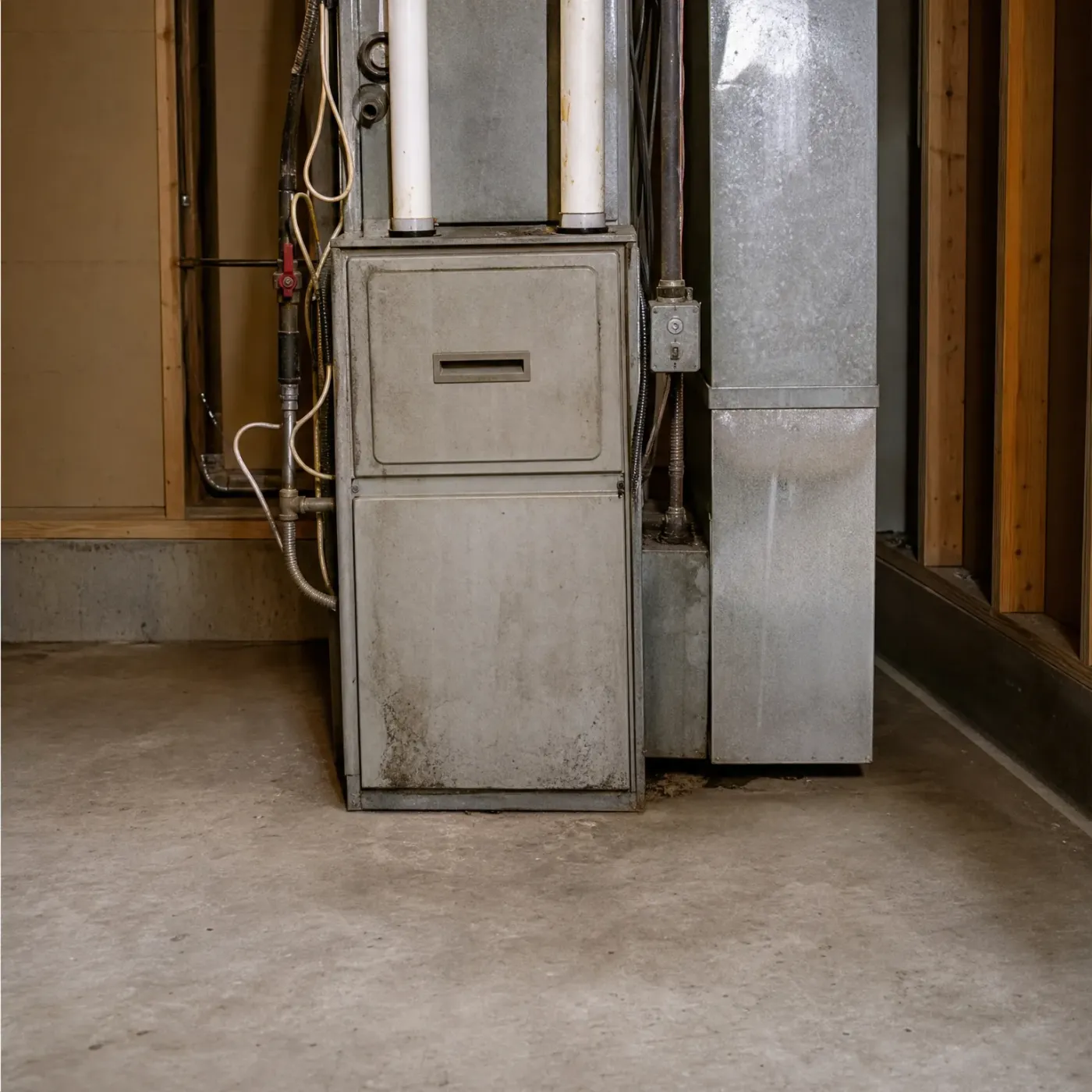
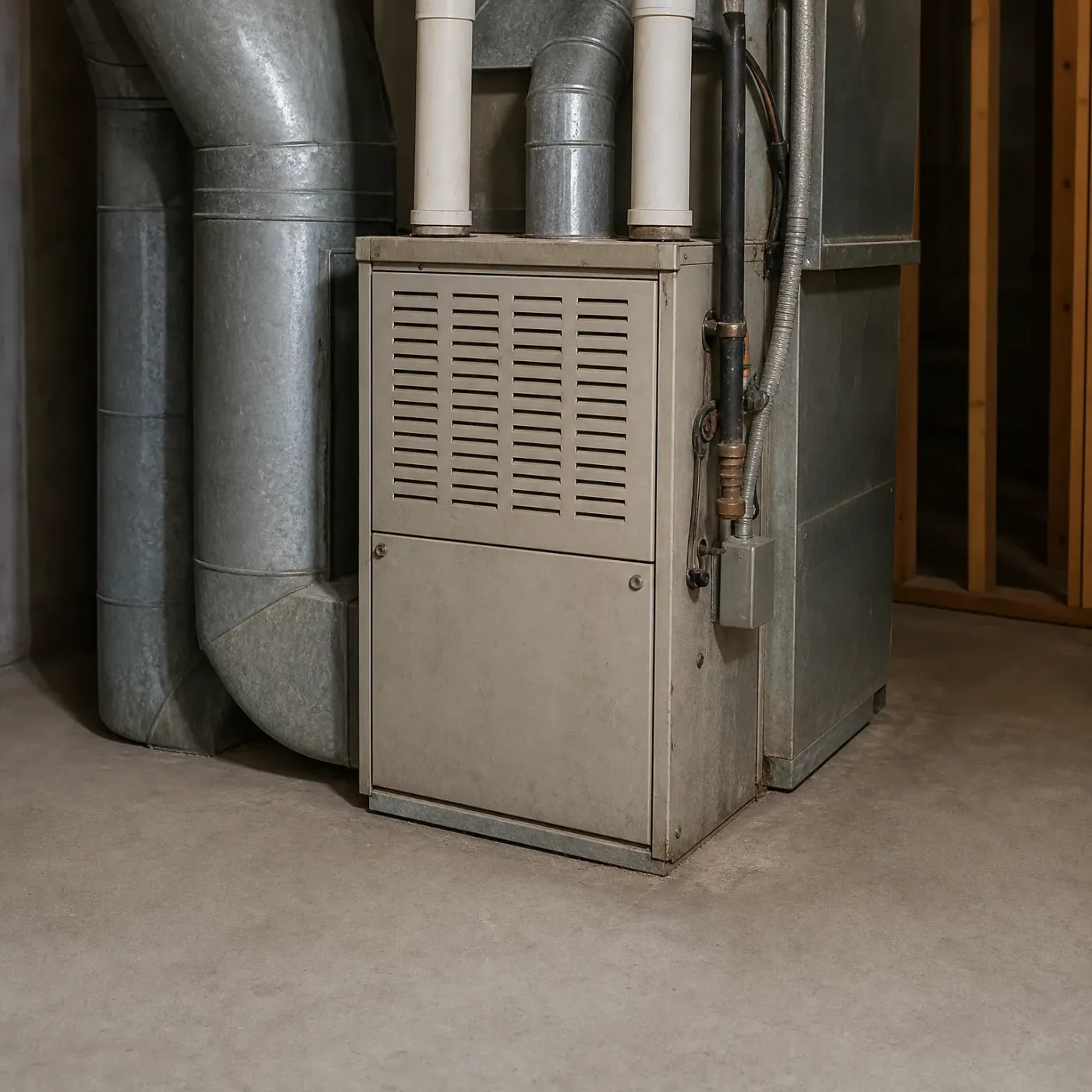
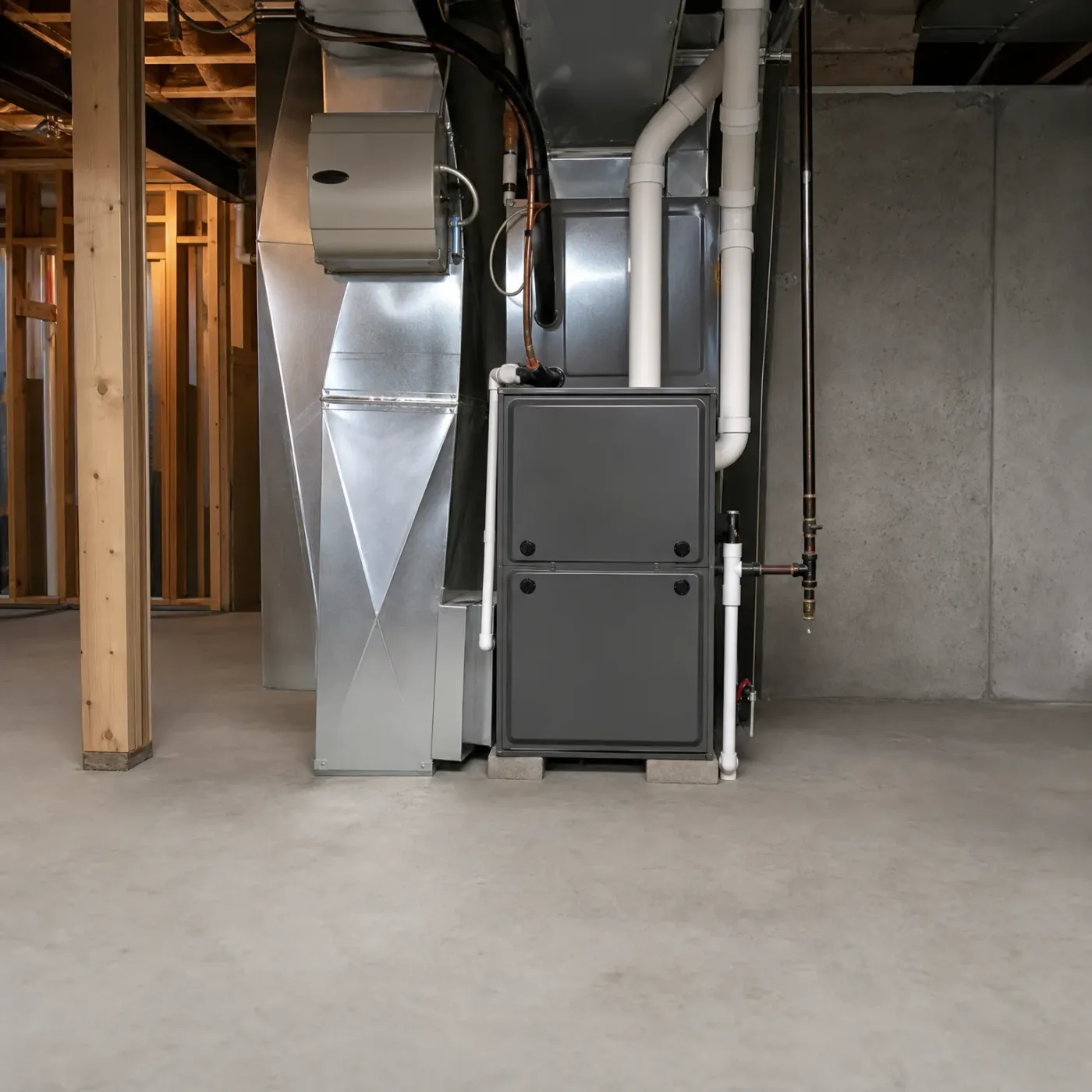
A gray high-efficiency furnace with white PVC venting pipes stands on blocks in a basement next to sheet-metal ductwork, with exposed wood framing on the left and a concrete wall and floor.

Normal condensate drainage

A high-efficiency furnace like this one makes water as it runs. The PVC pipe next to the flue carries that water to a drain or condensate pump, and from there it leaves the house. When that path is clear, you won't see a drop around the cabinet.

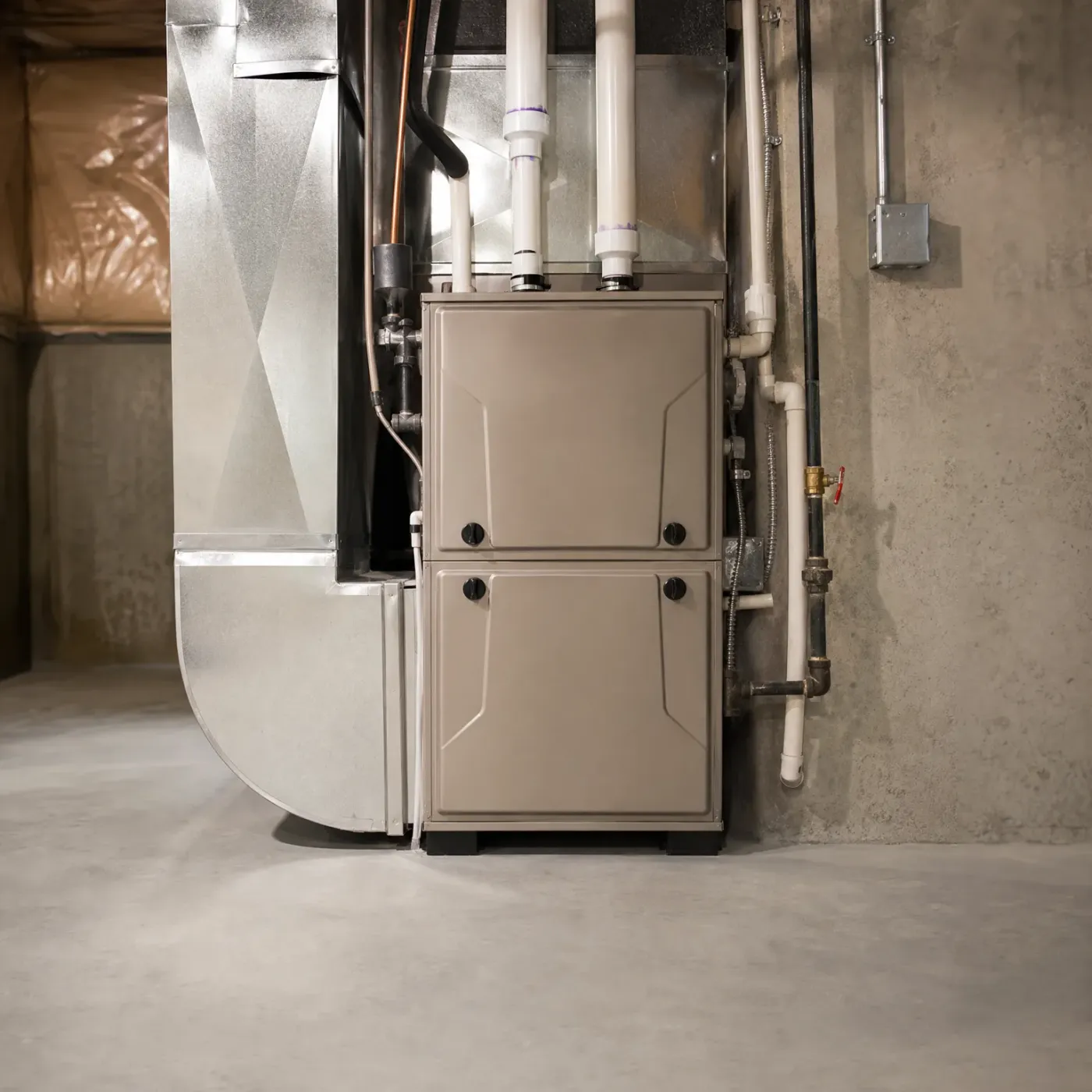
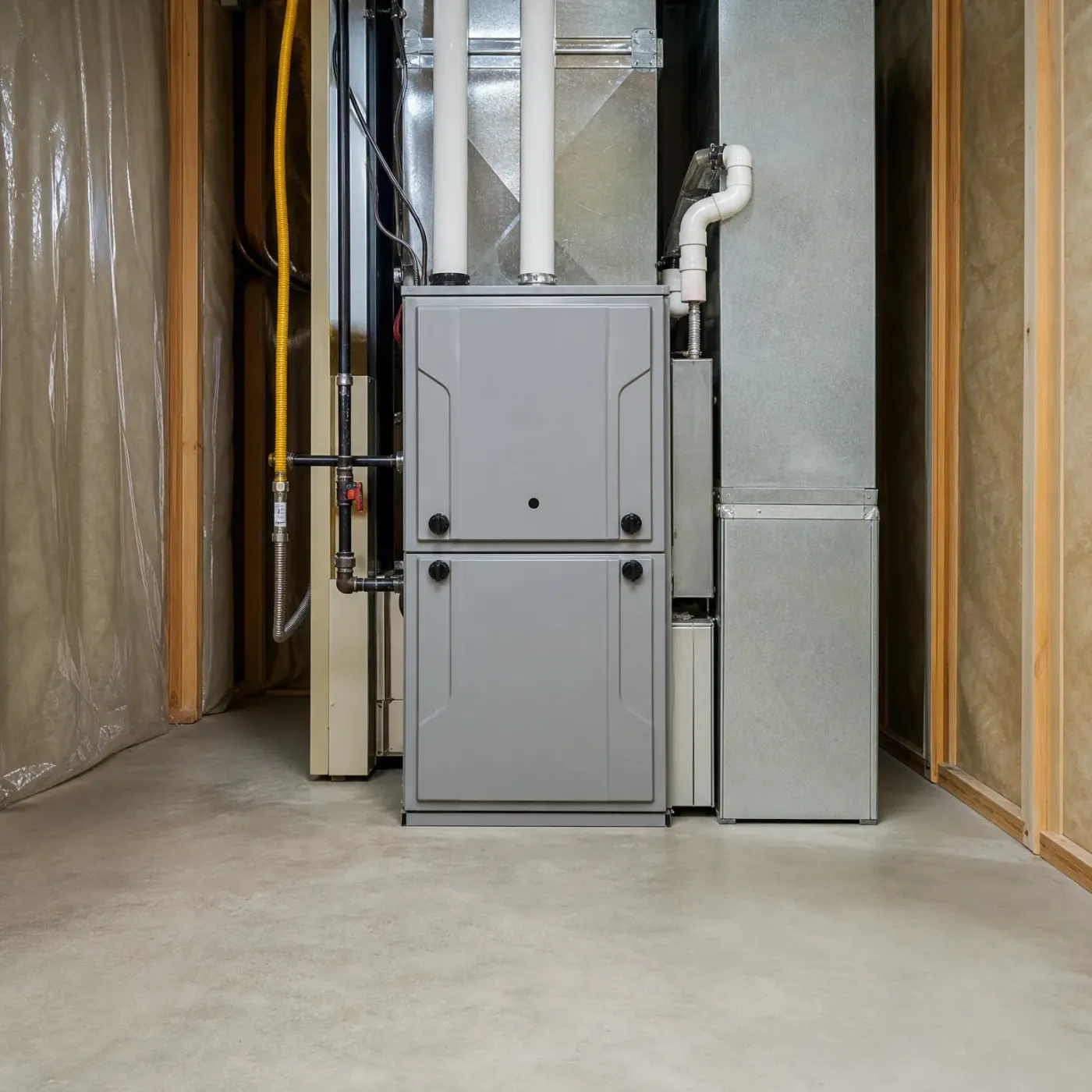
An older gas furnace with two white PVC vent pipes stands on a concrete basement floor beside galvanized sheet-metal ductwork, flexible conduit, and piping along a wall.

Water backing up

This older furnace still has a condensate line running to a pump, and that line clogs the same way. Once it backs up, water has nowhere to go but out of the cabinet and onto the floor. The furnace itself may be fine; the blockage is in the line.

Why is there water pooling by my furnace?

You'll usually spot it before anything else goes wrong: a damp patch on the floor near the unit, a drip coming from the bottom of the cabinet, or the PVC drain line sitting wet when it should be dry. Sometimes the condensate pump makes a gurgling sound or runs longer than it used to. If the furnace sits in a closet or utility room, the smell of damp cardboard or drywall can show up before you ever see water. Left alone, that water can warp the floor underneath, rust the furnace cabinet from the inside, or trip the safety switch that shuts the system down, leaving you without heat until someone clears the clog.

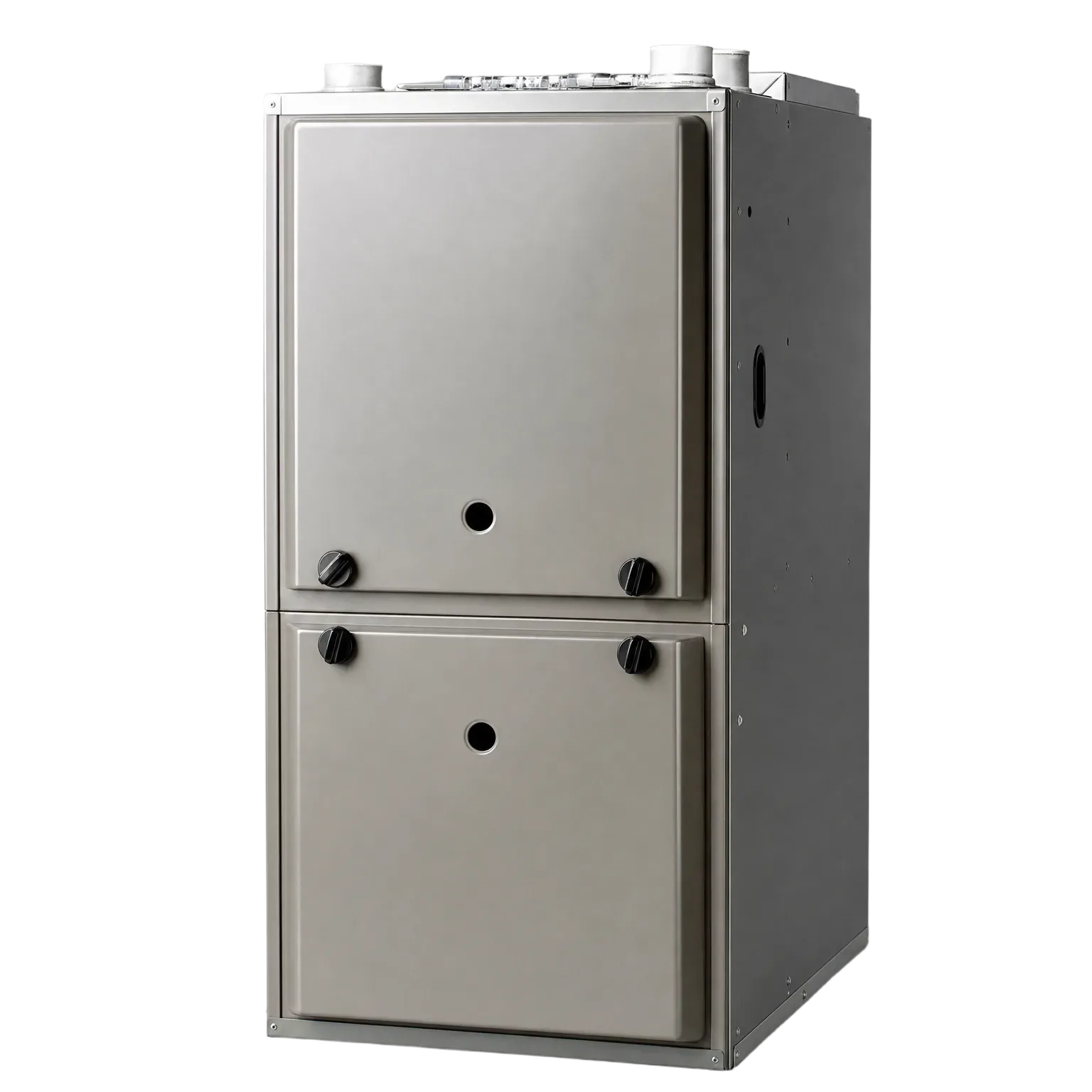
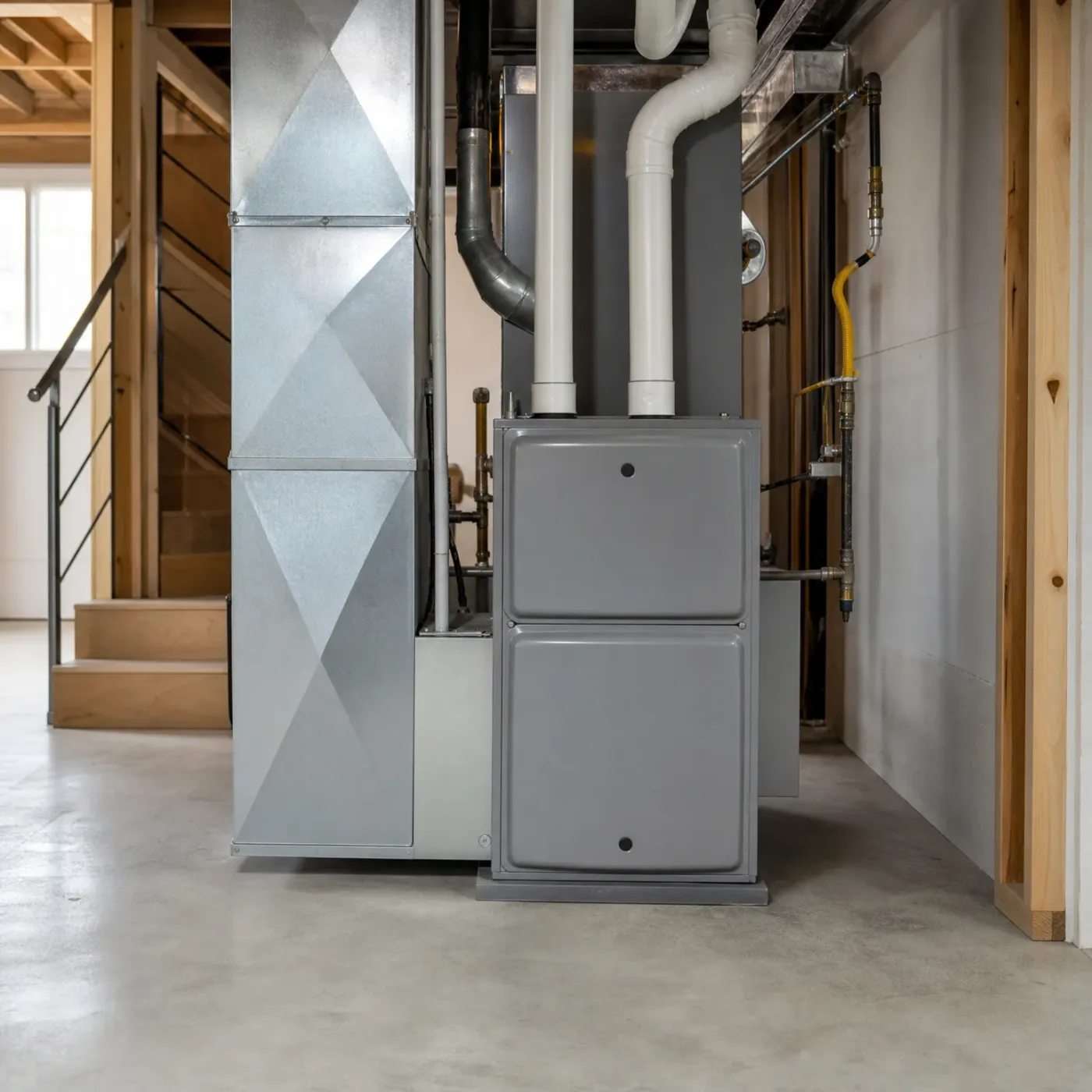
A beige high-efficiency furnace stands on a concrete basement floor beside sheet-metal ductwork, with white PVC vent pipes, flexible conduit and copper and steel piping running up a concrete wall to an electrical box.

Furnace cabinet, dry and running right

The ductwork connects clean, the PVC condensate line stays dry to the touch, and the floor underneath is bare concrete. Gas line and shutoff valve sit undisturbed along the wall. Water is leaving through the drain the way it's supposed to.

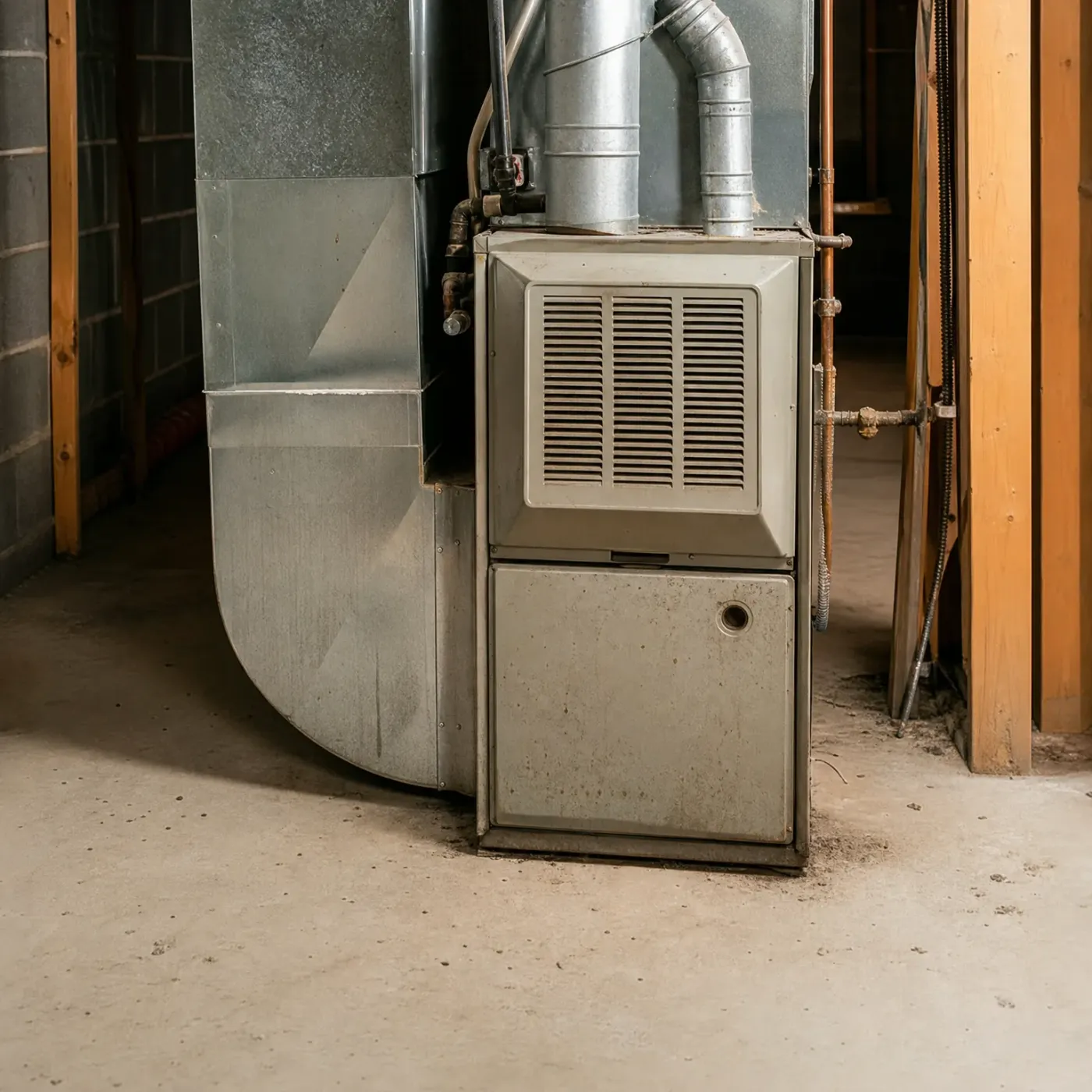
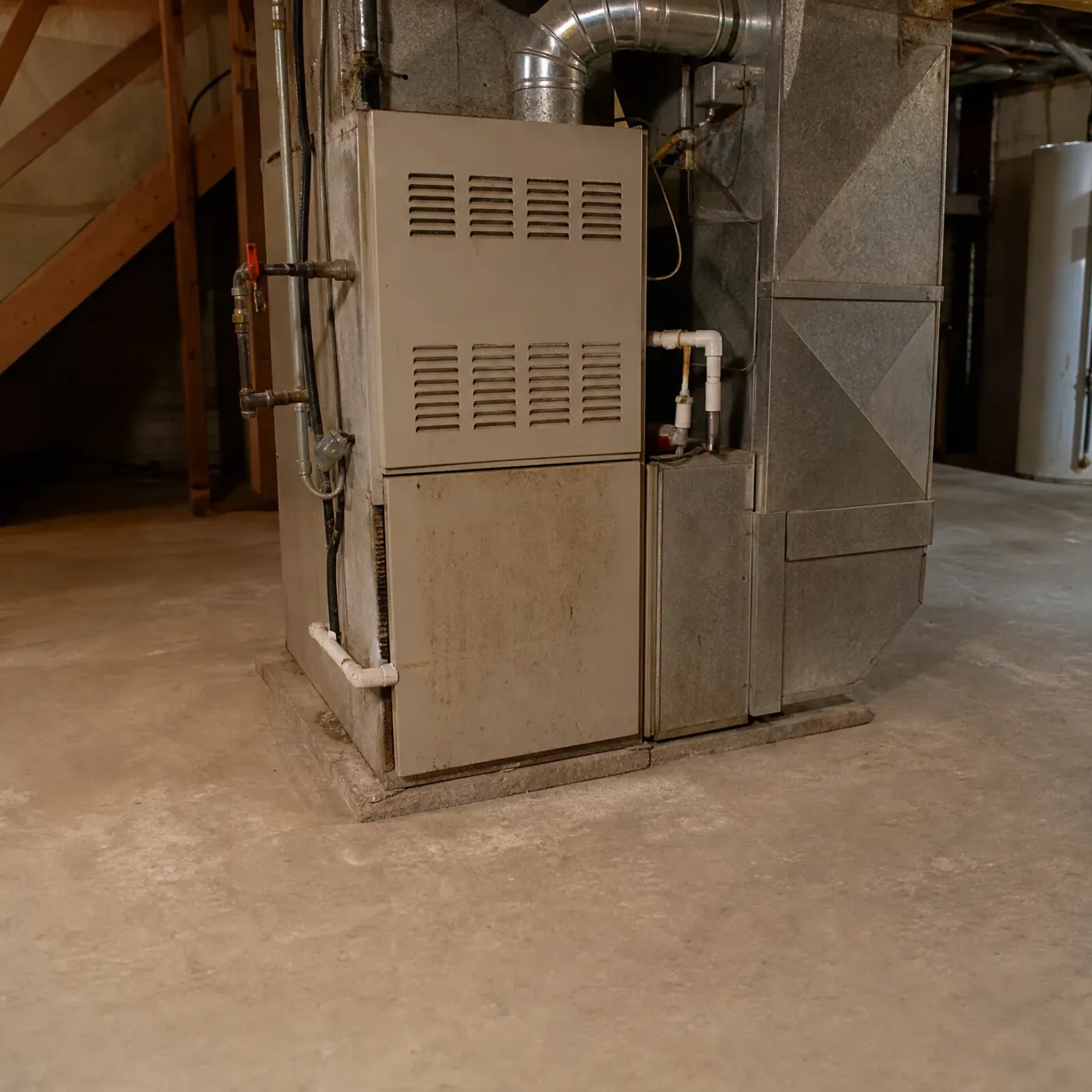
An older gas furnace with a louvered front panel stands on a concrete basement floor beside large sheet-metal ductwork, a metal flue pipe, copper piping and wood framing.

Furnace cabinet showing the signs

Dust has built up around the base, and the flue and gas lines show their age. A furnace in this shape is more likely to have a cracked drain fitting or a stuck float switch than one that's newer, and either will let water collect where it shouldn't.

Why does my furnace only leak water when it's been running a while?

Why does my furnace only leak water when it's been running a while?

Condensation builds up gradually, so a short cycle won't show it

A high-efficiency furnace doesn't make much water in the first few minutes. It takes a run of flame long enough to cool the exhaust gas, and that's when condensation actually starts forming inside the heat exchanger. On a quick cycle, there's barely enough to notice. Let it run through a cold stretch, and the drain line and pump have real water to move. If the line has a partial clog or the pump is struggling, that's exactly when it shows, the system has been working long enough to build up more water than the drain can clear in time. A furnace that leaks only after a while is still pointing to the same drain or pump problem. It just takes longer to show itself.

A woman in a cream cowl-neck sweater sits by a window with snow outside, in a dimly lit living room with a sofa, lit lamp, mirror, candles and a fireplace.
A woman in a gray turtleneck sweater sits beside a large window looking out at snow-covered evergreen trees, in a dimly lit living room with a lit fireplace, lamps, couch and houseplant.
A woman in a cream turtleneck sweater stands beside a large window with snow-covered ground and bare trees outside, in a dimly lit living room with lamps, a sofa and framed art.
A woman in a grey cowl-neck sweater stands indoors near a window, looking out at falling snow, with a lamp, framed picture and couch in the warmly lit room behind her.

Matched to your furnace job

Send the request today and stop worrying about who to call.

You're not committing to anything by asking.

Why a clogged line backs up fast

The condensate line is narrow, often half an inch wide, and it slopes just enough for gravity to pull water along. Algae and dust settle in that slope over time and narrow it further until a piece catches and blocks the rest. Once blocked, the furnace keeps making water with nowhere for it to go. It backs up through the trap and finds the lowest opening in the cabinet. That's usually a seam near the bottom, which is why the puddle shows up on the floor before anything else changes.

Why the pump matters more in summer

A condensate pump collects water in a small reservoir and switches on a float switch to pump it out once the level rises. In muggy weather the furnace and the AC's coil both drain into it, so it cycles more often and wears faster. If the float sticks or the motor fails, water keeps collecting until it overflows the reservoir. That overflow lands right at the base of the unit, which is why pump failures tend to show up as a puddle rather than a slow drip.

A beige sheet-metal furnace with a louvered upper panel stands on a concrete basement floor, connected to galvanized ductwork, white PVC vent pipes, and a metal gas line with an electrical box.
Before you get your furnace repair
A gray high-efficiency furnace with white PVC vent pipes stands in an unfinished basement beside sheet-metal ductwork, gas piping, and insulated stud walls on a concrete floor.
After you get your furnace repair

The condensate pump does the real work. A float switch inside it senses rising water and kicks the pump on to clear the reservoir before it fills. When that switch sticks or the pump motor burns out, nothing stops the water from climbing until it spills over the side and onto your floor. Most installations wire a safety switch into that pump so the furnace shuts itself off before things get that far, but if that switch was bypassed during install or has failed on its own, the furnace keeps running right through the overflow. There's a second path water can take. The drain trap built into the line needs to hold a certain depth of water to seal against the furnace's draft. If it runs dry or was never built deep enough, negative pressure inside the furnace pulls condensate backward through it. And any PVC joint along the way, cracked or knocked loose, will drip at that exact spot no matter what the pump and trap are doing upstream. A wet secondary pan under the coil usually means the drain line is clogged, not the pump.

How the drain system actually fails

  • The condensate pump is a small box near the furnace with a float switch that triggers the pump to clear the reservoir when water rises inside it.
  • If that float switch fails or the pump burns out, water keeps collecting until it overflows the reservoir and spills onto the floor.
  • Many furnaces wire the pump into a safety switch that should shut the furnace down before water overflows, but a bypassed or failed switch lets it run anyway.
  • Negative pressure inside the furnace can pull condensate backward through the drain trap if the trap runs dry or wasn't built with the right depth.
  • The secondary drain pan beneath the evaporator coil is a separate backup, and water there usually points to a clogged drain line rather than the condensate pump.
  • A cracked or disconnected PVC fitting anywhere along the line will leak at that joint even when the pump and trap are both working fine.
A gray high-efficiency furnace with white PVC vent pipes stands beside galvanized sheet-metal ductwork in a basement with a concrete floor, with a wooden staircase and railing at left.
Here the furnace sits dry, the PVC line clear, nothing pooling on the concrete below the cabinet.
An older gas furnace with louvered panels sits on a concrete pad in a basement, connected to sheet-metal ductwork and PVC and metal pipes, with a water heater and wooden stair framing in the background.
Here water has reached the base of the unit, pooling on the pad near the gas shutoff and condensate line.

Winter nights average 41°F

Nights here average 41°F through December, January and February, mild enough that your furnace mostly runs in short bursts rather than long stretches. That on and off cycling is exactly when condensate tends to pool instead of draining clean, so a clogged line can show up even on a mild night.

NOAA nClimDiv 1991-2020

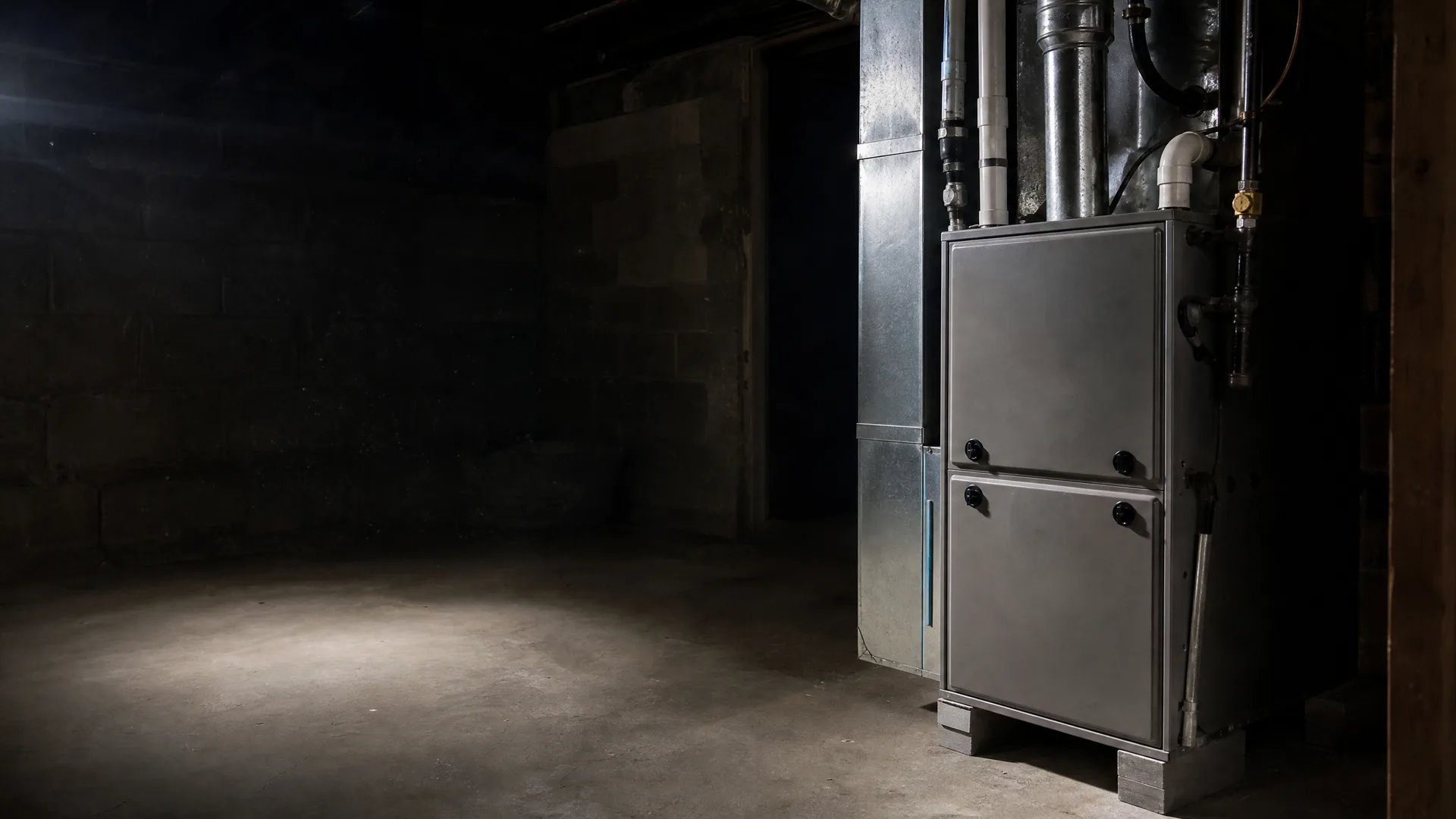
A gray furnace with ductwork and pipes stands against the wall of a dim concrete-block basement with a bare concrete floor lit by a single light.

The basement is cold by seven, the kind of cold that settles in once the sun's down and the furnace hasn't caught up yet. It's November, and the nights in Hays County are dropping enough to run the system a few hours at a stretch. Except tonight it isn't running. The burner's dark, the air near it still, with a thin haze of dust hanging where the blower usually stirs it. You crouch down and see the water first, a dark ring spreading across the concrete pad under the cabinet, soaking toward the gas shutoff. The PVC line beside it sits wet the whole way down. Nothing is loud or urgent about it. It's just quiet, and cold, and wrong.

How cold does it actually get here, and how much does that run your furnace?

  • Winter nights average 41°F

    Overnight lows average 41°F in December, January and February, cold enough to keep the furnace cycling through the night rather than sitting off.

  • Heat runs November through March

    Heat runs November through March here, so a clogged drain line has five months of condensate to deal with, not just a few cold snaps.

  • 62.1% of homes heat with electricity

    62.1% of homes in Hays County heat with electricity, which usually means an electric furnace or heat pump, both of which can still be high-efficiency and make condensate the same way.

NOAA nClimDiv 1991-2020 · ACS 2020-2024

A bearded man in a blue and brown plaid flannel shirt stands indoors looking out a window at snow-covered trees, with a ceramic mug on the windowsill.
A smiling man with dark curly hair in a navy t-shirt sits on a gray couch indoors, with a large-leafed plant and a window in the background.
A woman stands in the open front doorway of a single-story house with stone and wood siding while a man in a dark polo shirt and cap walks toward it along a concrete path.

Water by the furnace has a cause, and it's fixable

A furnace leaking water almost always comes down to the condensate line or the pump that clears it. One clogs, the other fails, and the water has nowhere to go but out of the cabinet. Winters in Hays County are mild, so your furnace runs in short bursts rather than long stretches, and that start-stop pattern is exactly when a clogged line backs up and shows itself on the floor.

None of this means the furnace itself is failing. It means the drain path needs attention, and that's a straightforward repair for someone who does this work regularly. Once you request a contractor through this page, the job of finding the right one is off your hands. You'll be matched with someone who services furnaces like yours in San Marcos and the surrounding area, and they'll reach out to you directly.

A speckled beige ceramic vase holding thin dried branches sits on a round wooden table near a window with sheer curtains, with a dark upholstered chair and draped blanket blurred in the background.
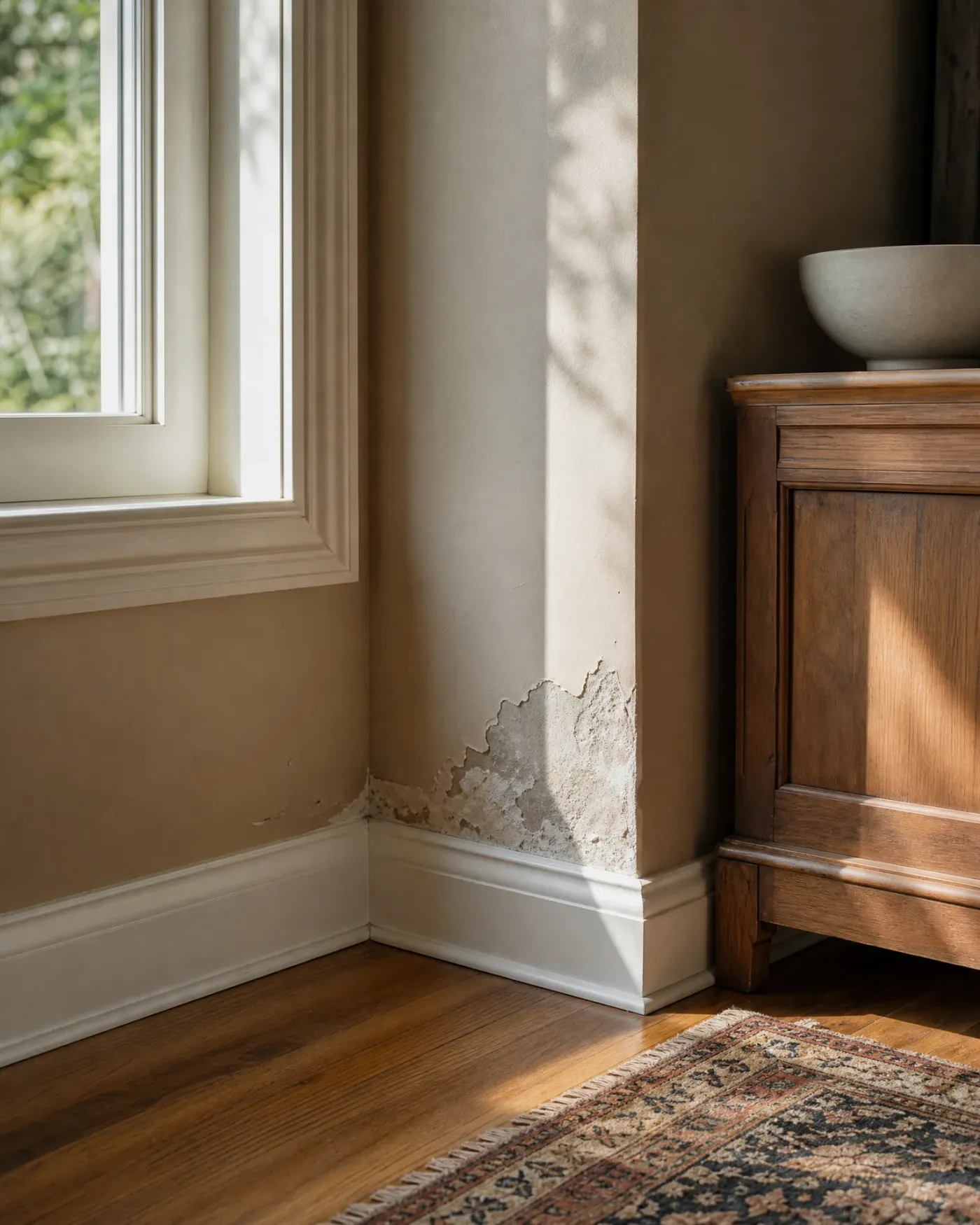
Interior room corner with sunlight from a window, showing peeling paint and damaged plaster on the wall above a white baseboard, a wooden cabinet with a pale bowl on top, hardwood floor and a patterned rug.
Interior corner of a room with tan walls, white profiled baseboard and window trim, a wood-plank floor in sunlight, and green foliage visible through the window.
An empty room corner with cream walls, white baseboard, two windows with deep sills showing green foliage outside, and a wood plank floor lit by sunlight.
Empty room corner with beige walls, white beadboard wainscoting, chair rail and baseboard, a window with green foliage outside, and sunlight casting leaf shadows on the wall above a wood floor.
Sunlit room corner with a multi-pane window, beige walls, white baseboard, wood floor with a woven rug, and a dark wooden cabinet holding a ceramic table lamp below a framed picture.

A furnace pro near you

Send the request and finding a pro stops being your problem.

Connect with a pro

It costs nothing to send, and you don't have to hire anyone.