
Furnace leaking water in Fort Worth, TX
Why is water leaking from my furnace in Fort Worth?
A puddle or drip under your furnace is unsettling, especially when the unit isn't supposed to produce water at all in the way an AC system does. You want to know if this is minor or if it means something inside the furnace has failed. Where the water is coming from and when you noticed it both point toward the cause, and that matters because not every leak means the same repair.
Most likely a clogged condensate line or a cracked heat exchanger
If your furnace is a high-efficiency model, it produces condensation as part of normal operation, and that water drains out through a condensate line. When that line clogs with algae or sludge, the water backs up and leaks from the unit instead. That's the most common cause and usually the least serious. A cracked heat exchanger is a less common but more serious cause, since it can let water pool and also lets combustion gases escape where they shouldn't. Since most homes in Fort Worth heat with electricity, a leak is more likely tied to condensation drainage than to a gas-fired heat exchanger, but either one needs a licensed technician to look at the furnace directly to tell which it is.




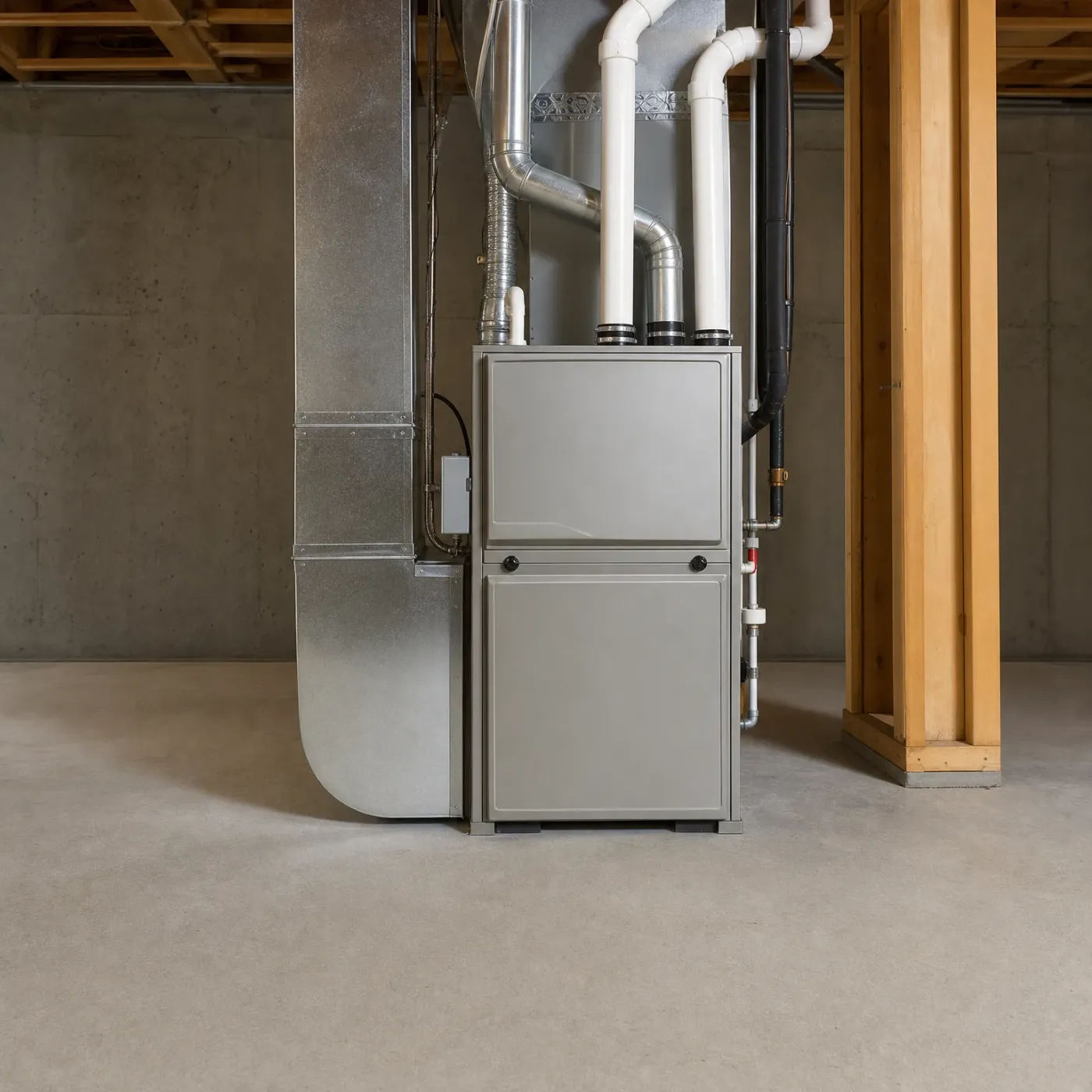
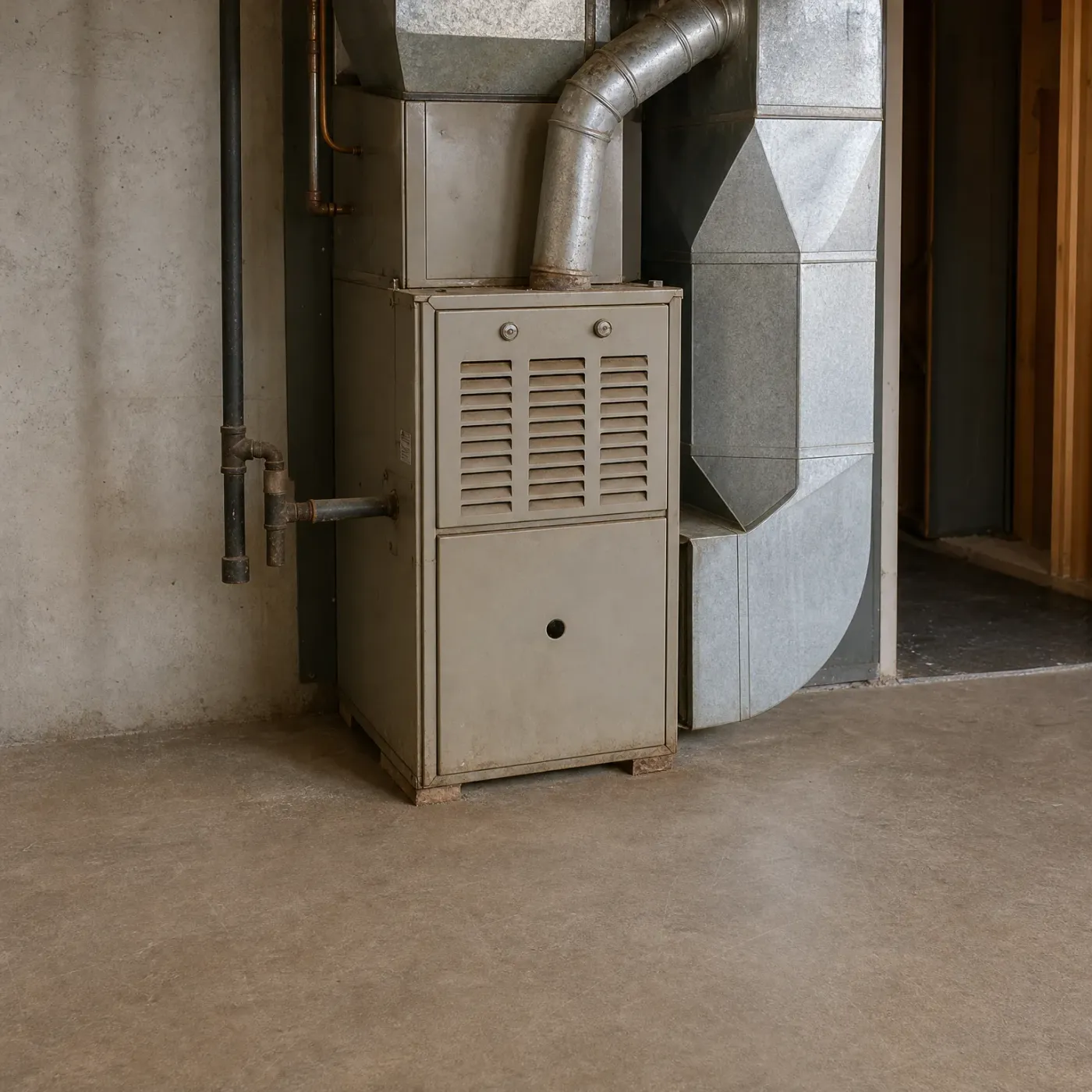
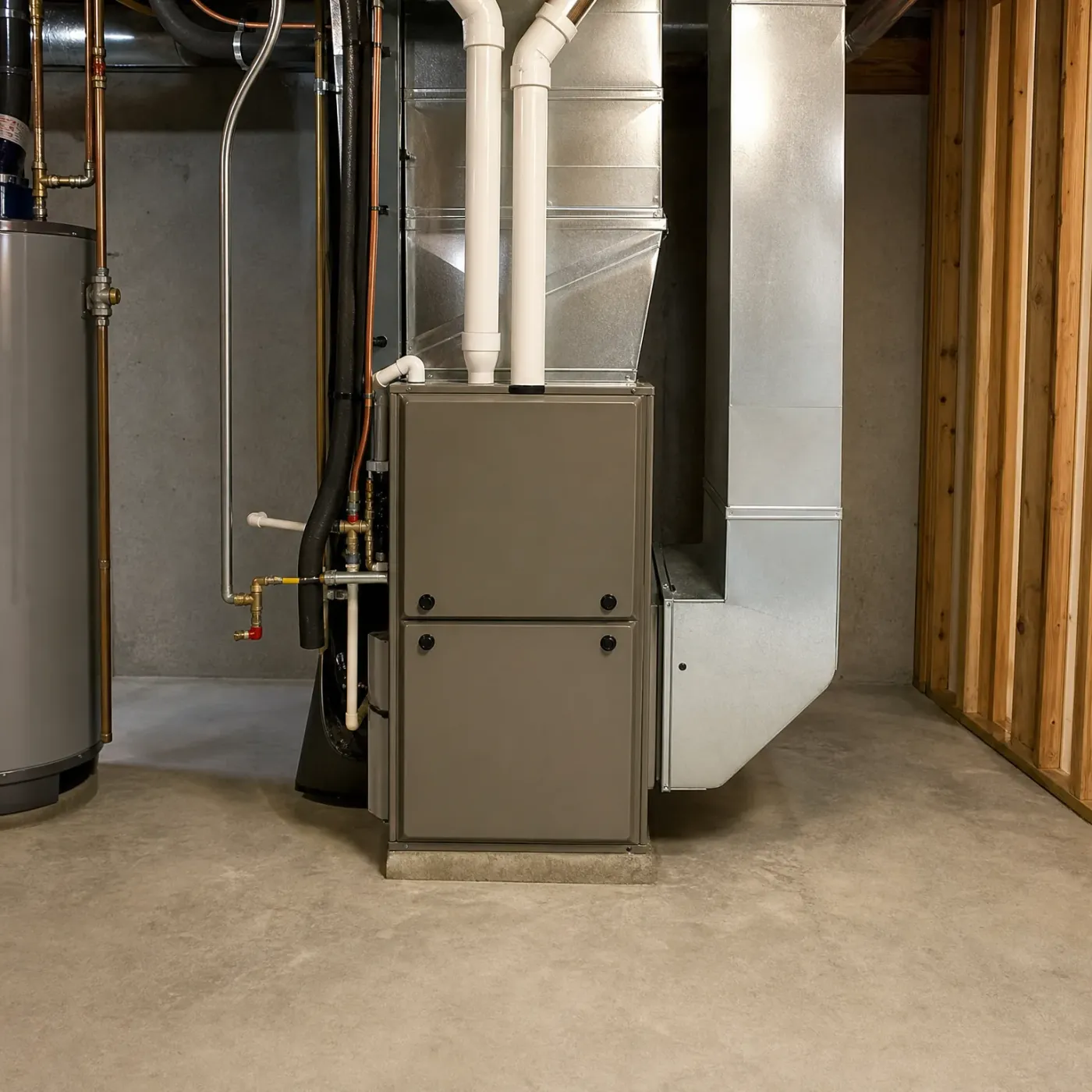
A high-efficiency furnace pulls so much heat out of its own exhaust that what's left condenses into water on its way out, and that water is supposed to leave through a small PVC line. It runs through a trap, down the line, and into a drain or a condensate pump sitting near the unit. When that path is clear, you never see a drop. When the line clogs or the trap cracks, the water has to go somewhere, and it finds the seams in the cabinet before it finds the floor. The pump adds another point of failure. It runs on a float switch, and when that switch sticks or the pump motor burns out, water backs up instead of getting pumped away. An older standard-efficiency furnace works differently and shouldn't be making condensate at all, so water underneath one usually means a cracked heat exchanger or a flue pipe that has rusted through, letting moisture condense somewhere it was never meant to.
Where the water actually comes from
- A high-efficiency furnace burns gas so completely that the leftover exhaust cools into water instead of escaping as heat up a flue.
- That water, called condensate, drips down through a trap and a PVC line into a floor drain or a condensate pump near the unit.
- A clog in that line or a cracked trap backs the water up until it finds the cabinet seams and runs out onto your floor.
- The condensate pump has a float switch, and when it sticks or burns out the water has nowhere to go but out.
- On an older, standard-efficiency furnace, water pooling underneath usually points to a cracked heat exchanger rather than normal drainage.
- A flue pipe that has rusted through or pulled apart can let combustion moisture condense inside the cabinet instead of venting outside.


Hand off the search today
A licensed pro who repairs furnaces in Tarrant County gets your request.
Once you send the form, finding a pro is off your list.
No charge to send it. You decide if you hire them.
Condensate Line or Heat Exchanger
Condensate Problem
- Water shows up only when the furnace is running, usually pooling near the PVC drain line or a small plastic condensate pump.
- A clogged trap or a kinked line is often the cause, and clearing it is usually a short visit for a technician who knows this furnace.
- The water is clean and odorless, since it's just cooled exhaust vapor, not anything drawn from your gas lines or ductwork.
- A condensate pump that's failed or unplugged will back up water fast, so check if the pump is running when you notice a leak.
- This kind of leak doesn't affect how the furnace heats your home, even though the dripping needs attention before it causes damage nearby.
Heat Exchanger Problem
- Water appears along with rust or corrosion inside the cabinet, sometimes with a metallic smell when the furnace is running.
- A cracked heat exchanger lets flue gas and moisture leak into places they were never built to go, including your ductwork.
- This kind of leak often comes with a furnace that's been in the house a long time, especially if it came with the home.
- A technician checks for carbon monoxide and cracks before doing anything else, since this affects whether the furnace is safe to run at all.
- Replacing a heat exchanger is a bigger repair than clearing a drain line, and in some cases replacing the furnace makes more sense.
Why the furnace runs so little here
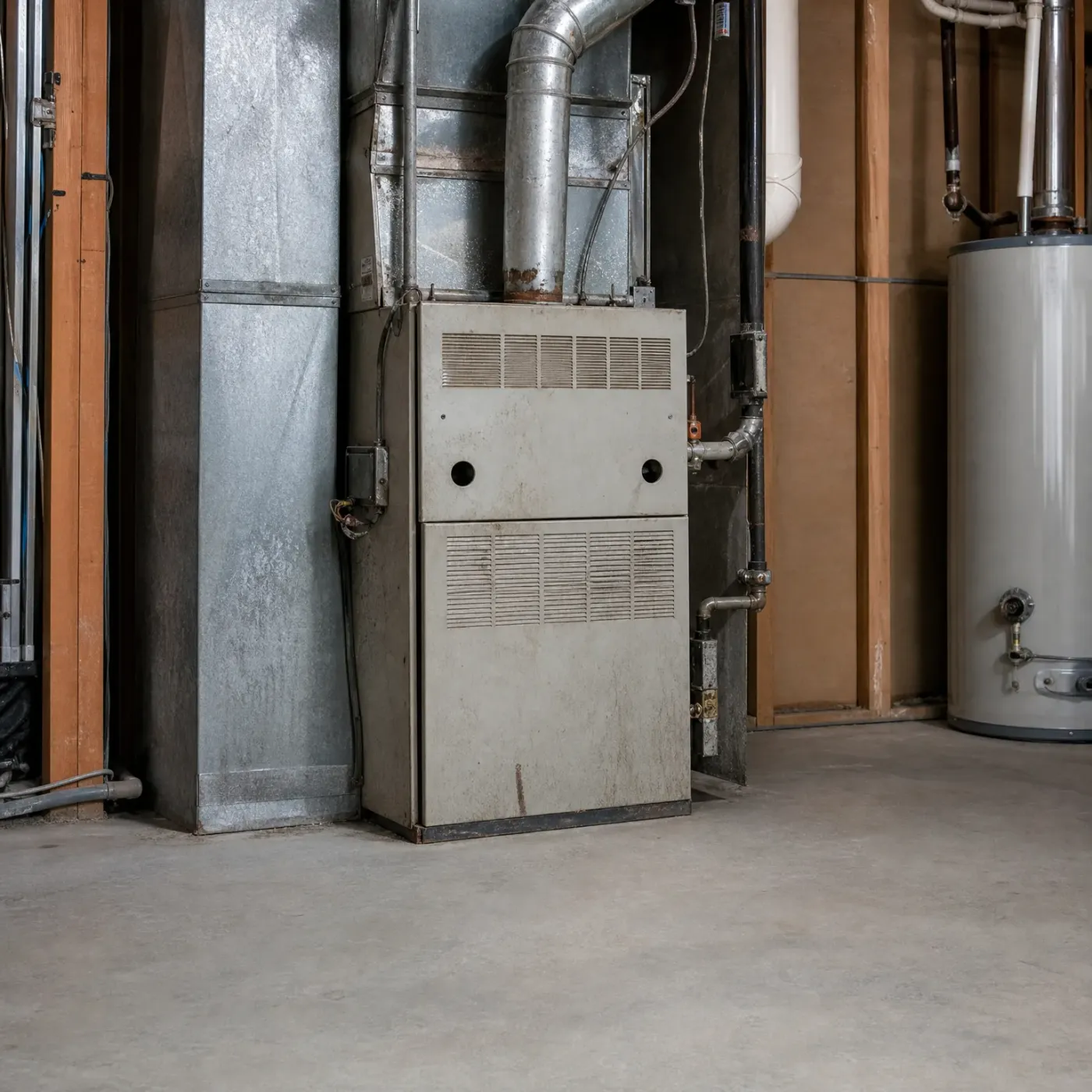
Winters in Fort Worth are mild, and most homes here heat with electricity rather than gas. That matters for how you read a water leak, because a gas furnace that only fires up on the coldest nights of the year still makes condensate every time it runs, short cycle or not. A furnace that sits idle for months doesn't dry out a trap or a line by itself, and dust or a buildup of algae can settle into the condensate trap during the stretches it's off. So the first run of a cold snap is often when a leak shows up, even if nothing changed about the unit itself.
What a slow leak costs you over time
A furnace leak rarely floods a room right away. More often it's a slow drip that stains the pad underneath, rusts the cabinet from the inside, or soaks into the subfloor before anyone notices. Left alone, a cracked heat exchanger can let exhaust gases mix with the air your furnace pushes into the house, which is a separate problem from the water itself. A clogged condensate line, by contrast, usually just backs up and overflows, and clearing it stops the leak without touching anything else. Knowing which one you have changes how urgent the fix is.
Winter nights average 37°F
Nights here average 37°F in December and January, so your furnace isn't firing nonstop the way it would further north. Short, infrequent runs mean condensate sits in the trap and line between uses, which gives any small clog more chance to turn into a drip on the floor.
NOAA nClimDiv 1991-2020
Water under your furnace almost always comes down to a clogged condensate line or a cracked heat exchanger, and which one it is changes everything about what happens next. A technician who works on furnaces around Fort Worth all year has seen both plenty of times, because short, infrequent burner cycles here let condensate traps clog quietly for weeks before anyone notices a drip. That kind of repeat exposure is what lets someone look at your trap, your line and your flue and know within minutes which problem you have, rather than guessing. You'll be matched with one licensed local contractor for this, not a handful of companies competing for the job, so you're not fielding five calls to sort out who shows up. Once your request is in, the work of finding someone qualified is off your plate. The puddle on the floor has an answer. Getting it is the next step.





Stop chasing a furnace pro
Your request goes to one pro, not a list of companies.
There's no charge for the request.