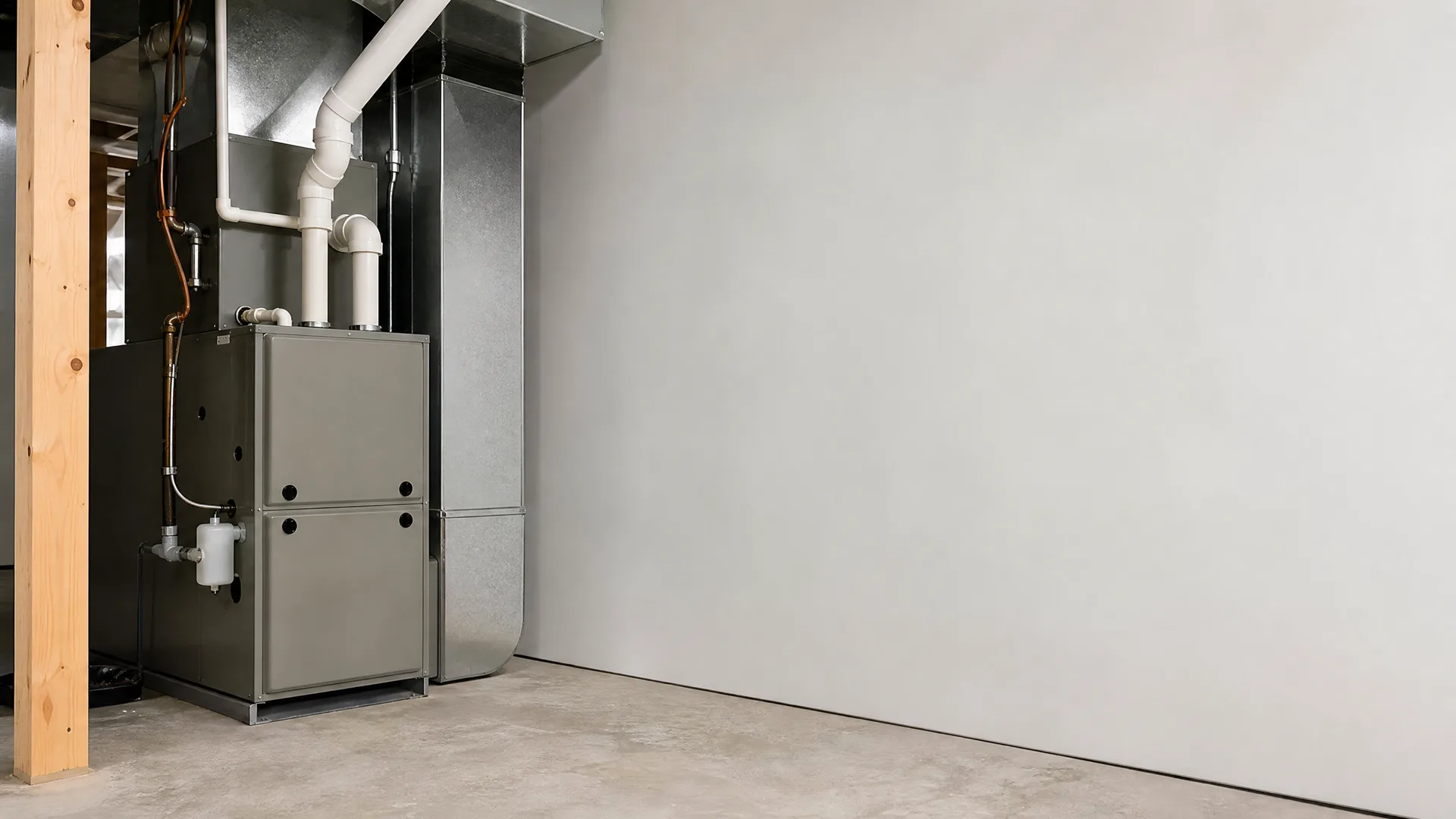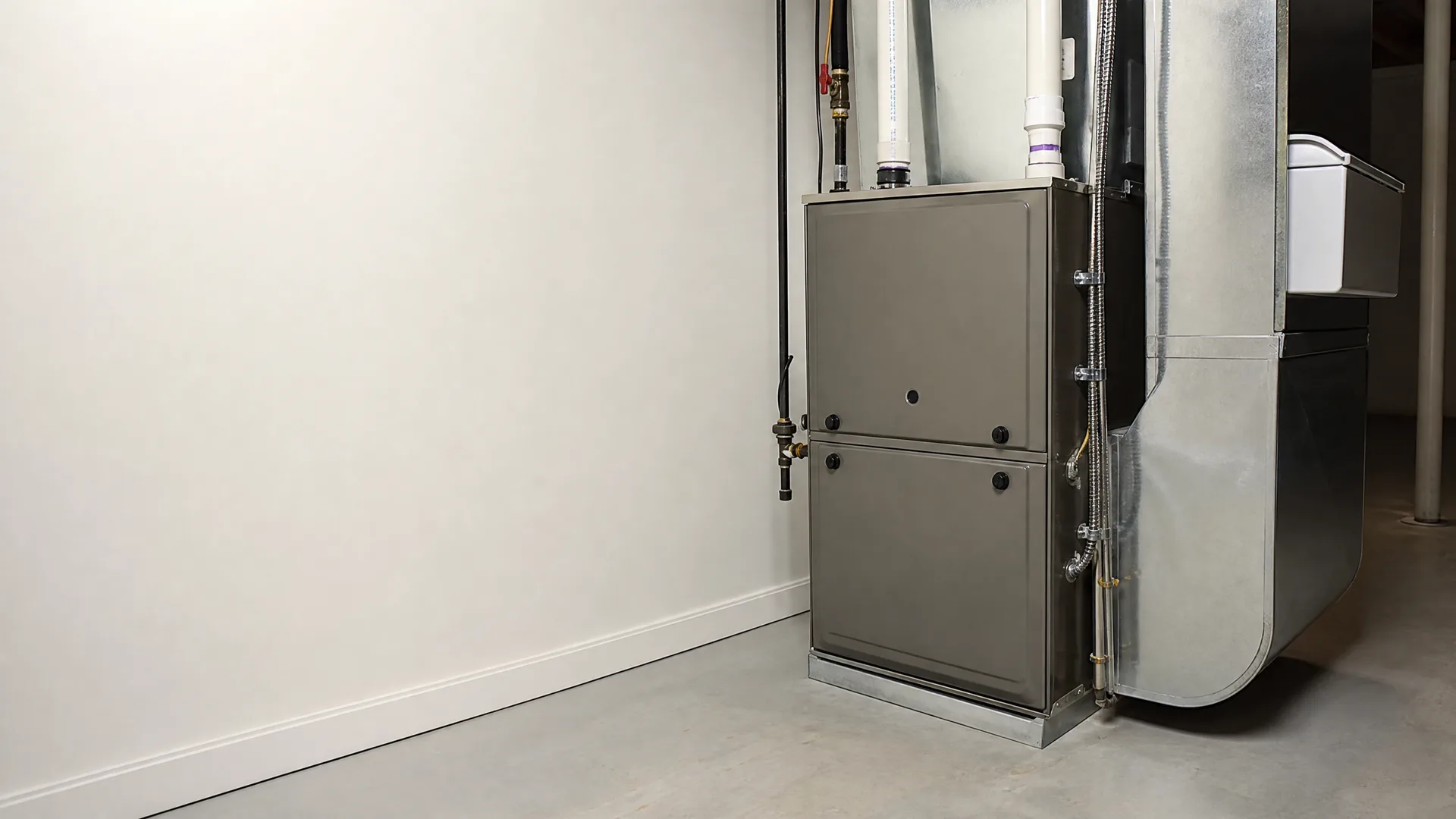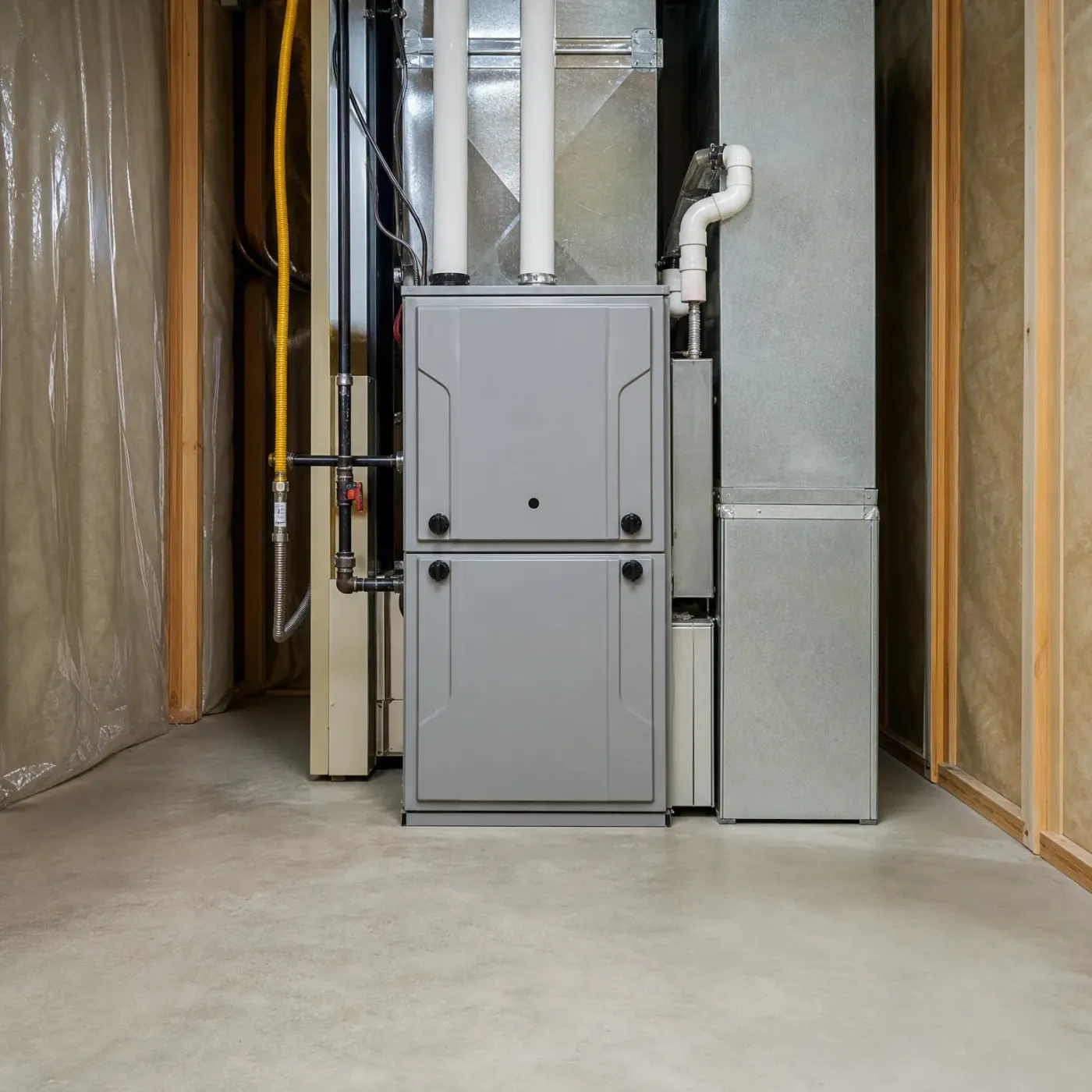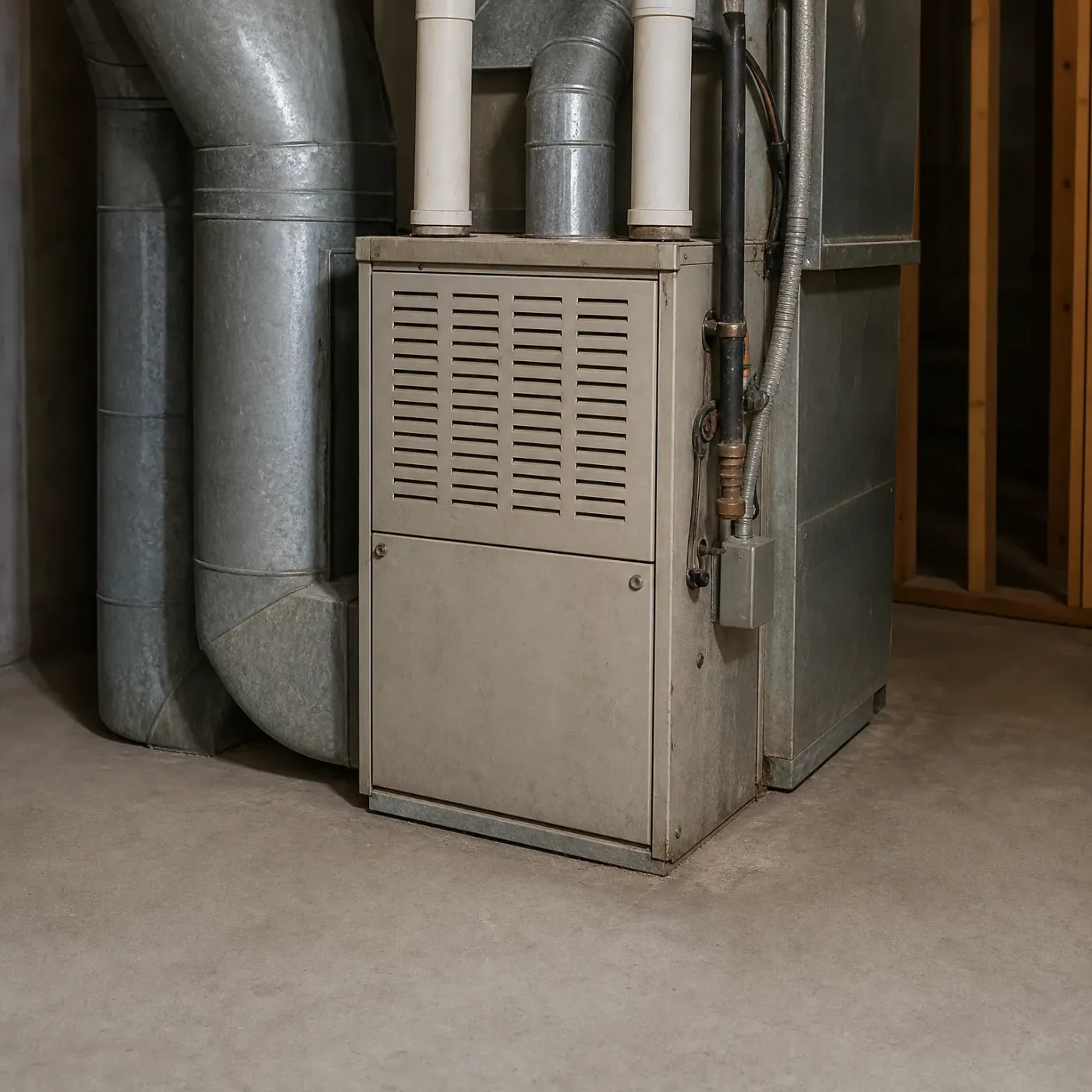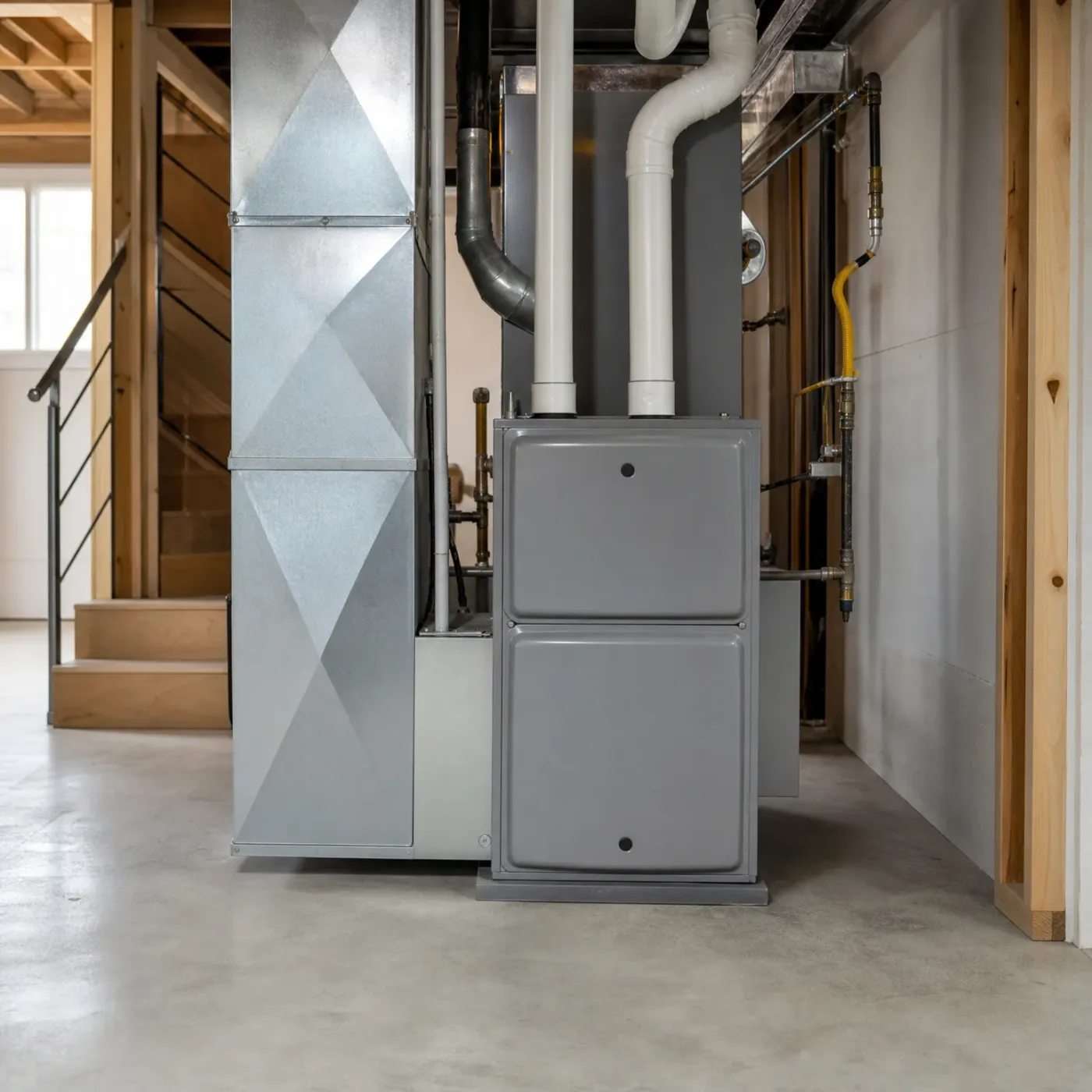




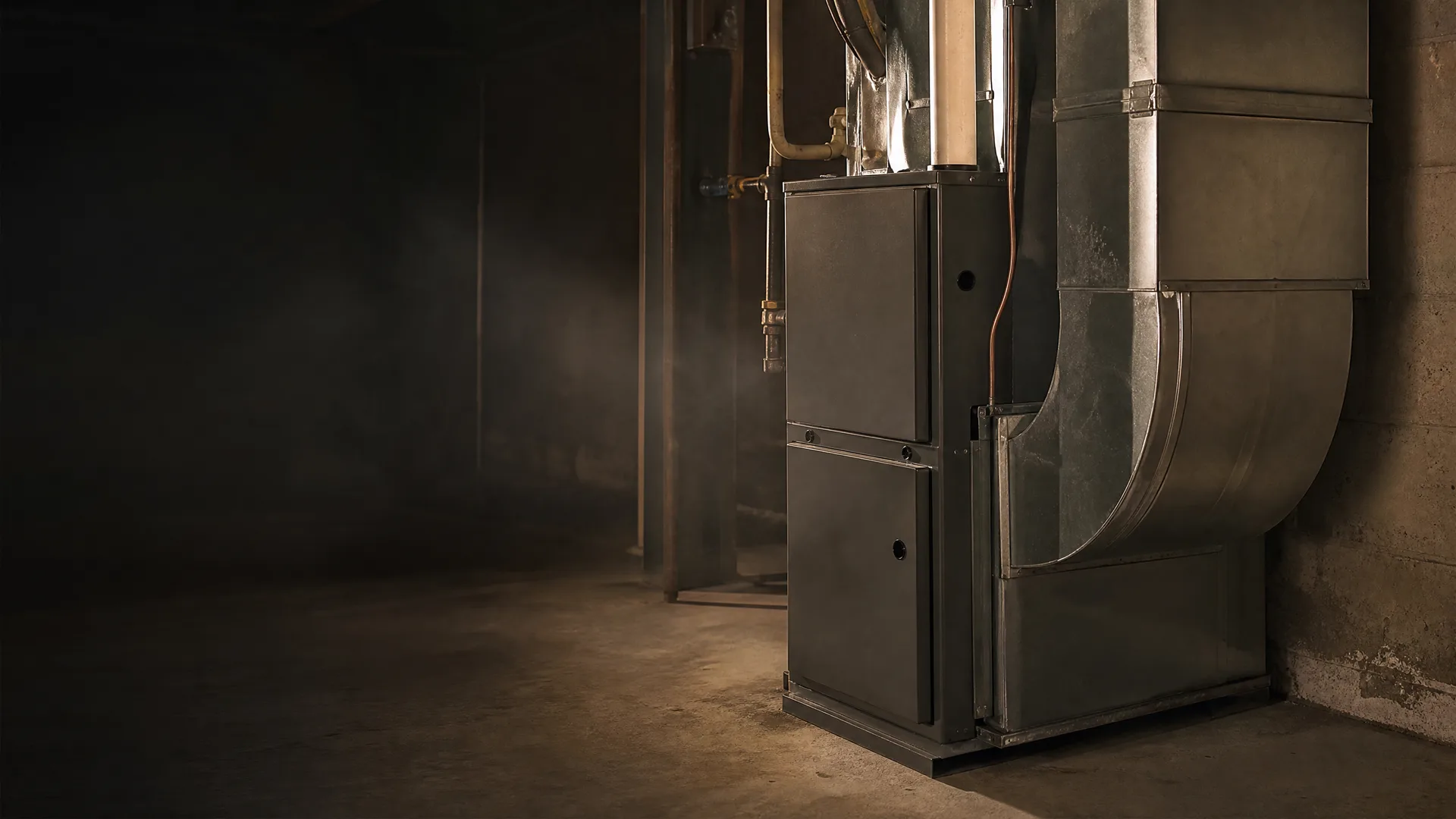
A gas furnace with two gray access panels stands on a concrete pad in a basement, with white PVC vent pipes above, sheet-metal ductwork to the right, and gas and water piping along the wall at left.

A pro who works on furnaces

Furnace leaking water in Conroe, TX

Water pooling around your furnace usually means a clogged condensate line or a cracked drain pan, and it's worth figuring out which before it damages the floor or the unit itself. This page walks through what's likely causing it. When you're ready, you can skip the searching and get matched with a contractor near Conroe who'll follow up directly.

Get a furnace pro

Water around your furnace almost always comes from the condensate line, the small pipe that drains moisture away from the unit. If it's clogged with algae or sludge, that water backs up and spills out instead of draining outside, usually pooling right at the base of the furnace. A cracked drain pan or a failed condensate pump causes the same mess, just from a different part. Since most furnaces in Montgomery County homes run alongside the AC system on the same humid summer days, that line sees a lot of moisture passing through it, which is what lets algae build up inside over time. If you've caught it early, the fix is usually straightforward. If the water has been sitting for a while, check the floor underneath and the unit's base for soft spots or rust, since standing water left alone can damage both.

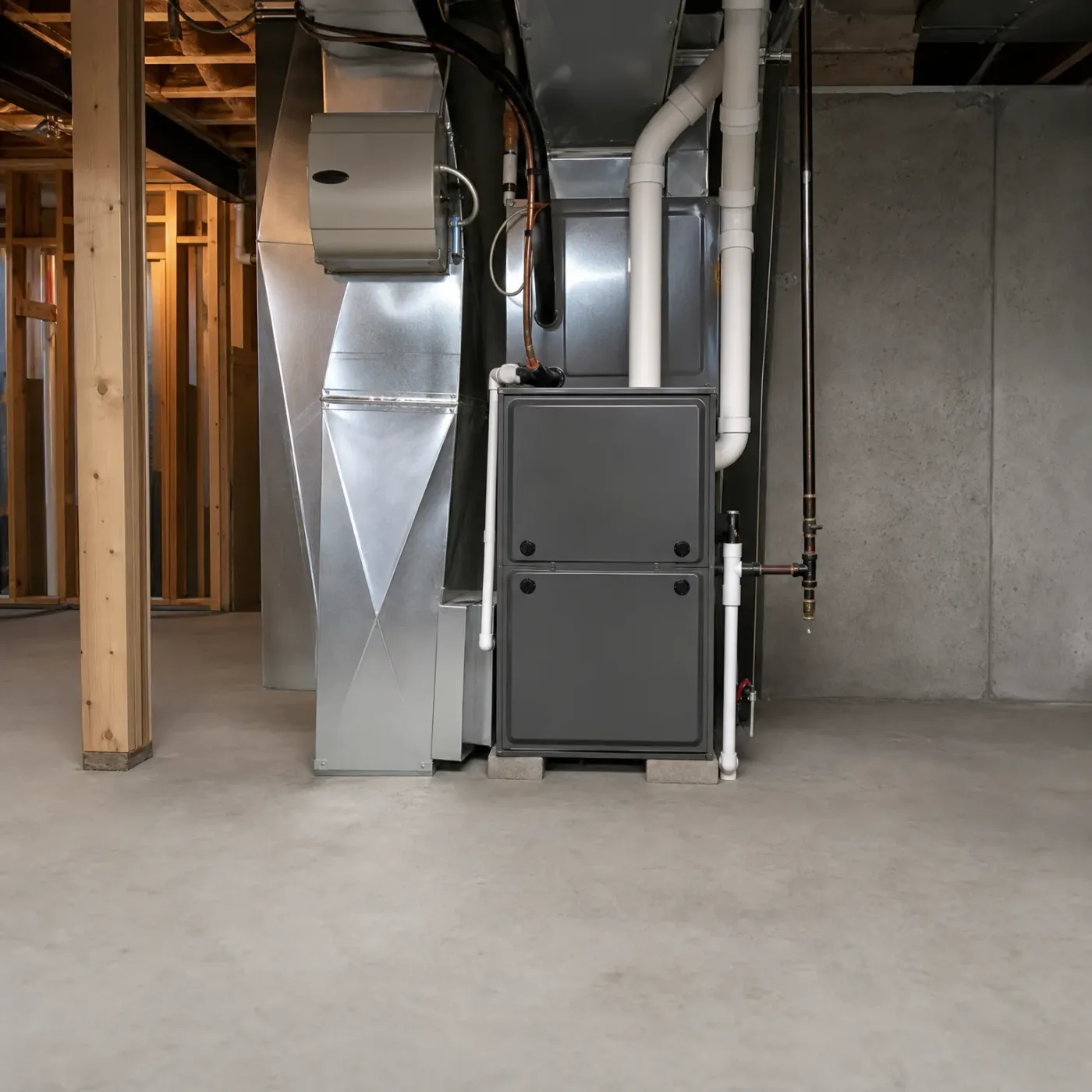
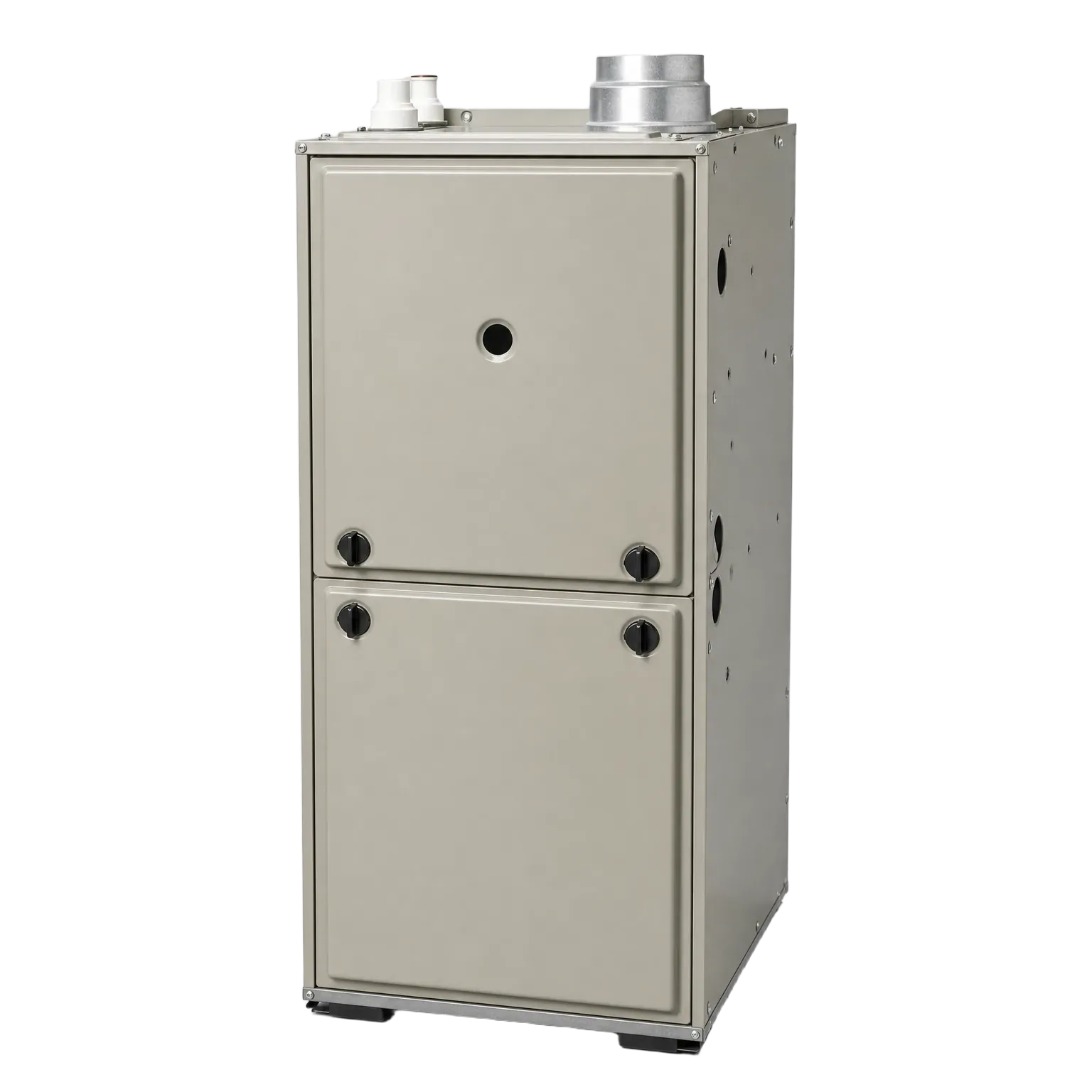
A gray high-efficiency furnace with white PVC venting pipes stands on blocks in a basement next to sheet-metal ductwork, with exposed wood framing on the left and a concrete wall and floor.
A high-efficiency furnace drains through a PVC condensate line running clear to the outside, with no water on the floor around it.
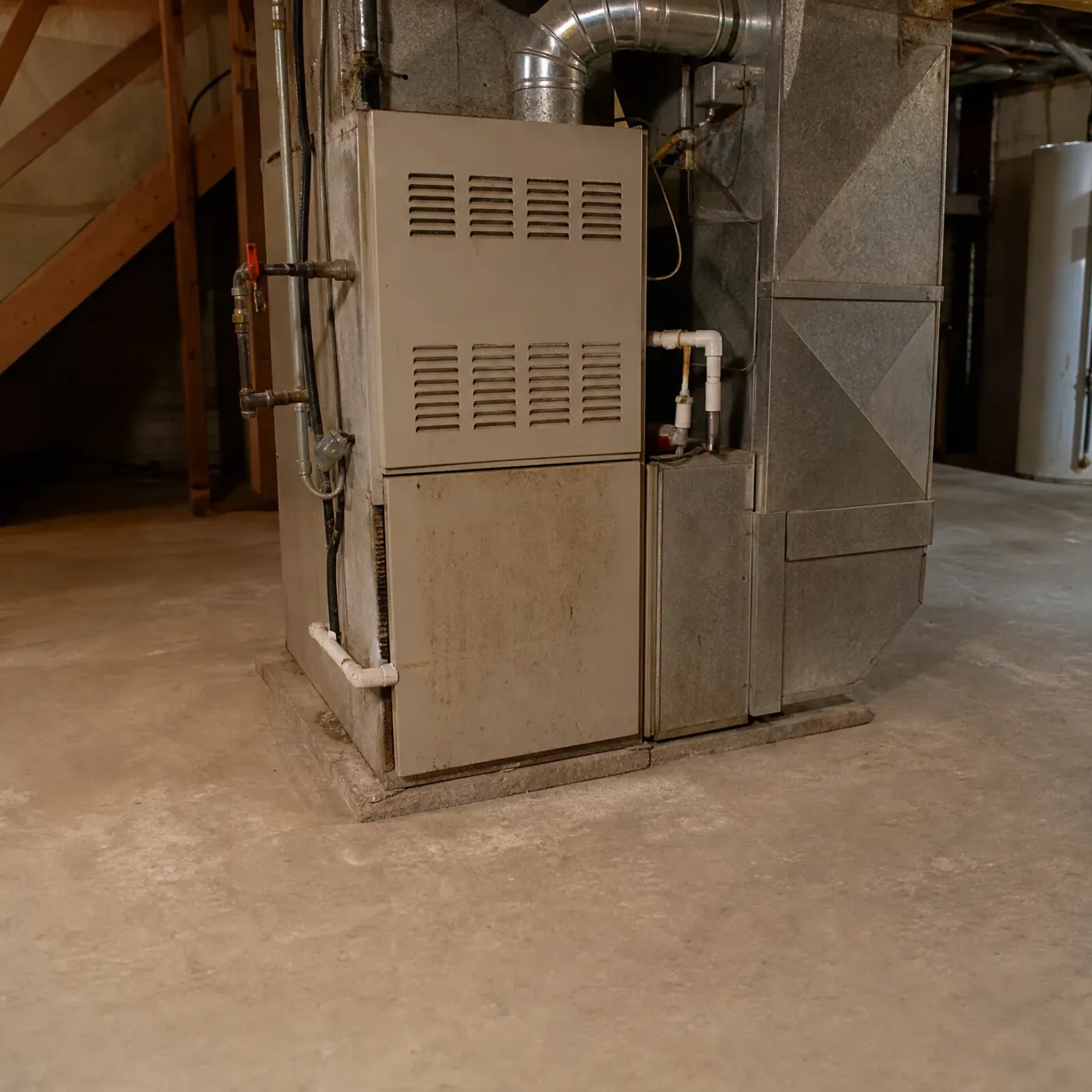
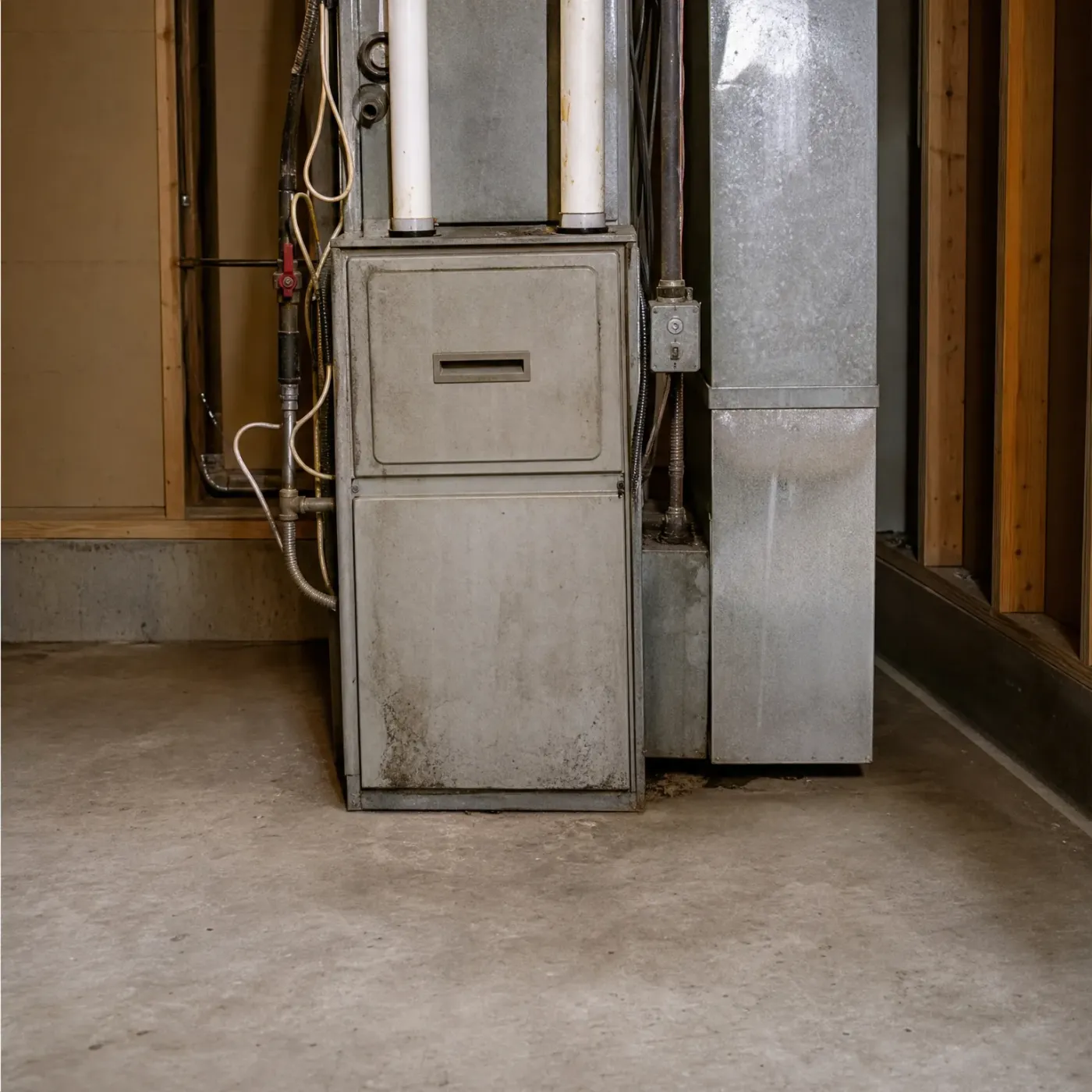
An older gas furnace with two white PVC vent pipes stands on a concrete basement floor beside galvanized sheet-metal ductwork, flexible conduit, and piping along a wall.
An older furnace with a cracked or rusted drain pan lets water collect at its base, pooling faster than a slow clog ever would.

How the drain line clogs

  • Most furnaces with condensate lines in Montgomery County are high-efficiency models, since gas furnaces need a second heat exchanger to produce that condensation.
  • The line slopes downward from the furnace so gravity moves water along it, and any dip or sag lets water sit and grow algae.
  • A condensate trap, a small U-shaped section near the furnace, is where clogs form first because water sits there even when the line is clear.
  • Many furnaces have a float switch inside the drain pan or trap that shuts the unit down the moment water backs up past a set level.
  • If that float switch is stuck or missing, the furnace keeps running and the water has nowhere to go but out onto the floor.
  • A wet filter or musty smell near the furnace often shows up before any standing water does, since the clog backs up gradually.

A high-efficiency furnace pulls extra heat out of the exhaust, and that process turns part of the gas into water instead of letting it vent as a gas. That water needs somewhere to go, so it drips into a drain line and runs outside. The line only works if it keeps sloping downward the whole way. Where it levels out or dips, water sits instead of moving, and standing water grows algae and sludge over time. The first place this tends to happen is the condensate trap, the U-shaped bend near the furnace that's built to hold a little water on purpose, as a seal against air coming back up the line. That same design makes it the first spot to clog, since anything in the water settles there before it reaches the rest of the pipe. Furnaces built with this system usually include a float switch sitting in the drain pan or trap, meant to cut power the moment water rises past a safe level. When that switch does its job, the furnace shuts off and you lose heat, but the floor stays dry. When the switch is stuck, corroded or was never wired in, the furnace keeps running right through a clog, and the water has no path except out over the edge of the pan. Often the first sign isn't water on the floor at all. It's a musty smell near the furnace or a filter that feels damp, both signs the line is backing up before it overflows.

A woman with wavy blonde hair wearing a grey knit cardigan over a green top sits on a sofa in a living room, looking off to the side.
A woman with long brown hair in a cream knit sweater sits on a light sofa in a living room, looking toward a window with sunlight on her face.
A woman in a gray sweater sits in a chair in a living room with a dark sofa, wooden coffee table with a potted plant, and a staircase behind her, looking toward a window.
A smiling woman with dark hair in an updo, wearing a gray ribbed turtleneck sweater, sits on a light sofa in a living room and looks off to the side.

Most condensate lines run a few feet before reaching a drain or the outside, and a clog usually forms where the line bends or dips, not along a straight run.

That's why clearing the line often stops the leak completely, while a cracked drain pan keeps leaking no matter how many times you empty it.

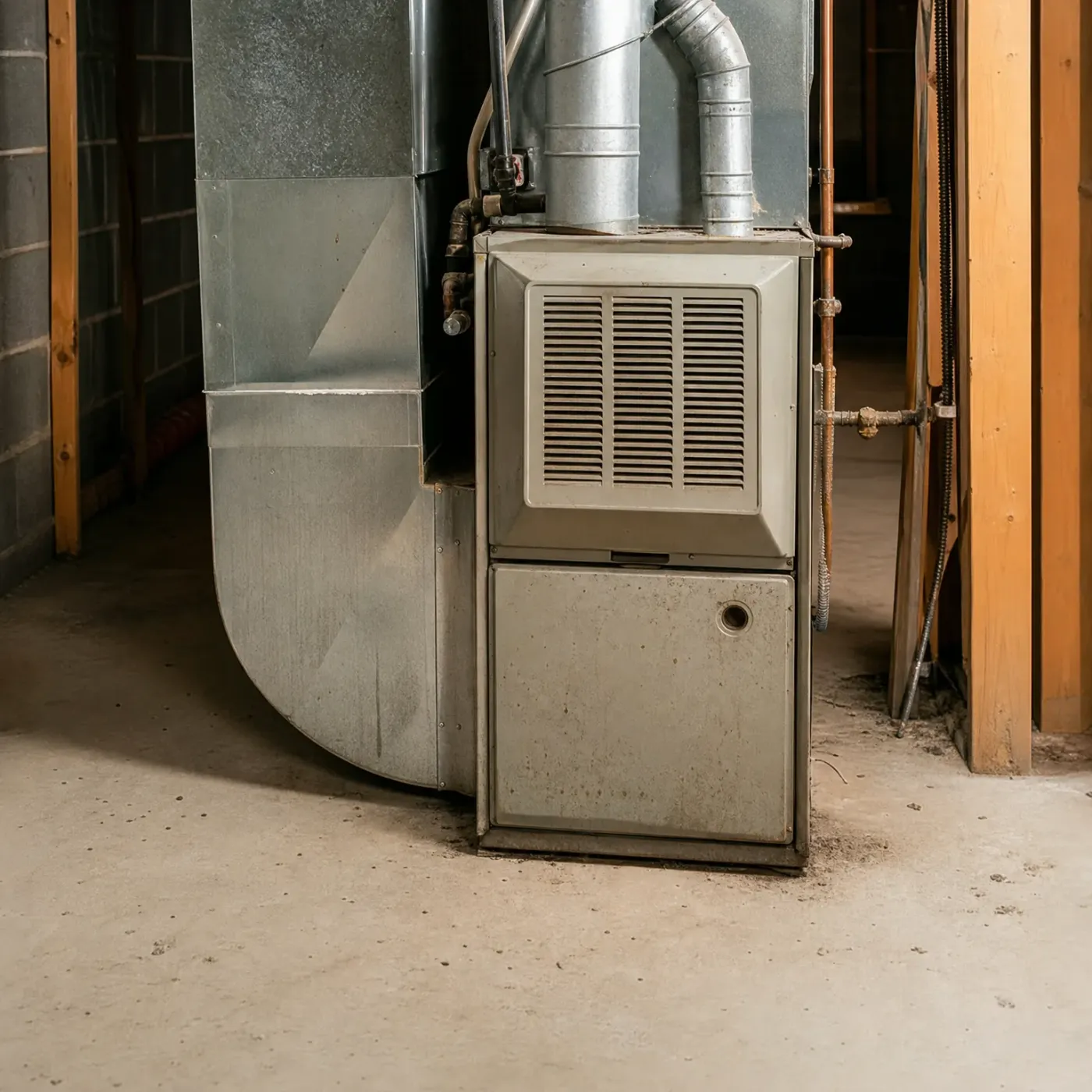
An older gas furnace with a louvered front panel stands on a concrete basement floor beside large sheet-metal ductwork, a metal flue pipe, copper piping and wood framing.
Before you get your furnace repair
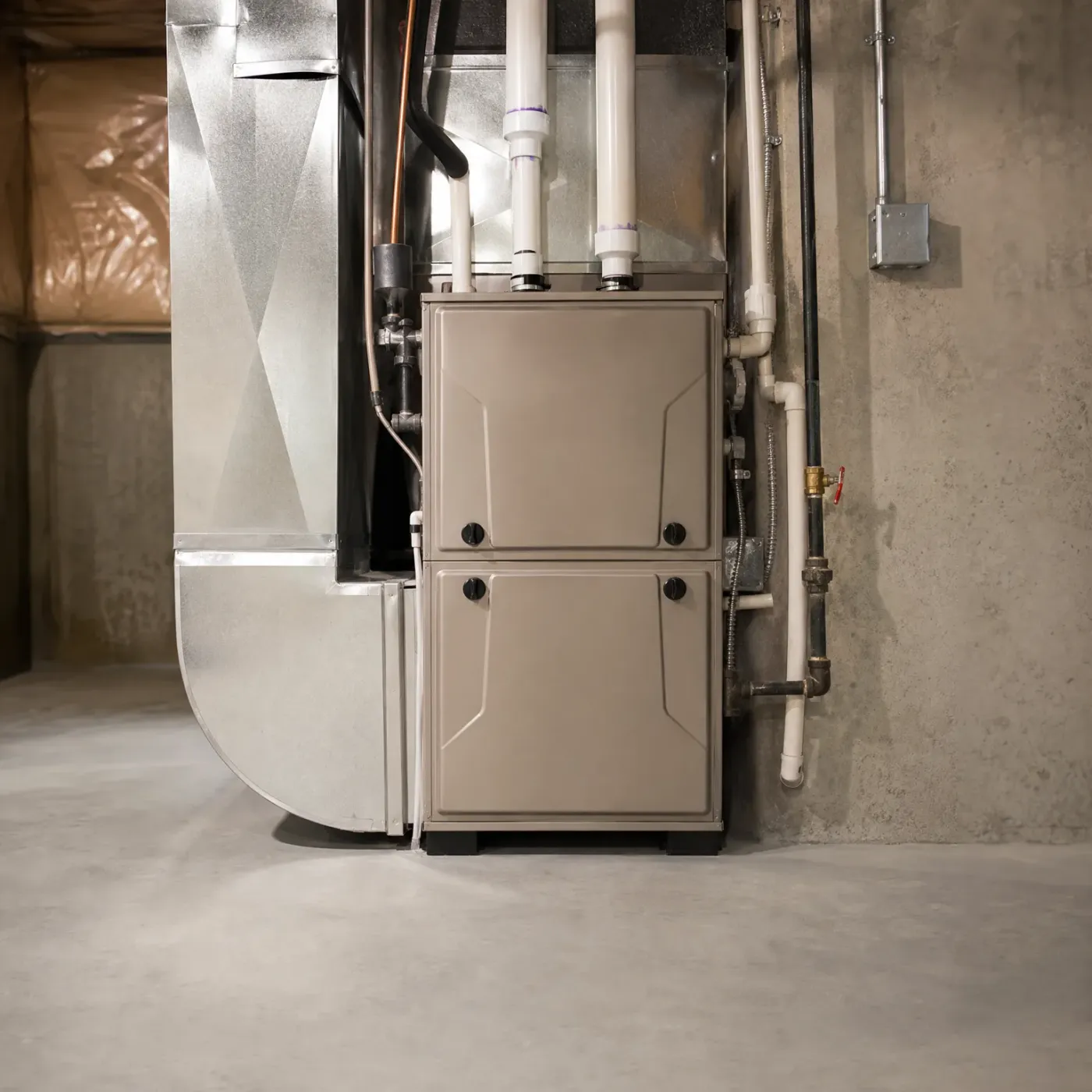
A beige high-efficiency furnace stands on a concrete basement floor beside sheet-metal ductwork, with white PVC vent pipes, flexible conduit and copper and steel piping running up a concrete wall to an electrical box.
After you get your furnace repair

What you'll likely notice first

Water shows up on the floor near the furnace, sometimes on carpet or soaking into drywall if the unit sits in a closet near a bedroom. You might catch a musty smell before you see the puddle, especially if the leak has been going on for a few days already. In a lot of Montgomery County homes the furnace sits in a closet or utility room with little clearance, so even a small amount of standing water reaches the baseboards or a nearby wall fast.
What it puts at risk if ignored

A clogged line that keeps backing up can trip a float switch and shut the furnace off entirely, leaving the house without heat on a cold night. Left longer, the water can warp the subfloor, stain drywall, or rust the furnace cabinet itself. A cracked drain pan is worse since it leaks steadily rather than only when the line clogs, so the damage to the floor underneath keeps adding up the longer it sits unaddressed.

Why does a furnace even make water in a place this warm?

  • Winter nights average 43°F

    Winter nights here average 43°F, cold enough for the furnace to run but mild enough that you may not notice a slow leak right away.

  • Heat runs November through March

    Heat runs November through March in Montgomery County, so a clogged line has months to back up before anyone spots the puddle.

  • 51.7% of homes heat with electricity

    Just over half of homes in the county, 51.7%, heat with electricity, and electric furnaces still produce condensate that needs to drain.

NOAA nClimDiv 1991-2020 · ACS 2020-2024

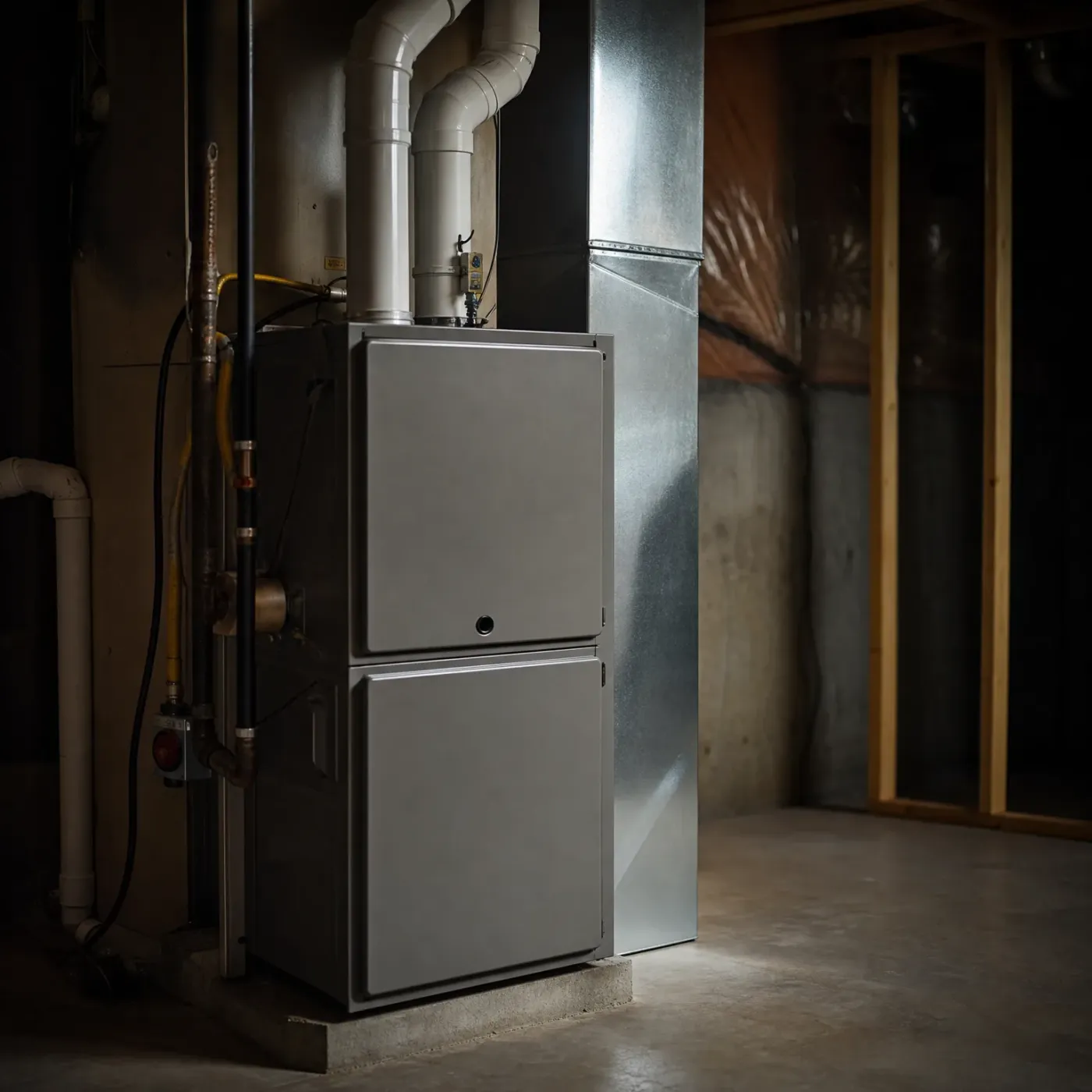
A furnace with two access panels stands in a dim basement, connected to large sheet-metal ductwork and pipes beside a concrete block wall.

The furnace sits quiet in the dark, the evening gone cold enough to finally kick it on. A thin haze of dust drifts near the cabinet, stirred up on the first real run of the season. You crouch down with a flashlight and find the puddle already spreading across the closet floor, soaking into the carpet edge before you've even found where it started. Outside, Conroe is down in the 40s tonight, the kind of cold that only shows up a few hours at a time. You wipe up what you can, set a towel down, and go looking for the shutoff, already thinking about who you'll need to call about the water pooling under the unit.

Get your furnace to the right pro

Explain the furnace problem once instead of to every shop in Montgomery County.

You only hire the pro if you want to.

A gray high-efficiency furnace with white PVC venting pipes and sheet-metal ductwork stands against a basement wall beside a wooden post, with a bare concrete floor and plain gray wall to the right.

Letting a slow leak sit

A clogged line usually drips slowly, so it's easy to put off. Left alone, that water finds the subfloor under the furnace or soaks into the drywall if it sits in a closet near a bedroom. By the time the cabinet shows rust at the base, the water has been getting in for a while. What started as a clog you could clear in an afternoon turns into flooring and drywall work too.

A gray high-efficiency furnace with white PVC vent pipes and flexible metal lines stands against a plain light wall in a basement, connected to galvanized sheet-metal ductwork on a concrete floor.

Catching it early

Once you spot the puddle and shut off the furnace, a clogged line is a straightforward fix, cleared out and draining again the same visit. A cracked drain pan takes more, since the pan itself gets replaced rather than cleaned. Either way, catching it when the water is still just on the floor, not in the subfloor or the wall, keeps the repair to the furnace itself.

Why does my furnace only leak water when it's running?

Why does my furnace only leak water when it's running?

Condensation only forms while the furnace is burning gas and running the second heat exchanger

A furnace only makes condensation while it's actually firing. Gas burns, the exhaust passes through the second heat exchanger, and that's when moisture forms and drains off through the condensate line. Once the burner shuts off, there's nothing left to condense, so the leak stops until the next cycle starts. That's why you might see water during a cold snap when the furnace runs long stretches, then nothing for a day or two when it barely kicks on. It doesn't mean the problem fixed itself. The clog or crack causing the leak is still there, waiting for the next run to push water out again.

An older woman with grey-blonde hair in an updo and a beige turtleneck sweater smiles while looking to the side in a warmly lit kitchen, with a round loaf of bread on the counter in front of her and a dark window showing snow outside.
A woman holds a sleeping boy wrapped in a gray knit blanket on a couch, with a lit table lamp and houseplant blurred in the background.
A gray high-efficiency furnace with white PVC vent pipes stands in an unfinished basement beside sheet-metal ductwork, gas piping, and insulated stud walls on a concrete floor.

Furnace running clean

This is what a properly draining furnace looks like. The PVC condensate pipe carries water straight out of the cabinet and away from the unit, so the concrete underneath stays dry. No pooling, no stains, no reason to look twice at the base of the cabinet.

A beige sheet-metal furnace with a louvered upper panel stands on a concrete basement floor, connected to galvanized ductwork, white PVC vent pipes, and a metal gas line with an electrical box.

Furnace in trouble

Here the water has nowhere to go. A clogged line or a failing drain pan lets it collect at the base of the cabinet instead of draining out, and it will keep collecting every time the furnace runs until the line or the pan gets fixed.

Winter nights average 43°F

Nights this cold run from December into February, and that's exactly when a furnace is working hardest to make heat, which means it's also making the most condensation. A slow clog that seemed harmless in November can be dripping steadily by the time these cold nights settle in.

NOAA nClimDiv 1991-2020

A gray high-efficiency furnace with white PVC vent pipes stands beside galvanized sheet-metal ductwork in a basement with a concrete floor, with a wooden staircase and railing at left.

Draining the way it should

The condensate line runs clear from the furnace cabinet to the outside, carrying water away as fast as the heat exchanger makes it. The concrete stays dry underneath. No stains on the floor, no rust creeping up the base of the unit.

An older gas furnace with louvered panels sits on a concrete pad in a basement, connected to sheet-metal ductwork and PVC and metal pipes, with a water heater and wooden stair framing in the background.

Backing up at the base

Water sits at the foot of the furnace instead of draining out, pooling against the cabinet where the gas line and shutoff valve meet. Left alone, it works into the concrete pad and starts rusting the sheet metal from the bottom up.

A man in a dark jacket and khaki pants walks through an open gate in a stone wall toward a woman standing in the open front doorway of a single-story white house with a dark shingled roof and river-rock accents.

Water at the base of your furnace has a cause you can find

A clogged condensate line or a cracked drain pan is almost always the reason. One stops a leak once it's cleared. The other keeps leaking until the pan itself is replaced. Either way, the water isn't a mystery once someone's looked at the unit directly.

You don't have to figure out which one it is yourself, and you don't have to call around Montgomery County asking contractors to explain the difference over the phone. Share what you've seen, the puddle, the musty smell, whether it only shows up when the furnace runs, and a contractor who handles this kind of repair will reach out to look at your unit and tell you which one you're dealing with.

A light gray sofa with gray and beige textured throw pillows and a cream knit blanket beside a white-framed window, with a small round side table holding a ceramic vase and potted greenery.
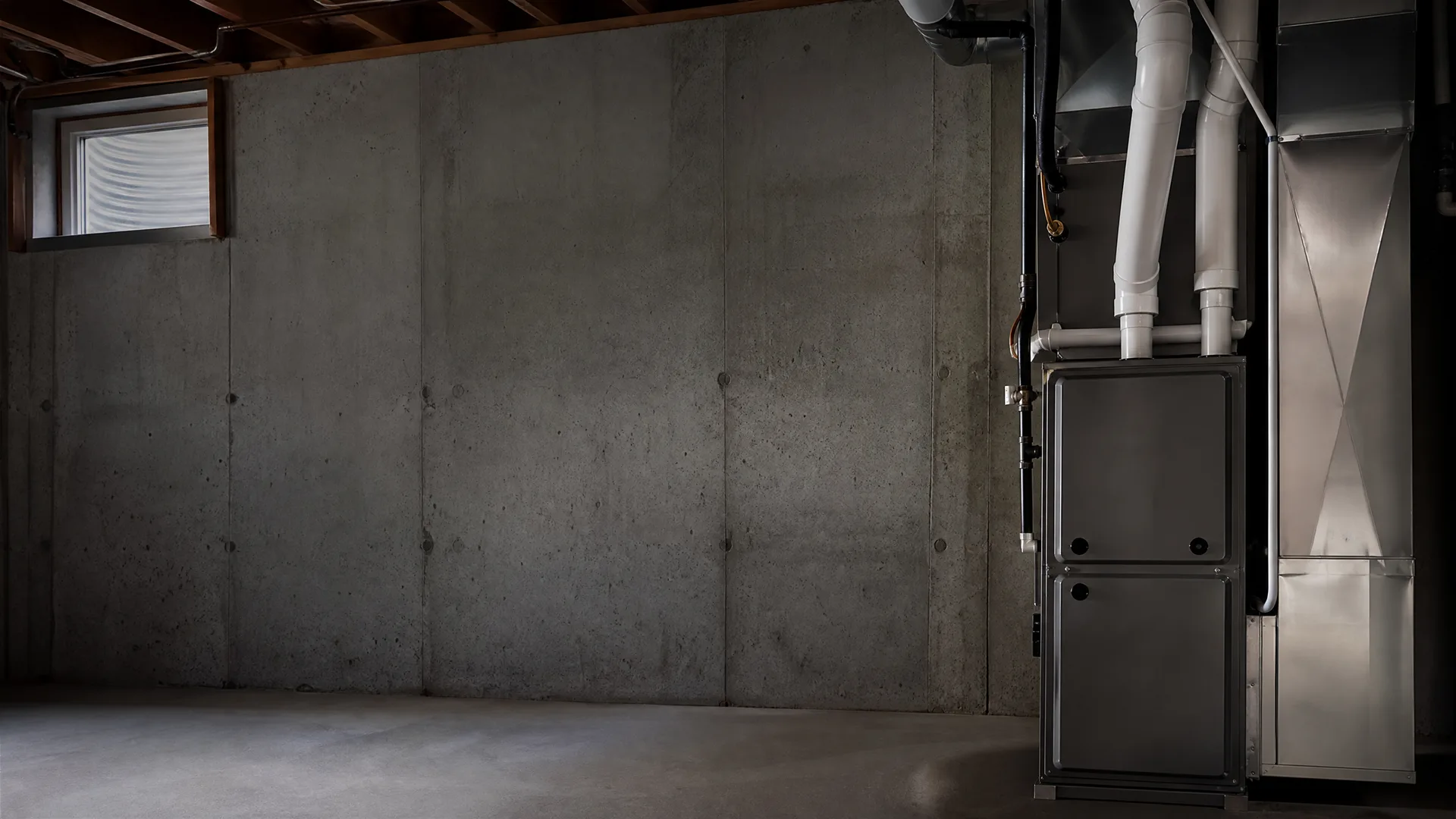
An empty unfinished basement with bare concrete walls and floor, a small window at upper left, and a furnace with white PVC vent pipes and metal ductwork at right.

Find a furnace repair pro in Montgomery County

Explain the job once and skip repeating it on every call.

Step 1 of 3: Equipment