Profile view of a bearded man wearing a dark baseball cap and a dark gray T-shirt against a plain off-white background.

Furnace keeps shutting off in McAllen, TX

Step 1 of 3: Equipment

Why does my furnace keep shutting off in McAllen, TX?

A furnace that shuts off on its own, over and over, usually means it's starting up fine and then cutting out a few minutes later. With most homes around McAllen heating with electricity rather than gas, that shutoff pattern almost always points to the furnace overheating and tripping its own safety switch, not a pilot or gas valve problem.

It's overheating and shutting itself off to protect the heat exchanger

An electric furnace has a limit switch that cuts power to the heating elements if the air inside the unit gets too hot. That happens when air isn't moving through it fast enough, usually from a clogged filter or blocked vents. The furnace runs for a few minutes, the air backs up, the switch trips, and the system shuts down until it cools and tries again. Winters here are mild, so a furnace in Hidalgo County often sits unused for long stretches and picks up dust before it gets called on. A dirty filter or a closed-off return is the first thing worth ruling out before anything inside the furnace itself needs attention.

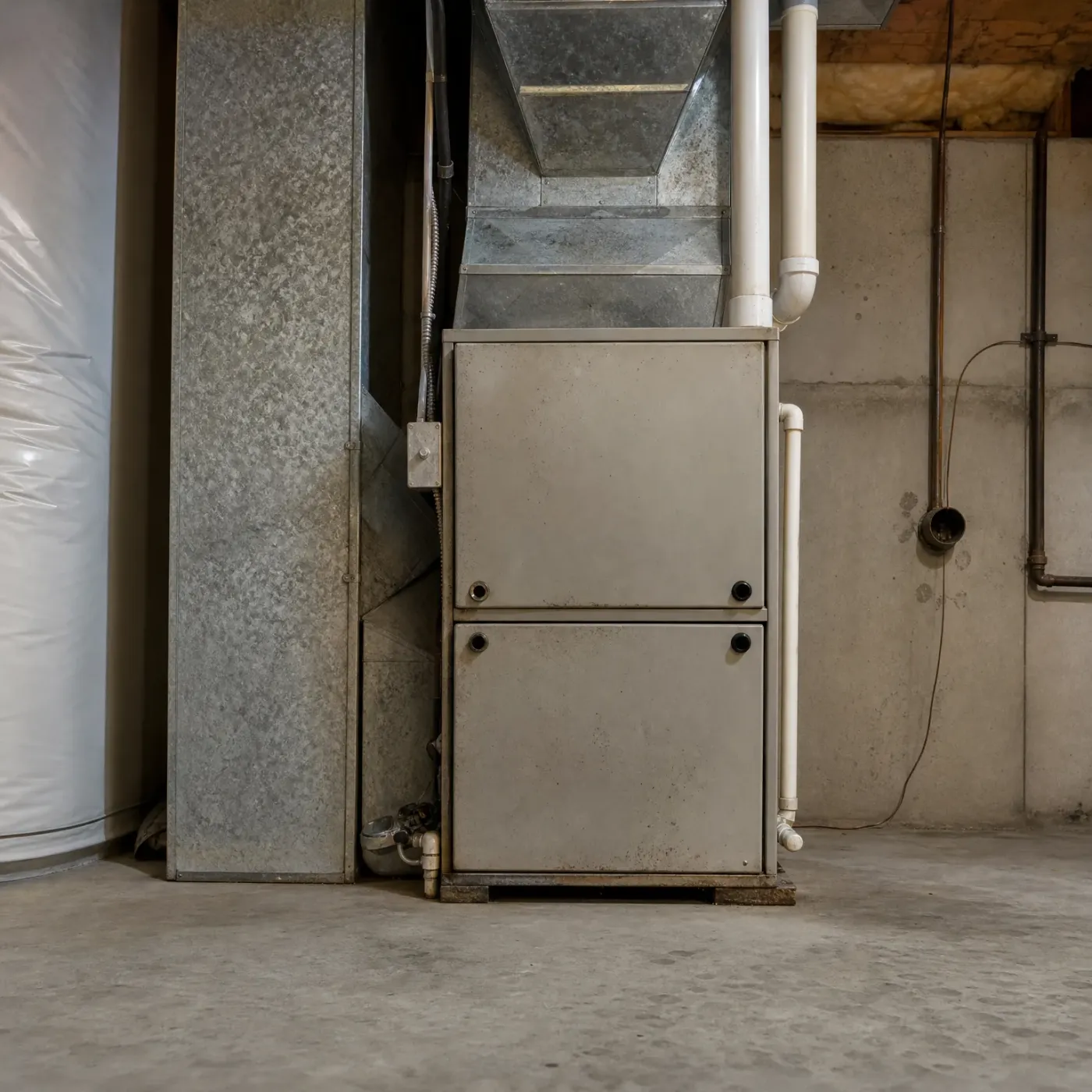
A gray high-efficiency furnace with two PVC vent pipes stands in an unfinished basement beside sheet-metal ductwork, a framed and plastic-covered wall, and a bare concrete wall with vertical pipes.

Running the way it should

A furnace that's working right starts, stays on, and finishes its cycle without tripping off early. Air keeps moving through the ductwork the whole time, and the flue pipe only handles exhaust, nothing backing up into the house.

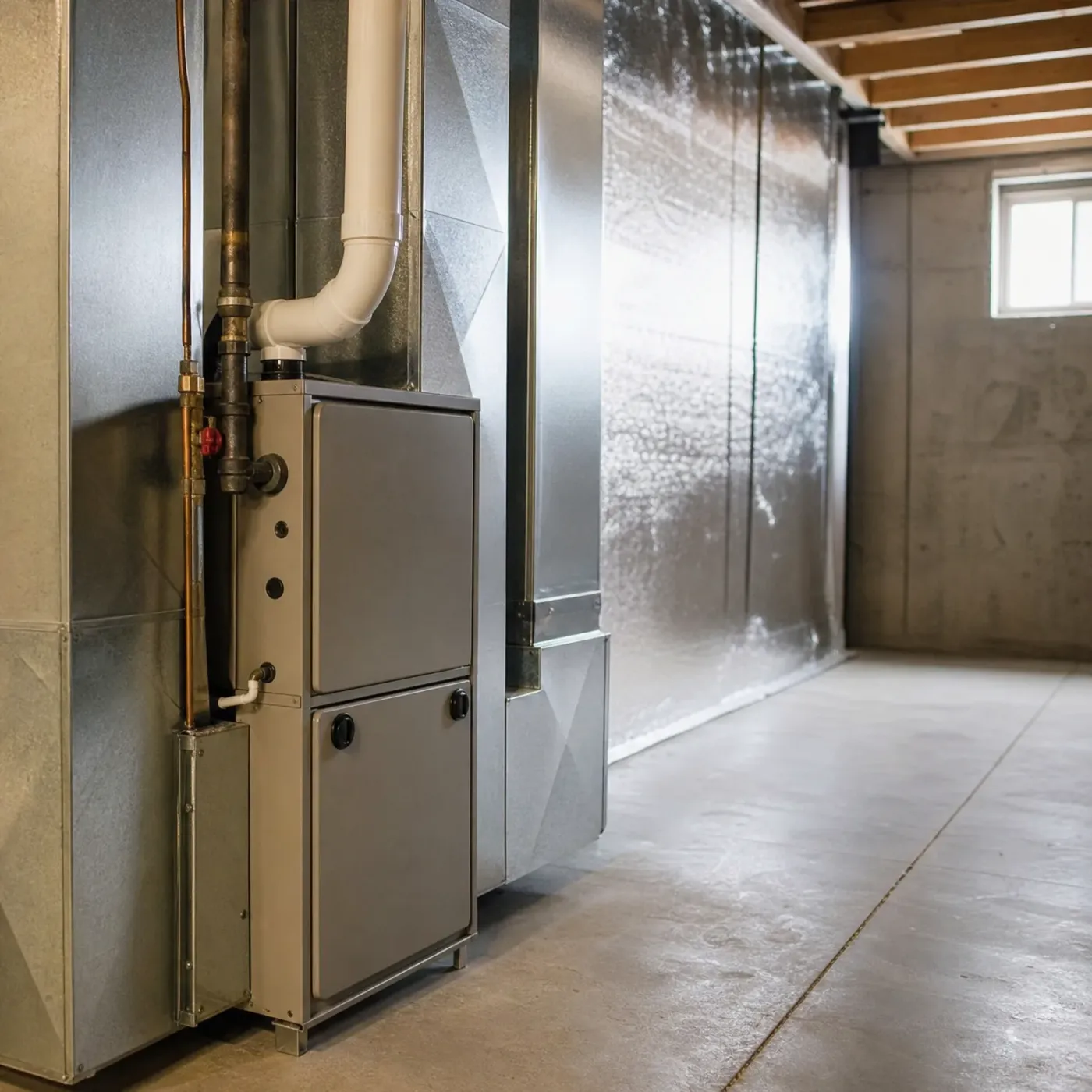
A gray furnace cabinet in a basement, connected to galvanized sheet-metal ductwork and white PVC pipes, against a concrete wall with exposed metal piping and insulation overhead.

Shutting off partway through

When it cuts out early, something is telling the furnace to stop before the cycle finishes. That could be a safety switch responding to heat buildup, a blocked line, or a part wearing out. It won't fix itself by running it again.

Short Cycling or Full Shutdown

Short cycling

  • The furnace starts, runs a few minutes, then shuts off before the house reaches the thermostat setting.
  • It turns back on shortly after, so you get bursts of heat instead of one steady run.
  • A dirty filter or blocked return can starve it for air, and it trips off to protect itself.
  • A cracked heat exchanger or a failing flame sensor, on gas furnaces, can cause the same pattern.
  • Rooms near the thermostat warm up while rooms farther down the ductwork stay cold, since each cycle ends early.
  • Electric bills can run higher than they should because the system never finishes a normal run.

Full shutdown

  • The furnace stops and will not restart on its own, even when the thermostat calls for heat.
  • A tripped breaker, a blown fuse, or a safety switch that's stuck open can all leave it dead like this.
  • On an electric furnace, this often points to a failed heating element or a problem in the control board.
  • No warm air comes through the vents at all, not even a weak trickle while it tries to restart.
  • Some units will show a blinking light on the control board that points to which safety switch tripped.
  • Left alone, a full shutdown in the colder months of a McAllen winter can mean going without heat until it's looked at.
A woman in a cream sweater with her hair in a bun laughs while seated at a stone counter holding a glass of red wine, in a dimly lit interior with a sofa, houseplants and a large window at night.
A woman with long dark hair in a cream knit sweater laughs while looking off to the side, seated in front of a dimly lit kitchen with an island, stools, open shelving and a potted plant, with a glass of red wine in the foreground.
A smiling woman with long dark wavy hair in a light knit sweater sits at a marble counter with a glass of red wine, with a dimly lit living room and kitchen in the background.
A smiling woman with long wavy brown hair in a beige sweater sits at a white marble counter with a glass of red wine, with a living room, dining table and kitchen cabinets behind her.

Find a furnace repair pro in Hidalgo County

A furnace that shuts off early and often doesn't fix itself, and running the thermostat up and down to force another cycle just adds wear to a system already struggling. Figuring out whether it's a clogged filter, a cracked heat exchanger, or a sensor that's gone bad takes someone who can open the unit and test it, not another guess from across the room. Left alone, short cycling tends to get more frequent, not less, and a furnace that trips off on its own is one that can fail outright on a cold night. You could spend the next few days calling around Hidalgo County, explaining the same problem to every shop, waiting on callbacks, and comparing quotes that don't mean much without seeing the furnace. Or you could hand that part off now and put your attention on the house instead of the phone, while someone who works on these systems every day takes it from here.

What's actually tripping the shutoff

  • A flame sensor coated in residue reads the flame weaker than it is and tells the control board to cut gas to the burners.
  • The limit switch trips when a dirty filter or blocked vent chokes airflow, shutting the furnace down before it overheats the heat exchanger.
  • A cracked heat exchanger can trip that same limit switch as it warps from uneven heat, so the furnace keeps starting and stopping.
  • An igniter that's losing strength may light the burners just long enough for the control board to sense flame, then fail and shut things down.
  • A pressure switch stuck open or a blocked inducer motor keeps the furnace from proving it's venting properly, so it won't stay running.
  • Loose wiring at the control board can mimic a sensor fault, making the furnace shut off at random even when every part underneath is fine.

Most of what makes a furnace quit mid-cycle comes down to safety switches doing their job. The flame sensor sits right in the burner flame and tells the control board the fire is lit. A thin layer of residue on it is enough to make the sensor read a weaker flame than what's really there, and the board responds by cutting gas rather than risk burners running without proof of flame. Airflow problems trip a different safeguard, the limit switch, which watches the temperature inside the heat exchanger and shuts the furnace down before that metal gets hotter than it should. A clogged filter or a blocked vent restricts the air moving across the heat exchanger, so the limit switch trips sooner than it would otherwise. If the heat exchanger itself has cracked from years of expanding and contracting, it can trip that same switch on its own, since the metal no longer heats evenly. Ignition has its own failure point: an igniter that's weakening may still glow enough to light the burners, but not reliably enough to satisfy the control board's flame sensor a few seconds later. Venting is checked too. A pressure switch that won't close, or an inducer motor that's not moving enough air out the flue, tells the board the furnace isn't drafting correctly, so it holds the burners off. And sometimes none of the parts are at fault. Wiring that's worked loose at the control board can send the same signals a failed sensor would, shutting the furnace off for no reason at all.
Why does my furnace keep shutting off instead of just running all winter?

  • Winter nights average 51°F

    Nights average 51°F here, cold enough to call for heat but not cold enough to run nonstop, so a furnace that short cycles is easy to miss at first.

  • Heat runs December through January

    With heat only running through December and January, a furnace that's shutting off early doesn't get much time to show the problem before the season's over.

  • 90.6% of homes heat with electricity

    At 90.6% of homes here, electric heat is what's running when a system shuts off early, which points the problem away from a gas valve or burner and toward the electric side.

NOAA nClimDiv 1991-2020 · ACS 2020-2024

A furnace that keeps shutting off and starting back up isn't going to sort itself out. It's a filter, a flame sensor, a limit switch, or a sensor that's worn past doing its job right, and figuring out which one takes someone who can look at the system directly. You could spend an evening searching for contractors near McAllen, calling a few, explaining the short cycling to each one, then sitting with the quotes trying to tell them apart. Or you can skip that part. Answer a few questions about what the furnace is doing and a contractor who works on these systems in Hidalgo County will reach out to you directly. You still get the furnace looked at and fixed. What you don't have to do is track down who's available, repeat yourself to every one of them, and guess at which quote actually makes sense.

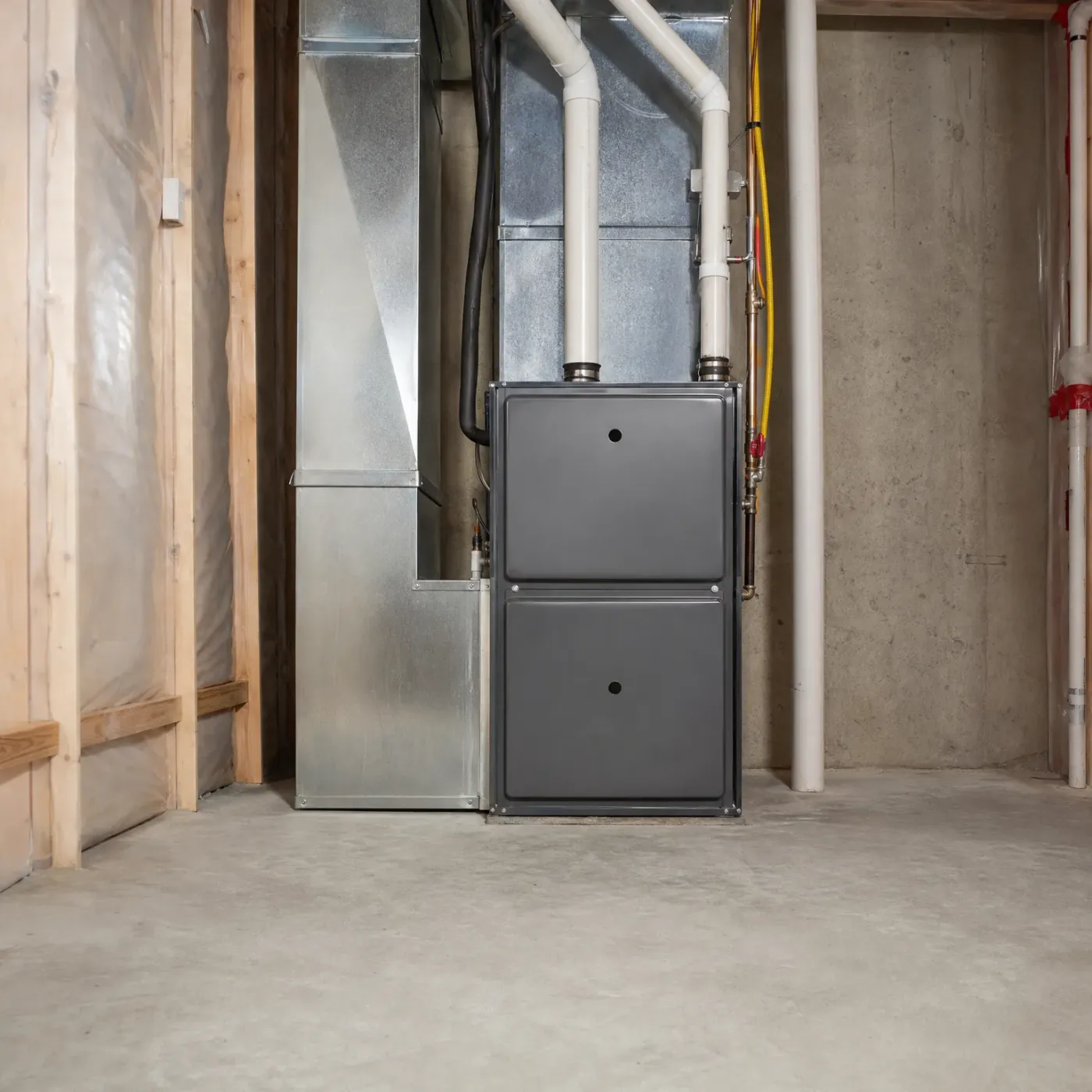
A gray furnace with a white PVC vent pipe and copper piping stands beside large galvanized sheet-metal ducts in an unfinished basement with concrete floor, concrete walls, foil-faced insulation, and a small window.

The right pro for this job

Match me with a pro

Fill out one short form instead of calling around.

There's no charge for the request.