Furnace keeps shutting off in Houston, TX

Step 1 of 3: Equipment

Why does my furnace keep shutting off in Houston?

A furnace that fires up and quits a few minutes later, over and over, usually points to one thing shutting it down on purpose. In Houston, where the furnace only runs a handful of weeks a year, this often shows up the first cold snap of the season, after the system has sat unused since last winter.

A safety switch is cutting power before the furnace can finish a heating cycle

Furnaces are built to shut themselves off the moment something is wrong, rather than keep running and cause damage or a hazard. A dirty flame sensor, a clogged filter, or a blocked vent can all trigger that shutoff within minutes of startup. Because most Harris County furnaces sit idle through the long muggy summer and only get asked to work for a short stretch of mild winter, dust and corrosion on these parts build up unused, then cause trouble the first time the system is pushed to run. The furnace isn't broken in the sense of needing to be replaced. It's reacting to something a technician can usually find by checking the sensor, the filter and the venting in that order.

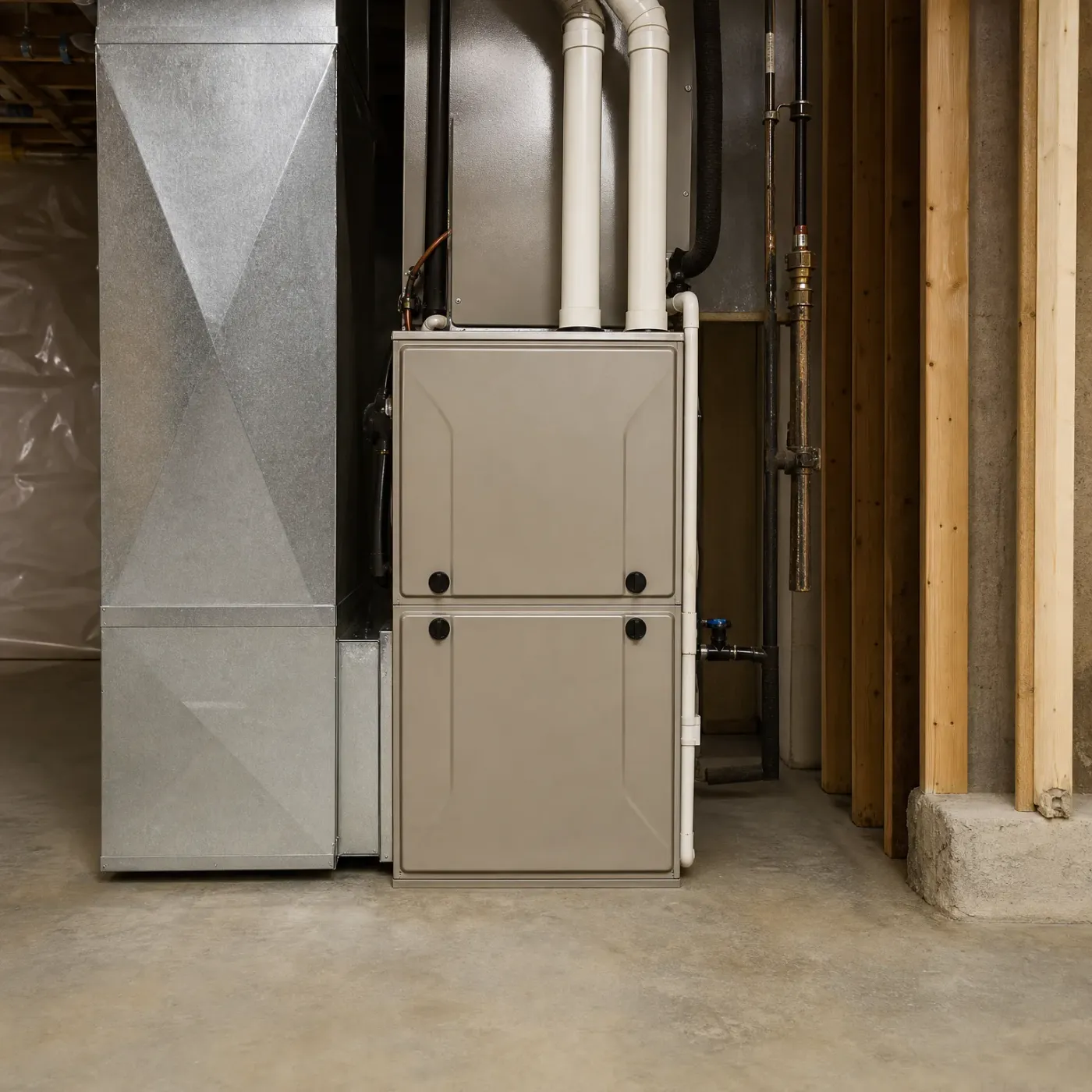
A beige high-efficiency furnace with white PVC vent pipes stands beside galvanized sheet-metal ductwork in a basement with a concrete floor, exposed wood studs, and metal piping along the wall.

Running the way it should

A furnace that's working right fires up, stays on until the house reaches the set temperature, and shuts off on its own. The burners stay lit, the blower runs steady, and the cycle repeats only when the thermostat calls for it again.
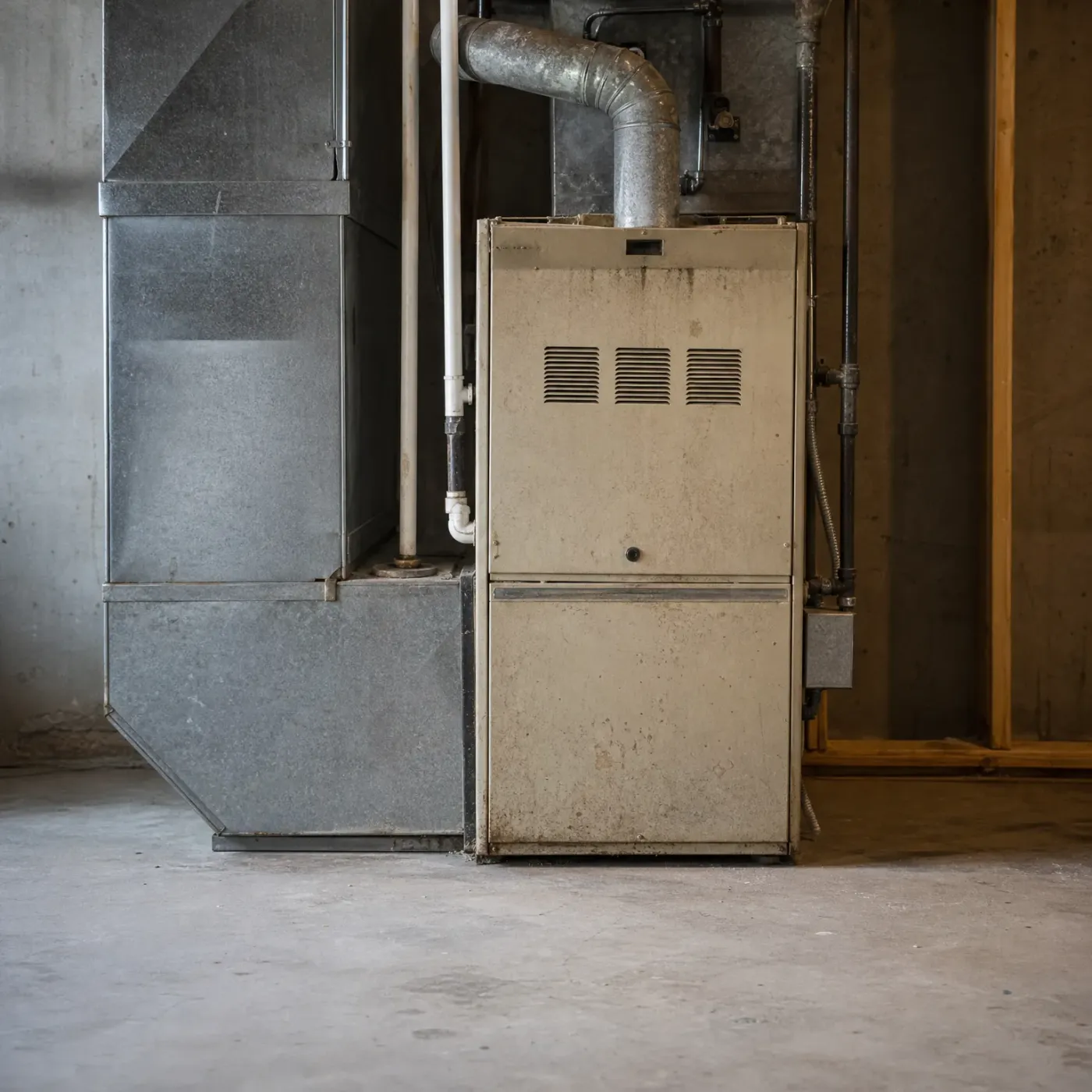
An older beige furnace with a louvered vent panel stands on a concrete basement floor beside galvanized sheet-metal ductwork, a metal flue pipe and vertical pipes along a concrete wall.

Shutting off on its own

A furnace that cuts out partway through a cycle is protecting itself from something. Weak flue connections, a dirty flame sensor, or airflow trouble can all trip the safety switch that kills the burners before the house gets warm.

Short Cycling vs. Running Right

Short cycling now

  • The furnace lights, runs a few minutes, and shuts off well before the house reaches the thermostat setting.
  • A dirty flame sensor is a common cause, since it can't confirm the burners are lit and the control board cuts gas to the burners as a safety measure.
  • A clogged filter restricts airflow across the heat exchanger, and the furnace shuts down on high limit before the room warms up.
  • If the furnace sits unused most of the year here, dust and spiderwebs in the burner compartment can block the flame sensor or pilot assembly.
  • Cracked or loose wiring to the flame sensor or limit switch can cause the same on-off pattern even when the parts themselves are fine.
  • Left alone, repeated short cycling puts wear on the igniter and blower motor each time they start up again.

Running without cutting off early

  • The furnace stays on until the thermostat is satisfied, then shuts off on its own and stays off until the next call for heat.
  • The flame sensor reads the burner flame correctly, so the control board keeps gas flowing for the full cycle.
  • Air moves freely through a clean filter, so the heat exchanger doesn't overheat and trip the high limit switch.
  • The blower comes on, runs at a steady speed, and shuts off a short time after the burners do.
  • A furnace running this way on a mild Houston winter day might only cycle a handful of times in an evening.
  • Wiring connections at the sensor and limit switch stay tight, so the control board gets accurate readings each cycle.
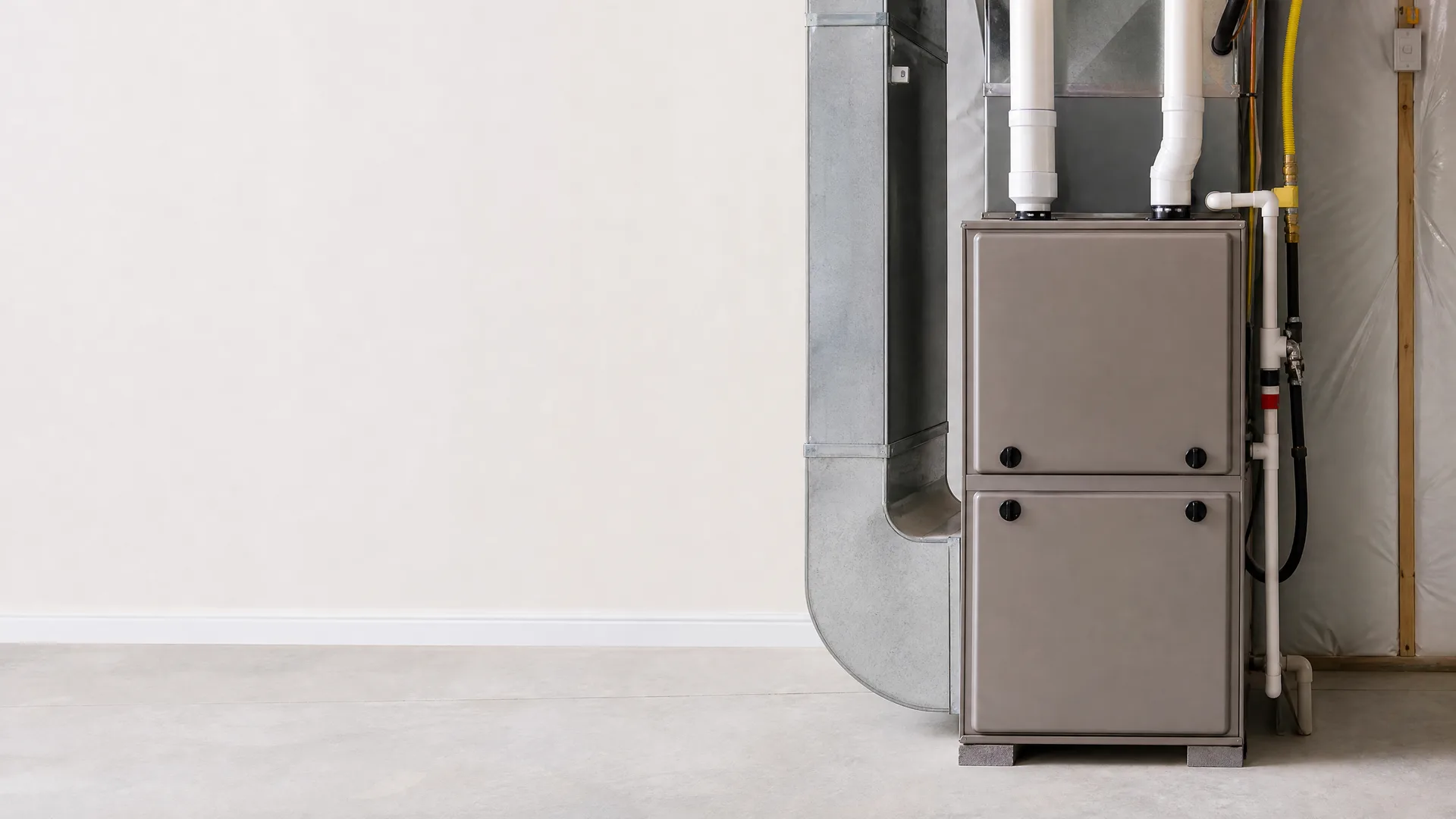
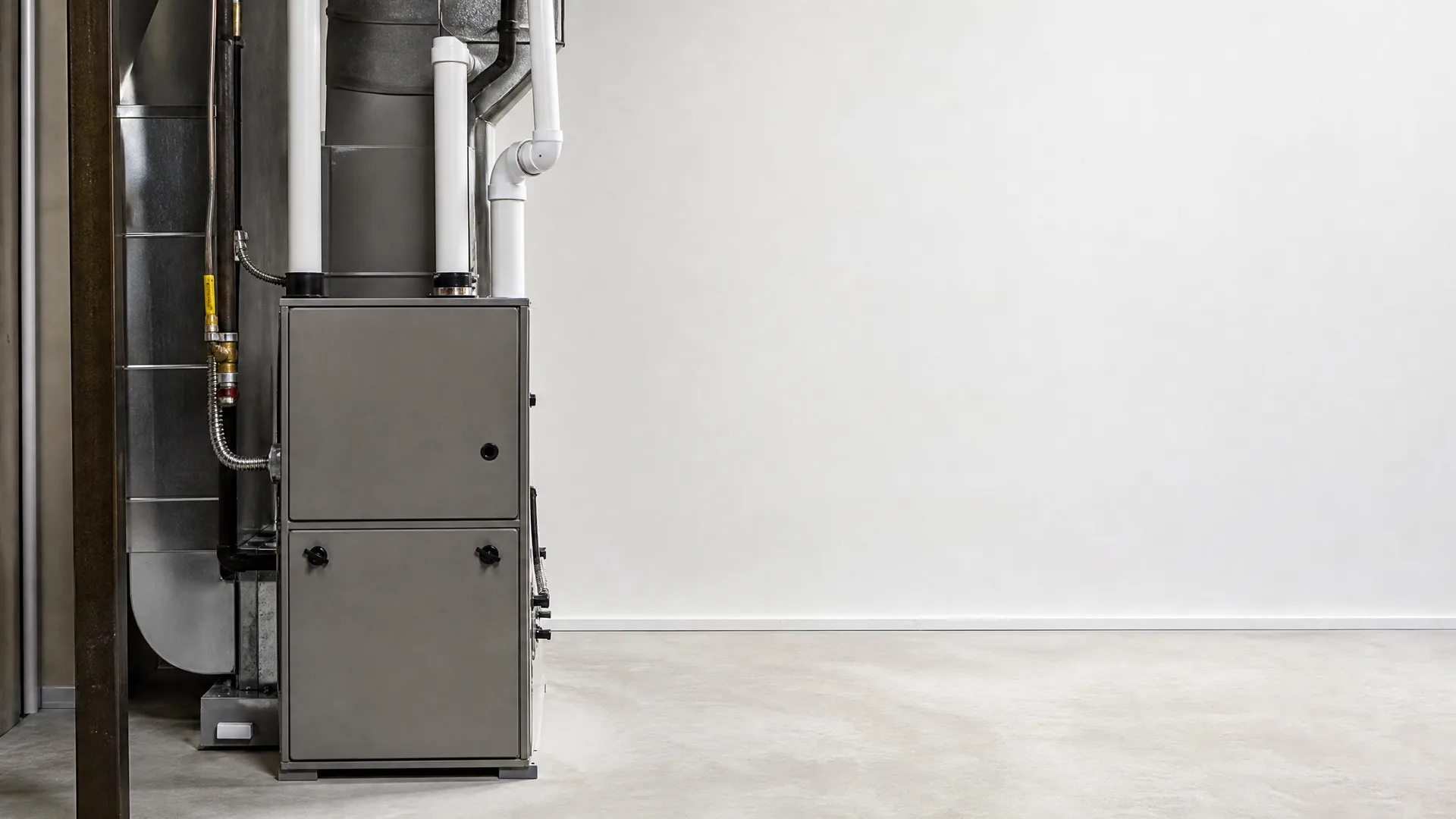
A gray residential furnace with attached PVC vent pipes, ductwork and a gas line stands against a plain white basement wall on a concrete floor.

Why the flame sensor fails first

Most furnaces here sit idle from spring through fall, and that stretch of dust settles right on the flame sensor. It's a short metal rod in the burner compartment that proves to the control board that gas is actually burning. A film of dust is enough to weaken that signal. The board reads it as no flame, even though the burners are lit, and cuts gas to protect the house from a leak. That's the shutoff you're seeing, working exactly as designed.

A gray high-efficiency furnace with white PVC vent pipes stands against a wall beside sheet-metal ductwork, flexible gas and electrical lines, in a room with a plain light wall and concrete floor.

What a pressure switch is checking

Behind most shutoffs is a pressure switch, a small part that confirms the inducer motor is venting exhaust before it lets the burners stay lit. If a vent pipe is blocked or the inducer is weak, the switch won't close, and the furnace shuts off rather than let exhaust back up into the house. After months of not running, a vent pipe can collect debris nobody noticed, which is why this shows up more on the first cold nights than any other time of year.

Winter nights average 45°F

A 45°F night is mild enough that your furnace only needs short bursts of heat to hold the house steady. That's exactly when a dirty flame sensor shows up, since a quick call for heat is all it takes for the burners to light, fail to prove themselves, and cut out again.

NOAA nClimDiv 1991-2020

A smiling bearded man in a dark blue henley shirt sits leaning back on a light grey sofa in a living room, with a bowl of popcorn on a wooden coffee table and a large window behind him.
A bearded man in a dark quarter-zip sweater sits smiling on a brown sofa in a dimly lit living room, with a bowl of popcorn and a mug on a table in the foreground and a potted plant near a window behind him.
A smiling man with graying dark hair and a beard, wearing an olive sweater, sits on a sofa in a living room beside a bowl of popcorn on a wooden table.
A smiling man in a dark green henley shirt sits on a gray sofa in a living room with a lit table lamp, wooden shelving unit, and a bowl of popcorn in the foreground.

Done looking for a furnace pro

A furnace that won't stay running is doing it on a night you actually need the heat, and in Houston those nights are few enough that you can't afford to lose one waiting on a callback. You could start working the phone yourself, explaining the same short cycling story to one company after another, waiting on quotes, trying to tell which outfit actually works on gas furnaces instead of just listing it on their site. Or you could send this once and let the search end here. A furnace shutting off a few minutes in isn't something to watch for a few more nights and see if it clears up. Each short cycle is the control board protecting the burners or the flue from something it doesn't like, and that something doesn't fix itself. Hand off the finding and the calling, and get back to a house that holds its temperature instead of one that keeps dropping it on you.

Short cycling has a cause

  • A furnace that fires, runs briefly, and quits almost always shuts off on purpose, not by accident.
  • A dirty flame sensor is the most common cause in Houston, where the furnace sits unused most of the year.
  • Mild nights in the 40s and 50s call for short bursts of heat, which is exactly when a weak flame sensor signal gets exposed.
  • A furnace running correctly stays on until the thermostat is satisfied, then shuts off on its own, not mid-cycle.
  • Short cycling will keep repeating itself until the part that's cutting gas to the burners gets found and addressed.
  • Waiting out a cold snap hoping it resolves on its own just means more cycles on a part that isn't working right.

A furnace that lights and then quits within minutes is shutting itself off. The control board is reading something that tells it not to keep burning gas, and in most Houston homes that something is a flame sensor coated with months of dust from a furnace that's sat idle since spring. The sensor's job is to confirm the burners are actually lit. When it can't do that, the board cuts gas rather than risk letting it flow unburned. A furnace working the way it should lights once, runs until the house hits the temperature on the thermostat, and shuts off on its own terms. One that's short cycling never gets there. It fires, runs a few minutes, quits, and tries again, and that pattern repeats on every call for heat until the part causing it gets cleaned or replaced. Houston's mild winters make this worse rather than better. A 45 degree night only needs short bursts of heat to keep a house comfortable, and short bursts are exactly what exposes a weak signal from a dirty sensor. A longer, harder-working cycle might push through; a short one won't. None of this resolves by waiting. A cold snap that passes doesn't fix the sensor underneath it, and the next call for heat starts the same cycle over. The furnace isn't broken in a way that gets better with time. It's telling the board something is wrong, and that keeps being true until someone looks at it directly.

A woman in a cream knit sweater reclines on a beige couch with eyes closed and a slight smile, a gray hardcover book resting open on a textured blanket over her lap, with a lit table lamp and a leafy plant in the dim background.
A smiling middle-aged man in a dark green sweater sits at a candlelit table with a glass of red wine and a bowl of salad in the foreground.

It's off your list after this

A furnace that keeps shutting off needs a contractor who can test the flame sensor, the limit switch and the venting, not another night of guessing. Sending this form means you skip calling around, repeating the same explanation to each shop, and weighing quotes with no way to judge them. A licensed contractor in the Houston area takes it from here. The finding-help part is done. What's left is getting your heat to run the way it should, through whatever mild nights are left this winter.

Describe it once

Describe what your furnace is doing once, in one form.

Sending the form costs nothing.