Tell us about the job
Takes about a minute. No obligation.
A furnace installation in Collingsworth County starts with questions a catalog cannot answer. 118 severe weather events were recorded in Collingsworth County, Texas between 2015 and 2024. At that rate, severe weather is part of what every system here runs against, season after season, and a contractor sizing new equipment has to account for that load before settling on a unit, a duct layout, or a flue configuration. The install decisions that hold up in this county are the ones built around what the climate actually asks of the equipment.
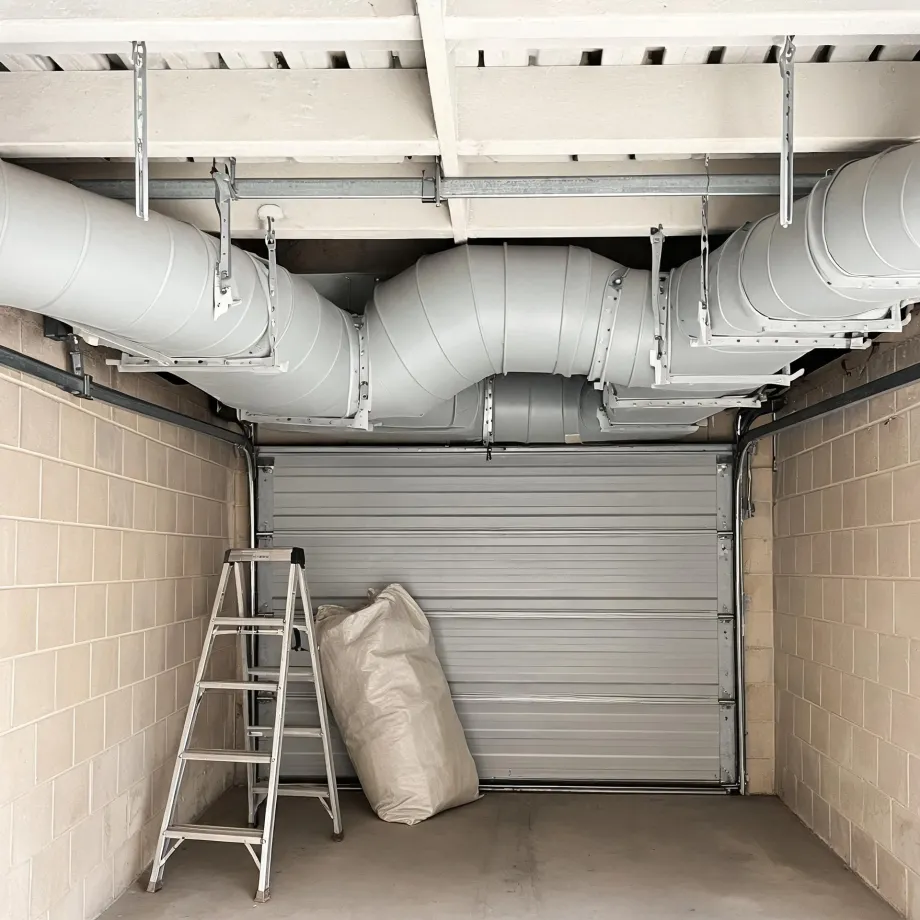
Ductwork laid down for an old gravity furnace or a window-unit era rarely carries what a modern forced-air system needs without modification. Half the homes in Collingsworth County, Texas were built in 1961 or earlier (2020-2024 ACS 5-year). A contractor sizing a new furnace here has to assess the existing trunk lines and branches before the equipment choice settles anything, because undersized or poorly routed duct runs will undercut a new unit's output regardless of its rated capacity. The electrical service is a second check: what the house came with and what a modern furnace draws are questions that get answered at the panel, not at the thermostat.
What Gets Installed With a New Furnace
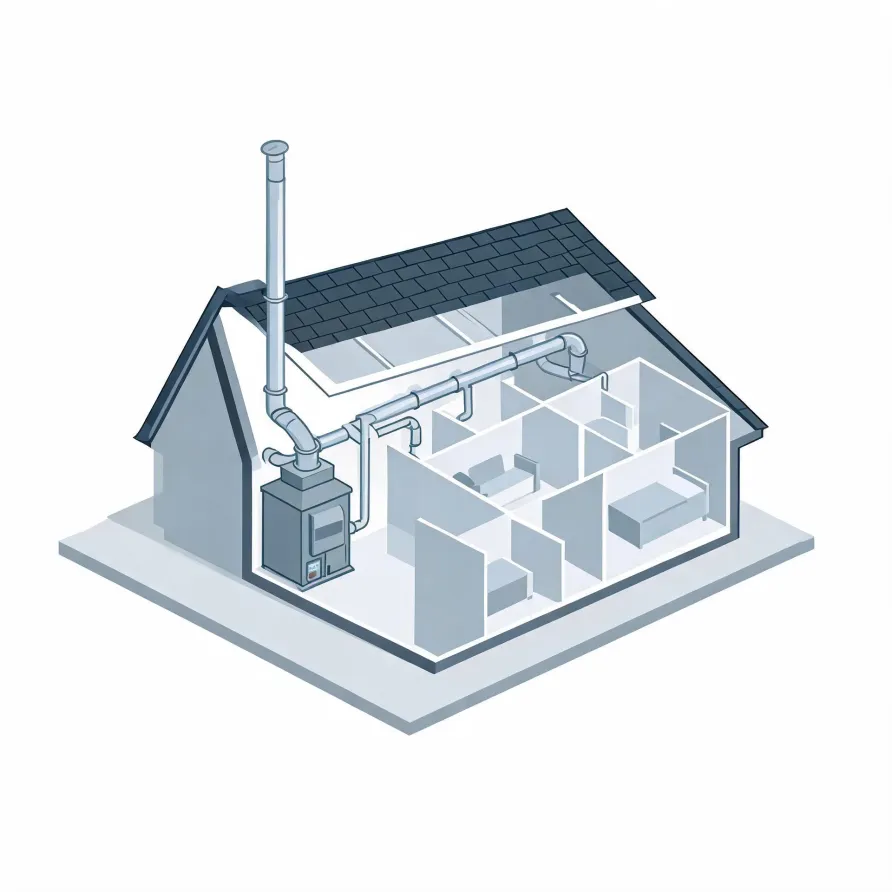
The furnace itself sits inside the house, most often in a utility closet, basement, or attic. It is the cabinet that contains the burners, the heat exchanger, and the blower. The burners produce heat, the heat exchanger transfers it to the air supply, and the blower pushes that air into the duct system.
The flue pipe runs from the furnace to an exterior wall or the roof and carries combustion gases out of the house. Beside or near the furnace, the air handler cabinet and the filter housing sit in line with the return air path. The thermostat mounts on an interior wall and is the control point the homeowner interacts with every day.
The drawing shows a typical layout, and a licensed contractor determines what applies to this particular house.
Get matched in Collingsworth CountyCollingsworth County, by the numbers
118 severe weather events were recorded in Collingsworth County, Texas between 2015 and 2024.
NOAA National Centers for Environmental Information, Storm Events Database, bulk CSV export, events 2015-01-01 through 2024-12-31.Half the homes in Collingsworth County, Texas were built in 1961 or earlier (2020-2024 ACS 5-year).
U.S. Census Bureau, 2020-2024 American Community Survey 5-Year EstimatesCollingsworth County, Texas holds 1,487 housing units (2020-2024 ACS 5-year).
U.S. Census Bureau, 2020-2024 American Community Survey 5-Year EstimatesOwners occupy 73.8% of the occupied homes in Collingsworth County, Texas (2020-2024 ACS 5-year).
U.S. Census Bureau, 2020-2024 American Community Survey 5-Year EstimatesCodes & Standards Governing Furnace Installation in Collingsworth County, Texas5 sourced rules and standards
What happens when the contractor shows up
Non-weatherized gas furnaces manufactured on or after November 19, 2015 must reach 80.0 percent AFUE.
Non-weatherized oil-fired furnaces manufactured on or after November 19, 2015 must reach 83.0 percent AFUE.
Mobile home gas furnaces manufactured on or after November 19, 2015 must reach 80.0 percent AFUE.
Non-weatherized gas furnaces manufactured on or after December 18, 2028 must reach 95.0 percent AFUE, up from the 80.0 percent minimum that applies to units manufactured before that date.
Licensing and Legal Requirements in Collingsworth County, Texas
In Texas a person may not engage in air conditioning and refrigeration contracting unless that person holds a license issued under the state air conditioning and refrigeration contractor law.
Severe Weather Events in Collingsworth County
Weather conditions put a measurable load on heating equipment, and that load shapes what a furnace has to do year after year to keep a home comfortable. How hard local weather runs that equipment is a local question, which is why the data below belongs on a page about furnace installation in this area.
118 severe weather events, 2015–2024. Source: NOAA National Centers for Environmental Information, Storm Events Database.