Tell us about the job
Takes about a minute. No obligation.
Sizing a furnace for this area is a local decision, not a catalog one, but the reasons have less to do with storm load than with elevation, soil, and the specifics of the structure being heated. 82 severe weather events were recorded in Jeff Davis County, Texas between 2015 and 2024. At that rate, severe weather touches equipment here from time to time rather than relentlessly grinding on it. A contractor quoting a new installation will not build the spec around storm exposure. What drives the sizing conversation is the building envelope, duct layout, and the demands of the household, and a contractor who skips that work and pulls a number from a chart will leave the system oversized or under-built regardless of what the sky does.
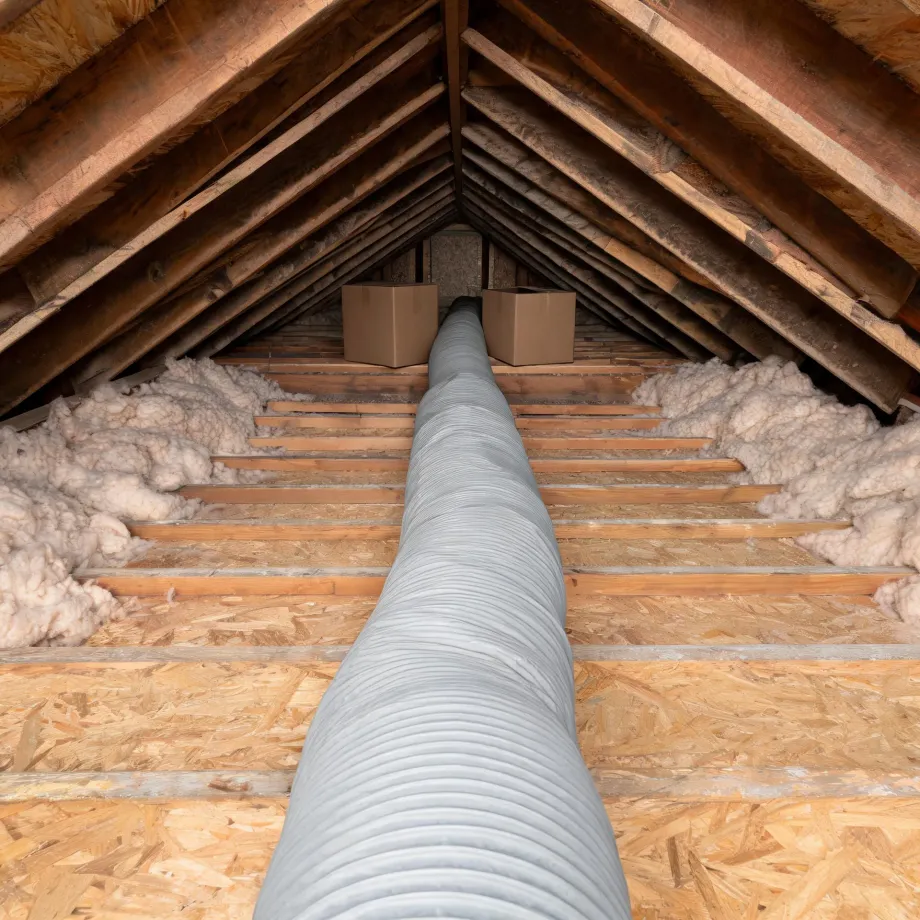
Ductwork sized and routed for older heating equipment is what a contractor runs into in much of this county's housing stock. Half the homes in Jeff Davis County, Texas were built in 1991 or earlier (2020-2024 ACS 5-year). A furnace installed today draws and distributes differently than what that ductwork was built to handle, so whether the existing runs, returns, and trunk lines are adequate for the new unit is the question that has to be answered before a quote means anything. Electrical service gets the same look. If either falls short, that work goes into the scope before the furnace itself does.
What Gets Installed With a New Furnace
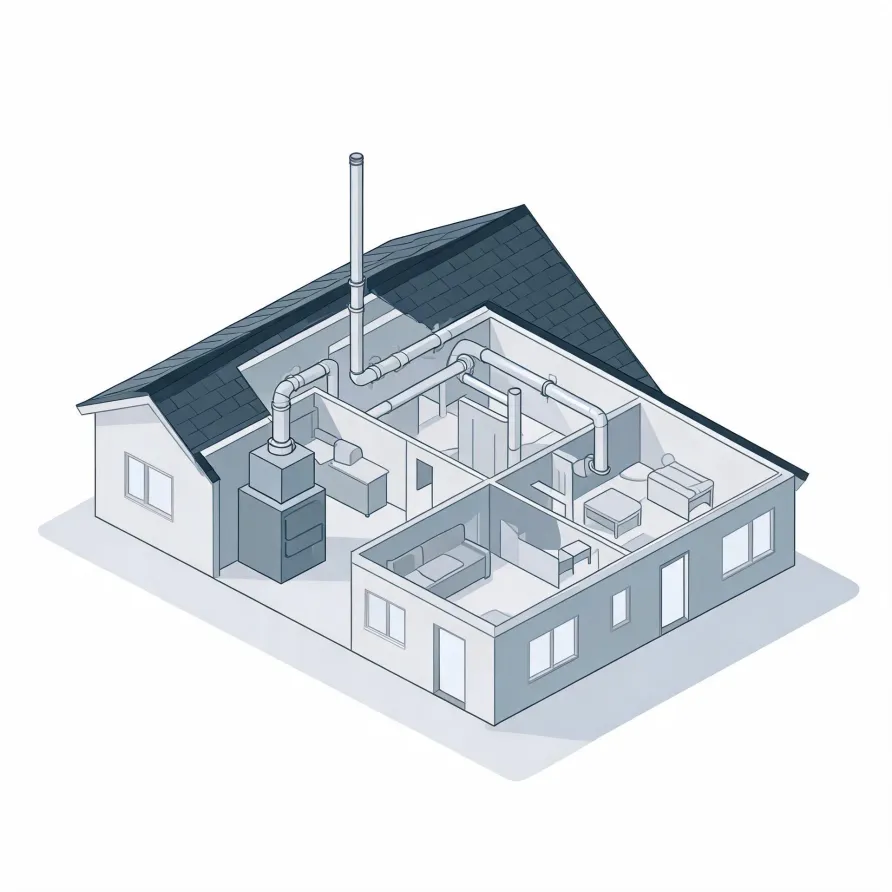
The furnace itself sits inside the house, most often in a utility room, basement, or closet. It holds the heat exchanger, the burner assembly, and the blower motor in one cabinet. The heat exchanger is the core piece: combustion happens on one side, and conditioned air passes over the other before moving into the home.
The flue pipe runs from the furnace cabinet out through the wall or roof and carries combustion gases out of the house. Alongside the cabinet, a contractor also installs the air handler components that tie the furnace to the rest of the system, including the filter housing and the plenum where treated air enters the supply side.
The drawing here shows a typical layout, and a licensed contractor determines exactly what applies to your house based on its configuration.
Get matched in Jeff Davis CountyJeff Davis County, by the numbers
82 severe weather events were recorded in Jeff Davis County, Texas between 2015 and 2024.
NOAA National Centers for Environmental Information, Storm Events Database, bulk CSV export, events 2015-01-01 through 2024-12-31.Half the homes in Jeff Davis County, Texas were built in 1991 or earlier (2020-2024 ACS 5-year).
U.S. Census Bureau, 2020-2024 American Community Survey 5-Year EstimatesJeff Davis County, Texas holds 1,531 housing units (2020-2024 ACS 5-year).
U.S. Census Bureau, 2020-2024 American Community Survey 5-Year EstimatesOwners occupy 88.0% of the occupied homes in Jeff Davis County, Texas (2020-2024 ACS 5-year).
U.S. Census Bureau, 2020-2024 American Community Survey 5-Year EstimatesFurnace Installation Rules & Standards for Jeff Davis County, Texas5 codes, licenses & standards
What the Installation Actually Looks Like
Non-weatherized gas furnaces manufactured on or after November 19, 2015 must reach 80.0 percent AFUE.
Non-weatherized oil-fired furnaces manufactured on or after November 19, 2015 must reach 83.0 percent AFUE.
Mobile home gas furnaces manufactured on or after November 19, 2015 must reach 80.0 percent AFUE.
Non-weatherized gas furnaces manufactured on or after December 18, 2028 must reach 95.0 percent AFUE, up from the 80.0 percent minimum that applies to units manufactured before that date.
Licensing Rules for HVAC Work in Jeff Davis County, Texas
In Texas a person may not engage in air conditioning and refrigeration contracting unless that person holds a license issued under the state air conditioning and refrigeration contractor law.
Severe Weather Events in Jeff Davis County
Weather in Jeff Davis County puts real demands on heating equipment, and those demands shape what a furnace needs to handle over its working life. A contractor sizing or installing equipment here works from local conditions, not regional averages.
82 severe weather events, 2015–2024. Source: NOAA National Centers for Environmental Information, Storm Events Database.