Tell us about the job
Takes about a minute. No obligation.
Sizing a furnace for a home in Ward County starts with the building, not the forecast. 41 severe weather events were recorded in Ward County, Texas between 2015 and 2024. At that rate, severe weather is an event in this county, not a standing condition, and a furnace that struggled through last winter most likely did so because of undersizing, duct problems, or years without service. A contractor quoting an installation here will run load calculations around the structure, insulation, and infiltration. The weather record does not drive that number in the way it might elsewhere, and a quote that leans on climate to justify equipment choices deserves a second look.
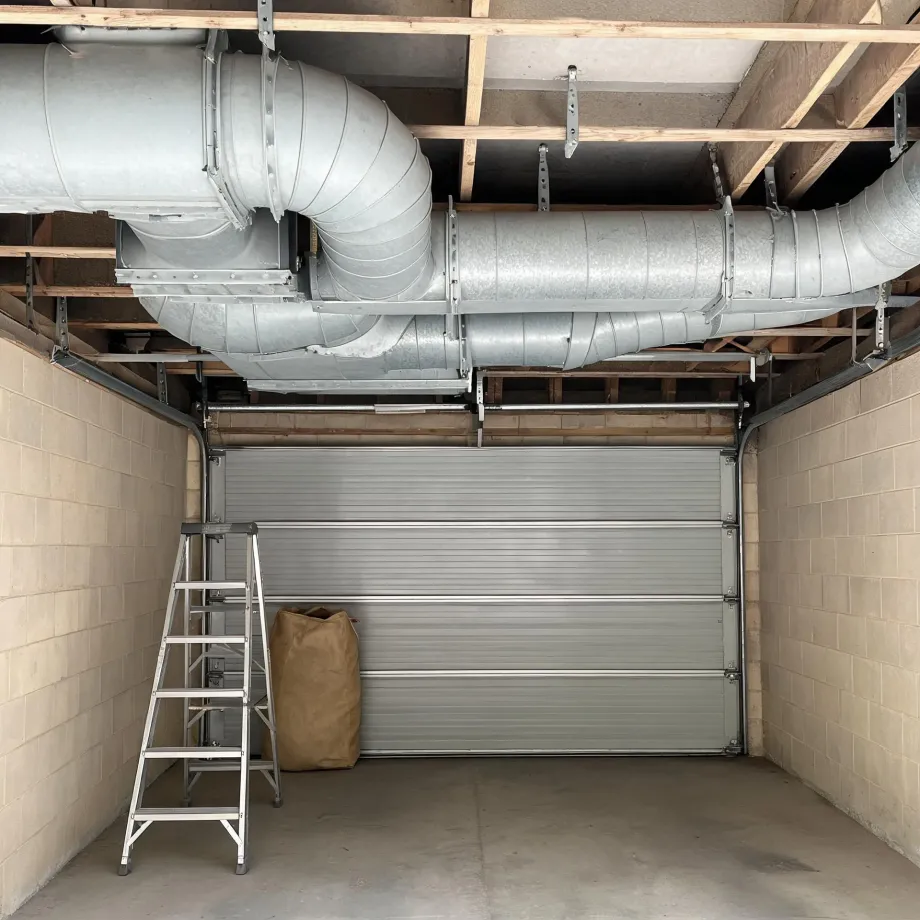
Ductwork laid down for equipment that no longer exists is the first thing a contractor has to assess before a furnace installation in Ward County can be priced with any accuracy. Half the homes in Ward County, Texas were built in 1973 or earlier (2020-2024 ACS 5-year). That age of construction means the supply and return layout in a typical house here was designed around a system nothing like what gets installed today, and a contractor who skips that assessment will quote the unit and miss the job. Where the existing duct network cannot carry the airflow a new furnace produces, it gets replaced or supplemented before the new equipment goes in.
What Gets Installed With a New Furnace
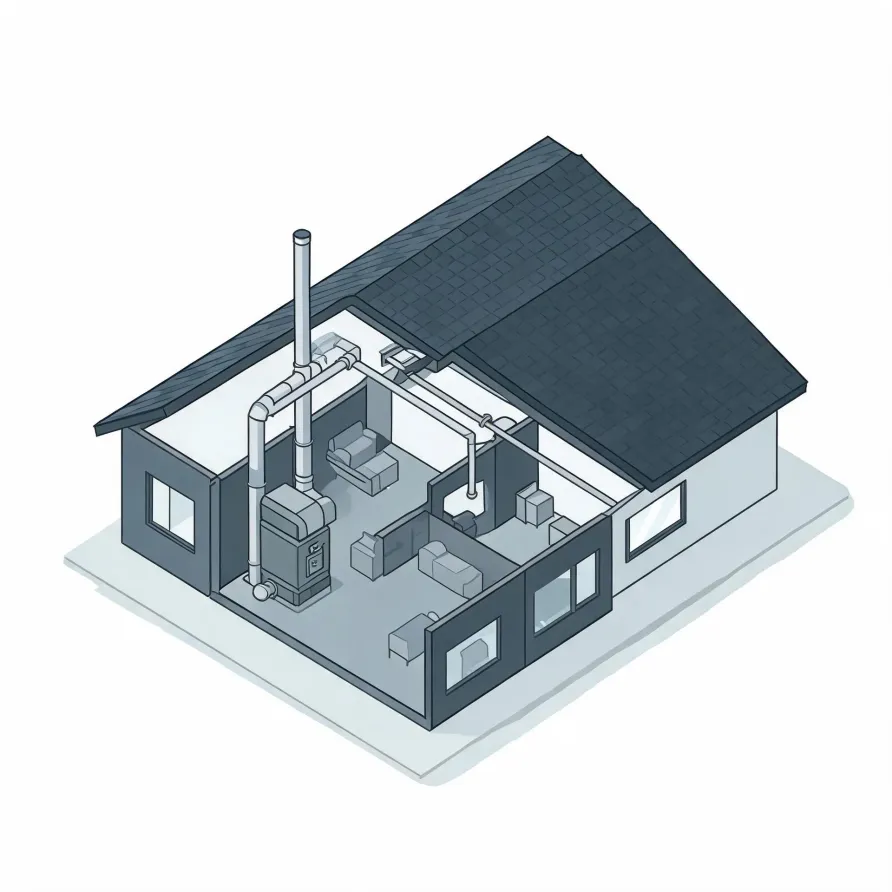
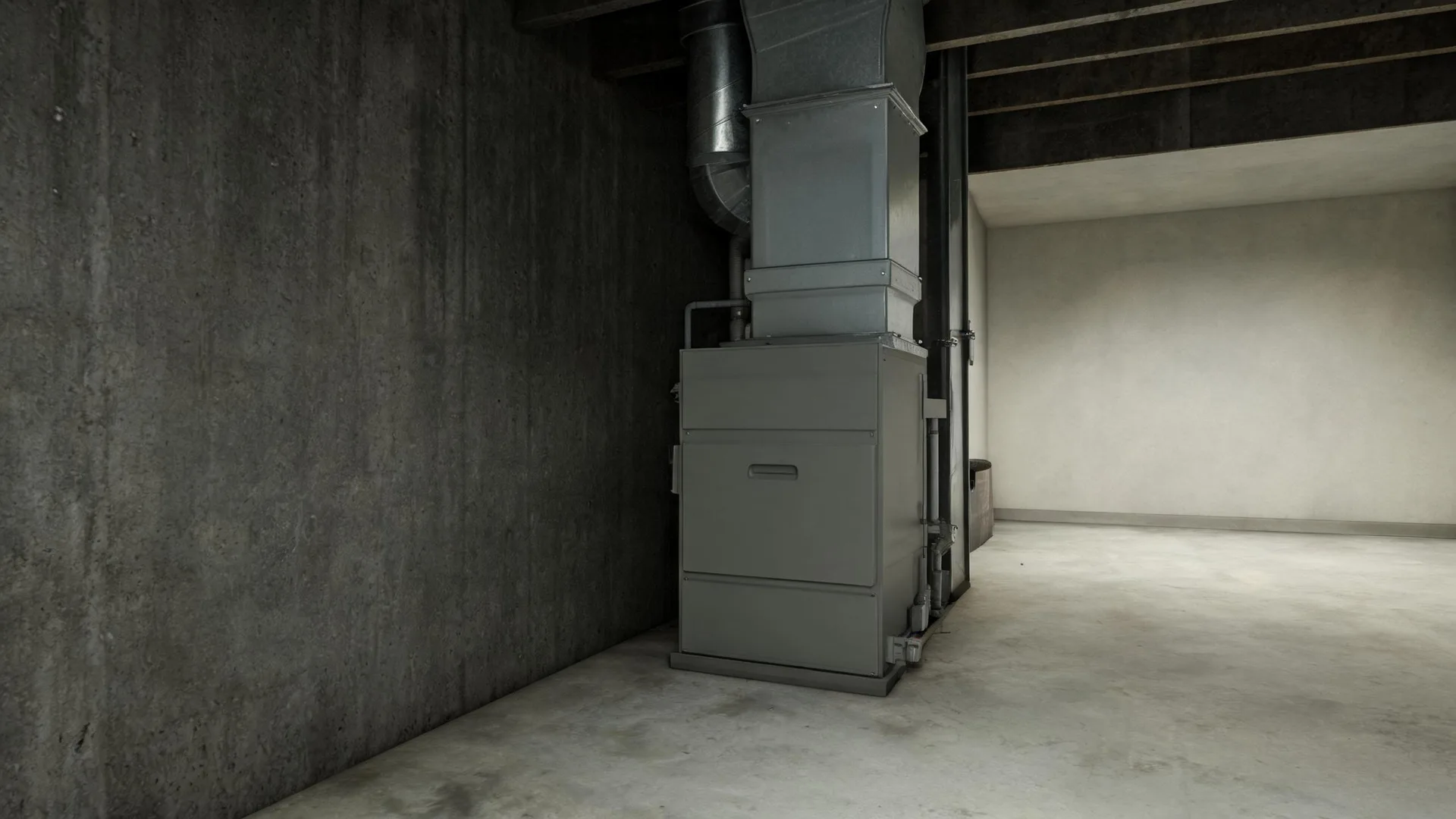
The furnace itself sits in a utility room, basement, or closet and is the unit a homeowner sees most readily. Inside it, a heat exchanger warms the air that moves through the house, and a blower motor pushes that air outward. The burner assembly feeds the heat exchanger from a gas line connection made during installation.
A flue pipe runs from the furnace to an exterior vent, carrying combustion exhaust safely out of the home. Alongside the furnace, a new thermostat gets placed on an interior wall and serves as the control point for the whole system. The contractor also sets a filter housing at the air intake, which is where conditioned air re-enters the unit.
The drawing shows a general layout of these components, and a licensed contractor determines what the installation requires for your specific home.
Find a contractor in Ward CountyWard County, by the numbers
41 severe weather events were recorded in Ward County, Texas between 2015 and 2024.
NOAA National Centers for Environmental Information, Storm Events Database, bulk CSV export, events 2015-01-01 through 2024-12-31.Half the homes in Ward County, Texas were built in 1973 or earlier (2020-2024 ACS 5-year).
U.S. Census Bureau, 2020-2024 American Community Survey 5-Year EstimatesWard County, Texas holds 5,165 housing units (2020-2024 ACS 5-year).
U.S. Census Bureau, 2020-2024 American Community Survey 5-Year EstimatesOwners occupy 78.5% of the occupied homes in Ward County, Texas (2020-2024 ACS 5-year).
U.S. Census Bureau, 2020-2024 American Community Survey 5-Year EstimatesFurnace Installation Rules & Codes for Ward County, Texas5 sourced standards and regulations
What happens when a contractor comes out to your home
Non-weatherized gas furnaces manufactured on or after November 19, 2015 must reach 80.0 percent AFUE.
Non-weatherized oil-fired furnaces manufactured on or after November 19, 2015 must reach 83.0 percent AFUE.
Mobile home gas furnaces manufactured on or after November 19, 2015 must reach 80.0 percent AFUE.
Non-weatherized gas furnaces manufactured on or after December 18, 2028 must reach 95.0 percent AFUE, up from the 80.0 percent minimum that applies to units manufactured before that date.
What Ward County, Texas Requires for HVAC Installation
In Texas a person may not engage in air conditioning and refrigeration contracting unless that person holds a license issued under the state air conditioning and refrigeration contractor law.
Severe Weather Events in Ward County
Weather puts a workload on heating equipment that mild-climate specs never account for. What the climate does in Ward County shapes how hard a furnace has to work and how long it can do it, which makes equipment selection and installation quality a local question.
41 severe weather events, 2015–2024. Source: NOAA National Centers for Environmental Information, Storm Events Database.