Tell us about the job
Takes about a minute. No obligation.
A contractor quoting a furnace installation in Angelina County sizes the system around what the local climate actually demands, and the weather record here is a real input to that decision. 101 severe weather events were recorded in Angelina County, Texas between 2015 and 2024. That puts this area in the middle of the national range, which means severe weather is a steady background condition rather than an outlier one. A system installed to the wrong specifications will underperform whether or not a storm rolls through, which is why a contractor here does the manual load calculation for this house before settling on equipment, not after.
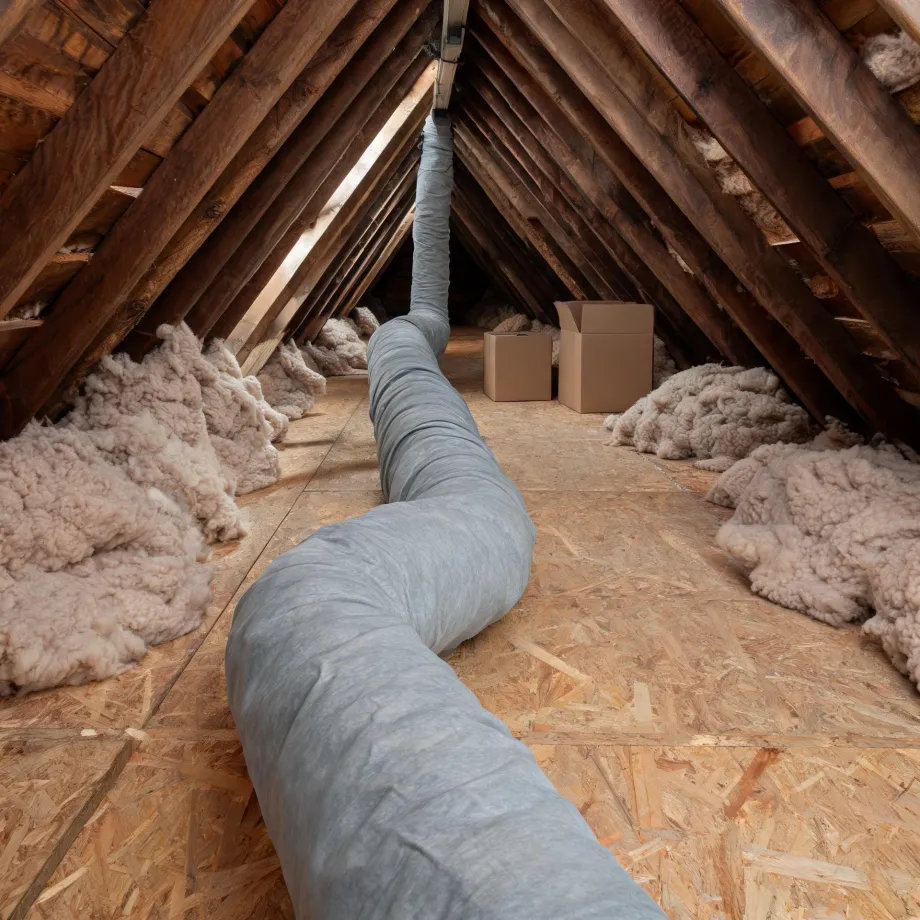
Ductwork laid in for an older generation of equipment is what a contractor has to settle first when quoting a furnace installation here. Half the homes in Angelina County, Texas were built in 1986 or earlier (2020-2024 ACS 5-year). A system built and sold to meet today's efficiency ratings depends on air moving through passages that are sized and sealed to match it, and ducts from an earlier era of equipment often are not. Where the duct layout does not match the new unit, a contractor has to decide what to reline, resize, or reroute before the furnace itself can be priced honestly.
What Gets Installed With a New Furnace
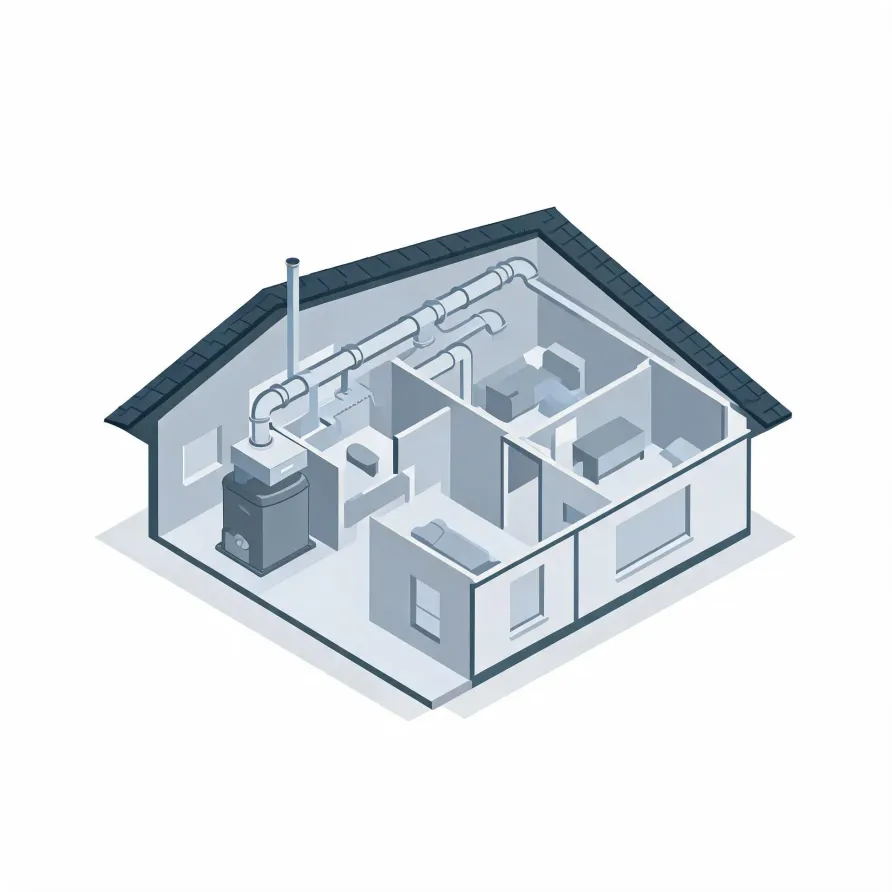
The furnace itself sits in a utility space, a basement, or a closet near the center of the house. It holds the burner assembly, the heat exchanger, and the blower that pushes conditioned air into the living space. The flue pipe runs from the unit to an exterior wall or roof to carry combustion gases out.
The air handler cabinet, where it is separate from the furnace body, mounts in the same mechanical space and houses the blower motor and filter rack. The thermostat goes on an interior wall and gives the homeowner a point of control. Refrigerant lines and condensate drains tie into the system depending on whether a cooling coil is added alongside the furnace.
The drawing shows a typical layout, and a licensed contractor determines exactly what applies to this house.
Get matched in Angelina CountyAngelina County, by the numbers
101 severe weather events were recorded in Angelina County, Texas between 2015 and 2024.
NOAA National Centers for Environmental Information, Storm Events Database, bulk CSV export, events 2015-01-01 through 2024-12-31.Half the homes in Angelina County, Texas were built in 1986 or earlier (2020-2024 ACS 5-year).
U.S. Census Bureau, 2020-2024 American Community Survey 5-Year EstimatesAngelina County, Texas holds 37,023 housing units (2020-2024 ACS 5-year).
U.S. Census Bureau, 2020-2024 American Community Survey 5-Year EstimatesOwners occupy 64.0% of the occupied homes in Angelina County, Texas (2020-2024 ACS 5-year).
U.S. Census Bureau, 2020-2024 American Community Survey 5-Year EstimatesFurnace Installation Rules & Standards for Angelina County, Texas5 codes, laws & standards
What the installation looks like from your side
Non-weatherized gas furnaces manufactured on or after November 19, 2015 must reach 80.0 percent AFUE.
Non-weatherized oil-fired furnaces manufactured on or after November 19, 2015 must reach 83.0 percent AFUE.
Mobile home gas furnaces manufactured on or after November 19, 2015 must reach 80.0 percent AFUE.
Non-weatherized gas furnaces manufactured on or after December 18, 2028 must reach 95.0 percent AFUE, up from the 80.0 percent minimum that applies to units manufactured before that date.
Licensing Rules for HVAC Work in Angelina County, Texas
In Texas a person may not engage in air conditioning and refrigeration contracting unless that person holds a license issued under the state air conditioning and refrigeration contractor law.
Severe Weather Events in Angelina County
Weather puts measurable stress on heating and cooling equipment, and that stress is shaped by local conditions. What happens in Angelina County drives how hard a furnace has to work and how long it holds up, which is why this data belongs on a page about installation.
101 severe weather events, 2015–2024. Source: NOAA National Centers for Environmental Information, Storm Events Database.