Tell us about the job
Takes about a minute. No obligation.
A contractor sizing a furnace in Jasper County starts from what the local climate actually demands, not from a specification sheet written for an average that does not apply here. 93 severe weather events were recorded in Jasper County, Texas between 2015 and 2024. At that rate, severe weather is a standing condition rather than an occasional disruption, and it shapes what heating capacity a home needs to maintain temperature when conditions outside are at their worst. A unit sized for a milder load will run longer and harder through those events, wearing components faster and falling short when the demand peaks. Getting the sizing right at installation is what keeps a furnace from chasing a load it was never built to meet.
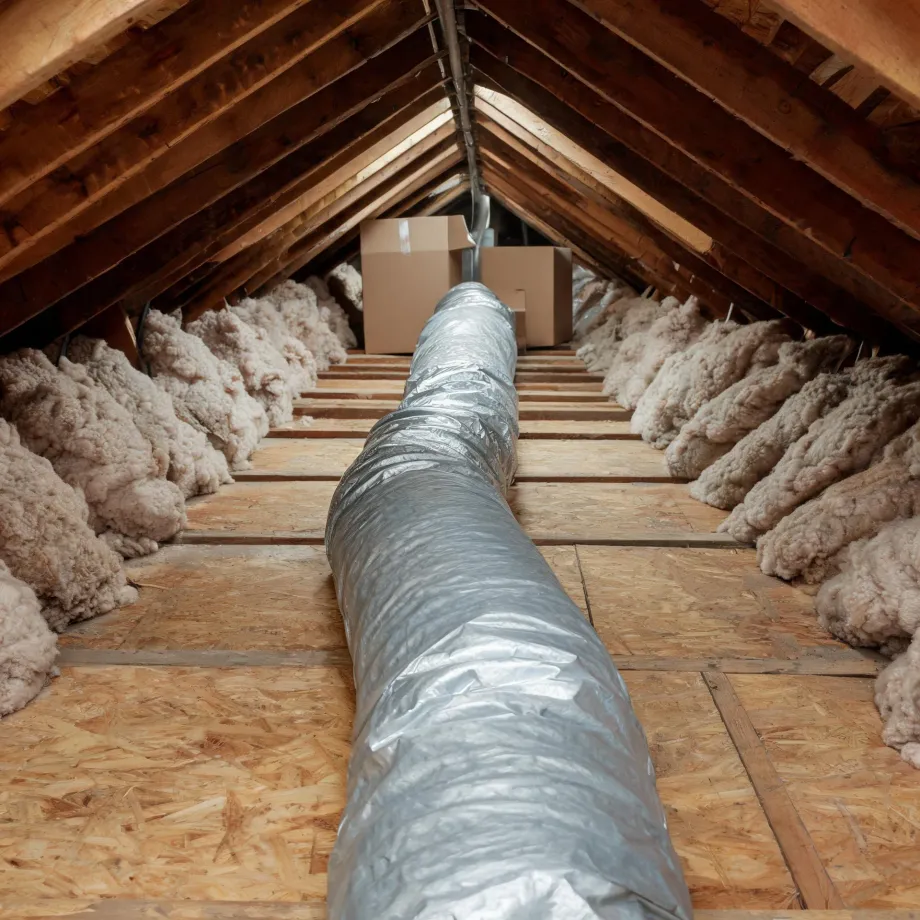
Ductwork laid down for an older system carries its own geometry: the trunk sizes, branch runs, and register placements that made sense then may not move enough air for what a new furnace demands. Half the homes in Jasper County, Texas were built in 1987 or earlier (2020-2024 ACS 5-year). That depth of history means a contractor sizing and installing a new unit has to assess what the existing duct system can actually carry before the equipment is ordered. Where the ducts fall short, the installation scope expands. The electrical side follows the same logic, since what the house was wired to support and what a new furnace draws are questions a contractor settles on-site.
What Gets Installed With a New Furnace
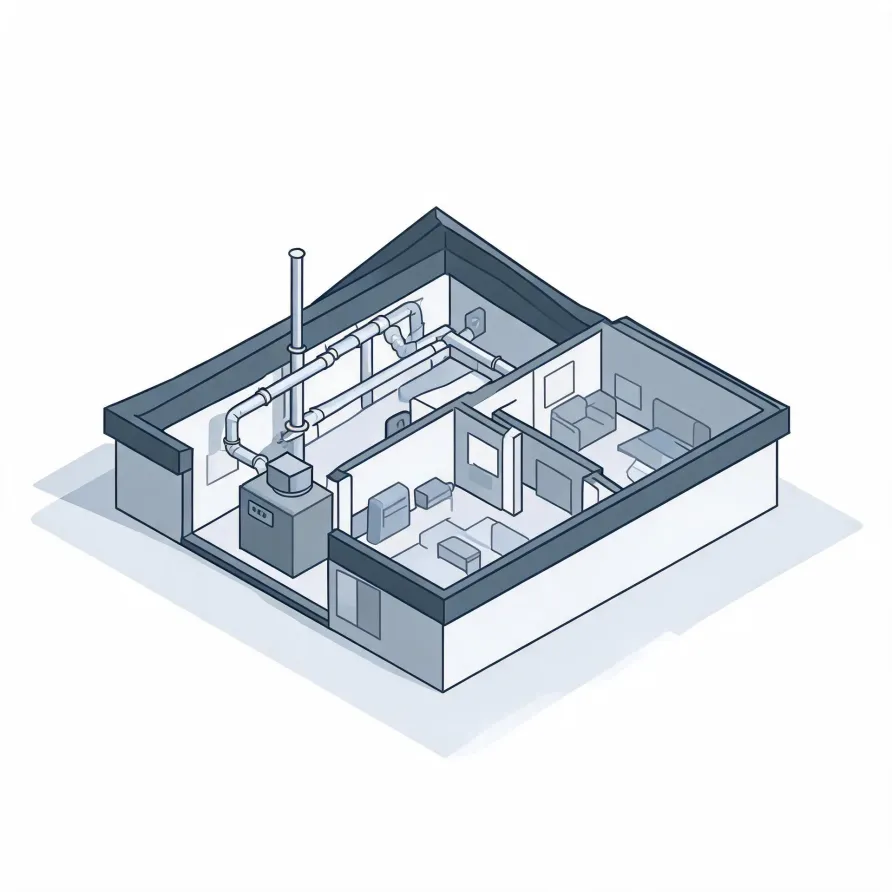
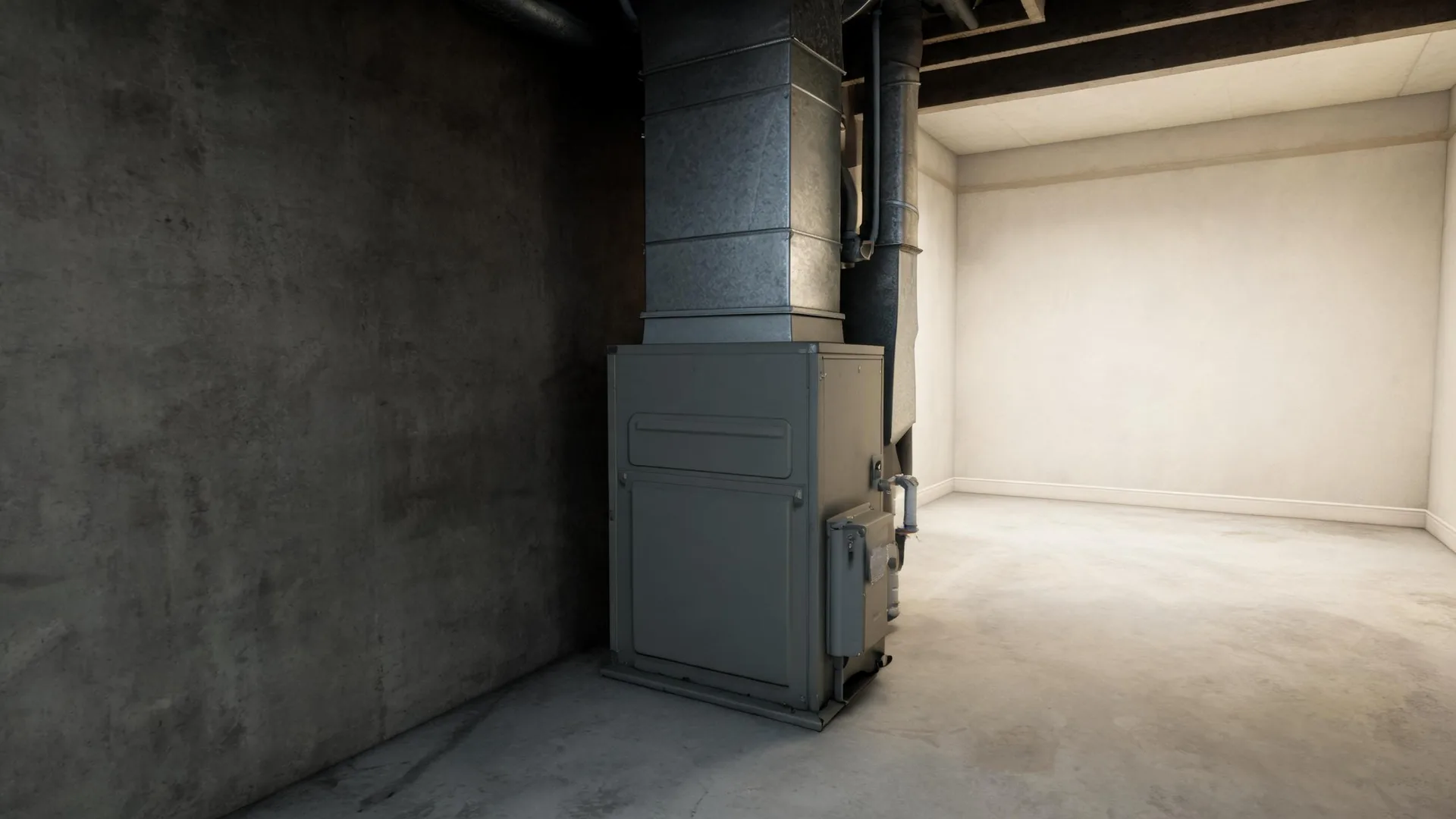
The furnace itself sits in a utility closet, basement, or garage and is the heart of what goes in. Inside the cabinet, the heat exchanger, burners, and blower motor are the core assembly a contractor sets in place. The flue pipe runs from the cabinet up and out of the house to exhaust combustion gases.
The thermostat mounts on an interior wall and is the control point the homeowner touches day to day. A new furnace also comes with a filter housing at the air return, and a contractor connects the gas line and the condensate drain where the equipment requires it.
The drawing shows a typical layout, and a licensed contractor determines exactly what applies to this house based on its current setup.
Get matched in Jasper CountyJasper County, by the numbers
93 severe weather events were recorded in Jasper County, Texas between 2015 and 2024.
NOAA National Centers for Environmental Information, Storm Events Database, bulk CSV export, events 2015-01-01 through 2024-12-31.Half the homes in Jasper County, Texas were built in 1987 or earlier (2020-2024 ACS 5-year).
U.S. Census Bureau, 2020-2024 American Community Survey 5-Year EstimatesJasper County, Texas holds 16,727 housing units (2020-2024 ACS 5-year).
U.S. Census Bureau, 2020-2024 American Community Survey 5-Year EstimatesOwners occupy 79.0% of the occupied homes in Jasper County, Texas (2020-2024 ACS 5-year).
U.S. Census Bureau, 2020-2024 American Community Survey 5-Year EstimatesFurnace Installation Rules & Standards for Jasper County, Texas5 sourced codes and standards
What the Installation Actually Looks Like
Non-weatherized gas furnaces manufactured on or after November 19, 2015 must reach 80.0 percent AFUE.
Non-weatherized oil-fired furnaces manufactured on or after November 19, 2015 must reach 83.0 percent AFUE.
Mobile home gas furnaces manufactured on or after November 19, 2015 must reach 80.0 percent AFUE.
Non-weatherized gas furnaces manufactured on or after December 18, 2028 must reach 95.0 percent AFUE, up from the 80.0 percent minimum that applies to units manufactured before that date.
Licensing Rules for Jasper County, Texas
In Texas a person may not engage in air conditioning and refrigeration contracting unless that person holds a license issued under the state air conditioning and refrigeration contractor law.
Severe Weather Events in Jasper County
Weather puts real hours on heating equipment. A furnace that works hard through weather stress wears differently than one that sits quiet, and that difference shapes what installation decisions make sense for this area.
93 severe weather events, 2015–2024. Source: NOAA National Centers for Environmental Information, Storm Events Database.