Tell us about the job
Takes about a minute. No obligation.
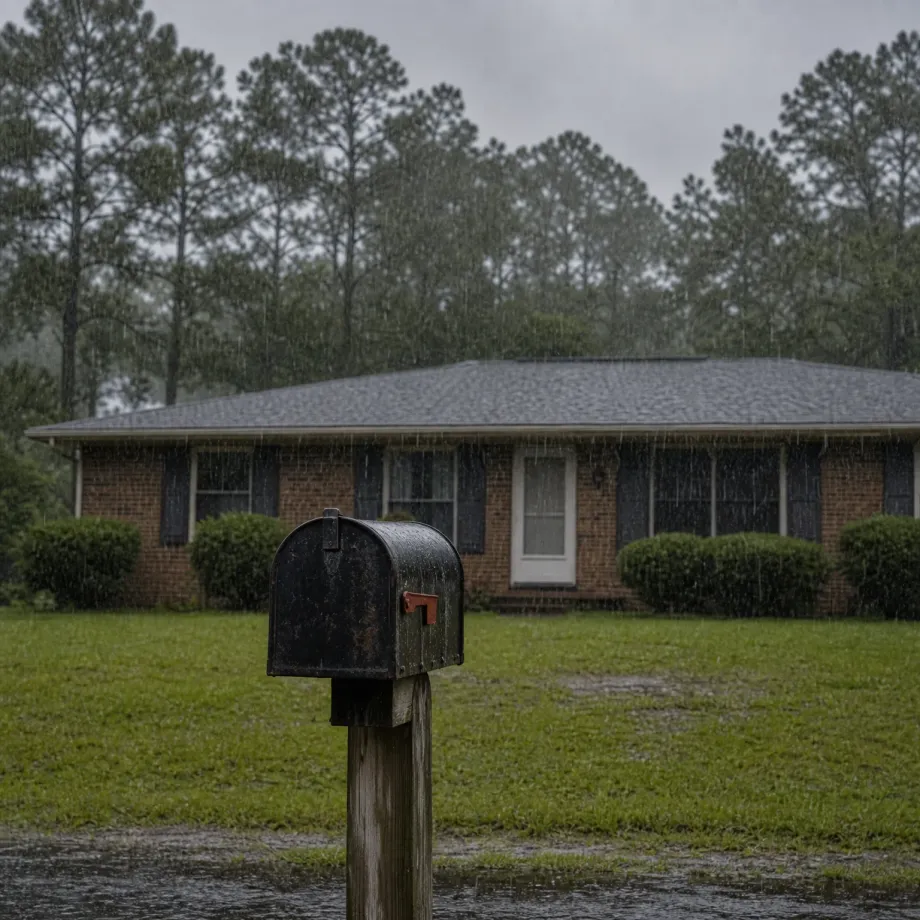
A furnace contractor quoting a new install in Maverick County is not building around a punishing weather history. 35 severe weather events were recorded in Maverick County, Texas between 2015 and 2024. At that rate, severe weather sits in the background rather than shaping every specification decision. What drives sizing here is the actual heat load of the structure: insulation, square footage, duct layout. A contractor who gets those wrong produces a system that short-cycles or runs constantly regardless of what the sky does outside, and no amount of heavy-duty equipment fixes a bad Manual J.
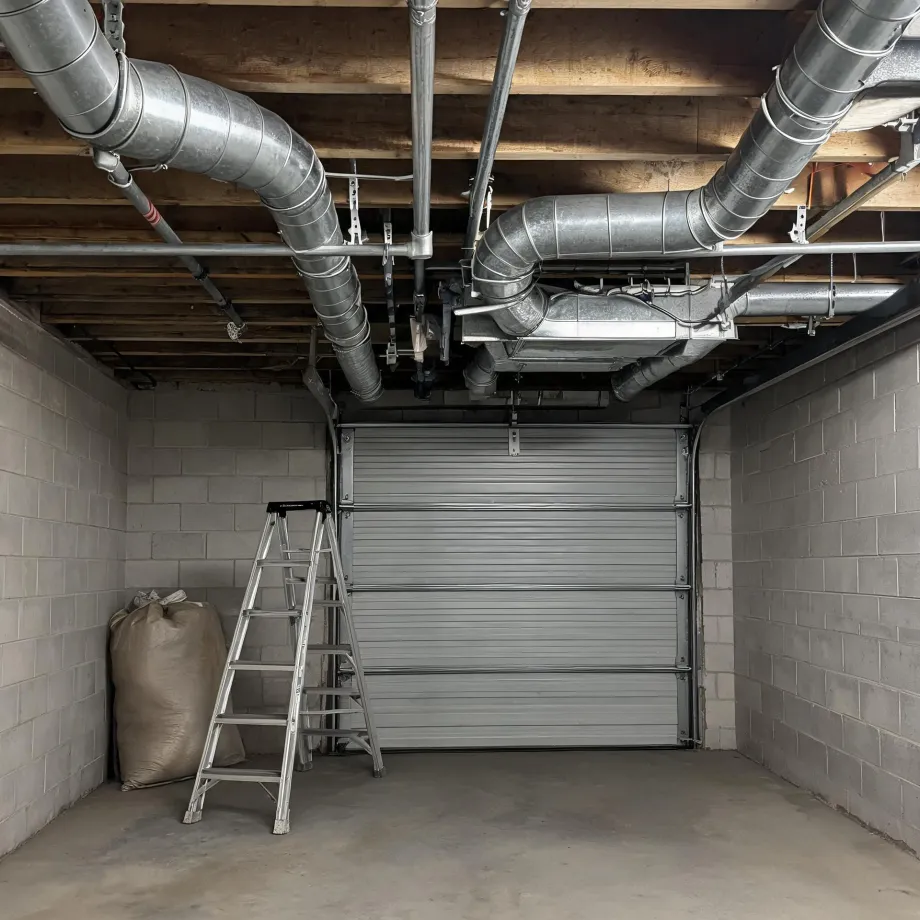
Existing ductwork is what determines whether a furnace installation goes cleanly or requires additional work before the new unit ever runs. Half the homes in Maverick County, Texas were built in 1997 or earlier (2020-2024 ACS 5-year). That means a contractor sizing a new furnace here has to assess what the existing trunk lines and branch runs can actually move, and whether the electrical service at the panel matches what the replacement equipment draws. A house that has had one or two systems cycled through it since it was built may have ductwork that was patched rather than redesigned, and those patches show up once airflow is measured against the new unit's specs.
What Gets Installed With a New Furnace
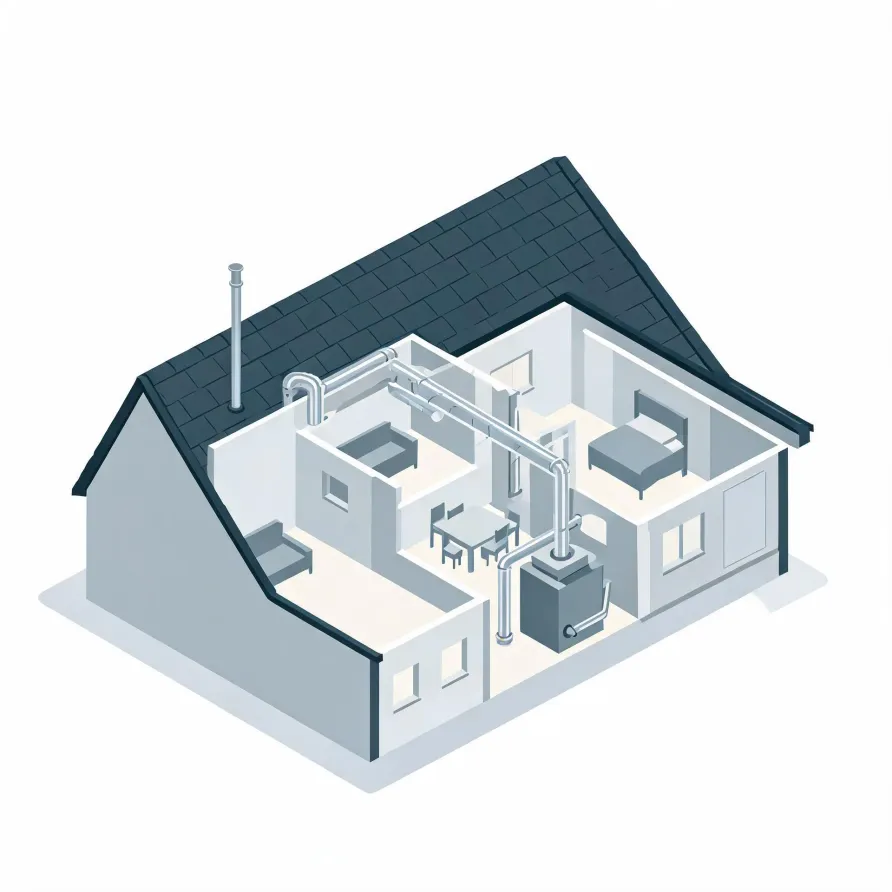
The furnace itself sits in a utility room, basement, or closet and burns fuel to produce heat, which it then pushes into the air stream. A flue pipe runs from the furnace to an exterior wall or roofline and carries combustion gases out of the house. These are the two pieces a homeowner is most likely to see.
The air handler components built into the furnace cabinet include the blower, the heat exchanger, and the burner assembly, all housed inside the same cabinet. A thermostat mounts on an interior wall and gives the homeowner control over when the furnace fires. A contractor also connects a gas line and a dedicated condensate or vent drain where the equipment requires one.
The drawing shows a typical layout, and a licensed contractor determines what applies to the specific configuration of your home.
Find a contractor in Maverick CountyMaverick County, by the numbers
35 severe weather events were recorded in Maverick County, Texas between 2015 and 2024.
NOAA National Centers for Environmental Information, Storm Events Database, bulk CSV export, events 2015-01-01 through 2024-12-31.Half the homes in Maverick County, Texas were built in 1997 or earlier (2020-2024 ACS 5-year).
U.S. Census Bureau, 2020-2024 American Community Survey 5-Year EstimatesMaverick County, Texas holds 20,445 housing units (2020-2024 ACS 5-year).
U.S. Census Bureau, 2020-2024 American Community Survey 5-Year EstimatesOwners occupy 70.5% of the occupied homes in Maverick County, Texas (2020-2024 ACS 5-year).
U.S. Census Bureau, 2020-2024 American Community Survey 5-Year EstimatesFurnace Installation Rules for Maverick County, Texas5 codes, standards, and laws
What the Installation Actually Looks Like
Non-weatherized gas furnaces manufactured on or after November 19, 2015 must reach 80.0 percent AFUE.
Non-weatherized oil-fired furnaces manufactured on or after November 19, 2015 must reach 83.0 percent AFUE.
Mobile home gas furnaces manufactured on or after November 19, 2015 must reach 80.0 percent AFUE.
Non-weatherized gas furnaces manufactured on or after December 18, 2028 must reach 95.0 percent AFUE, up from the 80.0 percent minimum that applies to units manufactured before that date.
Licensing and Legal Requirements in Maverick County, Texas
In Texas a person may not engage in air conditioning and refrigeration contracting unless that person holds a license issued under the state air conditioning and refrigeration contractor law.
Severe Weather Events in Maverick County
Extreme weather puts real demands on heating equipment, shortening run cycles, forcing harder restarts, and wearing components faster than moderate climates do. What furnaces face in Maverick County shapes what a contractor installs and how they size it.
35 severe weather events, 2015–2023. Source: NOAA National Centers for Environmental Information, Storm Events Database.