Tell us about the job
Takes about a minute. No obligation.
A furnace installation in Shelby County starts with load calculations that account for what the climate actually delivers. 84 severe weather events were recorded in Shelby County, Texas between 2015 and 2024. At that rate of severe weather, a system sized on catalog defaults will run harder and recover more slowly than one sized by a contractor who has worked this area. Duct sealing, equipment placement, and equipment ratings all shift when the baseline conditions push the system regularly rather than occasionally.
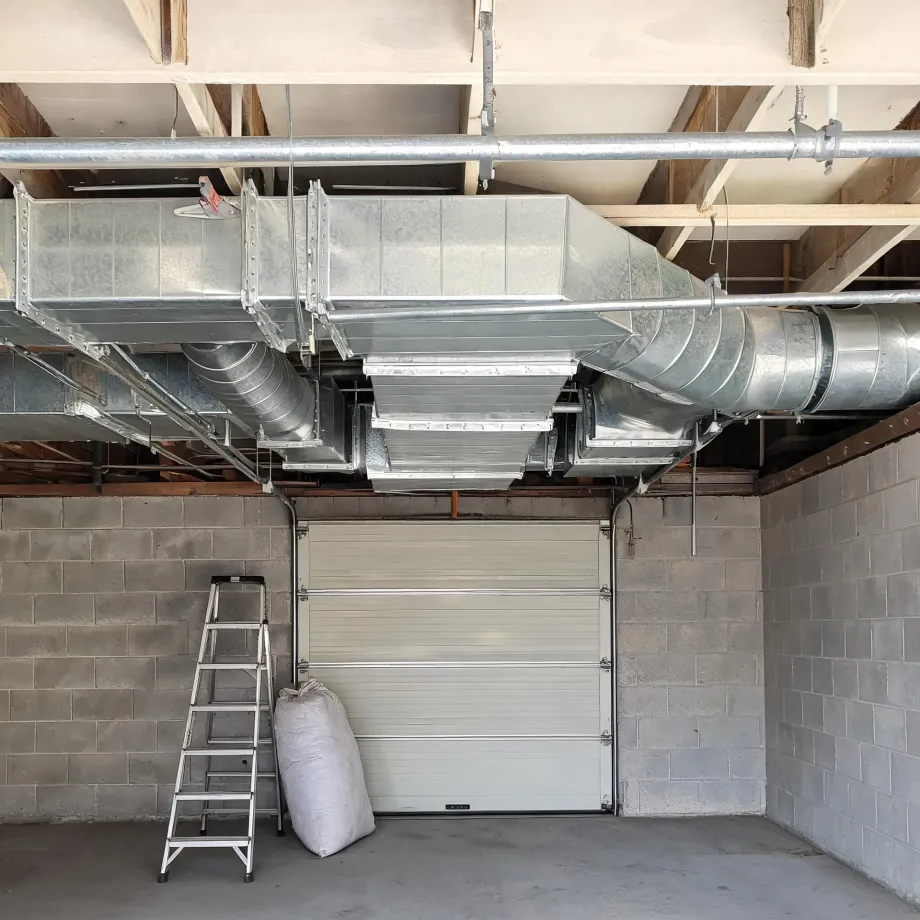
Existing ductwork is the first thing a contractor has to assess in a furnace installation here, and in much of this county's housing stock it was sized and routed for equipment that bears little resemblance to what gets installed today. Half the homes in Shelby County, Texas were built in 1984 or earlier (2020-2024 ACS 5-year). Duct runs that made sense for an older system may be undersized, poorly sealed, or configured in ways that limit what a new furnace can actually deliver to the rooms it is supposed to heat. The electrical side follows the same logic: a panel put in when the house was built reflects the demands of that era, not the requirements of current equipment. A contractor pricing a furnace job here opens the walls and the panel box before the unit itself becomes the question.
What Gets Installed With a New Furnace
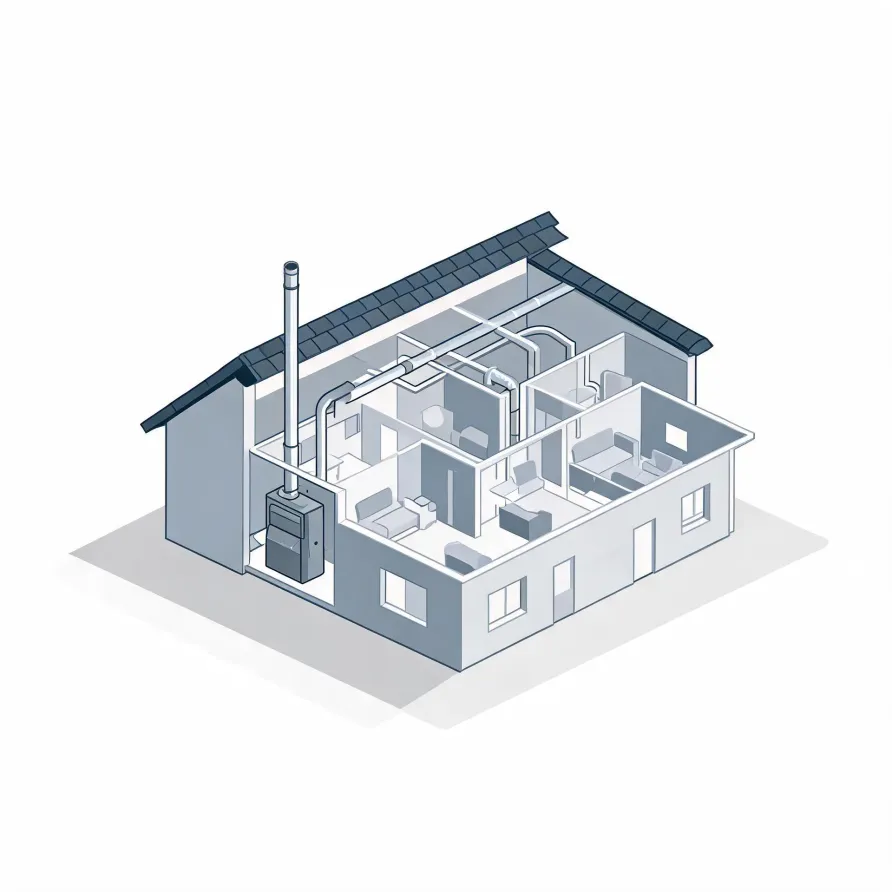
The furnace itself sits in a utility closet, basement, or garage and is the unit that generates heat. Attached to it is the air handler, which moves conditioned air through the house. Both pieces are sized and positioned during installation to match the home's layout and the existing duct openings.
The flue or vent pipe runs from the furnace to an exterior wall or the roof and carries combustion gases out of the house. The thermostat goes on an interior wall and gives the homeowner control over when the system runs. A contractor also sets the condensate drain line where the system calls for one.
The drawing shows a representative layout, and a licensed contractor determines what applies to this particular house.
Find a contractor in Shelby CountyShelby County, by the numbers
84 severe weather events were recorded in Shelby County, Texas between 2015 and 2024.
NOAA National Centers for Environmental Information, Storm Events Database, bulk CSV export, events 2015-01-01 through 2024-12-31.Half the homes in Shelby County, Texas were built in 1984 or earlier (2020-2024 ACS 5-year).
U.S. Census Bureau, 2020-2024 American Community Survey 5-Year EstimatesShelby County, Texas holds 11,584 housing units (2020-2024 ACS 5-year).
U.S. Census Bureau, 2020-2024 American Community Survey 5-Year EstimatesOwners occupy 74.0% of the occupied homes in Shelby County, Texas (2020-2024 ACS 5-year).
U.S. Census Bureau, 2020-2024 American Community Survey 5-Year EstimatesFurnace Installation Rules on the Books for Shelby County, Texas5 codes, standards & statutes
What the Installation Actually Looks Like
Non-weatherized gas furnaces manufactured on or after November 19, 2015 must reach 80.0 percent AFUE.
Non-weatherized oil-fired furnaces manufactured on or after November 19, 2015 must reach 83.0 percent AFUE.
Mobile home gas furnaces manufactured on or after November 19, 2015 must reach 80.0 percent AFUE.
Non-weatherized gas furnaces manufactured on or after December 18, 2028 must reach 95.0 percent AFUE, up from the 80.0 percent minimum that applies to units manufactured before that date.
Licensing Rules for HVAC Work in Shelby County, Texas
In Texas a person may not engage in air conditioning and refrigeration contracting unless that person holds a license issued under the state air conditioning and refrigeration contractor law.
Severe Weather Events in Shelby County
Weather puts load on heating and cooling equipment, and that load shapes what a furnace needs to handle over its working life. What happens in Shelby County is what the equipment here actually lives with, which is why local installation decisions start with local conditions.
84 severe weather events, 2015–2024. Source: NOAA National Centers for Environmental Information, Storm Events Database.