Tell us about the job
Takes about a minute. No obligation.
A furnace installation in this area starts with a load calculation that accounts for what the climate actually demands, not what a spec sheet assumes. 29 severe weather events were recorded in Matagorda County, Texas between 2015 and 2024. At that rate, severe weather is a standing condition of the county, and a contractor sizing a new furnace factors in how hard the system will be asked to run when conditions turn. Ductwork connections, equipment ratings, and the integrity of the install matter more here than in places where the weather rarely stresses the system past its steady-state design.
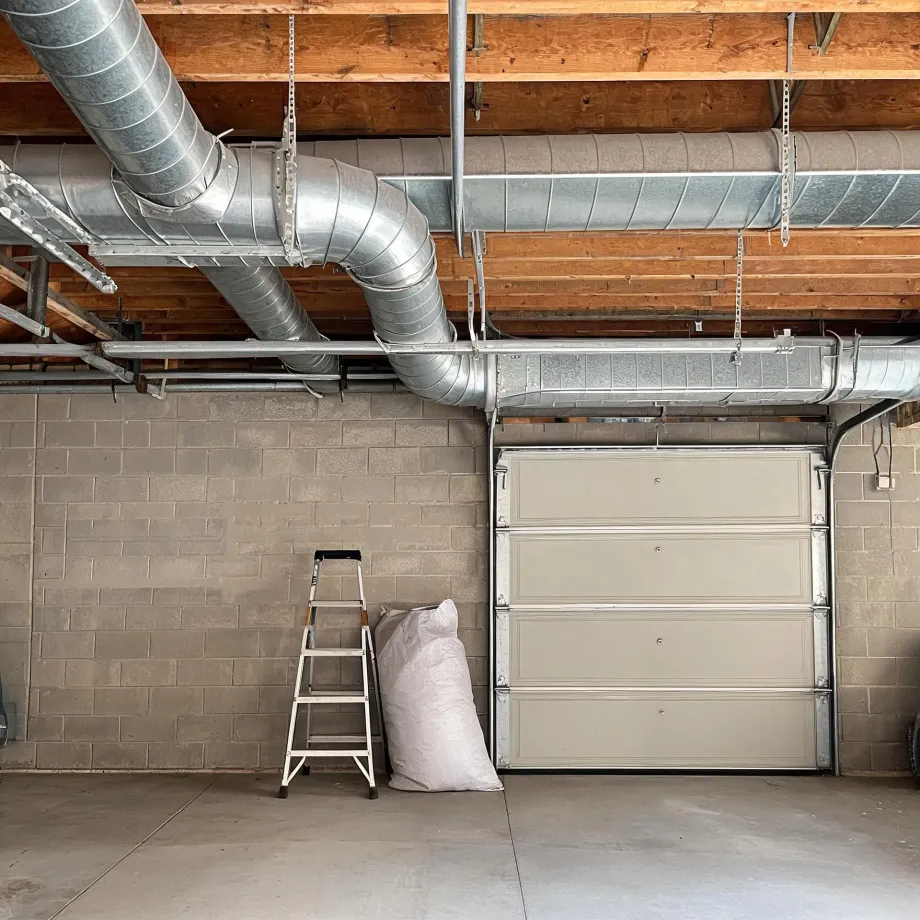
Ductwork laid in for equipment of an earlier generation carries assumptions about airflow and routing that a new furnace will test. Half the homes in Matagorda County, Texas were built in 1979 or earlier (2020-2024 ACS 5-year). That gap between what the ducts were designed around and what a modern unit delivers is where a furnace installation either holds together or needs additional work before the new equipment runs correctly. A contractor checking the existing duct runs and their condition before finalizing the job is reading the house for what it will and will not carry.
What Gets Installed With a New Furnace
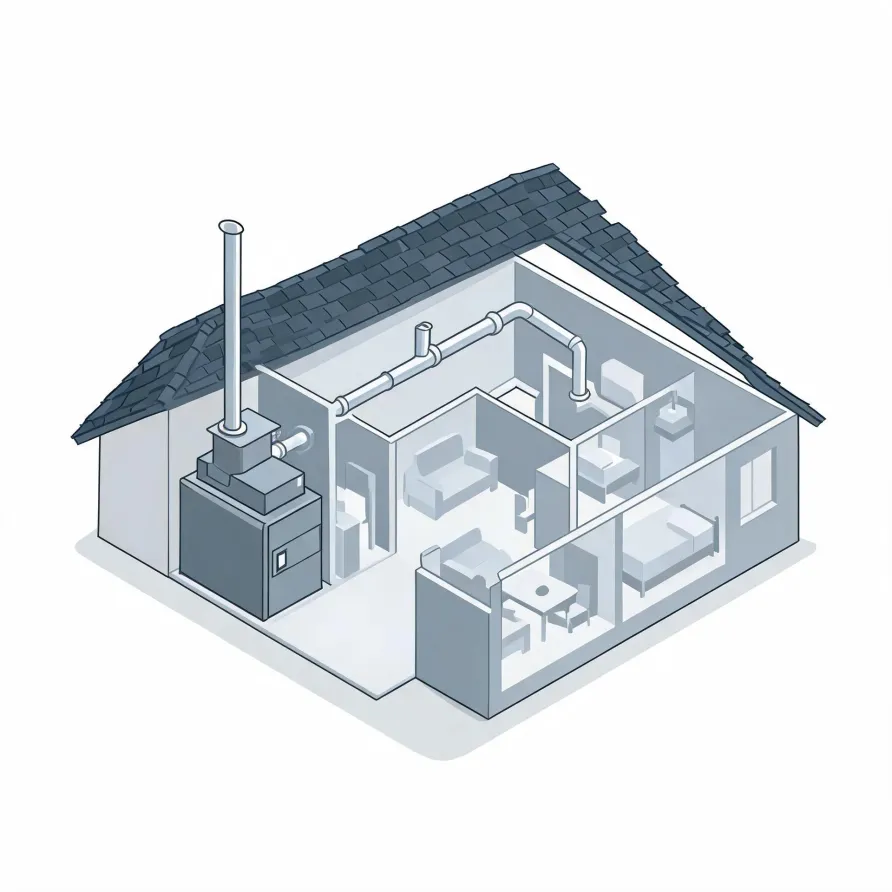
The furnace itself sits inside the house, most often in a basement, closet, or utility room, and it is the unit that produces the heat. A burner assembly inside it burns gas to generate that heat, and a heat exchanger transfers it to the air moving through the system. The blower motor, housed in the same cabinet, pushes that warmed air out.
The flue pipe runs from the furnace to an exterior wall or roofline and carries combustion gases out of the house. Alongside it, the gas valve and ignition assembly connect to the fuel supply and light the burners on demand. A thermostat mounts on a wall in the living area and tells the furnace when to run.
The drawing shows a typical layout, and a licensed contractor determines exactly what applies in your home.
Find a contractor in Matagorda CountyMatagorda County by the Numbers
29 severe weather events were recorded in Matagorda County, Texas between 2015 and 2024.
NOAA National Centers for Environmental Information, Storm Events Database, bulk CSV export, events 2015-01-01 through 2024-12-31.Half the homes in Matagorda County, Texas were built in 1979 or earlier (2020-2024 ACS 5-year).
U.S. Census Bureau, 2020-2024 American Community Survey 5-Year EstimatesMatagorda County, Texas holds 19,058 housing units (2020-2024 ACS 5-year).
U.S. Census Bureau, 2020-2024 American Community Survey 5-Year EstimatesOwners occupy 68.1% of the occupied homes in Matagorda County, Texas (2020-2024 ACS 5-year).
U.S. Census Bureau, 2020-2024 American Community Survey 5-Year EstimatesFurnace Installation Rules & Standards for Matagorda County, Texas5 sourced codes and standards
What happens once a contractor comes out
Non-weatherized gas furnaces manufactured on or after November 19, 2015 must reach 80.0 percent AFUE.
Non-weatherized oil-fired furnaces manufactured on or after November 19, 2015 must reach 83.0 percent AFUE.
Mobile home gas furnaces manufactured on or after November 19, 2015 must reach 80.0 percent AFUE.
Non-weatherized gas furnaces manufactured on or after December 18, 2028 must reach 95.0 percent AFUE, up from the 80.0 percent minimum that applies to units manufactured before that date.
Licensing and Legal Requirements in Matagorda County, Texas
In Texas a person may not engage in air conditioning and refrigeration contracting unless that person holds a license issued under the state air conditioning and refrigeration contractor law.
Severe Weather Events in Matagorda County
Matagorda County weather puts real demands on heating and cooling equipment over its lifetime. A furnace sized and installed for local conditions handles those demands better than one that was not.
29 severe weather events, 2015–2024. Source: NOAA National Centers for Environmental Information, Storm Events Database.